


National Wildlife Federation
Watershed Web: A Field Trip
Observing plant succession doesn't have to be a decade long process. A hands-on lesson has groups study succession over a designated space. Learners use their observation skills to record differences in plant and soil characteristics in...
National Wildlife Federation
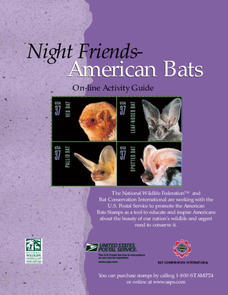
Night Friends - American Bats
Bats are a misunderstood species. Pupils learn about the characteristics of bats in a three-part lesson. They begin by examining the adaptations of different types of bats, then explore the misconceptions humans have about the species....

National Wildlife Federation
How Do You Feel About Water?
Less than one percent of the water on Earth is usable in people's homes. As pupils consider this fact, they reflect on their own water usage before designing a survey to collect information on water usage by others. They then analyze...

National Wildlife Federation
Danger from Afar: Non-Point Source Pollution and the Lake Superior Basin
How prevalent is pollution in the water system? A hands-on activity focuses on one area that is prone to pollution. Learners use game chips to represent clean water and polluted water and complete an activity that demonstrates how...
National Wildlife Federation
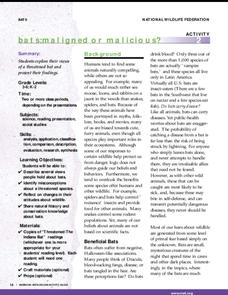
Bats: Maligned or Malicious?
Most people couldn't name the positive qualities of bats. Learners discover how bats benefit the environment and then create a concept map to summarize the information. After their reading, they identify misconceptions people have about...

National Wildlife Federation
Build a Bat House!
Bats usually get a bad rap. Scholars learn about the importance of bats and the threat their declining population has on the environment. They then build bat houses to attract and welcome bats into the area.
National Wildlife Federation
At-Risk Species
Certain behaviors make species vulnerable to extinction and others protect them. By studying species that are currently endangered, learners draw conclusions about these behaviors. They then apply their conclusions to healthy species and...
National Wildlife Federation
Life in the Cold: Climate Challenges
What does it take to make it in the Arctic? Learners examine the cold weather adaptations of a polar bear that help it survive. With everyday objects, they model these characteristics as they become make-shift polar bears. Modeling helps...
US Geological Survey
Water, Water, Everywhere?
Less than one percent of the earth's water is available for human use. A hands-on activity models the phenomenon for young scientists. Beginning with a specific volume of water, learners remove water that correlates to the percent of...

National Wildlife Federation
Sensory Discovery Walk: Connecting With Your Place
Take a blinded tour. Pairs take turns leading each other on a blindfolded exploration of the natural world and take stock of their surroundings using their remaining senses. After the tour, pupils try to map their paths and follow them...

National Wildlife Federation
Water, Water Everywhere?
Visibly display the location of the water in the world. Using 12 liters of water to represent the total amount of water in the world, the class measures out the water located in different areas, such as the ocean and ice caps. Class...
National Wildlife Federation
What's Your Habitat?
How do human habitats compare to animal habitats? Individuals begin their nature discovery by drawing their own habitats that extend beyond their houses. Pupils ensure their drawings include the four habitat elements of food, water,...

National Wildlife Federation
Plastic in the Sea
How much plastic do people use? Class members identify how plastic is involved in their daily lives by looking at food packaging either at a grocery store or at home. Learners view statistics for the amount of plastics found on a beach...

National Wildlife Federation
The Wheel of Trouble
What kind of troubles affect turtles? Learners create paper plate wheels to show four different hazards to sea turtles. Pupils color four segments of a picture to represent the overharvesting, changing beaches, pollution, and fishing...

National Wildlife Federation
Pollinator's Journey: Grades 5-8
Re-enact the flight of the pollinator. Pupils learn about the roles of butterflies, bats, and other pollinators in plant reproduction. The class acts out the migratory flight of Monarch butterflies and bats from the Sonoran Desert to...

National Wildlife Federation
Fish and Ladders: Grades 5-8
Swim with the fishes. Learners simulate the migration of Chinook salmon. Groups pretend to be salmon, while others are predators, fishers, and hazards. The salmon start in the spawning area and swim downstream to the ocean until reaching...

National Wildlife Federation
Create a Fish
Don't just teach learners to fish, but to create fish. The class discusses fish heads and predicts whether where the fish might live and what it eats. Given an index card with a fish adaptation written on it, pupils construct an...

National Wildlife Federation
Who Is Faster?
Am I going to catch it? Individuals time how long it takes them to walk, jog, and run a given distance and calculate their speed. They then research two animals and find their speeds. Using a chart, pupils compare the speeds of the...
National Wildlife Federation
Pollinator's Journey: Grades K-4
What's it like to migrate as a pollinator? Teachers provide direct instruction about the roles of pollinators such as butterflies on plants along with the threats they encounter. The class then acts out a story of the migration of bats...

National Wildlife Federation
Tricky Tracks
While wildlife may not always be visible, they leave their marks behind for people to discover. A wildlife lesson has pupils explore the characteristics of animal tracks. They learn different types of tracks, as well as what tracks tell...

National Wildlife Federation
Investigating Bat Adaptations
Bats may look the same, but are actually very different. Some bats eat meat and others fruit, while some have bright colors and others are dark colors. Learners examine the differences, view them as adaptations, and then play a game to...

National Wildlife Federation
Bison Mystery Box
Natural design is amazing. Young scientists connect the features of a bison to an assortment of everyday items. A bison's tail is an ideal flyswatter, and a pot stores water just like a bison's stomach. The lesson connects the usefulness...
National Wildlife Federation
Soil Decomposers
Worms are the kings of the decomposers. A four-part lesson plan has learners experiment with the characteristics of earthworms and their sensitivities. They vary factors such as light, acidity, temperature, and touch of soil and observe...

National Wildlife Federation
Endangered Species: What and Where?
What do endangered species have in common with non-endangered species? Given an endangered species to read about, individuals choose another species that is not endangered to compare it to. As a class, they create a species book with the...