Hi, what do you want to do?






Brooklyn Children’s Museum
Rocks and Minerals in Our Lives
Young geologists discover the important role that rocks and minerals play in our everyday lives through this series of hands-on activities. Starting off with a lesson that defines the difference between plants, animals, and...

Columbus City Schools
You Can’t Sneeze On This Tissue
Take your class' understanding of cells to the next level... or levels! Demonstrate the levels of organization using a variety of engaging methods. The teacher's guide includes the materials you'll need to execute a flower...

University of North Florida
Family Child Care Home Instructional Unit: My Community
As Mister Rogers would say, "It's a beautiful day in this neighborhood," especially when youngsters know all about community helpers and their role in the community. These two units, one designed for ages two to three and the other...

Columbus City Schools
Get Your Organisms Organized
From large to small, show your class how to organize them all! Included within the guide is everything you need to take their knowledge of classification from the cellular to the species level. The worksheets focus on...

Calvin Crest Outdoor School
Survival
Equip young campers with important survival knowledge with a set of engaging lessons. Teammates work together to complete three outdoor activities, which include building a shelter, starting a campfire, and finding directions in the...

Colorado Unit Writing Project
Fun with Phonemic Awareness
The phonemic awareness activities in this packet are designed to help kids develop skills in rhyming, syllabication, blending onsets and rimes, and beginning and ending sounds. Well worth a place in your curriculum library.

Cal Recycle
Conserving Natural Resources
Trying to plan an engaging elementary science unit on natural resources? Conserve your energy! This five-part series of lessons and hands-on activities has exactly what you need to teach young scholars about the importance of conservation.
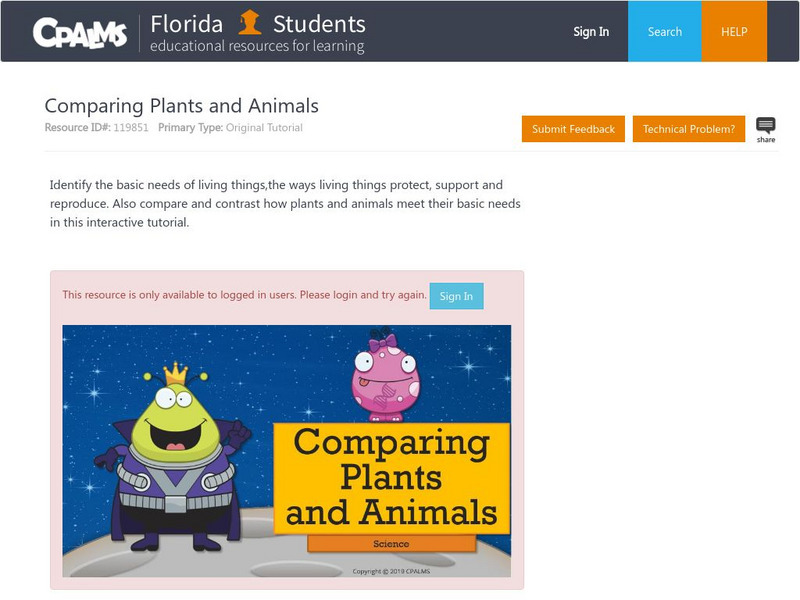
CPALMS
Florida State University Cpalms: Florida Students: Comparing Plants and Animals
A tutorial that compares and constrast plants and animals. Explore how living things their obtain basic needs, protect, support, and reproduce. A PDF file of the tutorial is available.
E-learning for Kids
E Learning for Kids: Science: Nova Zembla: Why Do We Need Plants?
This module explores how plants help animals survive. Bobby is a scientist on Antarctica. He discovers many amazing uses of plants. Join him and help him learn.
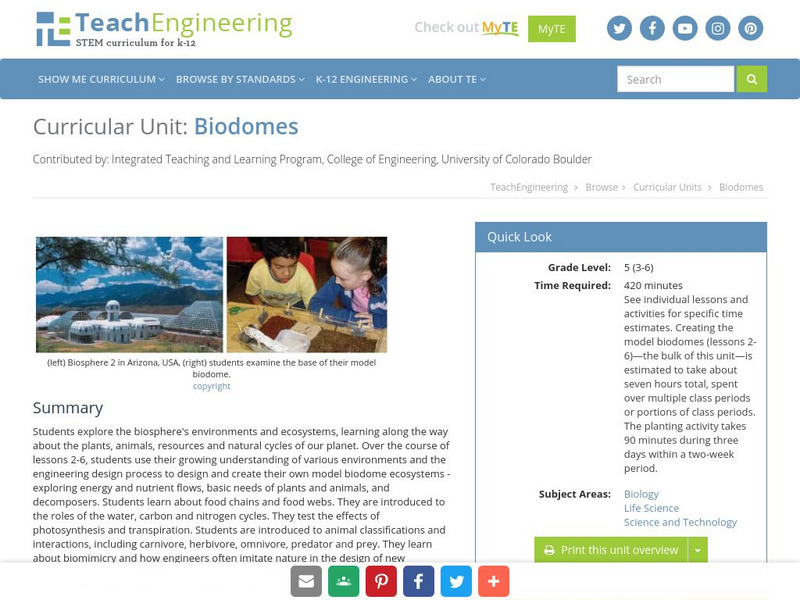
TeachEngineering
Teach Engineering: Biodomes
Students explore the biosphere's environments and ecosystems, learning along the way about the plants, animals, resources and natural cycles of our planet. Over the course of lessons 2-6, students use their growing understanding of...
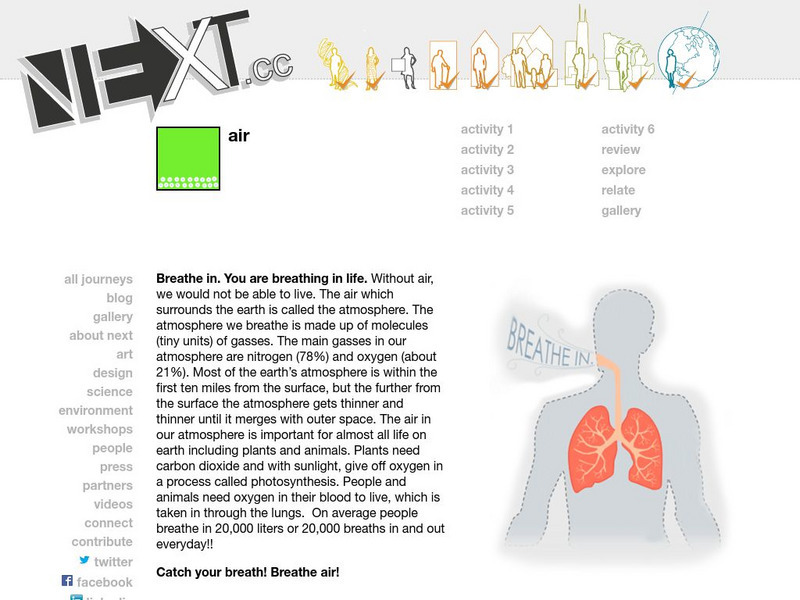
Next.cc
Next: Air
Multiple activities explore and explain why plants and animals need air to survive.