Hi, what do you want to do?






Scholastic
Study Jams! Magnetism
Six simple images pull your class into magnets. Most of the pictures show magnetic fields as revealed by iron filings. Concepts are explained in print along the bottom of each slide and include magnetic force, force fields, poles,...

Concord Consortium
Energy of Bond Formation
Show your chemistry class that there's much more to covalent bonding than sharing electrons! Pupils manipulate atoms of hydrogen, oxygen, and carbon to observe the energy of bond formation using a well-rounded interactive. The resource...

Concord Consortium
Conversion of Electric Potential Energy
Here is a resource that is full of potential energy! Learners manipulate charged objects to convert electric potential to thermal energy using a savvy simulation. The resource includes a variety of charge settings and helpful potential...

PHET
Generator
Michael Faraday was self-educated, earned an honorary doctorate from the University of Oxford, invented the first Bunsen burner, discovered the laws of electrolysis, and proved that a changing magnetic field produces a current. In this...

Concord Consortium
Non-Bonding
What makes helium so Noble, anyway? Explore the bonding properties of helium versus those of hydrogen using an interactive resource. Science scholars manipulate atoms of each element and observe changes in potential energy as the atoms...

PHET
Atomic Interactions
Who knew atoms could be attracted to each other? A simulation allows learners to see how forces between atoms influence the attraction between them. Classes see the attractive and repulsive forces adjusting as distance between atoms...

McGraw Hill
Neutron Stars Interactive
The universe is full of sources of energy. Explore the energy of pulsars with your classes through a simulation. An interactive lesson allows learners to manipulate the angle of rotation of both the earth and the pulsars. A real-time...

PHET
Faraday's Electromagnetic Lab
"But still try, for who knows what is possible." - Michael Faraday. Faraday's advice features in a simulation that permits pupils to play with a bar magnet in order to make a light bulb glow connecting electromagnetic induction to...

Curated OER
Inductance
In this inductance worksheet, students answer 20 questions about magnetic fields as they relate to inductors, inertia, transistors, and the flow of current through circuits.
Concord Consortium
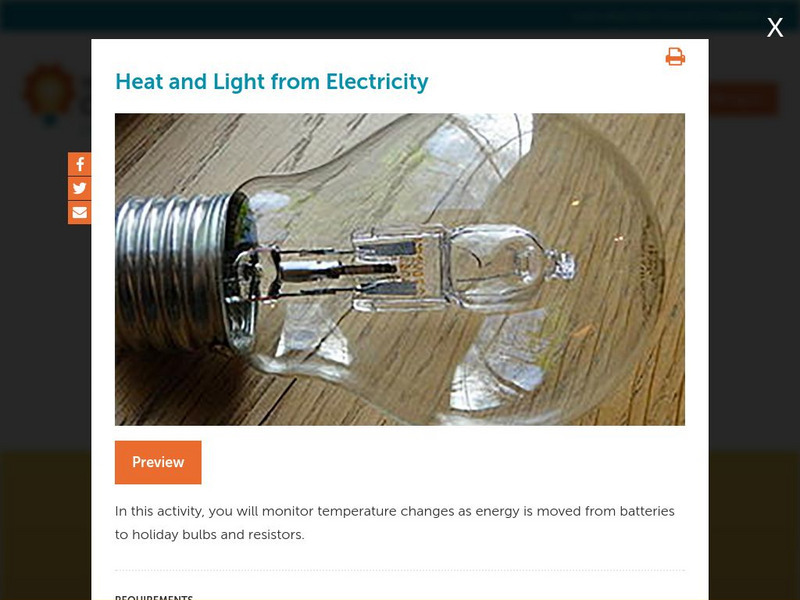
Concord Consortium: Stem Resources: Heat and Light From Electricity
Understand the energy transformations that happens when you light a bulb with a battery. Activity requires students to build a simple circuit and take temperature and time measurements. Lab includes procedure with questions that can be...
University of Oregon
Magnet Lab: University of Oregon Virtual Laboratory
The collection of interactive physics applets offered by the University of Oregon is an excellent resource for students. The applets are grouped in broad subject areas including astrophysics, energy and environment, mechanics and...
Science Museum, London
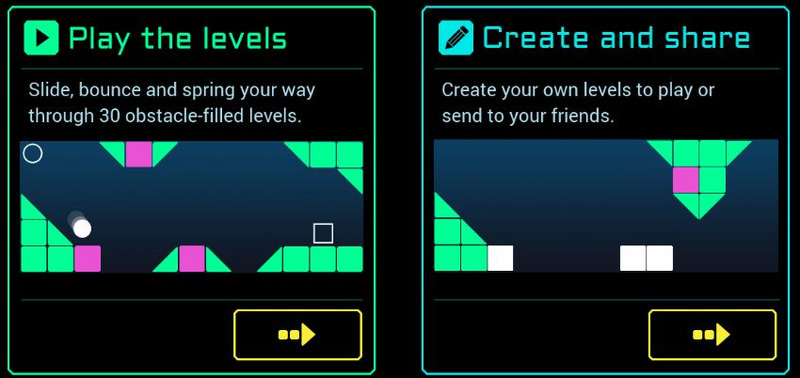
Science Museum: Launchpad Online: Launchball
Use your knowledge of physics concepts like electricity, reflection, magnetism, etc. to complete interactive online puzzles.

CK-12 Foundation
Ck 12: Physics Simulation: Electric Analogies
[Free Registration/Login Required] Explore a different way of thinking about electricity as a way to become familiar with the concept of potential, current, and resistance using this interactive simulation. A PDF worksheet and a video...
University of Colorado
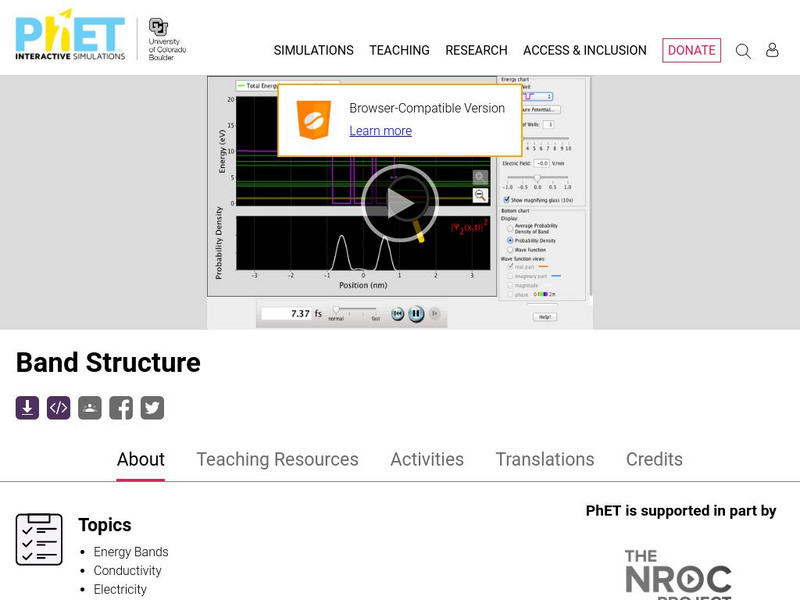
University of Colorado: Ph Et Interactive Simulations: Band Structure
Explore the origin of energy bands in crystals of atoms. The structure of these bands determines how materials conduct electricity. Java required.
Florida State University
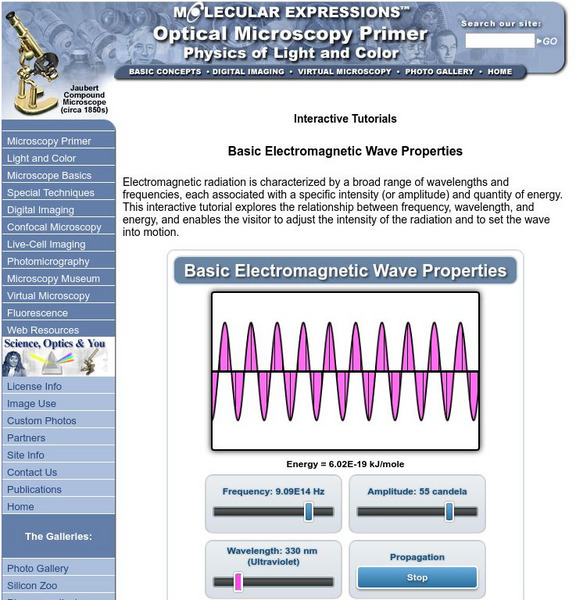
Florida State University: Basic Electromagnetic Wave Properties
This Florida State University page includes an interactive java tutorial that explores the relationship between frequency, wavelength, and energy, and enables the visitor to adjust the intensity of the radiation and to set the wave into...