Hi, what do you want to do?





American Chemical Society
Inquiry in Action: Temperature Affects Dissolving
Answer the question of whether cocoa mix dissolves in hot water or cold water in this activity. Help students see how temperature affects the rate at which solids dissolve. This lesson includes teacher and student instructions.
Stanford University
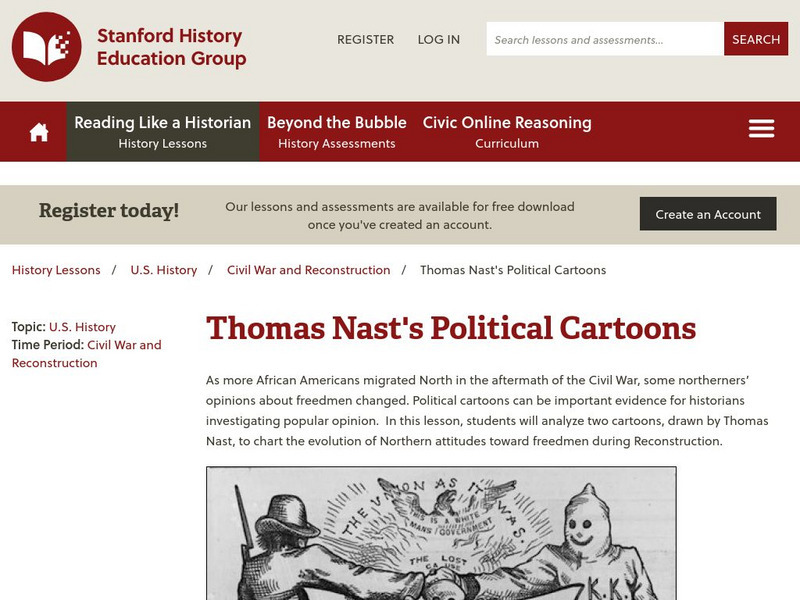
Sheg: Document Based History: Reading Like a Historian: Thomas Nast
[Free Registration/Login Required] Students read primary source documents to solve a problem surrounding a historical question. This document-based inquiry lesson allows students to analyze two cartoons drawn by Thomas Nast, and to chart...
Stanford University
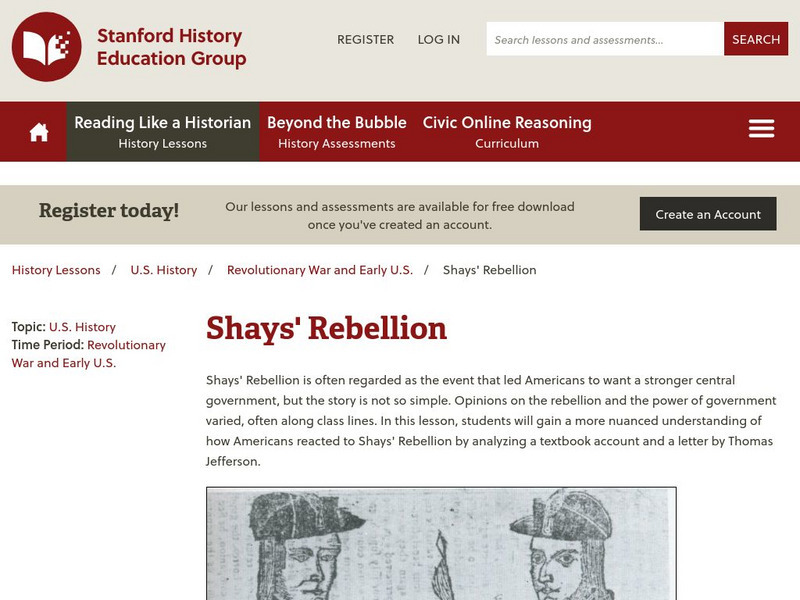
Sheg: Document Based History: Reading Like a Historian: Shays' Rebellion
[Free Registration/Login Required] Students read primary source documents to solve a problem surrounding a historical question. This document-based inquiry lesson allows students to gain a more nuanced understanding of how Americans...
Stanford University
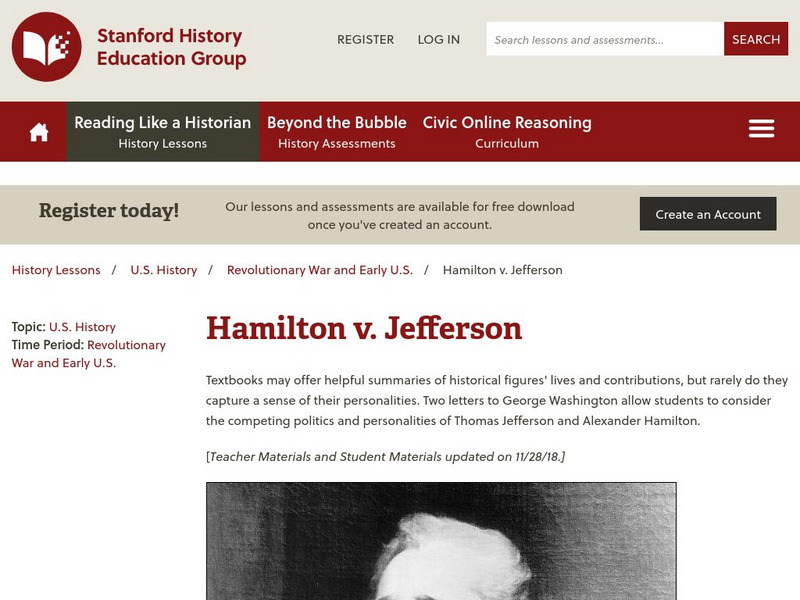
Sheg: Document Based History: Reading Like a Historian: Hamilton v. Jefferson
[Free Registration/Login Required] Students read primary source documents to solve a problem surrounding a historical question. In this inquiry lesson, two letters to George Washington allow students to consider the competing politics...
Stanford University
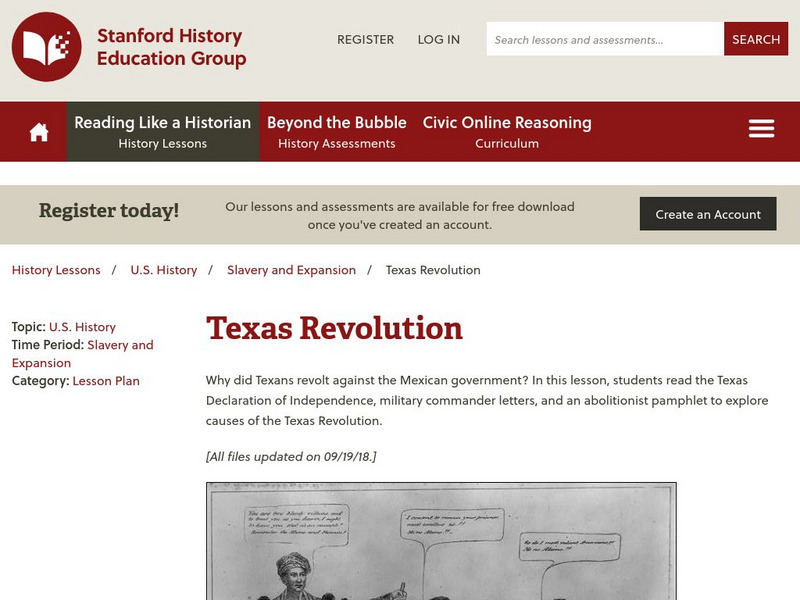
Sheg: Document Based History: Reading Like a Historian: Texas Independence
[Free Registration/Login Required] Learners read primary source documents to solve a problem surrounding a historical question. This document-based inquiry lesson allows students to read parts of the Texas Declaration of Independence,...
Stanford University
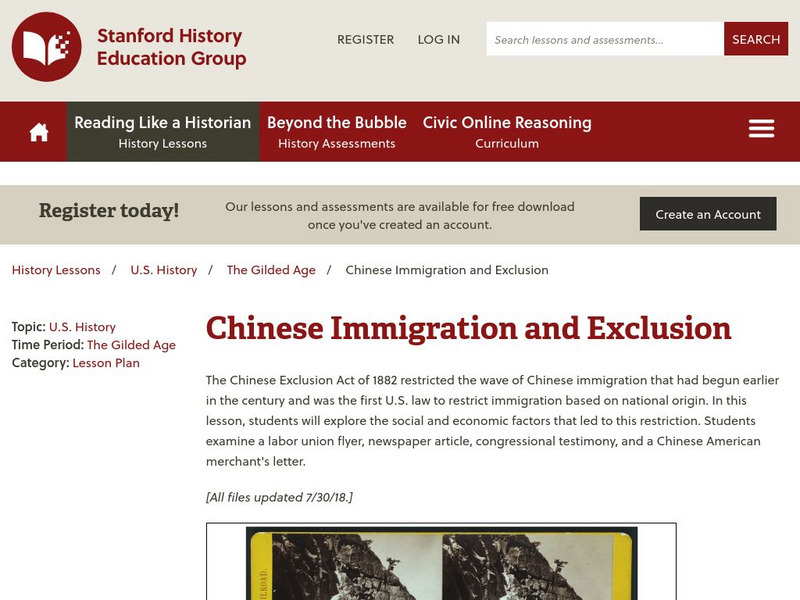
Sheg: Document Based: Reading Like a Historian: Chinese Immigration, Exclusion
[Free Registration/Login Required] Students reading primary source documents to solve a problem surrounding a historical question. This inquiry lesson plan allows students to explore the social and economic factors that fueled the wave...
Stanford University
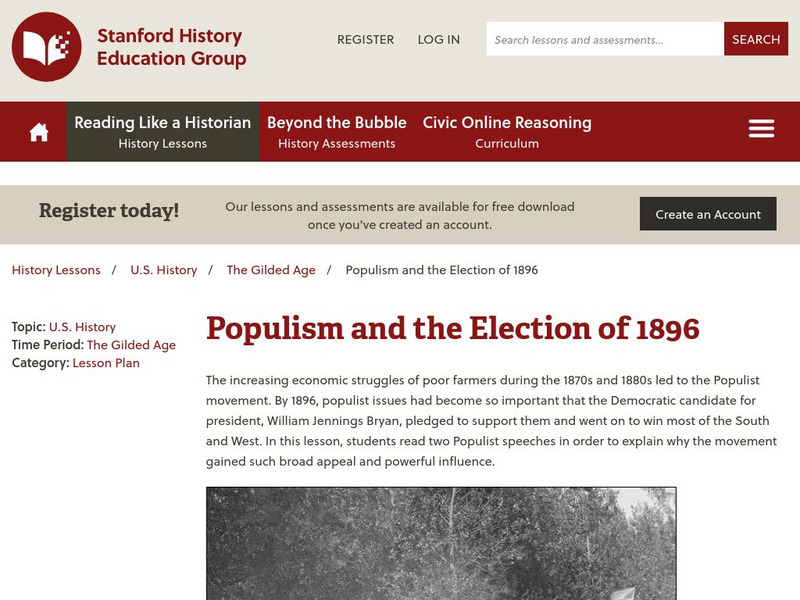
Sheg: Document Based History: Reading Like a Historian: Populism: 1896 Election
[Free Registration/Login Required] Students use primary source documents to solve a problem surrounding a historical question. This document-based inquiry instructional activity allows students to read two Populist speeches in order to...
Stanford University
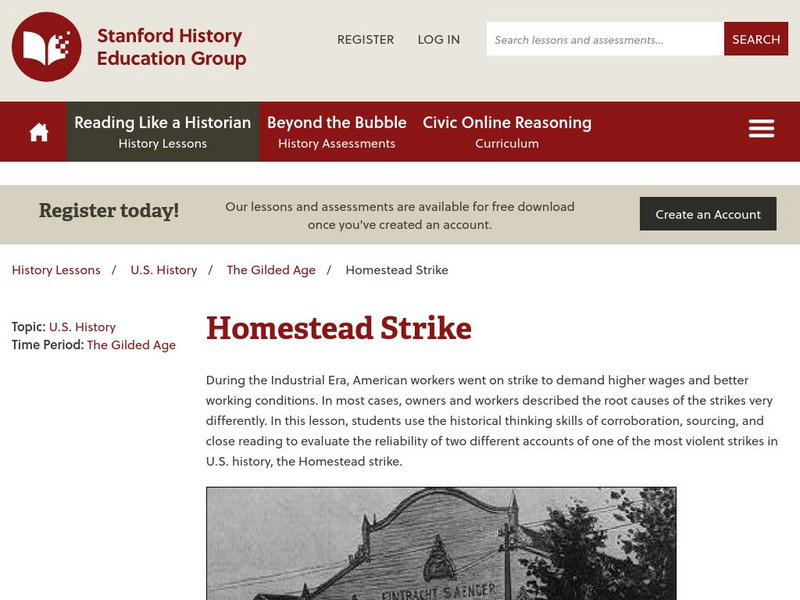
Sheg: Document Based History: Reading Like a Historian: Homestead Strike
[Free Registration/Login Required] Students solve a problem surrounding a historical question by reading primary source documents. This historical inquiry lesson allows students to use the historical thinking skills of corroboration,...
Stanford University
Sheg: Document Based History: Reading Like a Historian: Jacob Riis
[Free Registration/Login Required] Students solve a problem surrounding a historical question by reading primary source documents. This historical inquiry activity allows students to investigate the photographs of 19th-century...
Stanford University
Sheg: Document Based History: Reading Like a Historian: Woman Suffrage
[Free Registration/Login Required] Young scholars read primary source documents to solve a problem surrounding a historical question. This document-based inquiry activity allows students to explore the broad context of the women's...
Stanford University
Sheg: Document Based History: Reading Like a Historian: Soldiers in Philippines
[Free Registration/Login Required] Students read primary source documents to solve a problem surrounding a historical question. This inquiry lesson allows students to use close reading skills to read a variety of primary source...

ReadWriteThink
Read Write Think: Searching for Gold: A Collaborative Inquiry Project
Contains plans for six lessons that ask students to research the Gold Rush before teaching each other about it. In addition to objectives and standards, this instructional plan contains links to sites used in the lessons as well as...

Stanford University
Sheg: Document Based History: Reading Like a Historian: Maine Explosion
[Free Registration/Login Required] Students solve a problem surrounding a historical question by reading primary source documents. When the USS Maine exploded in Havana Harbor, triggering the Spanish-American War, the New York Times and...

TED Talks
Ted: Ted Ed: Who Am I? A Philosophical Inquiry
Throughout the history of mankind, the subject of identity has sent poets to the blank page, philosophers to the agora and seekers to the oracles. These murky waters of abstract thinking are tricky to navigate, so it's probably fitting...

Smithsonian Institution
Smithsonian Learning Lab: The Greatest Show on Earth (Starring Some of the World's Smallest Animals)
Teachers can download this teaching package that discusses insects and insect adaptations. Students will enjoy the hands-on activities described in the lessons. Teachers will appreciate the student handouts provided, as well as the list...
Other
We Are Teachers: What Is Genius Hour and How Can I Try It in My Classroom?
Genius Hour is inquiry-based, student-directed learning. It gives students an opportunity to look at the big wide world around them and explore their own unique interests in a loosely structured, but supported way. This article gives...
Common Sense Media
Common Sense Media: Education: Private and Personal Information (3 5)
As students visit sites that request information about their identity, they learn to adopt a critical inquiry process that empowers them to protect themselves and their families from identity theft. They learn the difference between...

Alabama Learning Exchange
Alex: What's the Matter: Concentration Game
What's the Matter? is a guided inquiry lesson on classification of matter, physical and chemical properties, and physical and chemical changes. There are two parts to this lesson: (a) concentration game for definitions and (b)...

Alabama Learning Exchange
Alex: What Do We Have in Common?
This inquiry activity explores the definitions of quadrilaterals and the properties of the diagonals of quadrilaterals to classify quadrilaterals. Students will work cooperatively to justify conclusions. This lesson plan was created by...
Harvard University
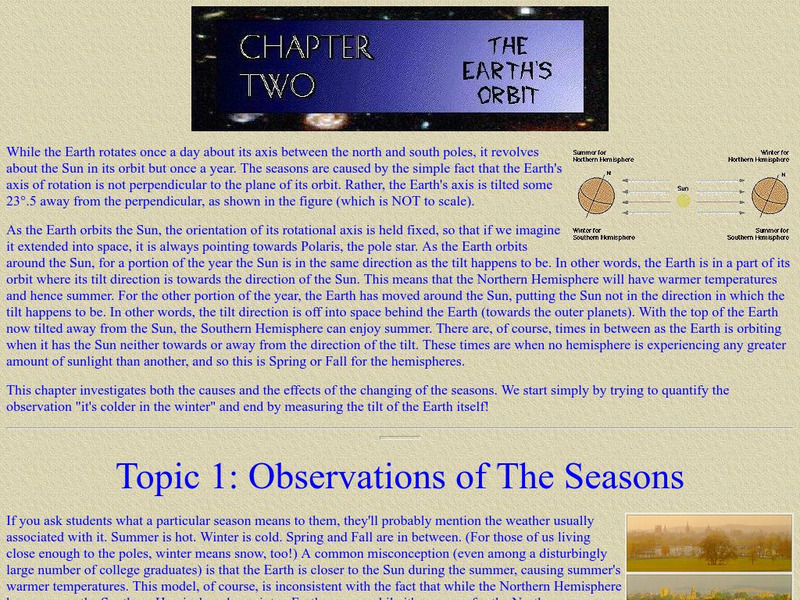
Eyes on the Sky, Feet on the Ground: The Earth's Orbit
Students perform many inquiry activities related to Earth's orbit. Included are recording daily temperatures, observing the sun's path over several weeks, tracking sunrise and sunset times, and angle of sunlight. Diagrams make lessons...

Alabama Learning Exchange
Alex: I'm So Crushed
In this activity, students will have an opportunity to solve a mystery. They will discover why a soda can collapses during a demonstration due to the effects of changes in temperature and atmospheric pressure. Students will gain further...
Science Education Resource Center at Carleton College
Serc: Mn Step: Relative Dating Using "The Block"
This lesson involves an innovative strategy for introducing the concept of relative dating using a block of wood that has been painted, damaged, and nailed. The task for students is to analyze the order in which these events happened and...
Science Education Resource Center at Carleton College
Serc: Foss Lifeboat Investigation
The second of a lesson plan series contains an activity where students choose a lifeboat's variable to investigate, plan an experiment based on the variable they have chosen, and then test the variable. Upon completion of their...

Alabama Learning Exchange
Alex: Quadrilaterals
This is an inquiry lesson plan used to review Algebra 1 objectives by applying them to geometry concepts. Students explore the properties of quadrilaterals and classify them by definition. This lesson plan can be use in geometry classes....
Other popular searches
- Science Inquiry Lessons
- Chemistry Inquiry Lessons
- Math Inquiry Lessons
- Guided Inquiry Lessons
- Inquiry Lessons on Rocks
- Life Science Inquiry Lessons
- Health Inquiry Lessons
- Drug Inquiry Lessons
- Inquiry Lessons on Plants
- Inquiry Lessons English
- Inquiry Lessons Plants
- Genetics Inquiry Lessons