Hi, what do you want to do?





National High Magnetic Field Laboratory
Magnet Academy: Fluorescent Lamp 1934
Compared to incandescent lamps, fluorescent lamps last longer, require less energy and produce less heat, advantages resulting from the different way in which they generate light.
Science and Mathematics Initiative for Learning Enhancement (SMILE)
Smile: Electrostatics
From the Science and Mathematics Initiative for Learning Enhancement project at the Illinois Institute of Technology. A teacher lesson plan which includes several Van de Graaff generator demonstrations and some station-style labs....

PBS
Pbs Teachers: Hybrid Automobiles
Examine a car engine illustration to discover the relationship between a motor and a generator. List the pros and cons of hybrid cars, and create a poster on series hybrid cars, parallel hybrid cars or how hybrid cars are different from...
Science4Fun
Science4 Fun: Wind Energy
What is wind energy? Learn how to use wind energy to generate power, how winds are formed, how it generates electricity, how a wind turbine works, and the advantages and disadvantages of wind energy.
Science Buddies
Science Buddies: Leaky Clues to Dam Design: How Reservoir Height Affects Hydroel
It's hard to believe that the same water that you use every day to quench your thirst, cook with, bathe in, swim in, and wash your clothes and dishes, is capable of another trick-it can make electricity. Electricity can be generated...
TeachEngineering
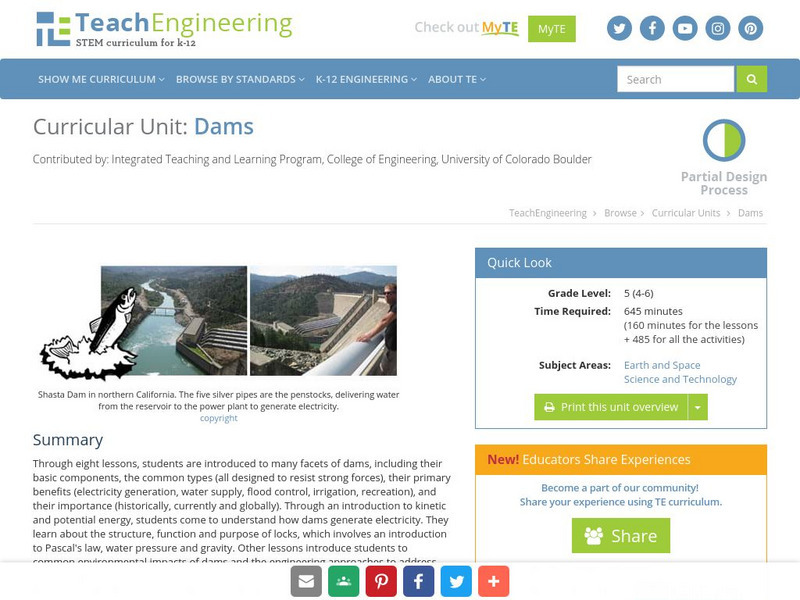
Teach Engineering: Dams
Through eight lessons, students are introduced to many facets of dams, including their basic components, the common types (all designed to resist strong forces), their primary benefits (electricity generation, water supply, flood...

PBS
Pbs: Rough Science
Website companion to PBS show, "Rough Science," in which five scientists use their collective expertise to complete a series of tasks. Follow the scientists as they do things like generate electricity, make soap, make antibacterial...
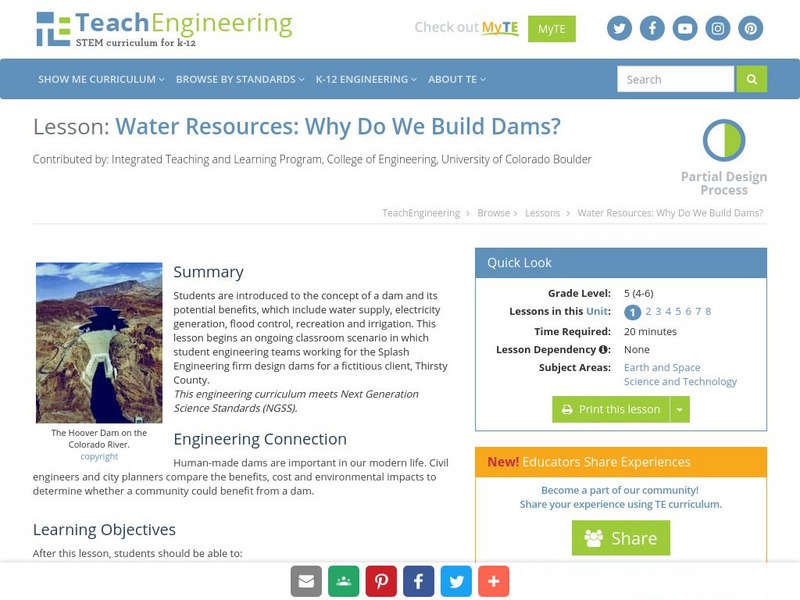
TeachEngineering
Teach Engineering: Why Do We Build Dams?
Students are introduced to the concept of a dam and its potential benefits, which include water supply, electricity generation, flood control, recreation and irrigation. This lesson begins an ongoing classroom scenario in which student...
Technovation
Curiosity Machine: Challenges: Build a Hydroelectric Waterwheel
Can you generate electricity from the flow of water by designing a waterwheel? In this challenge, students will be using everyday objects to create their waterwheel. This site contains a lesson plan, tips, and a place for students to...
Science Buddies
Science Buddies: Solar Speedway
Solar power is hot these days. Gleaming, black solar panels soak up rays on more and more rooftops of homes and businesses providing a clean, alternative source of heat and electricity. You might guess that different times of the day...

National High Magnetic Field Laboratory
Magnet Academy: Electromagnetic Induction
In 1831, Michael Faraday carried out numerous experiments to prove that electricity could be generated from magnetism. He not only demonstrated electromagnetic induction, but also developed a good conception of the processes involved....
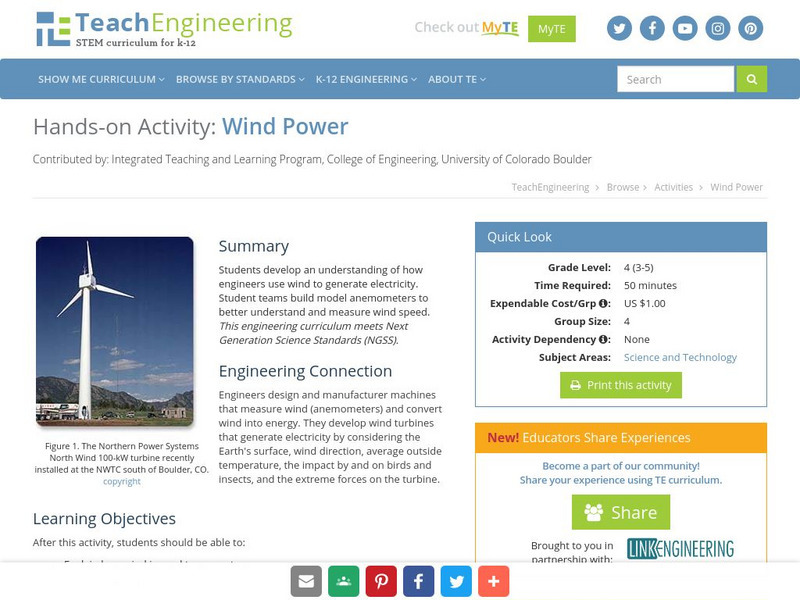
TeachEngineering
Teach Engineering: Wind Power
In this activity, students develop an understanding of how engineers use wind to generate electricity. They will build a model anemometer to better understand and measure wind speed.
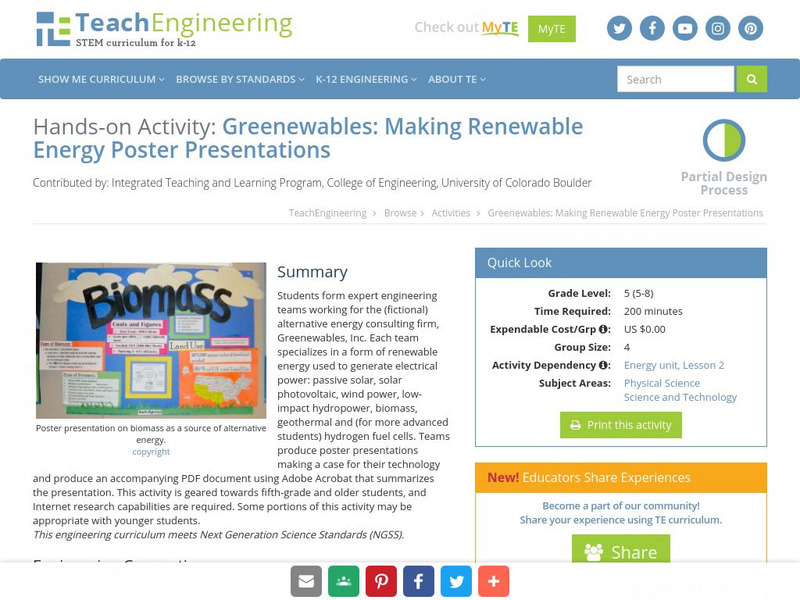
TeachEngineering
Teach Engineering: Greenewables
Students form expert engineering teams working for the (fictional) alternative energy consulting firm, Greenewables, Inc. Each team specializes in a form of renewable energy used to generate electrical power: passive solar, solar...
Science4Fun
Science4 Fun: Hydropower
What is hydropower? Discover how electricity is generated from hydropower, three methods of generating electricity, and the advantages and disadvantages.
Science4Fun
Science4 Fun: Tidal Energy
What is tidal energy? Learn about using tides to generate power, methods of generating electricity, and the advantages and disadvantages of tidal energy.
Energy for Sustainable Development
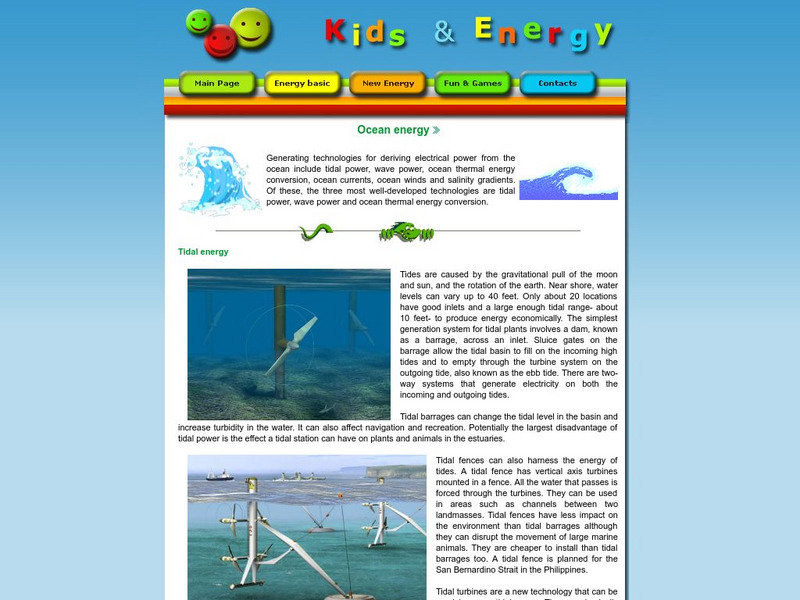
Kids and Energy: Ocean Energy
Generating technologies for deriving electrical power from the ocean include tidal power, wave power, ocean thermal energy conversion, ocean currents, ocean winds and salinity gradients. Of these, the three most well-developed...
Other
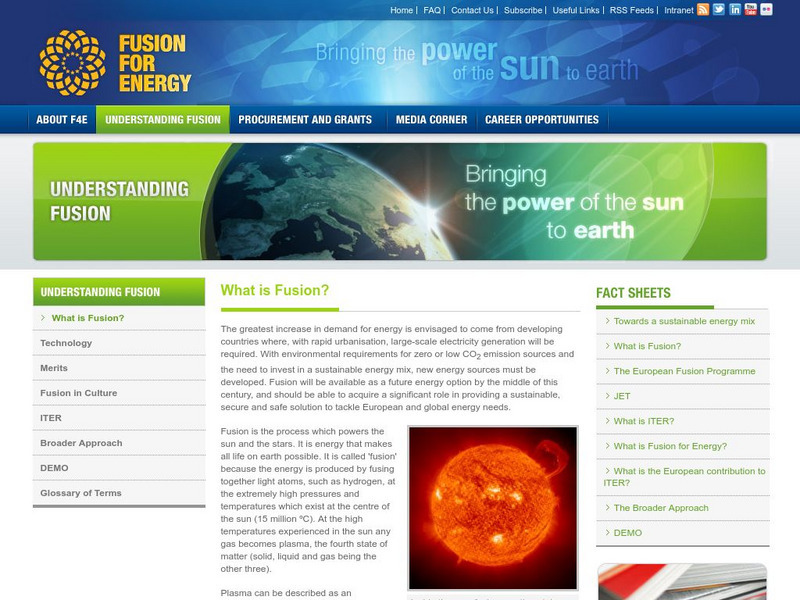
Fusion for Energy: What Is Fusion
The greatest increase in demand for energy is envisaged to come from developing countries where, with rapid urbanization, large-scale electricity generation will be required. With environmental requirements for zero or low CO2 emission...
Science4Fun
Science4 Fun: Solar Energy
What is solar energy? Learn about solar heating, solar electricity generation, and the advantages and disadvantages of solar power.
Sophia Learning
Sophia: Energy Forms: Lesson 2
This lesson will explain the advantages and disadvantages of generating electricity from various forms of energy. It is 2 of 4 in the series titled "Energy Forms."
Sophia Learning
Sophia: Energy Forms: Lesson 3
This lesson will explain the advantages and disadvantages of generating electricity from various forms of energy. It is 3 of 4 in the series titled "Energy Forms."
Sophia Learning
Sophia: Energy Forms: Lesson 4
This lesson will explain the advantages and disadvantages of generating electricity from various forms of energy. It is 4 of 4 in the series titled "Energy Forms."
Sophia Learning
Sophia: Energy Forms: Lesson 1
This lesson will explain the advantages and disadvantages of generating electricity from various forms of energy. It is 1 of 4 in the series titled "Energy Forms."
Curated OER
Wikipedia: Natl Historic Landmarks in Ny: Adams Power Plant Transformer House
Transformer house of the first large-scale, alternating current electric generating plant in the world; tapped power of Niagara Falls via a 7,500 foot (2,286 m) tail-race tunnel.