Hi, what do you want to do?






Out-of-School Time Resource Center
Nutrition and Physical Activity
Emerging nutritionists explore what it means to be healthy. In the beginning of the unit, your class will examine the five food groups and learn how food gets from the farm to our plates. This leads into the investigation of...

Curated OER
An Introduction to Nutrition
Whether you need a new textbook for your health class, or a few exercises and passages for your lesson on nutrition, you'll find what you need with a thorough nutritional science resource. With 15 chapters that cover elements of...

Calvin Crest Outdoor School
Survival
Equip young campers with important survival knowledge with a set of engaging lessons. Teammates work together to complete three outdoor activities, which include building a shelter, starting a campfire, and finding directions in the...

Curated OER
Our Systematic Body
Students explore several parts of the body system in the eight lessons of this unit. Through several hands-on activities, the skeletal, muscular, digestive, circulatory and nervous systems are observed.

Curated OER
It's All About Me!
Students study the five major body system in this unit. They examine how to keep themselves healthy.
CK-12 Foundation
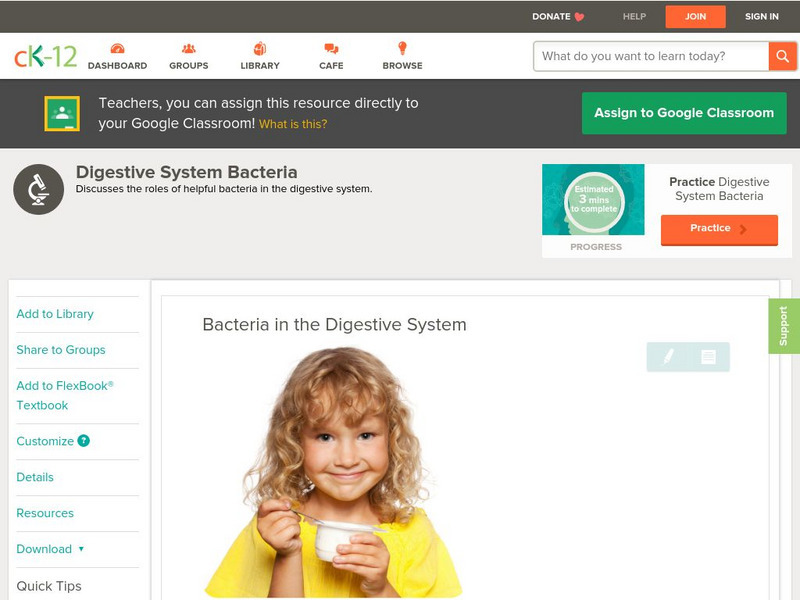
Ck 12: Life Science: Bacteria in the Digestive System
[Free Registration/Login may be required to access all resource tools.] Yogurt is a good source of calcium. Yogurt also contains active cultures of "good" bacteria. Foods that contain these beneficial bacteria are sometimes called...
CK-12 Foundation
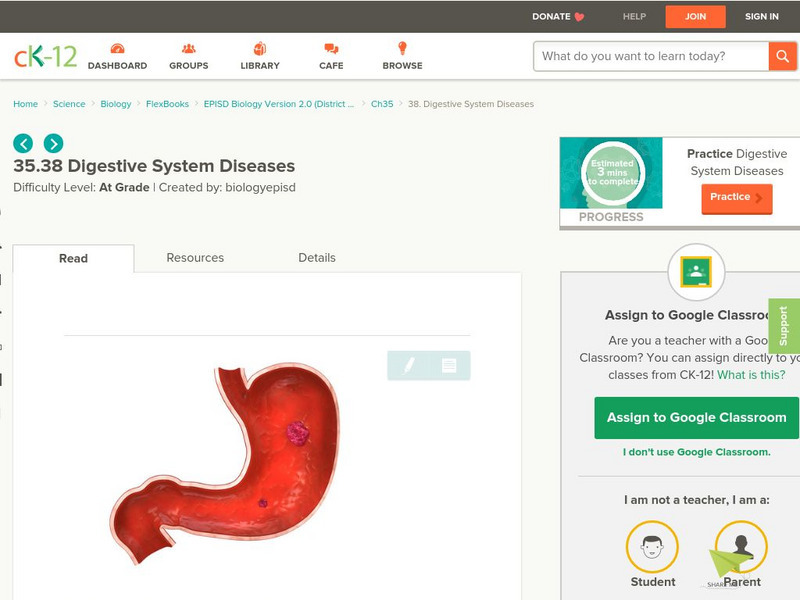
Ck 12: Digestive System Diseases
[Free Registration/Login may be required to access all resource tools.] You've probably had an upset stomach. Most likely it was due to something you ate. But imagine bleeding from your stomach. That's a little different than your...
CK-12 Foundation
Ck 12: Life Science: Human Digestive System
[Free Registration/Login may be required to access all resource tools.] Nutrients in the foods you eat are needed by the cells of your body. How do the nutrients in foods get to your body cells? What organs and processes break down the...
Curated OER
Kids Health: Digestive System
A video [5 mins. 9 secs.], brief quiz, engaging activity, and more helping students understand how the digestive system handles the foods we put into our mouths.
CK-12 Foundation
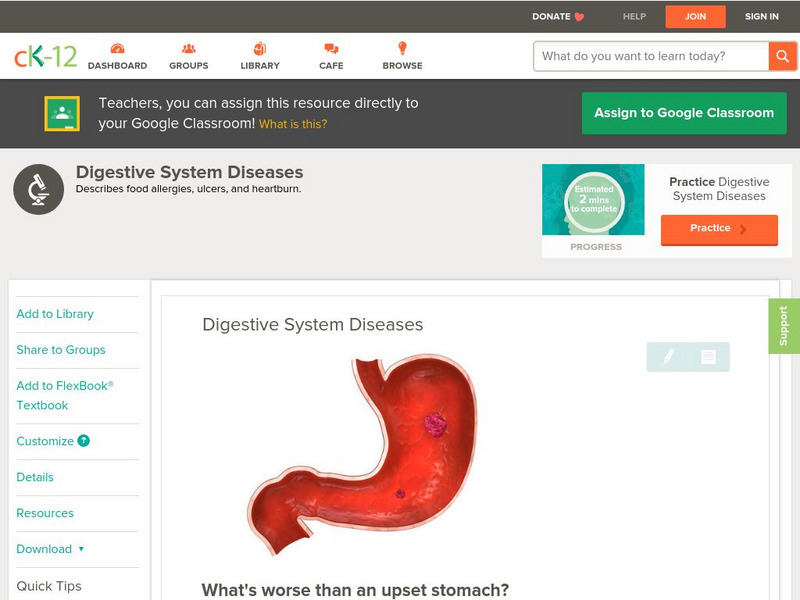
Ck 12: Biology: Digestive System Diseases
[Free Registration/Login may be required to access all resource tools.] Describes common diseases of the digestive system.
Georgia Department of Education
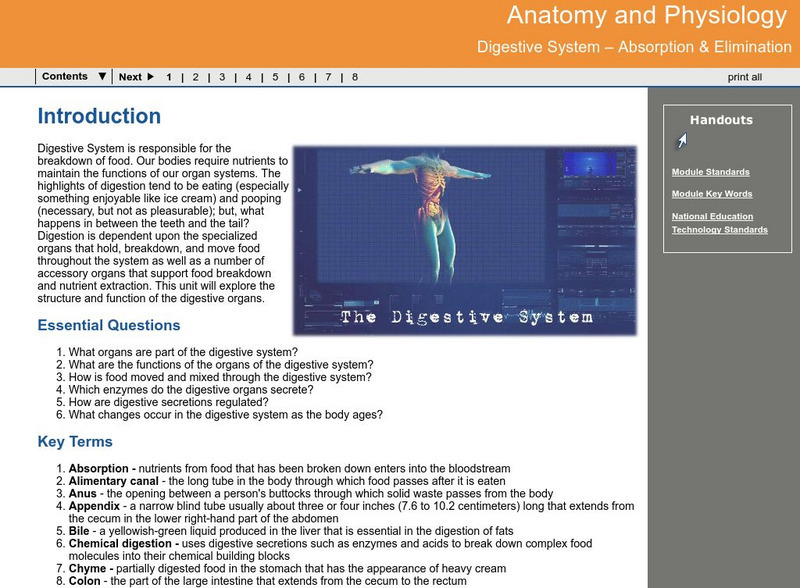
Ga Virtual Learning: Anatomy & Physiology: Digestion Sys Absorption, Elimination
Through informational text with printable notes, interactive assignments, and video clips, students discover the structure and function of the human digestive system.
Sophia Learning
Sophia: Animals: Human Digestive System
An overview of the structure and function of the human digestive system.

OpenStax
Open Stax: Exercise, Nutrition, Hormones, and Bone Tissue
All of the organ systems of your body are interdependent, and the skeletal system is no exception. The food you take in via your digestive system and the hormones secreted by your endocrine system affect your bones. Even using your...

TED Talks
Ted: Ted Ed: How Your Digestive System Works
Emma Bryce traces food's nine-meter-long, 40-hour journey through the remarkable digestive tract.
OpenStax
Open Stax: Anatomy & Physiology: The Small and Large Intestines
With this module, students will be able to identify three main adaptations of the small intestine's wall that increase its absorptive capacity. Students will also trace the pathway of food waste from its point of entry into the large...

TED Talks
Ted: Ted Ed: How the Food You Eat Affects Your Gut
The bacteria in our guts can break down food the body can't digest, produce important nutrients, regulate the immune system, and protect against harmful germs. Shilpa Ravella shares the best foods for a healthy gut.
BBC
Bbc: Gcse Bitesize: Animal Organization Digestion
The major nutrients required for a healthy diet are carbohydrates, proteins, and lipids. The digestive system breaks down large molecules of food, which are then absorbed into the bloodstream. After reading, try the quiz.