Hi, what do you want to do?






Museum of Science
Skyscraper Engineering
The sky's the limit when learning about engineering. Future engineers conduct an activity to learn about forces associated with skyscrapers. They design and build a model of a skyscraper from basic household materials, then test their...

Museum of Science
Gravity Sewer
It's all downhill from here. Scholars model a sewer system using straws and other household materials. They test out their systems using colored water and discover how gravity plays an essential role in sewers.

Museum of Science
Make a Map
It's important to know the final destination. Scholars first measure distances in a region of interest using a standard measuring device or by counting steps. They then use an appropriate scale and graph paper to create a map of the...

Museum of Science
Terrarium
Make a premium terrarium. Learners create a miniature terrarium to study ecosystems. They use a clear container, along with rocks, soil, moss, leaves, woodland plants, earthworms, and bugs to construct their terrariums.

Museum of Science
Gum Chemistry
Gum be gone! Scholars conduct an experiment to find the best substance that would help remove gum from the bottom of a shoe. They test peanut butter, petroleum jelly, olive oil, vinegar, and rubbing alcohol in their experiments.

Museum of Science
City Circuit
Here's an electric lesson on electricity. Pupils create an electric circuit to model a city's electric system. They then test out different materials to see whether they are conductors of electricity.

Museum of Science
Sound Design
Hear about a great resource on sound? An interesting hands-on activity has learners construct a device that will soundproof a phone or speaker. They test out different materials to see which ones best absorb sound waves.

Museum of Science
Balloon Racers
Watch those balloon cars go! Scholars build racers that run using the power of balloons and conduct races with the cars. They learn about Newton's third law of motion and how it applies to their balloon racers.

Howard Hughes Medical Institute
Winogradsky Columns: Microbial Ecology in the Classroom
Winogradsky columns are ideal for observing the role of bacteria and other microorganisms in an ecosystem. This student activity guide is complete with data tables for observations and analysis questions for processing what was observed....

Other
Dana Sourcebook of Brain Science: It's Mindboggling!
Look through this online pamphlet to find brain exercises as well as explanations of how the brain works. Very complete and fun to read.
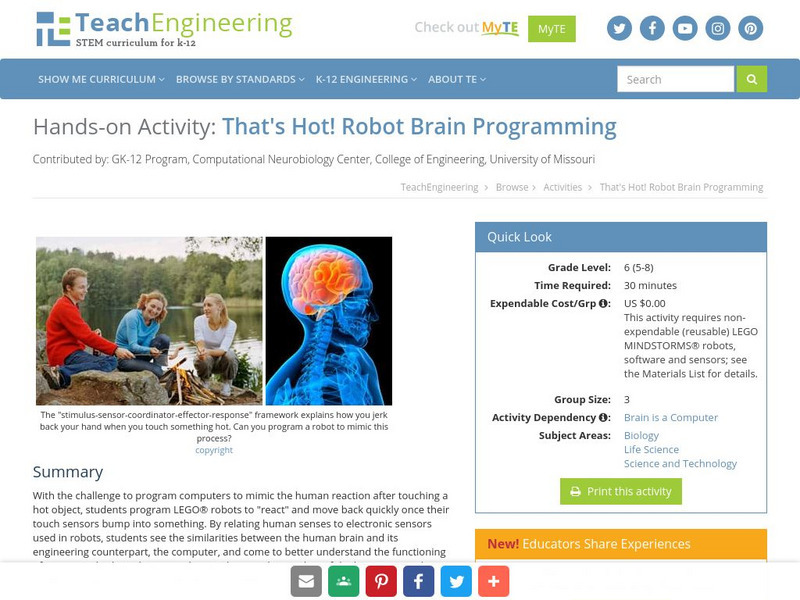
TeachEngineering
Teach Engineering: That's Hot! Robot Brain Programming
With the challenge to program computers to mimic the human reaction after touching a hot object, students program LEGO robots to "react" and move back quickly once their touch sensors bump into something. By relating human senses to...

Louisiana Department of Education
Louisiana Doe: Curriculum Hub: Ela Guidebooks: Application: Teenage Brain: Prepare for a Class Discussion
Review the academic conversation reference guide, the conversation stems, the class discussion norms, and the discussion question.
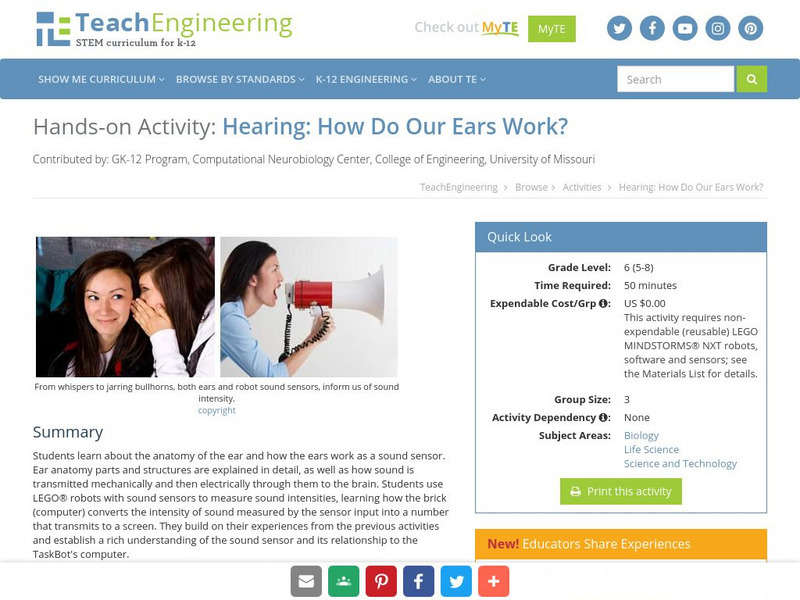
TeachEngineering
Teach Engineering: Hearing: How Do Our Ears Work?
Students learn about the anatomy of the ear and how the ears work as a sound sensor. Ear anatomy parts and structures are explained in detail, as well as how sound is transmitted mechanically and then electrically through them to the...
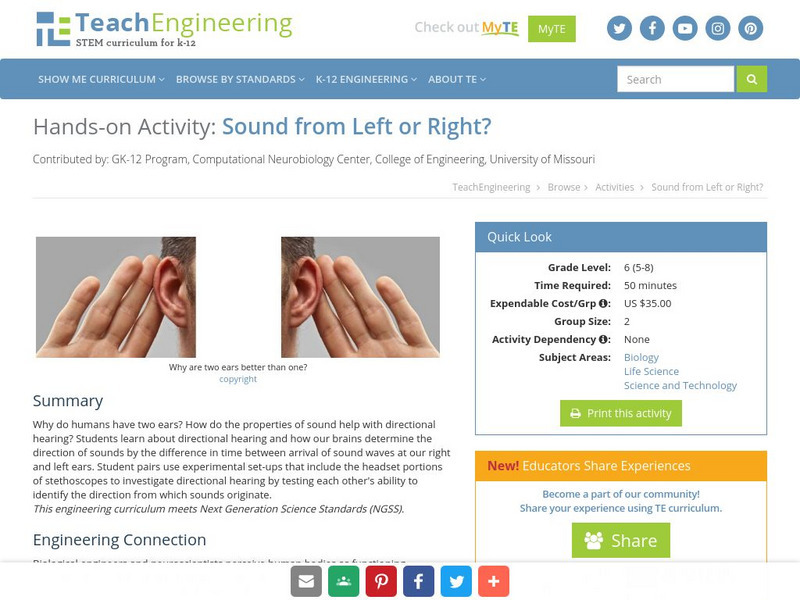
TeachEngineering
Teach Engineering: Sound From Left or Right?
Why do humans have two ears? How do the properties of sound help with directional hearing? Students learn about directional hearing and how our brains determine the direction of sounds by the difference in time between arrival of sound...
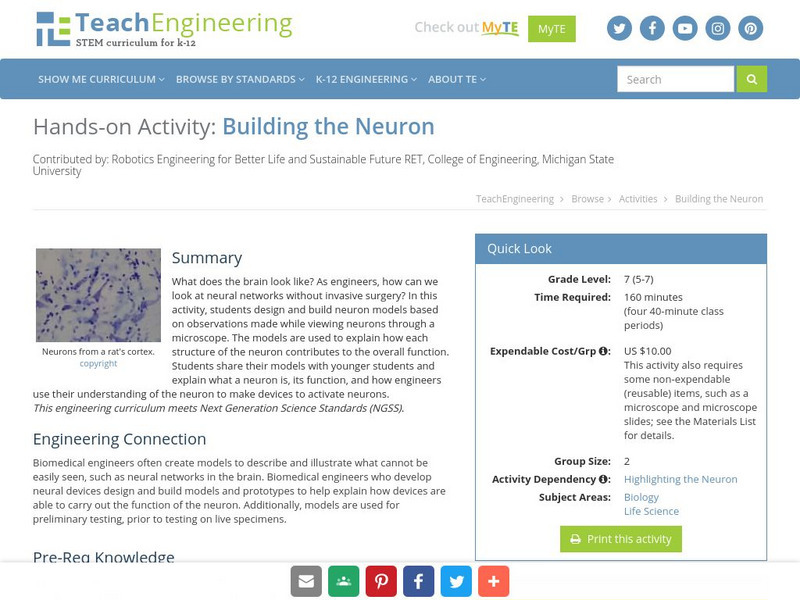
TeachEngineering
Teach Engineering: Building the Neuron
In this activity, students design and build neuron models based on observations made while viewing neurons through a microscope.
TeachEngineering
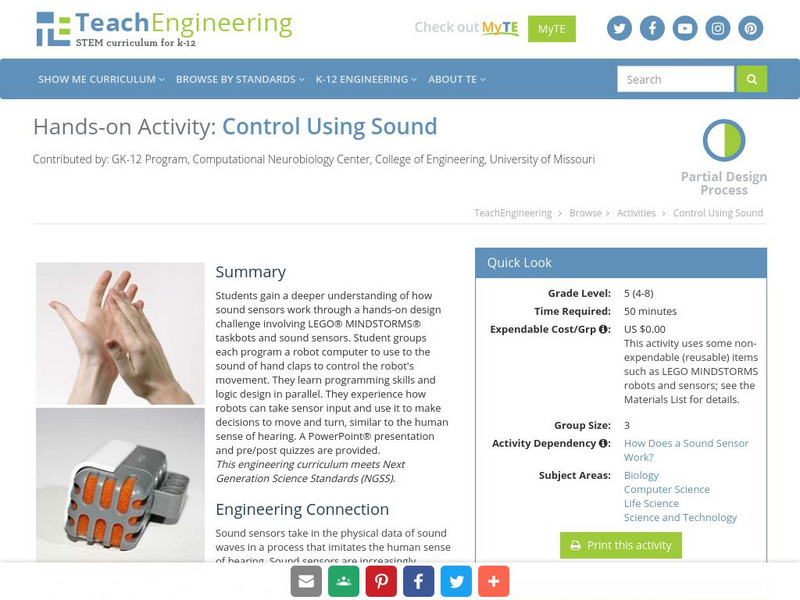
Teach Engineering: Control Using Sound
Students gain a deeper understanding of how sound sensors work through a hands-on design challenge involving LEGO MINDSTORMS NXT taskbots and sound sensors.
TeachEngineering
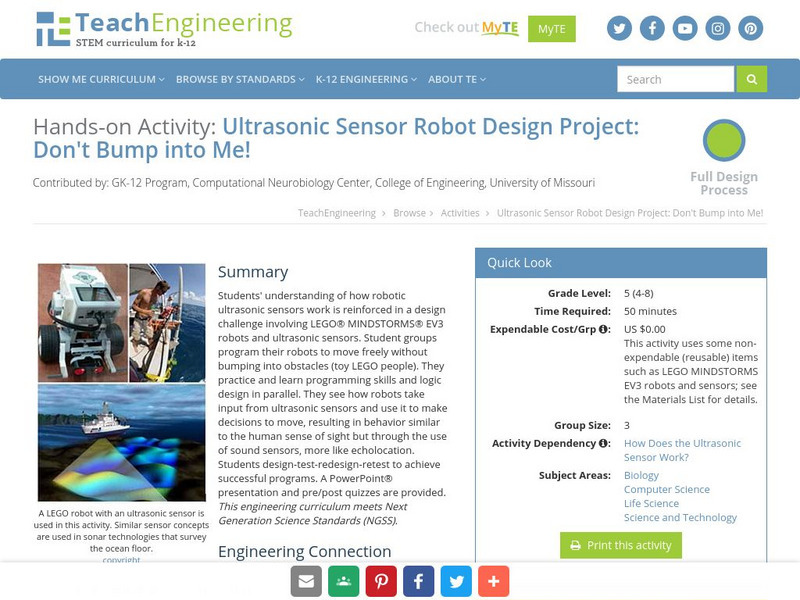
Teach Engineering: Don't Bump Into Me!
Students' understanding of how robotic ultrasonic sensors work is reinforced in a design challenge involving LEGO MINDSTORMS NXT robots and ultrasonic sensors.
TeachEngineering
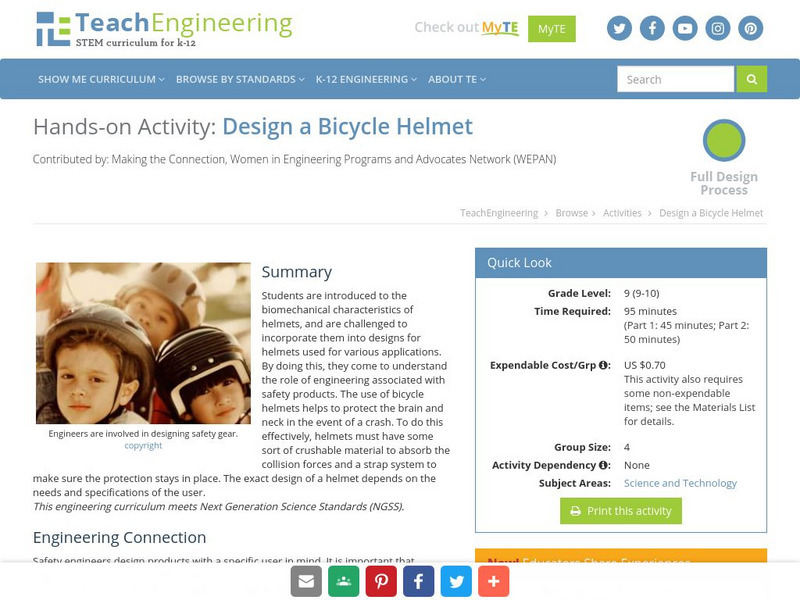
Teach Engineering: Design a Bicycle Helmet
The goal of the activities is for students to understand the basics of engineering associated with safety products. Using a bicycle helmet helps to protect the brain and neck during a crash. In order to do this effectively, helmets must...