Hi, what do you want to do?






Curated OER
Stunning Jellyfish
Thimble jellyfish are no bigger than a human thumbnail. These interesting creatures are 95% water! Learn more awesome facts in this great video clip.

Nature League
What Are Invertebrates? - Lesson Plan
Insects, and other invertebrates outnumber vertebrates—segmented-legs down! The first in a five-part series of videos from an Invertebrates series introduces these organisms in all their spineless glory. Each invertebrate phyla takes the...

Deep Look
Why Jellyfish Float Like a Butterfly—And Sting Like a Bee
Jellyfish predate dinosaurs by 400 million years. The video explains how jellyfish without a heart, blood, or a brain have survived longer than most other species. It details two of their tricks for adapting and finding prey as their...

MinuteEarth
Do We Have to Get Old and Die?
They say nothing in life is guaranteed except death and taxes. But, are taxes the only one sure thing? Pupils ponder the possibility of eternal life with the ageless examples of the mole rat and jellyfish. The narrator discusses why our...

Be Smart
I Don't Think You're Ready for These Jellies
If a jellyfish is cut into two parts, each part can regenerate, creating two new organisms.This phenomenon and other interesting facts about jellyfish are explored in the Monterey Bay aquarium's exhibit on jellies and talks with the...

SciShow
The Most Venomous Animals in the World
The king cobra has enough venom to bring down an adult elephant. Video begins with a brief explanation of what venom is before exploring the most venomous animal in the world. It continues with examples of many venomous animals, how they...

SciShow
Hydras: Our Immortal, Tentacled Friends
What type of animal is essentially immortal? The video describes the distinctive capabilities of the hydra. It doesn't follow the typical life cycle pattern of most living creatures, and these unique features make the hydra basically...

SciShow
Four Creatures That Glow
Have you ever wanted to glow? The reasons creatures glow change based on their situation and biology. The video lesson discusses mating rituals, defense, and reasons we don't understand yet. It also explains how creatures glow and...

SciShow
How to Live Forever? Be a Jellyfish
The turritopsis dohrnii, or immortal jellyfish, are tiny, with adults measuring only 0.18 inches tall and wide. The narrator of this short video explores the immortal jellyfish and the importance of their unique and amazing lives. These...

SciShow
Synthetic Jellyfish
If you take silicone and apply muscle cells from a rat's heart, can you make a jellyfish? Turns out, the answer is mostly yes. The video is a perfect introduction to tissue engineering and the major benefits people can get from this...

Crash Course
Simple Animals: Sponges, Jellies, and Octopuses
A video focusing on the evolutionary history of simple animals reveals some amazing facts. Did you know that some deep-water sponges can live to be more than 200 years old? The narrator of the film explains what simple animals...

TED-Ed
How Does a Jellyfish Sting?
Jellyfish are not aggressive creatures. They simply use their stinging cells as a defense mechanism. Some animals have developed adaptations that prevent them from being affected by a jellyfish's sting. Watch to find out the science...

California Academy of Science
Jellies at the Academy
Jellyfish are captivating creatures. A biologist shares her life with the jellies as she feeds, raises, and studies them every day. This would be a pertinent video when you are teaching marine biologists about reproduction, defensive...

PBS
Pbs: Nature: Open Ocean Jellies
Learn about ocean health and the growth of jellyfish populations in a sea turtle documentary from the PBS, Nature series, in this video podcast. [1:55]
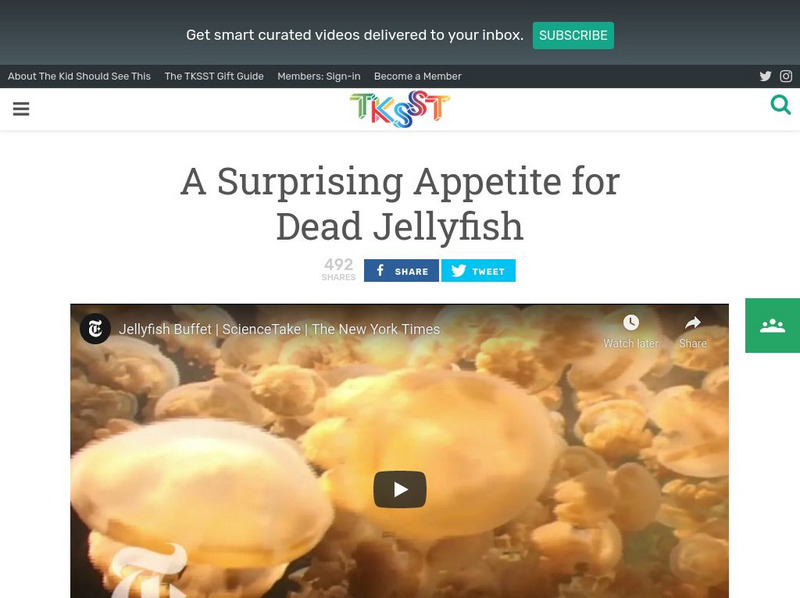
The Kid Should See This
Tksst: Science Take: A Surprising Appetite for Dead Jellyfish
Based on recent marine studies, learn how scientists have been rethinking of the jellyfish's position in the food web. [1:34]
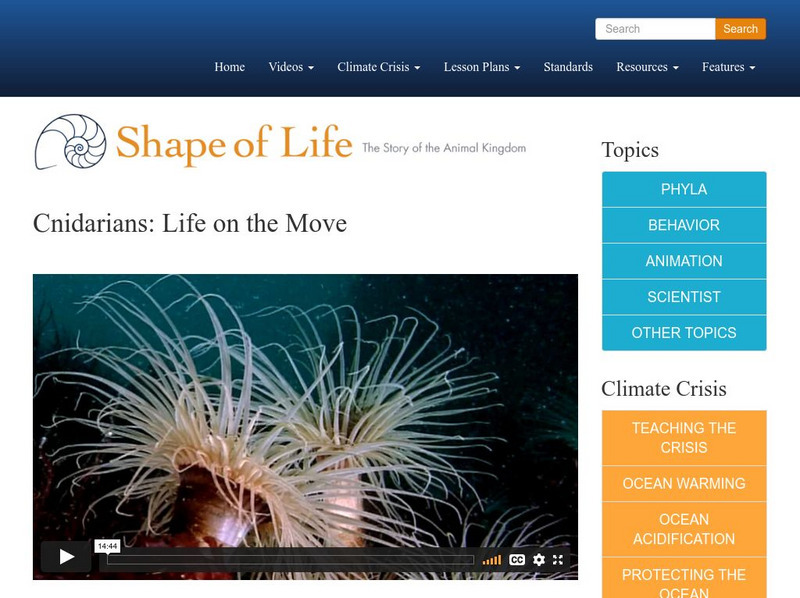
Sea Studios Foundation
Shape of Life: Cnidarians: Life on the Move
Did you know that Cnidarians were the first animals to have muscles and nerves to produce behavior? They were also the first to have a mouth and stomach to digest food. This animiation will help you learn about nematocysts when we watch...
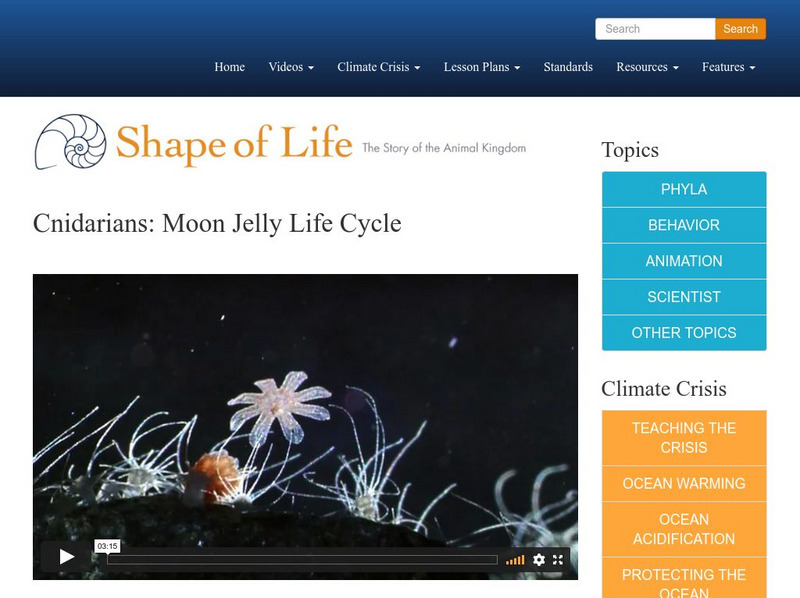
Sea Studios Foundation
Shape of Life: Cnidarians: Moon Jelly Life Cycle
A video documenting the jellyfish's life cycle. Moon jelly polyps divide off tiny juvenile jellyfish called ephyra. The juveniles will grow into adults that will spawn. The offspring will settle to the bottom and grow into tiny polyps....
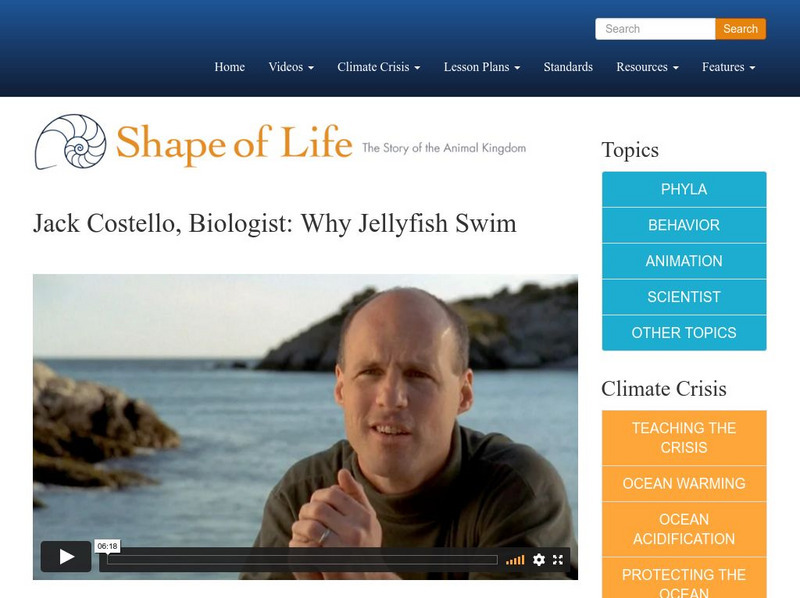
Sea Studios Foundation
Shape of Life: Jack Costello, Biologist: Why Jellyfish Swim
Jack Costello studies how jellyfish move and feed. He dives to videotape moon jellies swimming and observes that they don't really move much. With this in mind, he seeks to answer the question: why do jellyfish spend their time swimming?...

Other
Fast Focus on the Environment: Jellies
Site showcases a video (Windows Media Player required) on Monterey Bay Aquarium's newest exhibit 'Jellies: Living Art.' This temporary exhibit was designed to bring artistic creation into the underwater realm, and enhance the way people...
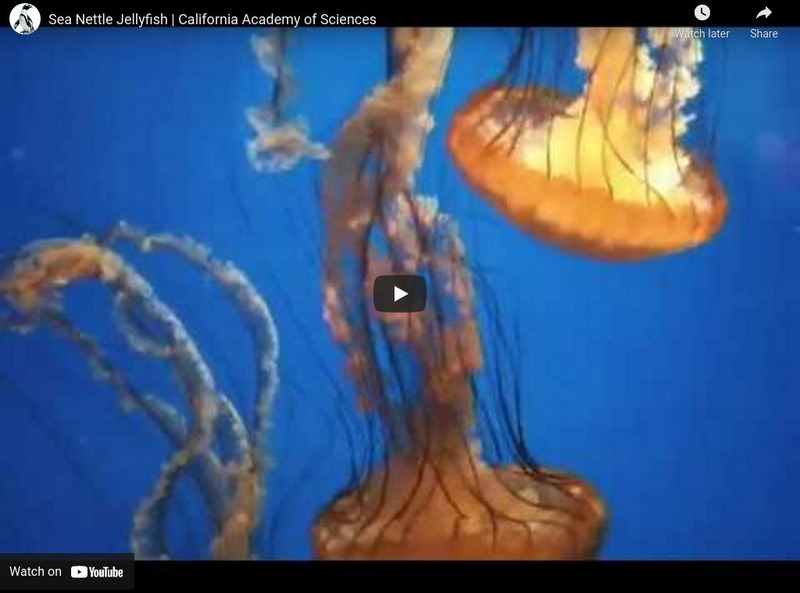
California Academy of Sciences
Ca Academy of Sciences: Sea Nettle Jellyfish
Sea nettle jellyfish (Chrysaora fuscescens) are common along the Pacific coast in fall and winter. They sometimes congregate in huge swarms. Here's a glimpse at our sea nettle tank in the Steinhart Aquarium at the Academy. [0:59]