Hi, what do you want to do?






American Museum of Natural History
What is Marine Biology?
A marine environment covers the majority of the earth but is arguably the least understood. Teach young scientists about the characteristics of oceans and ocean species using an interactive online lesson. The in-person or remote learning...

American Museum of Natural History
What's This? Sensing
There is a scallop that relies on sight so much that it actually has more than 100 eyes! There are many species that rely heavily on one sense or another. An online interactive resource has youth read about several of these animals. The...

American Museum of Natural History
Earthquakes Tremors From Below
Earthquakes are really no one's fault. A thorough lesson explains the different types of earthquakes how they happen. Learners interact with the online lesson to simulate earthquakes and examine their results. The lesson is appropriate...

Independence Hall Association
American History: From Pre-Columbian to the New Millennium
Need an online resource to supplement the paper textbook in your classroom? An all-encompassing website covers historical events throughout the last half of the second millenium, leading right up to the third. From the pre-Columbian...

PBS
Pbs Learning Media: What Is a Wave?
This interactive activity adapted from the University of Utah's ASPIRE Lab provides an overview of the characteristics and properties of various types of waves, including light waves, sound waves, and water waves.
PBS
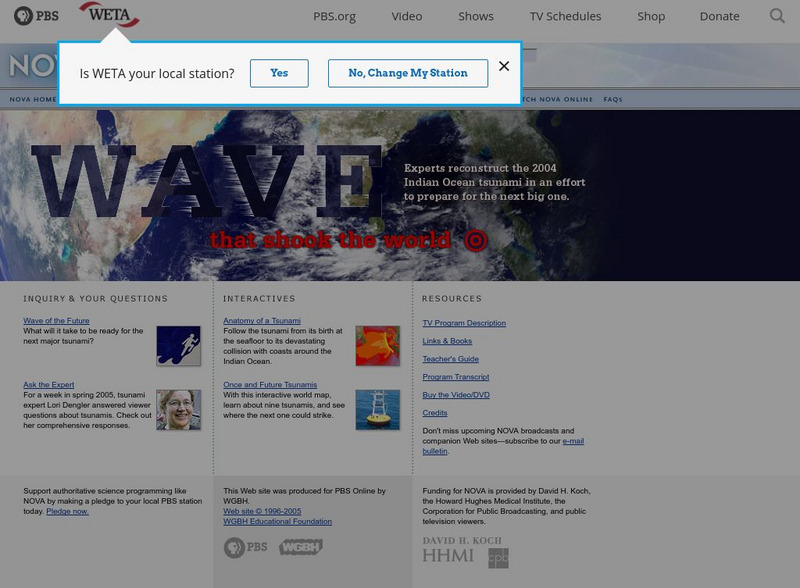
Wave That Shook the World
This resource focuses on the December 26th Indian Ocean tsunami. It explains the anatomy of the Indian Ocean tsunami, as well as what is being done to prepare for future tsunamis. In addition, it shows potential hot spots for future...
Other
Abc News: Talking to Kids About the Tsunami Tragedy
How can you begin to talk to your kids about the Tsunami tragedy? This site offers insight on how to deal with this difficult topic.
Other
K 3 Learning Pages: Tsunami Disaster
This site features several links to tsunami relief sites. Students and teachers can access information about the tsunami relief efforts through these resources.
PBS
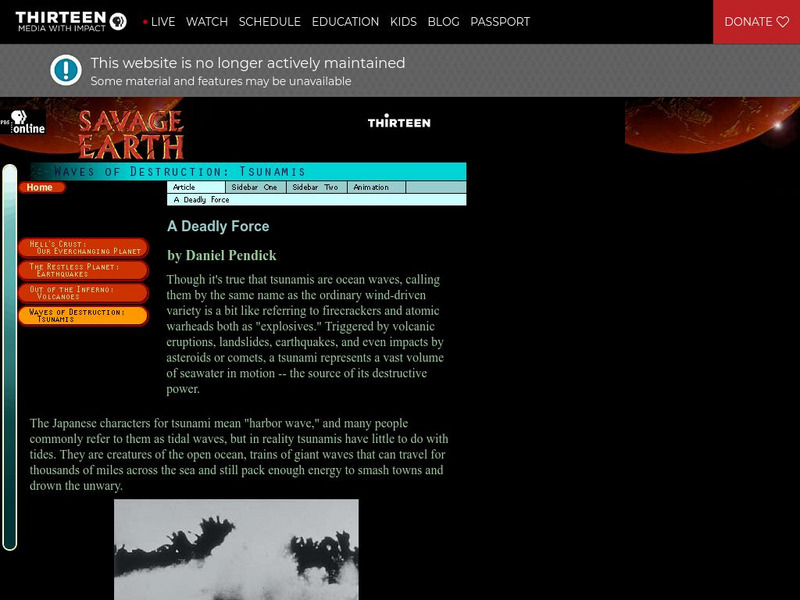
Wnet: Thirteen: Savage Earth: Tsunamis
Excellent site exploring the mysterious and destructive tsunamis. Explore this scientific marvel and learn about the causes and dangers.
California Institute of Technology
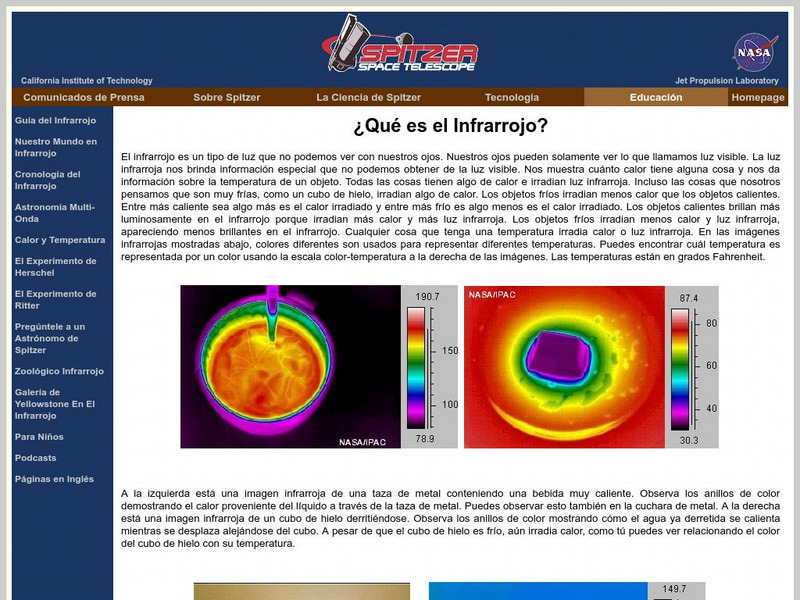
Spitzer Science Center: Que Es El Infrarrojo?
An excellent resource for Spanish speaking science students. Provides a thorough description of infrared light, what it does and how it is used. Provides excellent pictures depicting actual use.
NASA
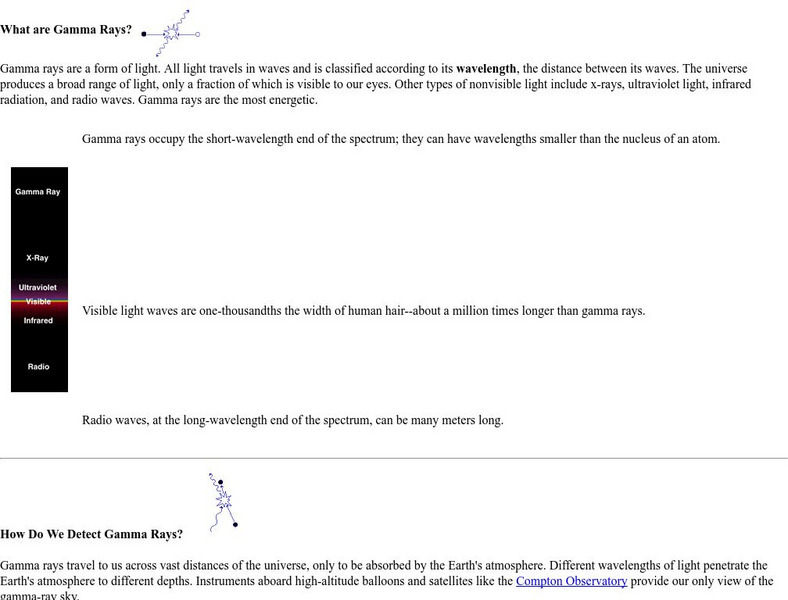
Viewing the Violent Universe: What Are Gamma Rays?
The universe produces a broad range of light, only a fraction of which is visible to our eyes. Gamma rays are nonvisible light, which also includes x-rays, ultraviolet light, infrared radiation, and radio waves.
Columbia University
Scientific Background on the Indian Ocean Earthquake and Tsunami
This site features information and related links that can be used by students and scientists to understand the events that led to the December 2004 Indian Ocean tsunami.
Other
Arm Program's Education Center: Global Warming
An all purpose site with something for everyone. Learn about global warming and climate change, ask a scientist, take a quiz, or get a lesson plan!
Ducksters
Ducksters: Physics for Kids: Basics of Sound
Kids learn the basics of the science of sound, the speed of sound, and volume. What is sound and how does it move? It is a wave made from the vibration of molecules.
Ducksters
Ducksters: Physics for Kids: Light
Kids learn about the science of light. Energy made of waves and particles called photons traveling at the top speed in the universe. What is refraction? The difference between transparent, translucent, and opaque.
Other
Geo Model: Ground Penetrating Radar
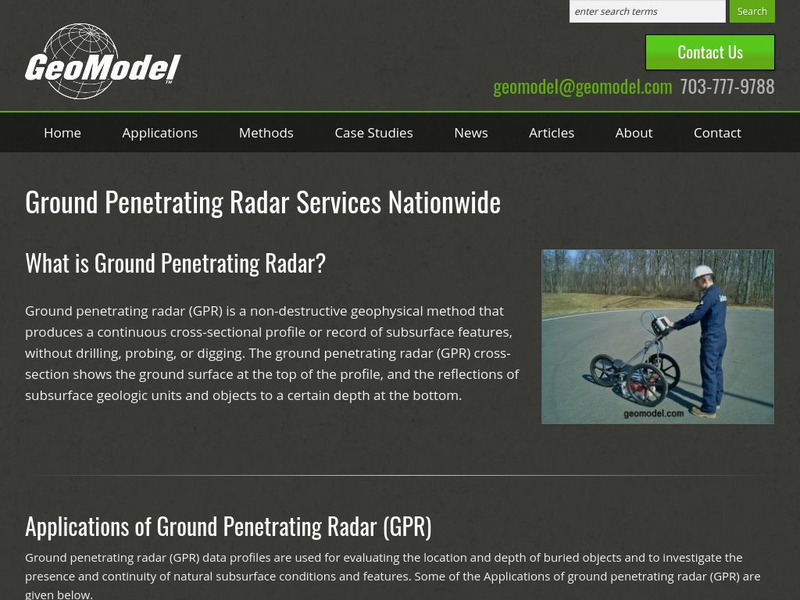
GPR can detect underground features such as abandoned mines or hazardous waste tanks. This is a commercial site for a company that uses this technology, but it offers pictures and information on what's possible.
Academy of American Poets
Poets.org: Stevie Smith
The biography is brief but covers the poet's life and themes. What makes the site valuable is its links to other Smith sites, including one RealAudio site that features the reading of her poem "Not Waving but Drowning."