Hi, what do you want to do?






Alabama Learning Exchange
Alex: Interpreting Documents on the Ahsge
Students will explore the documents that were used in shaping the United States, before, during, and after its creation. While studying these documents, students will use reading skills to interpret and analyze documents. By the end of...
Stanford University
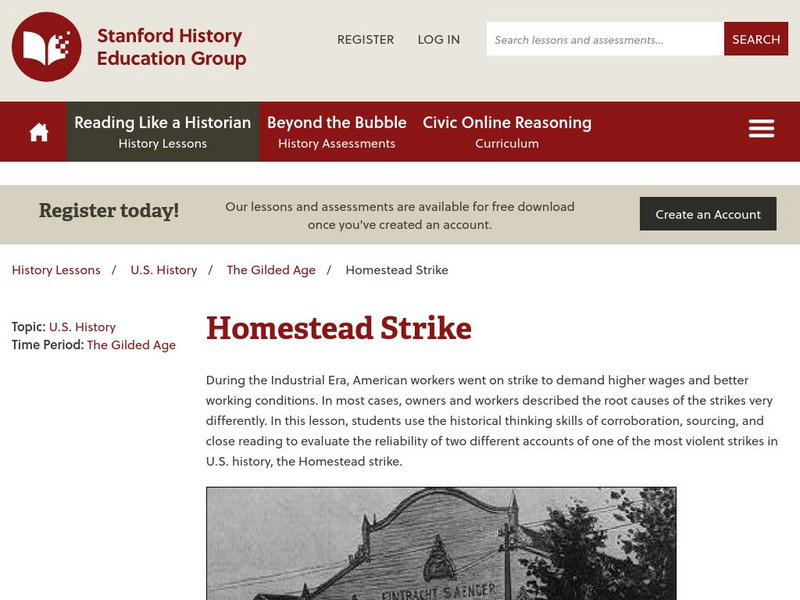
Sheg: Document Based History: Reading Like a Historian: Homestead Strike
[Free Registration/Login Required] Students solve a problem surrounding a historical question by reading primary source documents. This historical inquiry activity allows students to use the historical thinking skills of corroboration,...
Stanford University
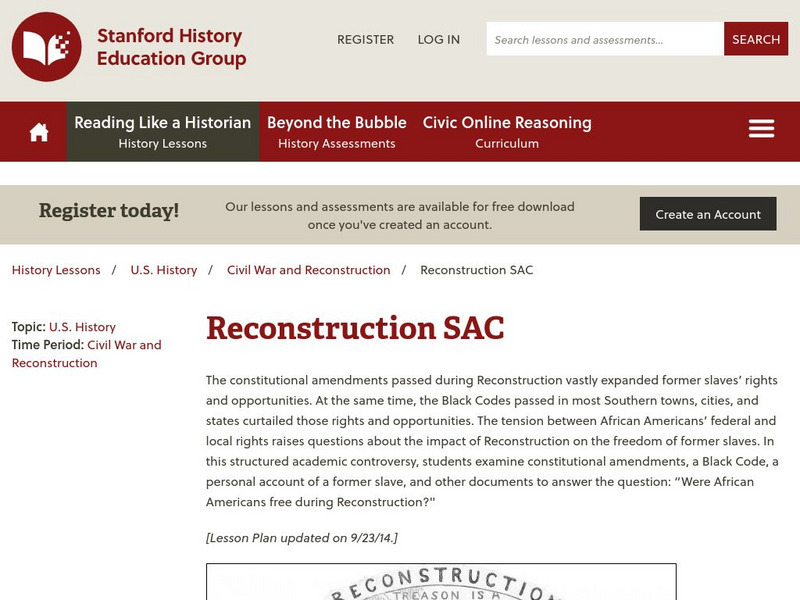
Sheg: Document Based History: Reading Like a Historian: Reconstruction Sac
[Free Registration/Login Required] Students use primary source documents to investigate central historical questions. In this structured academic controversy, students examine constitutional amendments, a Black Code, a personal account...
Stanford University
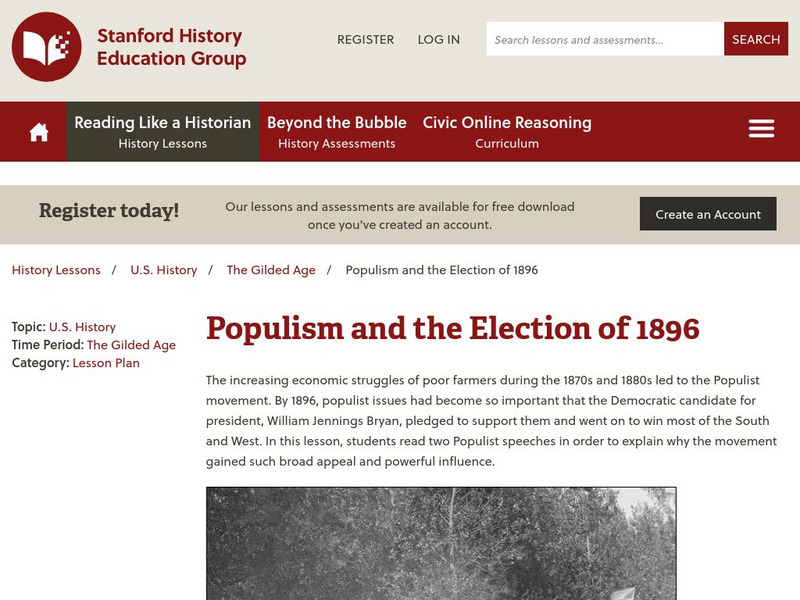
Sheg: Document Based History: Reading Like a Historian: Populism: 1896 Election
[Free Registration/Login Required] Students use primary source documents to solve a problem surrounding a historical question. This document-based inquiry instructional activity allows students to read two Populist speeches in order to...

Stanford University
Sheg: Document Based History: Reading Like a Historian:examining Passenger Lists
[Free Registration/Login Required] Students use primary source documents to investigate central historical questions. For this investigation, students critically examine the passenger lists of ships headed to New England and Virginia to...
Stanford University
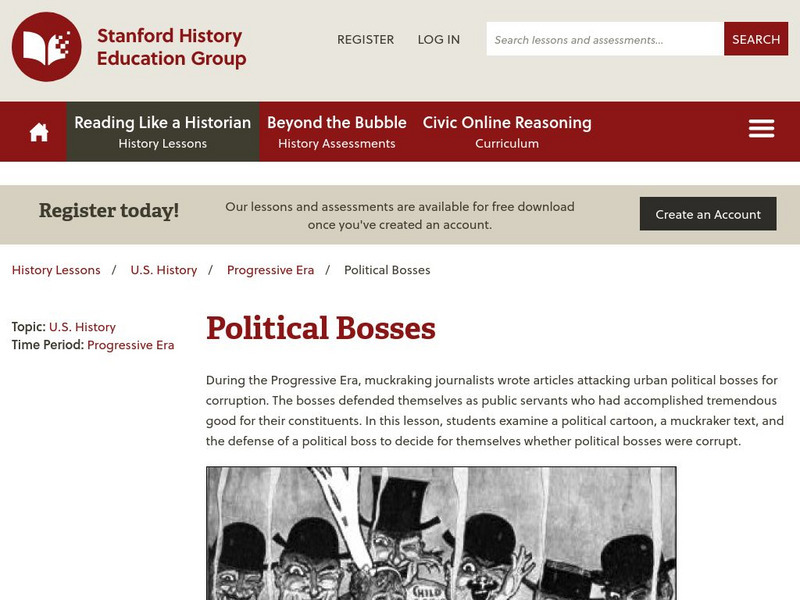
Sheg: Document Based History: Reading Like a Historian: Political Bosses
[Free Registration/Login Required] Students use primary source documents to investigate central historical questions. In this investigation, students examine a political cartoon, a muckraker text, and the defense of a political boss to...
Stanford University
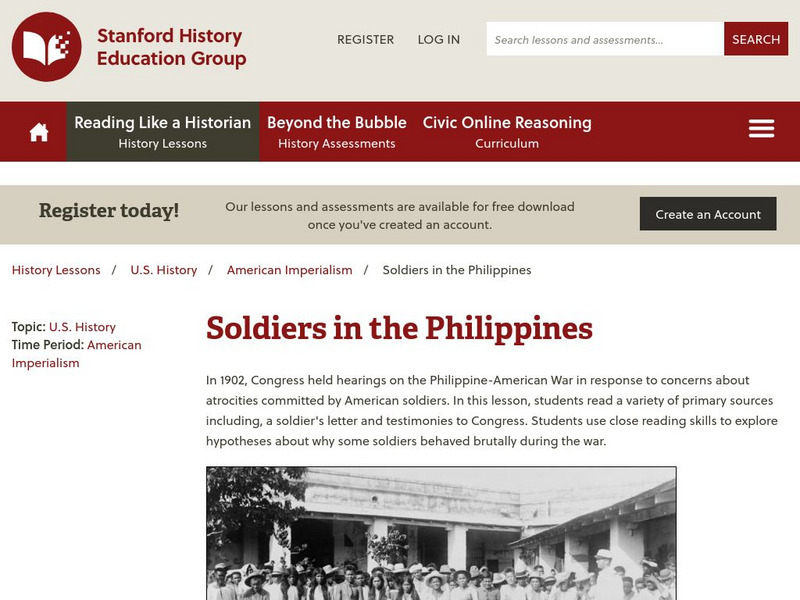
Sheg: Document Based History: Reading Like a Historian: Soldiers in Philippines
[Free Registration/Login Required] Students read primary source documents to solve a problem surrounding a historical question. This inquiry lesson allows students to use close reading skills to read a variety of primary source...

Stanford University
Sheg: Document Based History: Reading Like a Historian: Maine Explosion
[Free Registration/Login Required] Students solve a problem surrounding a historical question by reading primary source documents. When the USS Maine exploded in Havana Harbor, triggering the Spanish-American War, the New York Times and...

Stanford University
Sheg: Document Based History: Reading Like a Historian: Japanese Segregation
[Free Registration/Login Required] Students use primary source documents to investigate a central historical question. In this investigation, students contextualize President Theodore Roosevelt's turn-of-the-century speeches and letters...

Smithsonian Institution
Smithsonian: Engaging Students With Primary Sources
This reference guide is designed to highlight the benefits of using primary source materials in any classroom and to provide the teacher with practical suggestions and examples of how to do this. It includes a bibliography and links to...
US National Archives
Docsteach: Oh Freedom! Sought Under the Fugitive Slave Act
This activity includes primary sources from the official records of the U.S. District Court at Boston that tell the story of William and Ellen Craft, a young couple from Macon, GA, who escaped to freedom in Boston in 1848. Students will...

US National Archives
Docsteach: How Effective Were the Efforts of the Freedmen's Bureau?
In this activity, students will analyze documents from the War Department's Bureau of Refugees, Freedmen, and Abandoned Lands - better known as the Freedmen's Bureau - that Congress established on March 3, 1865, as the Civil War was...
US National Archives
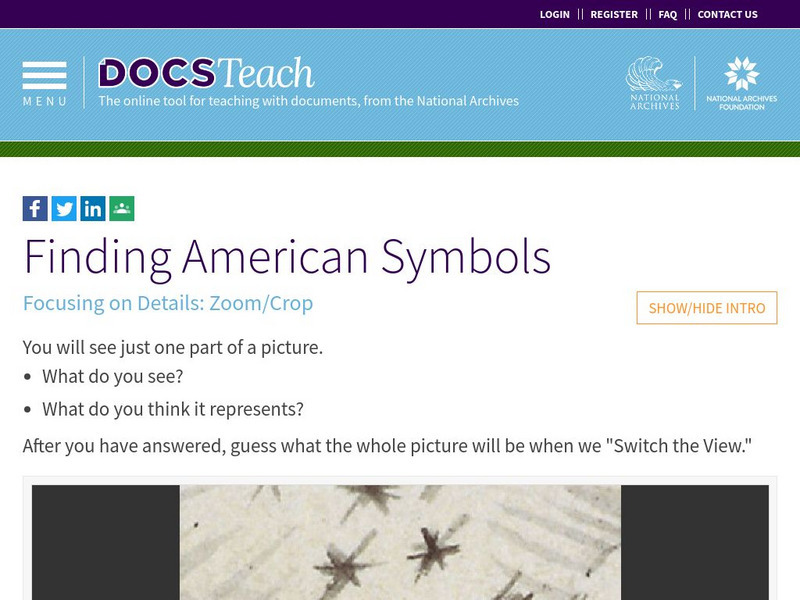
Docsteach: Finding American Symbols
Students will identify symbols used in the original design of the Great Seal of the United States (1782) and assess how the symbols connect with important American ideas.

Library of Congress
Loc: The United States Constitution
See transcripts of the debates of the Federal Convention of 1787, the draft of the Constitution, or see the facsimiles of the original documents. Trace the progress of the Constitution using the historical documents themselves.

Stanford University
Stanford History Education Group: Mansa Musa
[Free Registration/Login Required] Lesson on Mansa Musa uses primary resources for historical investigation. Includes lesson plan, PowerPoint, and original documents.

Stanford University
Stanford Education History Group: Battle of Thermopylae
[Free Registration/Login Required] Lesson in which students use primary resources to investigate questions and historian claims about the Battle of Thermopylae. Includes downloadable lesson plan, original documents, and PowerPoint.
Stanford University
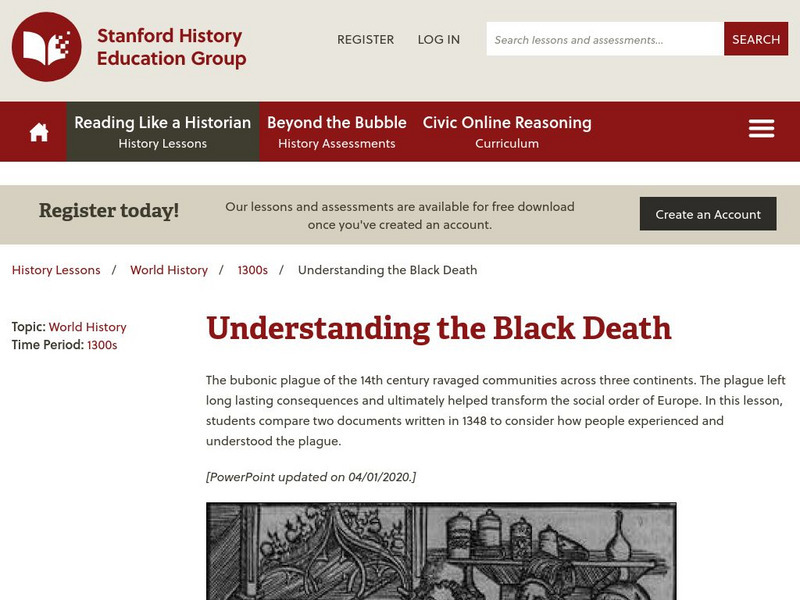
Stanford History Education Group: Understanding the Black Death
[Free Registration/Login Required] Lesson in which young scholars compare two primary source documents to investigate how people experienced or understood the plague in 1348. Inlcudes lesson plan, PowerPoint, and original documents.
Maine Historical Society
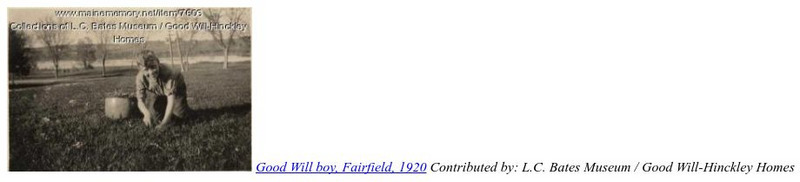
Maine Memory Network: Exhibit: A Day for Remembering
Using historically significant documents and images the celebration of Memorial Day is traced from the late 1800s on.
Writing Fix
Writing Fix: A Primary Source Picture Book
Inspired by My Tour Of Europe, by Teddy Roosevelt, young scholars will create a children's picture book based on a topic of historical study to be used as a primary document.
US National Archives
Docsteach: What Kind of Leader Was General Douglas Mac Arthur?
In this activity, students will analyze video clips, photographs, and written documents related to General Douglas MacArthur to explore the controversy surrounding his career, especially the decision by President Harry S. Truman to...
Smithsonian Institution
Smithsonian Source: Civil Rights
The Smithsonian offers a variety of teaching supplements to be used in lessons on civil rights such as documents, teaching strategies, and historic photographs. Civil rights for other minorities are also discussed.