Hi, what do you want to do?





Georgia Department of Education
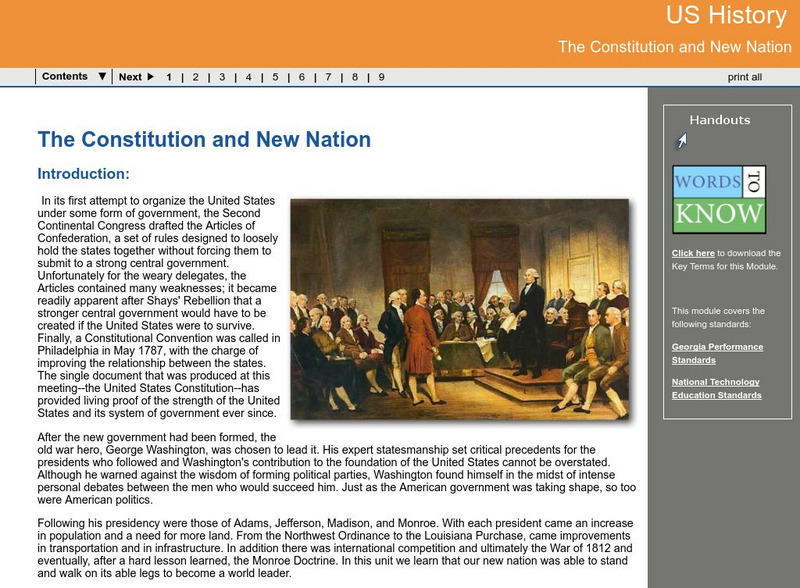
Ga Virtual Learning: Us History: The Constitution and New Nation
US History learning module on the post revolutionary period discussing the fundamentals of writing the Constitution and a new form of government.

US Government Publishing Office
Ben's Guide to u.s. Government: Ways to Amend the Constitution
Ben's Guide is a fun way to present US laws to school aged children. This site presents a thorough investigation into ways to amend the Constitution. Links to related sites are available.
Digital History
Digital History: The Constitution and Slavery
The issue of slavery was a contentious one during debates in the Constitutional Convention. Read about the various issues, the quotes of several of the delegates, and see how the word "slave" is not even mentioned in the Constitution....
OpenStax
Open Stax: The Constitutional Convention and Federal Constitution
After reading this section of the chapter on "Creating Republican Governments", students will be able to identify the central issues of the 1787 Constitutional Convention and their solutions and also describe the conflicts over the...
US Senate
The u.s. Senate: The Senate and the United States Constitution
This site from the United States Senate provides information about the evolution of the Senate as the Constitution was being written by the Constitutional Congress.
The History Cat
The History Cat: The Constitutional Convention: Creating the Constitution
Explains why the Articles of Confederation were not strong enough to hold the country together. One result was a farmers' rebellion in Massachusetts led by Daniel Shays, which was precipitated by a debt crisis that caused many farmers to...
Shmoop University
Shmoop: Making the Constitution Terms
Read about Checks and Balances, Balance of Power, the Electoral College, and much more in this informative lesson about the making of the Constitution.
Digital History
Digital History: Amending the Constitution
The Constitution can be amended, but it is tough to do. Read about the routes that can be taken to add amendments and look at some of the amendments that have succeeded.
Other
Institute for American Liberty: The First Principles of the Constitution [Pdf]
This article contains information about the principles used to create the Constitution of the United States.
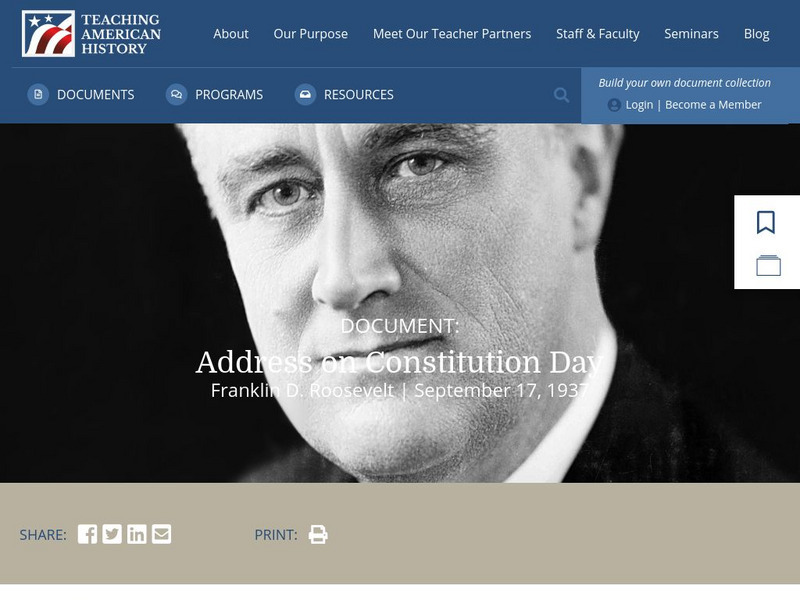
Teaching American History
Teaching American History: Address on Constitution Day
Read the speech given by President Franklin D. Roosevelt on September 17, 1937, honoring the Constitution and applying the tenets of the Constitution to contemporary issues in the 1930s.
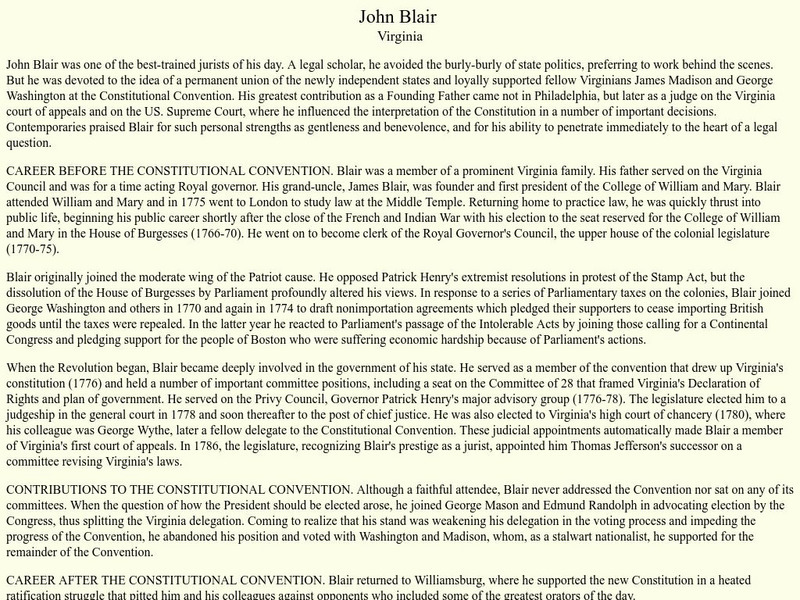
US Army Center
U.s. Army Center of Military History: John Blair
A biography of John Blair, a delegate to the Constitutional Convention from Virginia. He later served as an associate justice on the Supreme Court.
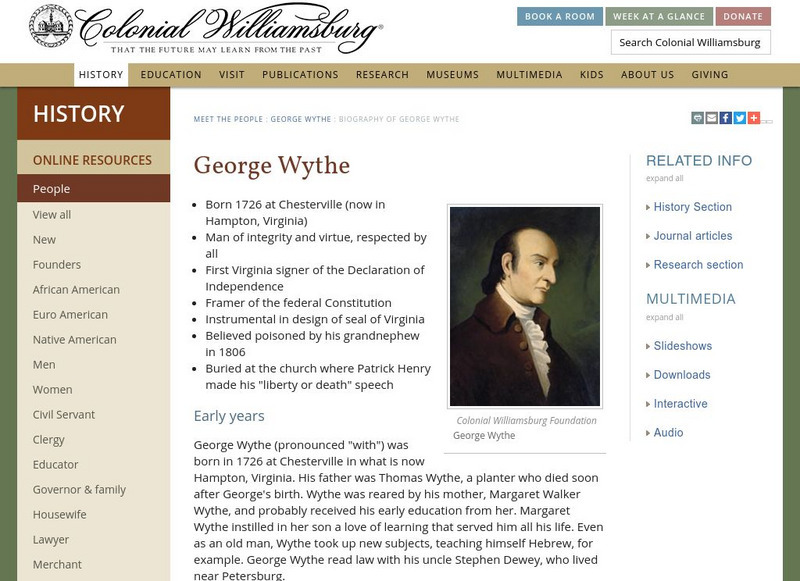
Colonial Williamsburg Foundation
Colonial Williamsburgh: Meet the People: George Wythe
A short biographical sketch on George Wythe, a delegate to the Constitutional Convention from Virginia.
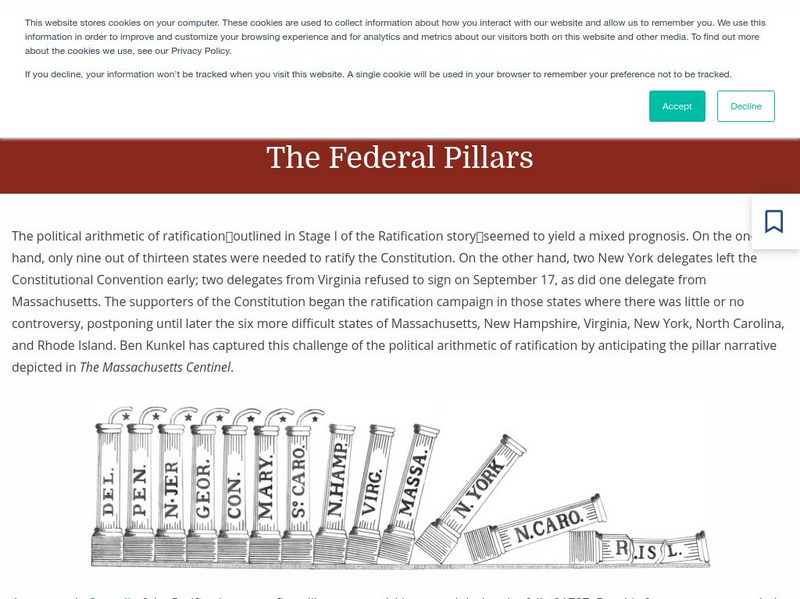
Teaching American History
Teaching American History: The Federal Pillars
An overview of the order in which the states ratified the Constitution. Find an assortment of newspaper clippings recognizing the ratification process across the states.
Library of Congress
Loc: Primary Documents in American History: The Articles of Confederation
The original Articles of Confederation and Perpetual Union between thirteen states, created in 1777 and ratified in 1781. It preceded the Constitutional Convention in 1787.
Digital History
Digital History: Republicanism
The framers of the Constitution had a great distaste for the monarchial society of Great Britain. See how this was reflected in the checks and balances they wrote into the Constitution in an effort to create a working republic.
University of Groningen
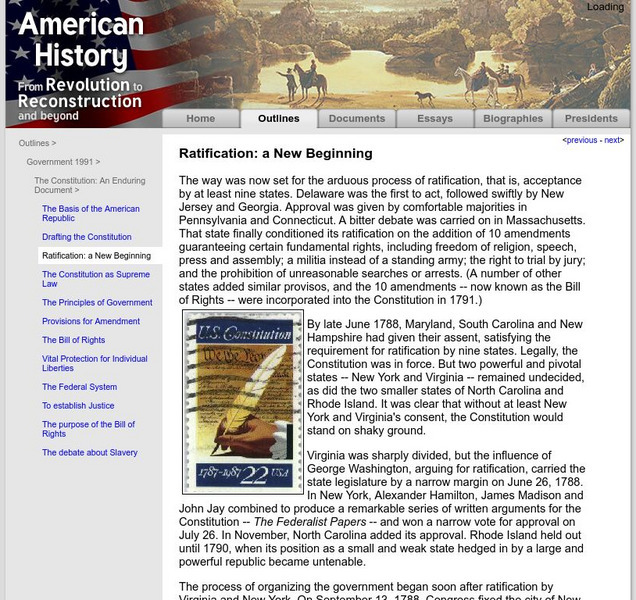
American History: Outlines: Ratification
This site from the University of Groningen provides a synopsis chronologically written on the ratification of the U.S. Constitution beginning with the first states who accepted the document to pressures exerted by the Federalists to...

Siteseen
Siteseen: Government and Constitution: Preamble to the Constitution
This article contains the history, meaning, and words to the Preamble to the Constitution which encompassed the reasons why the thirteen original colonies separated from Great Britain to become an independent nation.
Library of Congress
Loc: New Jersey Approved the Constitution
Take a journey back in time through the "Garden State" of New Jersey. A brief of overview of this historical state, as well as fascinating photographs enrich this site from The Library of Congress.
Incredible Art Department
The Incredible Art Department: Constitution Day
Discusses the origin of Constitution Day and the history of the Constitution and the Bill of Rights. Lists descriptions of the seven articles and twenty-seven amendments in the Constitution. Presents lesson suggestions from teachers and...
US Mint
United States Mint: History
Learn about the United States Mint and how it was created by the Constitution. Details on coins the Mint has produced, its role in U.S. history, and growth.
Teaching American History
Teaching American History: Fireside Chat: Plan for Reorganization of Judiciary
Franklin D. Roosevelt introduces a movement to reorganize the judiciary system of the United States during his March 9, 1937 Fireside Chat. He proposes to change the number of judges and the terms of their services to best uphold the...
OpenStax
Open Stax: Congress and the Remaking of the South, 1865 1866
This section from a chapter on "The Era of Reconstruction" describes the efforts made by Congress in 1865 and 1866 to bring to life its vision of Reconstruction and explains how the Fourteenth Amendment transformed the Constitution.
University of Groningen
American History: Outlines: Ratification and Bill of Rights
This site is provided for by the University of Groningen. Learn about the struggle for approval by the states of the U.S. Constitution, continuous disagreements after the Constitutional Convention between the Federalists and the...
Teaching American History
Teaching American History: Religion in American Politics
The Constitution establishes a separation of church and state, but the two are always connected in some way. Understand the connections that are unavoidable and how governments work through them.