Hi, what do you want to do?






Clean Up Australia
Why are Batteries Harmful to the Environment?
Open this lesson by reading together about primary and secondary batteries (such as nickel-cadmium cells), problems they can cause in the environment, and how humans can minimize the damage. Afterward, little ones examine a collection of...

Curated OER
Old Telephone Books: A Recycling Journey
Students read about old telephone books are being recycled to make new objects and then answer short answer questions about it. In this recycling lesson plan, students also look into their books to find information.

DiscoverE
Design a Folding Solar Panel
Solar energy is an amazing alternative ... but, not always particularly portable! Challenge young scientists to a folding solar panel build-off with an easy-to-execute activity. Scholars brainstorm around specific design needs, construct...

Mary Pope Osborne, Classroom Adventures Program
Mummies in the Morning Egyptian pyramids, hieroglyphics
Visit the Magic Treehouse and take your class on a trip through time with a reading of the children's book Mummies in the Morning. Using the story to spark an investigation into Egyptian culture, this literature unit engages...

Seussville
The Lorax's Earth Day
Add a touch of Dr. Seuss whimsy to your Earth Day celebration with six pages consisting of Earth-friendly, inspiring, and engaging activities designed to enhance the beauty of your school campus and showcase the famous story, The...

PBS
Twirling in the Breeze
Blow classes away with a hands-on lesson investigating wind speed. Learners use common materials to design and construct anemometers. They then test their anemometers and collect data on the wind speed created by a fan.
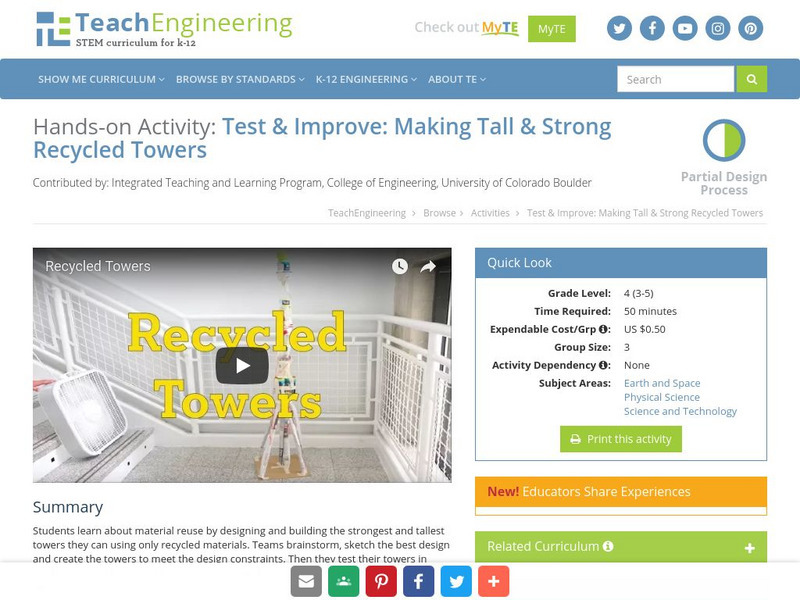
TeachEngineering
Teach Engineering: Recycled Towers
Students learn about material reuse by designing and building the strongest and tallest towers they can, using only recycled materials. They follow design constraints and build their towers to withstand earthquake and high wind simulations.
Science Buddies
Science Buddies: The Big Dig
Even though many cities have recycling programs, a lot of trash still ends up in the dump. Find out which materials will break down and which materials won't. Will the results of this experiment change which products you often buy?
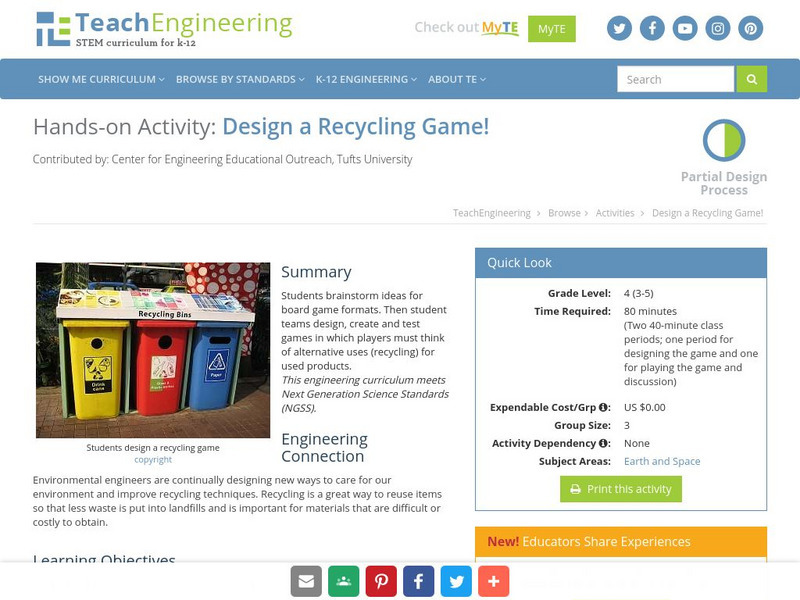
TeachEngineering
Teach Engineering: Design a Recycling Game!
Students will design a game where players try to come up with alternative uses for used products. Students will brainstorm ideas for an effective board game format.
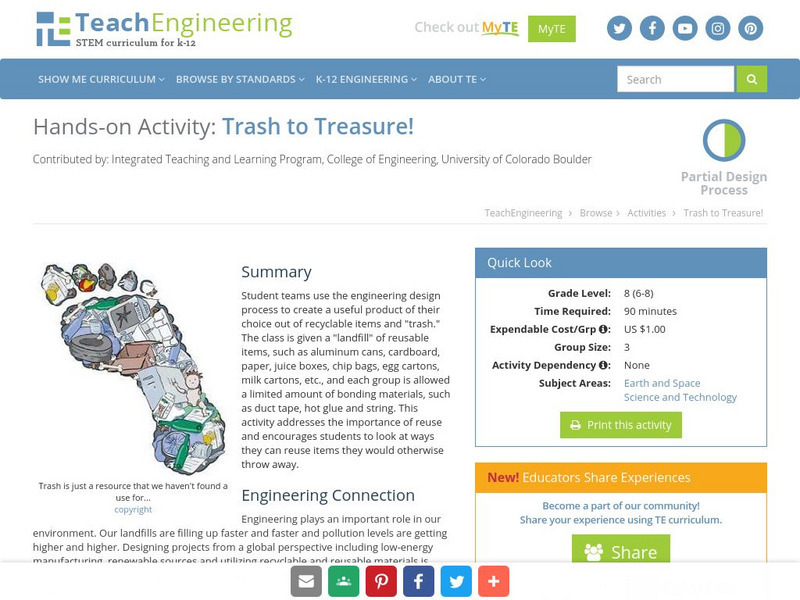
TeachEngineering
Teach Engineering: Trash to Treasure!
Student teams use the engineering design process to create a useful product of their choice out of recyclable items and "trash." The class is given a "landfill" of reusable items, such as aluminum cans, cardboard, paper, juice boxes,...
TeachEngineering
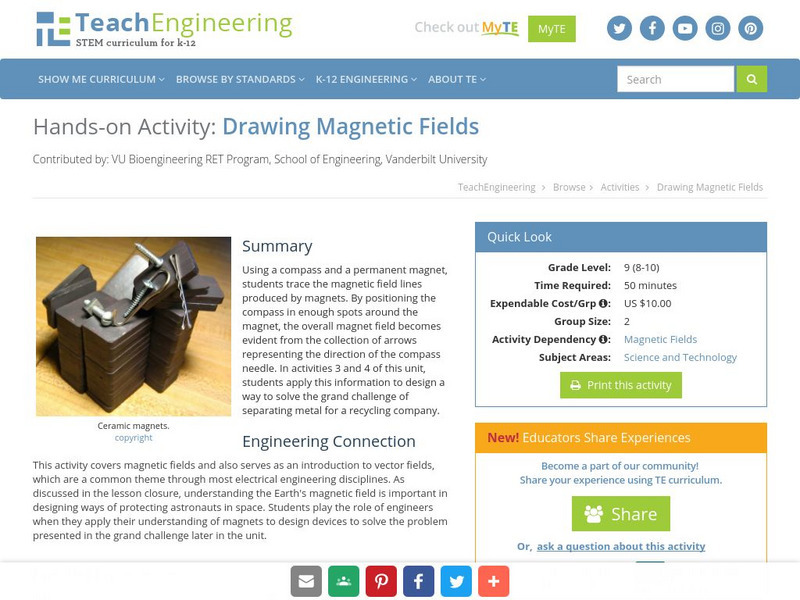
Teach Engineering: Drawing Magnetic Fields
Students use a compass and a permanent magnet to trace the magnetic field lines produced by the magnet. By positioning the compass in enough spots around the magnet, the overall magnet field will be evident from the collection of arrows...
TeachEngineering
Teach Engineering: Building an Electromagnet
Students design and construct an electromagnet that must pick up 10 staples. They begin with only minimal guidance, and after the basic concept is understood, are informed of the properties that affect the strength of that magnet. They...
TeachEngineering
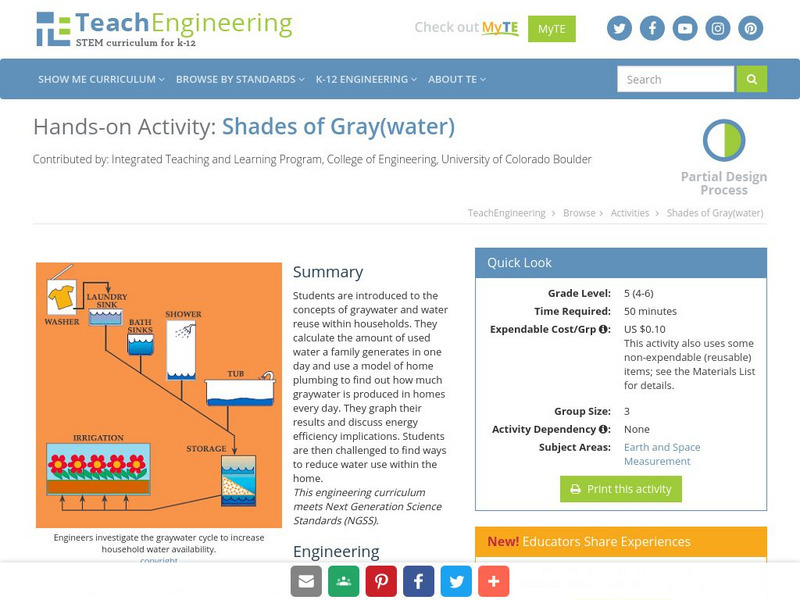
Teach Engineering: Shades of Gray(water)
Students are introduced to the concepts of graywater and water reuse within households. They calculate the amount of used water a family generates in one day and use a model of home plumbing to find out how much graywater is produced in...
TeachEngineering
Teach Engineering: Trash Talkin'
In this activity, students collect, categorize, weigh and analyze classroom solid waste. The class collects waste for a week and then student groups spend a day sorting and analyzing the garbage with respect to recyclable and non...

TeachEngineering
Teach Engineering: Design a Net Zero Energy Classroom
Students create a concept design of their very own net-zero energy classroom by pasting renewable energy and energy-efficiency items into and around a pretend classroom on a sheet of paper. They learn how these items (such as solar...
TeachEngineering
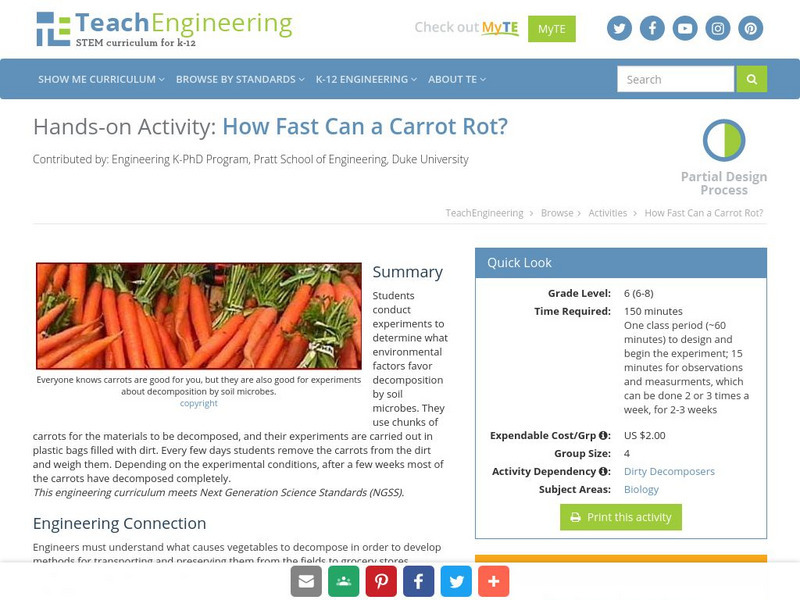
Teach Engineering: How Fast Can a Carrot Rot?
Students conduct experiments to determine what environmental factors favor decomposition by soil microbes. They use chunks of carrots for the materials to be decomposed, and their experiments are carried out in plastic bags filled with...