Hi, what do you want to do?





ReadWriteThink
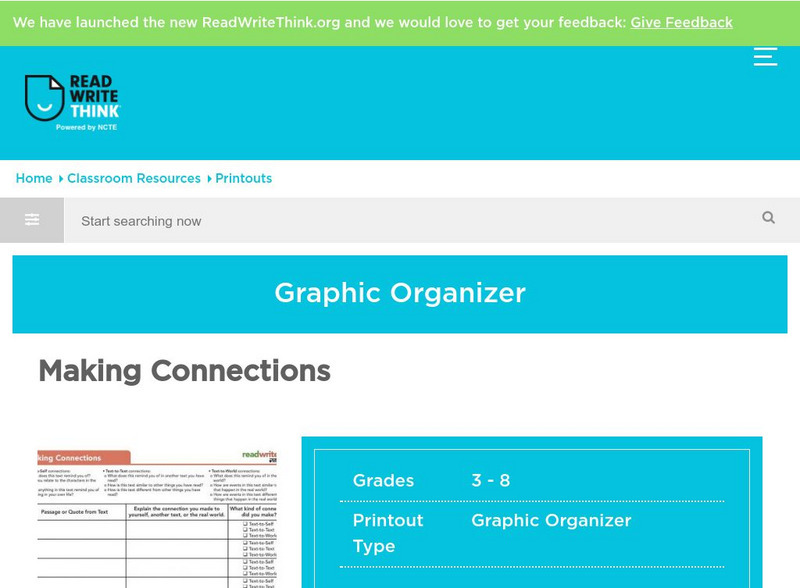
Read Write Think: Making Connections
A printable graphic organizer for students to use when making text to self, text, and world connections while reading a text. Directions on how to use this type of graphic organize as well as lists of teaching ideas and related resources...
Lumen Learning
Lumen: Writing Process: Organizing
This instructional activity focuses on the organization of your paper including how to write a thesis statement, the elements of an effective paragraph, patterns of organization, transitions, and conclusions. It also provides a video of...
Read Works
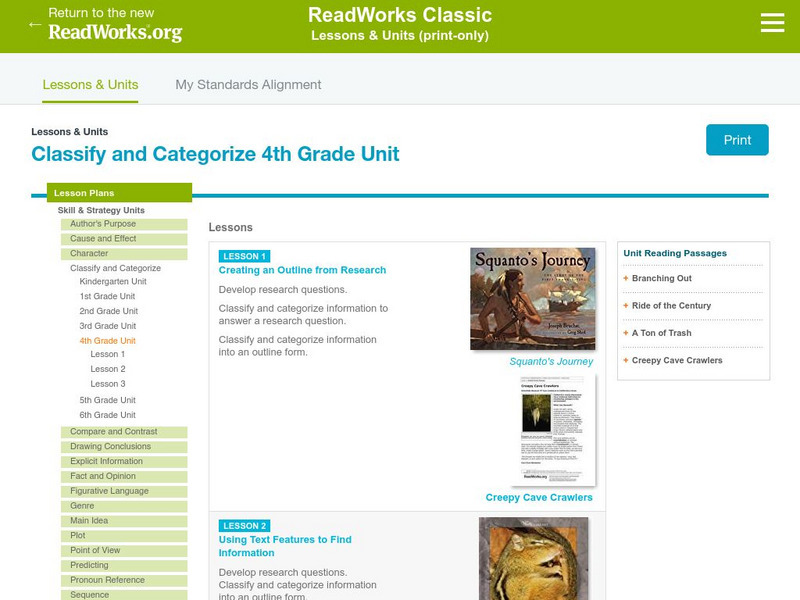
Read Works: Classify and Categorize 4th Grade Unit
[Free Registration/Login Required] A three-lesson unit on classifying and categorizing through which students learn how to organize research into an outline, use text features to locate information, and write a research report. Lessons...
ReadWriteThink
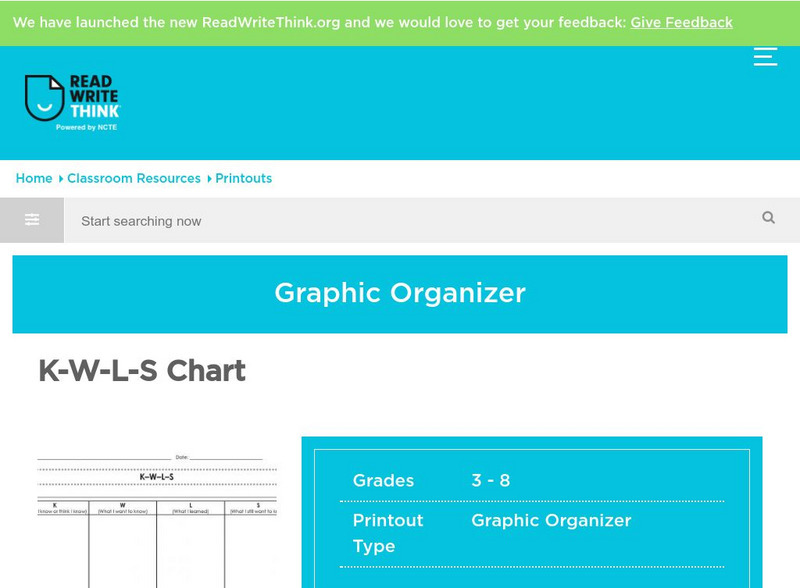
Read Write Think: K W L S Chart
A printable K-W-L-S sheet to help students activate prior knowledge, ask questions, record new learning, and then ask additional questions to extend inquiry beyond the text . Directions on how to use this type of graphic organize as well...

ReadWriteThink
Read Write Think: Expository Escapade: Detective's Handbook
Working on higher-level thinking skills with your readers is made easier with this lesson. You will have your students connect with and analyze a mystery story at their grade-appropriate level. Lesson plan, printable worksheets, and...
ReadWriteThink
Read Write Think: Creative Writing Through Wordless Picture Books
Need help planning ways to creatively teach your students chronological order? Here's a great place to start. While the site is specifically geared toward the middle school student, it is a teaching idea which could easily be adapted for...
ReadWriteThink
Read Write Think: Draw a Story: Stepping From Pictures to Writing
Help young young scholars move from drawing pictures into writing simple stories. Good plan for having students put pictures in sequential order and teaching them about sequential order.
ReadWriteThink
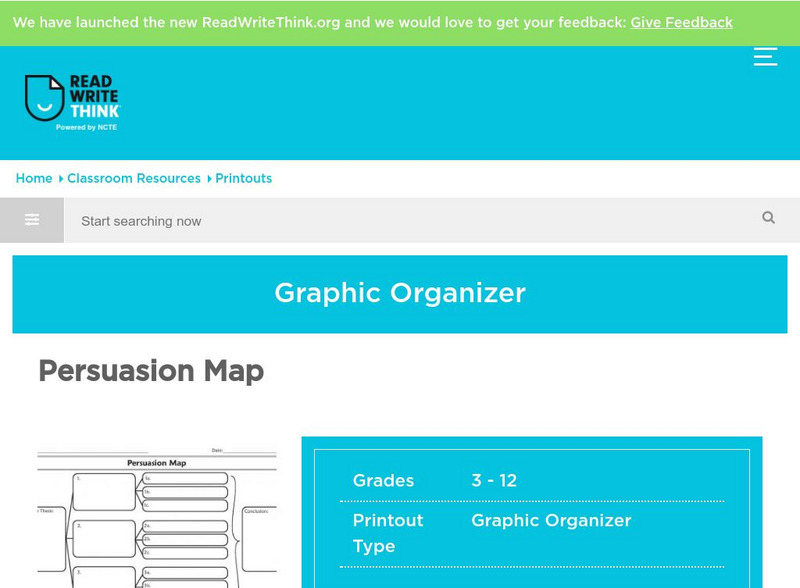
Read Write Think: Persuasion Map
A printable graphic organizer for students to use when writing on opinion or persuasive essay. Directions on how to use this type of graphic organizer as well as lists of teaching ideas, lesson plans, and other resources are also...
Sophia Learning
Sophia: Revision Techniques: Improving Flow
A ten-slide presentation explaining revision strategies that focus on improving the flow of a written text.
ReadWriteThink
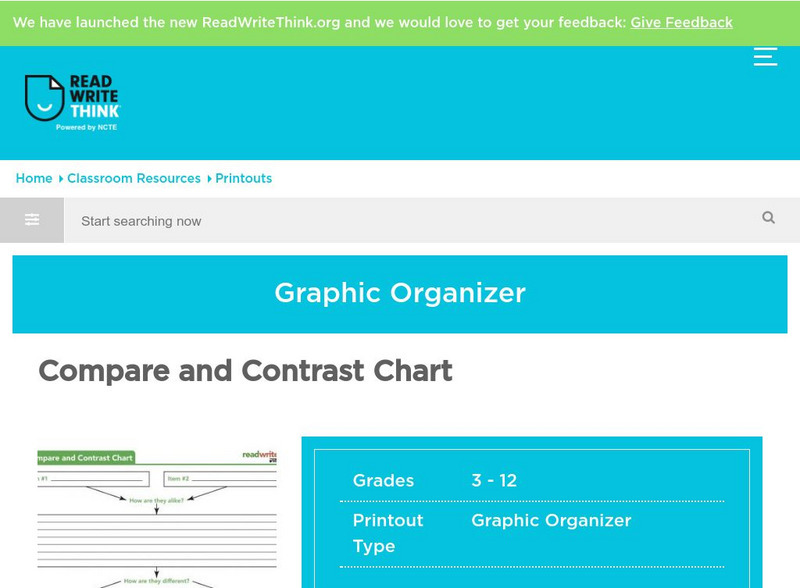
Read Write Think: Compare and Contrast Map
Use this graphic organizer to compare or contrast ideas, things, or texts. This is a great cross-curricular tool to use for both reading strategies and prewriting.
Capital Community College Foundation
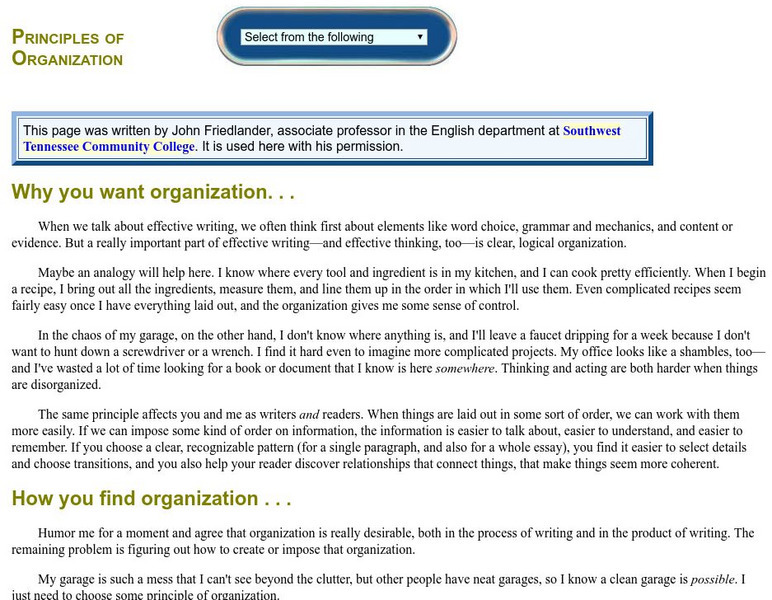
Guide to Grammar and Writing: Principles of Organization
In writing and reading organization is the key to a reader's understanding. A great site for those of you who are looking for some further explanation of organization in writing. There is instruction, an example text, and specific...

AdLit
Ad lit.org: Teach the Seven Strategies of Highly Effective Readers
To improve students' reading comprehension, teachers should introduce the seven cognitive strategies of effective readers: activating, inferring, monitoring-clarifying, questioning, searching-selecting, summarizing, and...
Scholastic
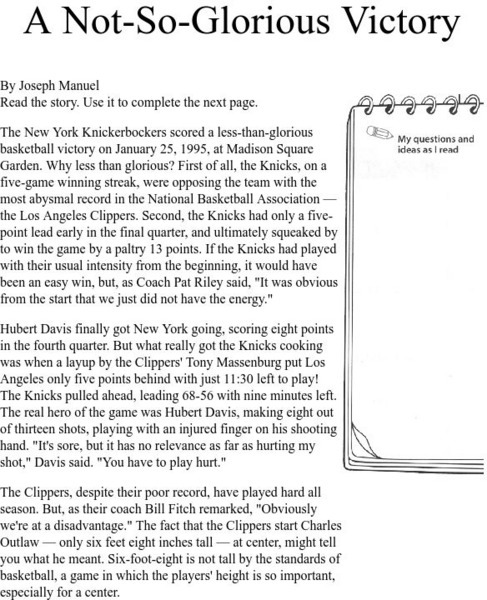
Scholastic: A Not So Glorious Victory
After reading "A Not-So-Glorious," Victory, which is included on this page, have your students practice identifying cause and effect using the printable worksheet.
![Scholastic: So That's the Reason! [Pdf] Unknown Type](https://content.lessonplanet.com/knovation/original/32238-436f863b7c91b994bd9fe2e7c4a03769.jpg?1661264711 "Scholastic: So That's the Reason! [Pdf] Unknown Type")
Scholastic
Scholastic: So That's the Reason! [Pdf]
Simple, one-page printable worksheet to introduce your students to cause and effect. Gives one set example, and has space at the bottom to apply to any story you read.
Curated OER
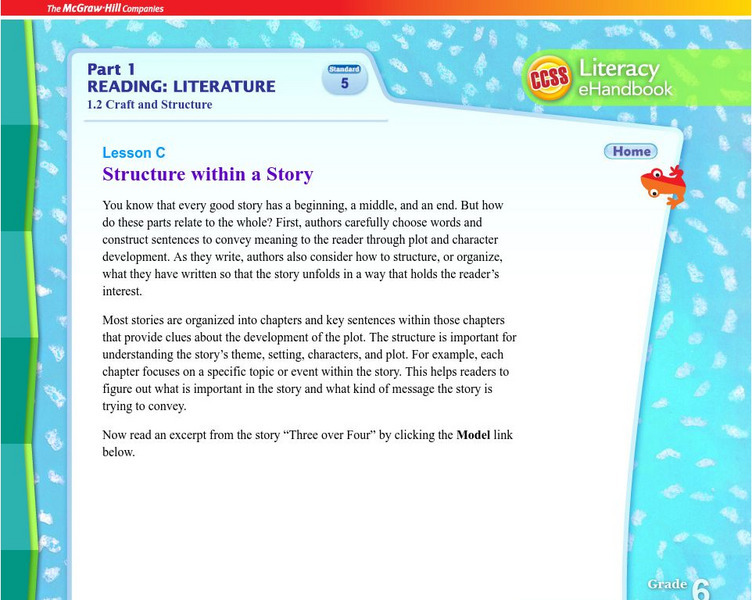
Mc Graw Hill: Structure Within a Story
Learn why structure is important when organizing a story then read an excerpt from the story "Three over Four" to practice how structure helps to develop the story's theme, setting, and plot.
ReadWriteThink
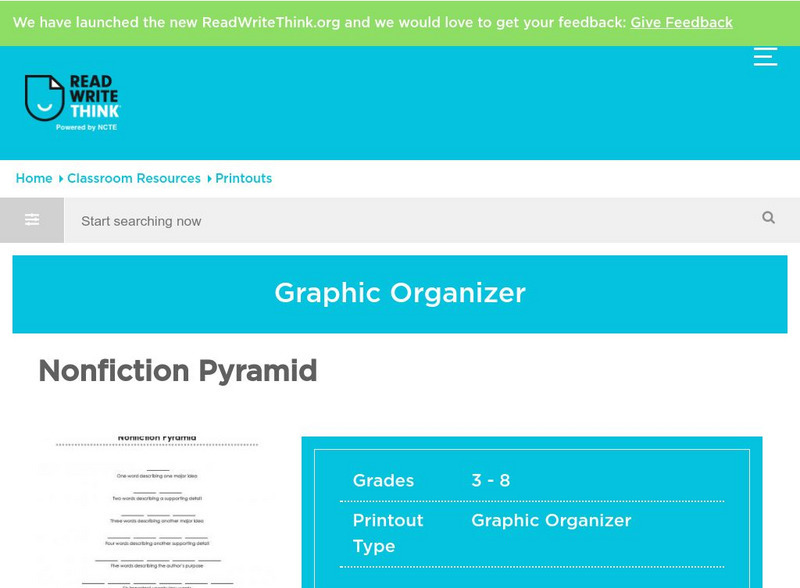
Read Write Think: Nonfiction Pyramid
A printable pyramid for use with nonfiction texts while students identify the main ideas and supporting details within a text. Students also determine author's purpose and key vocabulary words. Directions on how to use this type of...

Other
Reading Quest: Strategies for Reading Comprehension: Concept of Definition Map
Sometimes teaching students about creating definitions is difficult because they do not understand about multiple meanings or depth in meaning. This is a chance to teach students, using the concept map included, how to create definitions...
ReadWriteThink
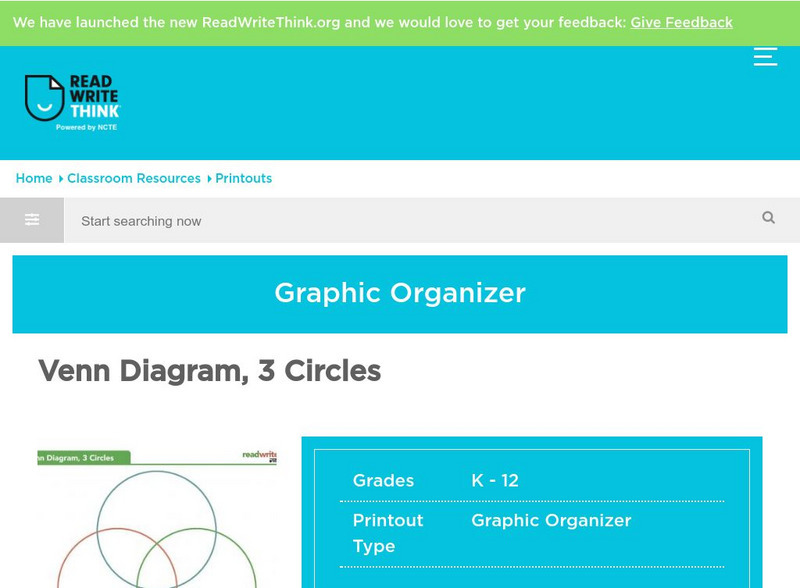
Read Write Think: Venn Diagram, 3 Circles
A printable Venn Diagram with three circles to use when comparing and contrasting three things or topics. Directions on how to use this graphic organizer as well as lists of teaching ideas and related resources are also provided.
Better Lesson
Better Lesson: Unit: The Author's Point Is
Students will focus on Main Idea, Author's Purpose, Identifying supporting details and Organizing details. Students will read a variety of Informational Text (non-fiction) to understand how stated and implied main idea effect the...
Capital Community College Foundation
Guide to Grammar and Writing: Developing a Definition
Not sure what a definition paper is? This is a great site from the Capital Community College to help you with developing a definition. Includes a sample essay and guiding questions.
Teachers.net
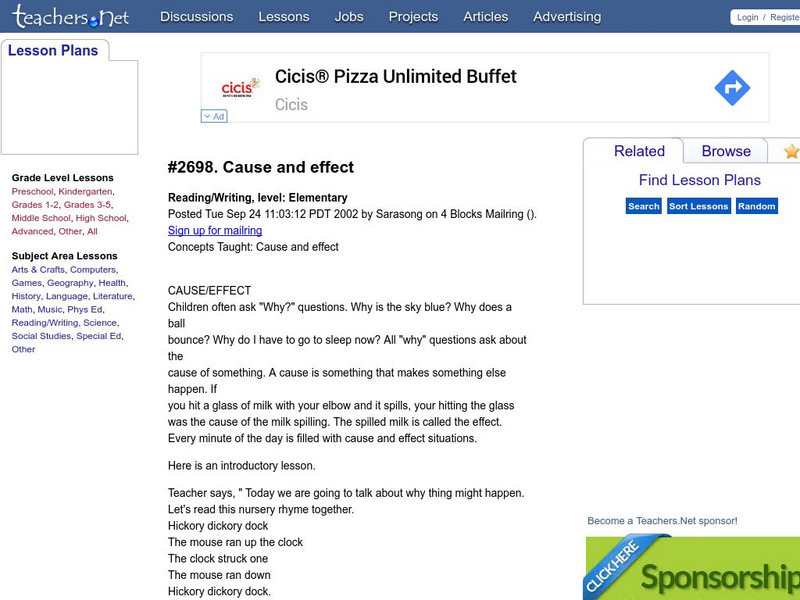
Teachers.net: Cause and Effect
Simple and effective method for introducing primary students to the concept of cause and effect in literature.
Scholastic
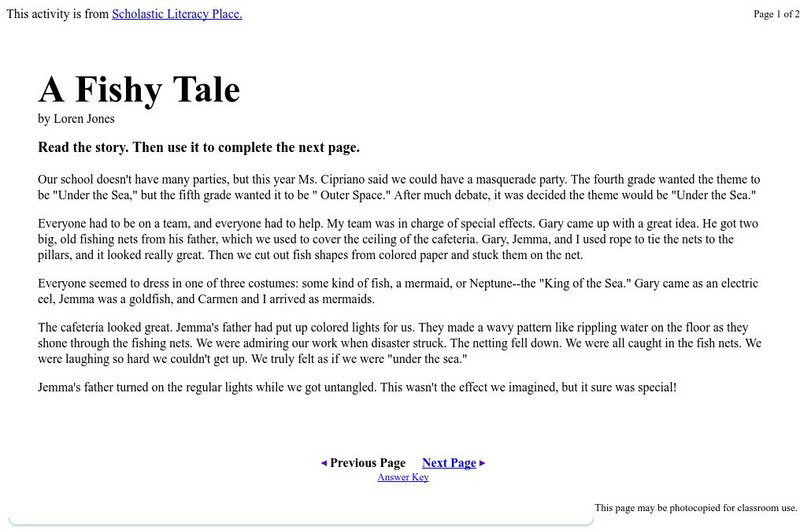
Scholastic: A Fishy Tale
A delightful anecdote sure to spark the thoughts of all students as you teach compare/contrast skills through a text to which they can relate. Site includes printable worksheet and answer key.
AdLit
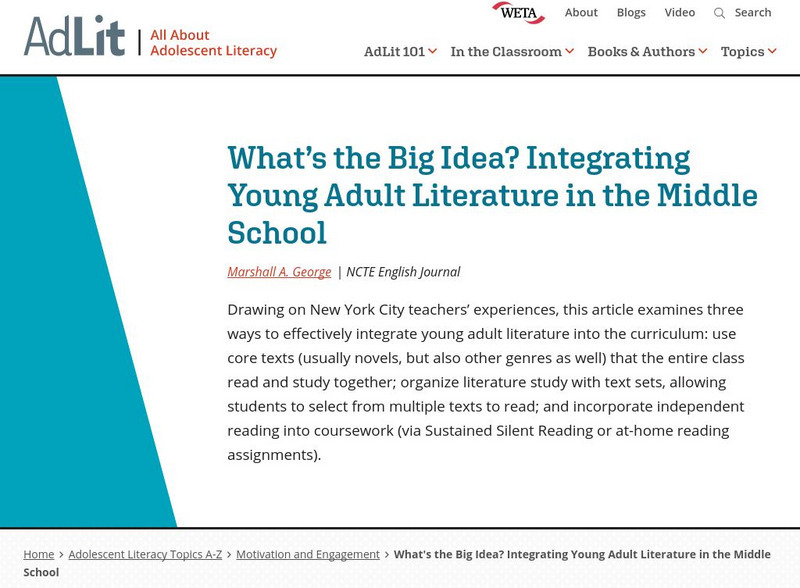
Ad lit.org: What's the Big Idea? Integrating Young Adult Literature
Drawing on New York City teachers' experiences, this article examines three ways to effectively integrate young adult literature into the curriculum: use core texts (usually novels, but also other genres as well) that the entire class...