Hi, what do you want to do?






Other
Maths Revision: Work, Energy & Power
Basic definitions and examples for the concepts of work, energy, and power. Covers kinetic and potential energy, and conservation of energy.

Quizlet
Quizlet: 6th Grade Science: Energy Vocabulary: Match
In this interactive game, students match 17 terms related to energy with their definitions. These include the following: Kinetic, Sound, Potential, Elastic potential, Chemical, Gravitational Potential, Electrical, Light, Energy, Energy...
Quizlet
Quizlet: 6th Grade Science: Energy Vocabulary: Flashcards
This set of interactive flashcards focuses on 17 terms related to energy and their definitions. These include the following types of energy: Kinetic, Sound, Potential, Elastic potential, Chemical, Gravitational Potential, Electrical,...
Quizlet
Quizlet: 6th Grade Science: Energy Vocabulary: Test
This interactive assessment features 6 matching, 6 multiple-choice, and 5 true/false question over 17 terms related to energy and their definitions. These include the following: Kinetic, Sound, Potential, Elastic potential, Chemical,...

Other
Forms of Energy: Heat, Radiant, Electrical, Chemical, Nuclear Energy
Explains what each of these types of energy is and provides examples.
Physics Classroom
The Physics Classroom: Energy Conservation on an Incline
This site is a discussion and animation about whether the total mechanical energy of a cart rolling down an incline is conserved, which can be determined if there are any external forces acting upon it.
Other
Ed informatics.com: What Is Work, Energy and Power?
Defines work, energy, and power. Explains the work-energy principle, types and forms of energy, and presents some exercises to try.
TeachEngineering
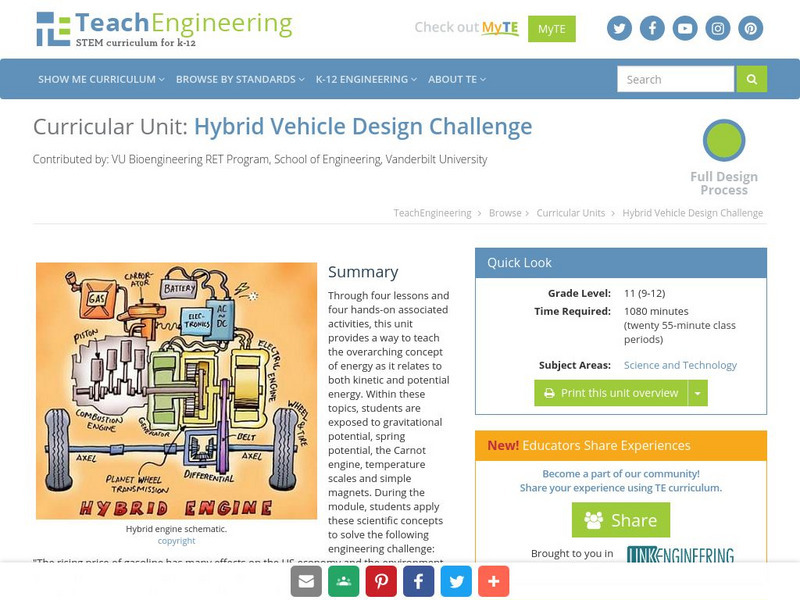
Teach Engineering: Hybrid Vehicle Design Challenge
This module is written for a first-year algebra-based physics class, though it could easily be modified for conceptual physics. It is intended to provide hands-on activities to teach the overarching concept of energy, as it relates to...
The Tech Interactive
The Tech Museum of Innovation: Save the Hiker [Pdf]
Can you build a device that will deliver life-saving treatment to someone in a hazardous situation? During this lesson, students will learn how energy is converted and transferred between objects. Working in groups and through the...
TeachEngineering
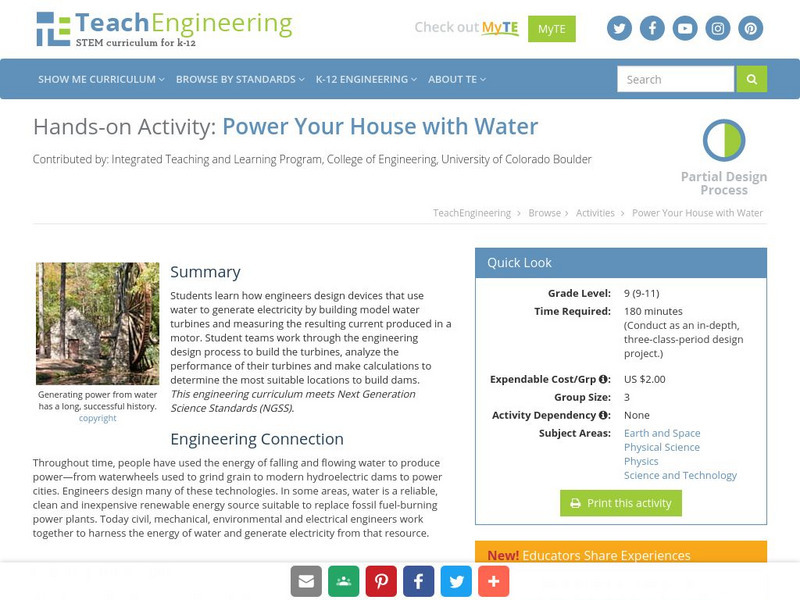
Teach Engineering: Power Your House With Water
Students learn how engineers design devices that use water to generate electricity by building model water turbines and measuring the resulting current produced in a motor. Students work through the engineering design process to build...
TeachEngineering
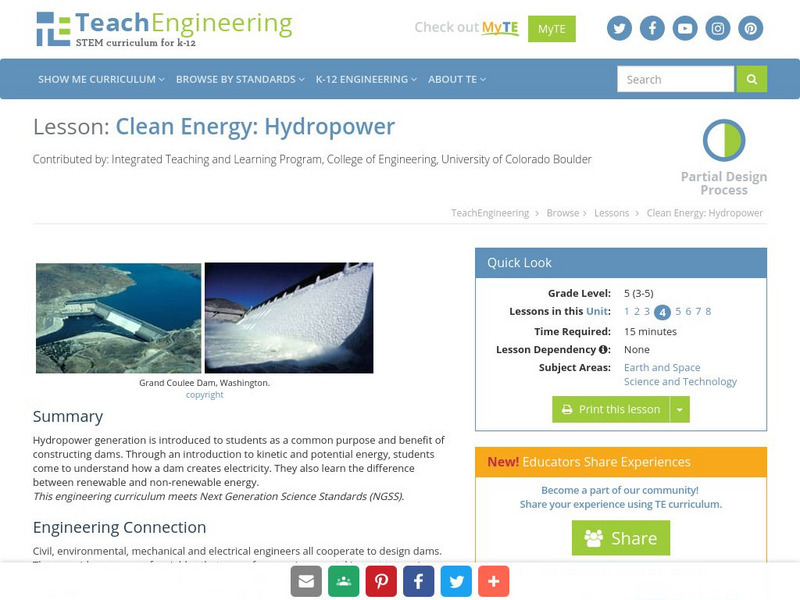
Teach Engineering: Clean Energy: Hydropower
Hydropower generation is introduced to students as a common purpose and benefit of constructing dams. Through an introduction to kinetic and potential energy, students come to understand how a dam creates electricity. They also learn the...
NC State University
The Engineering Place: Roller Coasters [Pdf]
A lesson where students construct a roller coaster and test it under different conditions to learn about force and motion.
TeachEngineering
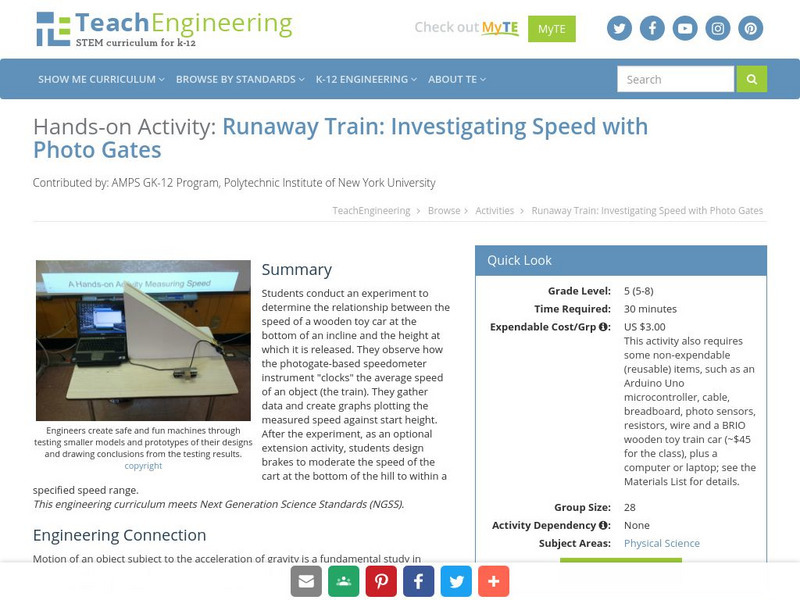
Teach Engineering: Runaway Train: Investigating Speed With Photo Gates
Students conduct an experiment to determine the relationship between the speed of a wooden toy car at the bottom of an incline and the height at which it is released. They observe how the photogate-based speedometer instrument "clocks"...

PBS
Pbs Teachers: Scientific American: It's a Kid's World: Body Sense
Investigate potential and kinetic energy by investigating the elasticity of a metal coil toy, the Slinky. Explore the development of muscle coordination in children and measure how practice improves performance of motor skills.
TeachEngineering
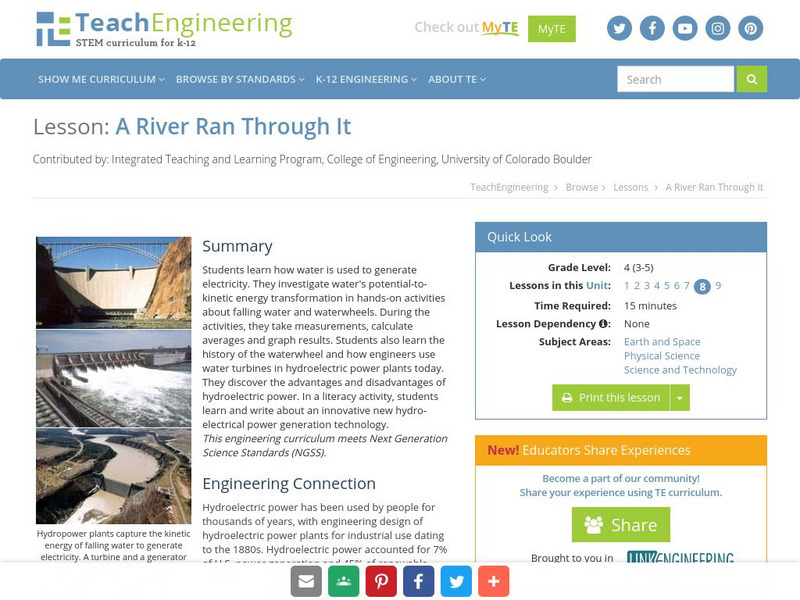
Teach Engineering: A River Ran Through It
Students learn how water is used to generate electricity. They investigate water's potential-to-kinetic energy transformation in hands-on activities about falling water and waterwheels. During the activities, they take measurements,...

Museum of Science
Museum of Science and Industry Chicago: Online Science: Drop Eggs Into Cups
Step-by-step illustrated instructions showing how to drop four eggs into four cups without touching them. Demonstrates the concept of inertia according to Newton's first law of motion.
Physics Classroom
The Physics Classroom: Work, Energy, and Power: Internal vs. External Forces
Through illustrated examples and interactive examples, students learn about the two categories of forces are referred to as internal forces and external forces.
TeachEngineering
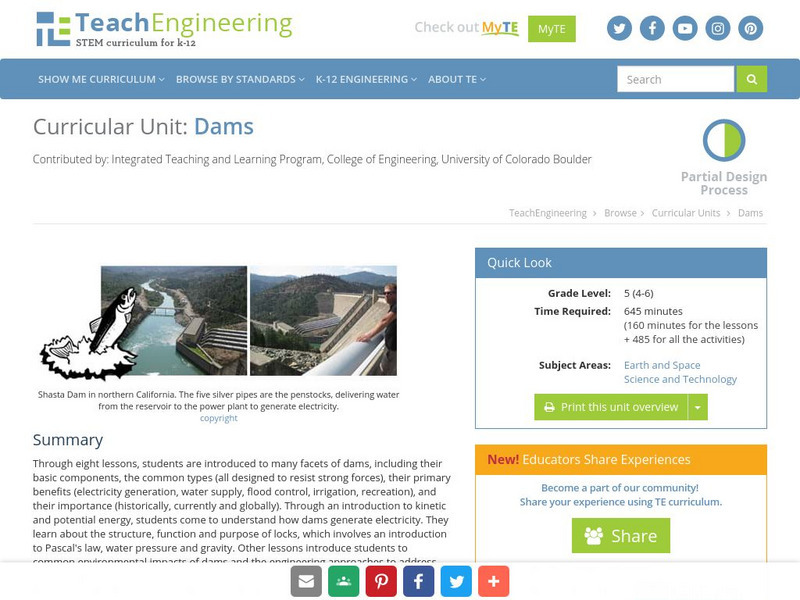
Teach Engineering: Dams
Through eight lessons, students are introduced to many facets of dams, including their basic components, the common types (all designed to resist strong forces), their primary benefits (electricity generation, water supply, flood...
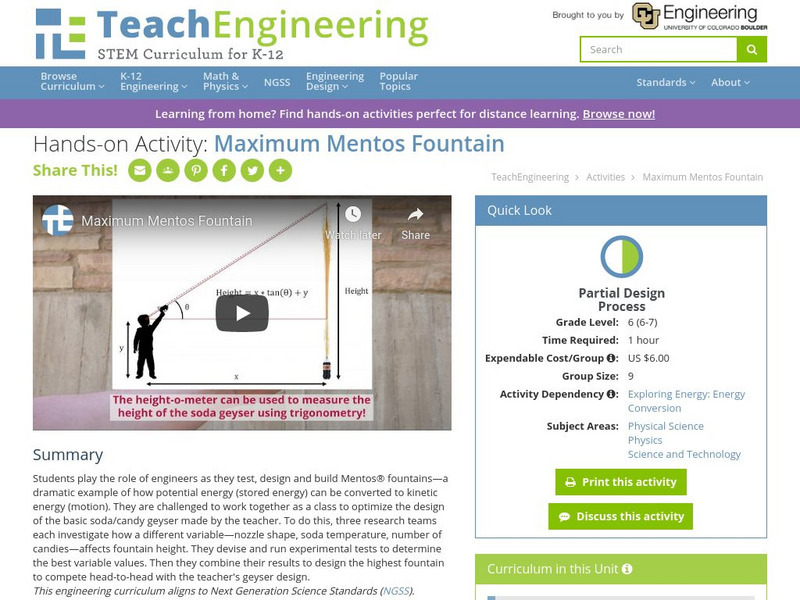
TeachEngineering
Teach Engineering: Maximum Mentos Fountain
Students play the role of engineers as they test, design and build Mentos fountains - a dramatic example of how potential energy can be converted to kinetic energy. They are challenged to work together as a class to optimize the design...
Sophia Learning
Sophia: Kinetic & Potential Energy
This lesson explains how kinetic and potential energy are related.
Sophia Learning
Sophia: Energy: Lesson 4
This lesson will present the different states of energy and how they affect living things. It is 4 of 7 in the series titled "Energy."
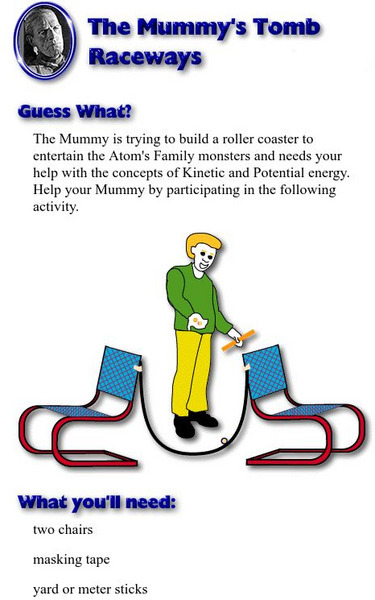
Other
Puhinui School: The Atoms Family: The Mummy's Tomb: Raceways
Help the Mummy build a rollercoaster to entertain the Atoms Family monsters by investigating the concepts of kinetic and potential energy.
Physics Classroom
The Physics Classroom: Motion of a Mass on a Spring
This tutorial investigates the motion of a mass on a spring and how a variety of quantities change over the course of time. Such quantities will include forces, position, velocity and energy - both kinetic and potential energy. Take the...
Physics Aviary
Physics Aviary: Practice Problems: Billy on Hill (Level 2)
Students must predict the distance traveled by a person on a sled. The person will start with potential energy due to gravity and then lose some energy on a hill. They will then lose the remaining energy on a level surface. You have to...