Hi, what do you want to do?






Incredible Art Department
The Incredible Art Department: Middle School and High School Sub Plans
Lesson ideas for the substitute teacher for middle school and secondary art instruction.
CK-12 Foundation
Ck 12: Interactive Middle School Math 6
This all-interactive MSM 6 course is a complete and rigorous Grade 6 Mathematics course where the text is the support material, NOT the main content. The course includes instructional interactives, inline immediate-feedback (formative)...
American Chemical Society
Middle School Chemistry: Lesson Plans: Using Chemical Change to Identify Unknown
Learners observe reactions of liquids with different known powders in this lesson plan. Unknown powders are then identified using characteristic chemical changes.Site includes a procedure, teacher instructions, and video instruction.
American Chemical Society
Middle School Chemistry: Lesson Plans: Why Does Water Dissolve Sugar?
Lesson plan in which students design an experiment to determine if different types of liquids affect the amount of dissolution of an M&M candy shell.
American Chemical Society
Middle School Chemistry: Lesson Plans: Can Liquids Dissolve in Water?
Lesson plan with mulitmedia links in which students identify and control variables to help design a solubility test for different liquids in water.
Other
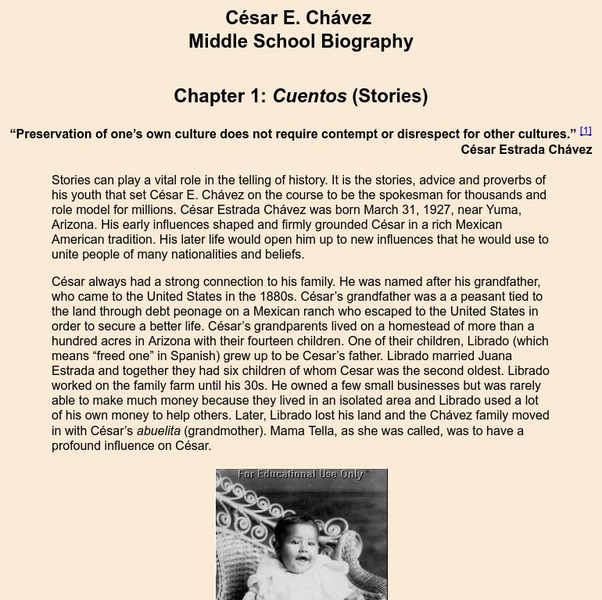
California Department of Education: Cesar E. Chavez Middle School Biography
Complete biographical sketch of Cesar Chavez, founder of the United Farm Worker's (UFW) in 1962. Provides a detailed discussion of his early life, his family, and his work with labor issues.
American Chemical Society
Middle School Chemistry: Lesson Plans: What Is a Chemical Reaction?
After observing a demonstration of a chemical reaction between a burning candle and the oxygen in the air, students use atom model cut-outs to model the reaction and see that all the atoms in the reactants show up in the products.
American Chemical Society
Middle School Chemistry: Lesson Plans: Why Does Water Dissolve Salt?
Students use their own model of a salt crystal and water molecule to show how water dissolves salt. Then, they relate their observations to the structure of salt, water, and alcohol on the molecular level.
American Chemical Society
Middle School Chemistry: Lesson Plans: Using Dissolving to Identify an Unknown
Students first observe a solubility test between salt and sugar. Next, they design their own solubility test with four known crystals and an unknown to discover the identity of the unknown.
American Chemical Society
Middle School Chemistry: Lesson Plans: Forming a Precipitate
Students investigate the concept of a precipitate by combining two clear, colorless solutions that produce a solid.
American Chemical Society
Middle School Chemistry: Heat, Temperature, and Conduction
Students observe, describe, and draw a model on the molecular level, showing how energy is transferred from one substance to another through conduction.
American Chemical Society
Middle School Chemistry: Represent Bonding With Lewis Dot Diagrams
Learners draw and interpret Lewis dot diagrams for individual atoms and both covalent and ionic compounds.
American Chemical Society
Middle School Chemistry: Moving Molecules in a Solid
Students observe and describe, on the molecular level, how heating and cooling affect the motion of molecules in a solid.
American Chemical Society
Middle School Chemistry: Molecules in Motion
Students observe, on a molecular level, how heating and cooling affect molecular motion.
National Council of Teachers of Mathematics
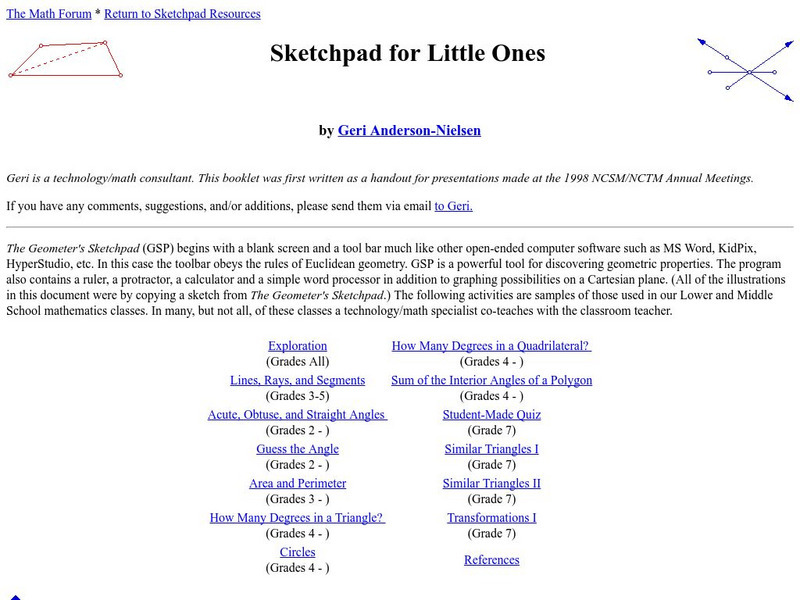
The Math Forum: Geometer's Sketch Pad Lessons
This site contains lessons using Geometer's Sketch Pad for elementary and middle school aged students.
Other
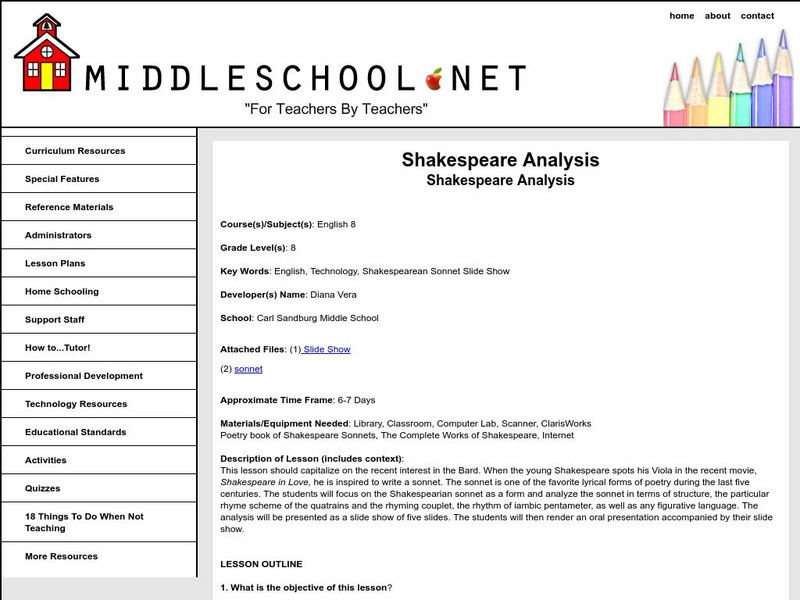
Middle school.net: Shakespeare Analysis & Slide Show
Check out this informative site featuring an analysis of Shakespeare. The objective of this activity is for students to analyze a sonnet and present their findings via slide show. This lesson integrates technology into the curriculum.
American Chemical Society
Middle School Chemistry: Lesson Plans: Does Temperature Affect Dissolving?
Learners identify and control variables to design an experiment to see whether the temperature of a solvent affects the speed at which a solute dissolves.
American Chemical Society
Middle School Chemistry: Periodic Table and Energy Level Models
Students interpret the information given in the periodic table to describe the arrangement of electrons on the energy levels around an atom.
Centers for Disease Control and Prevention
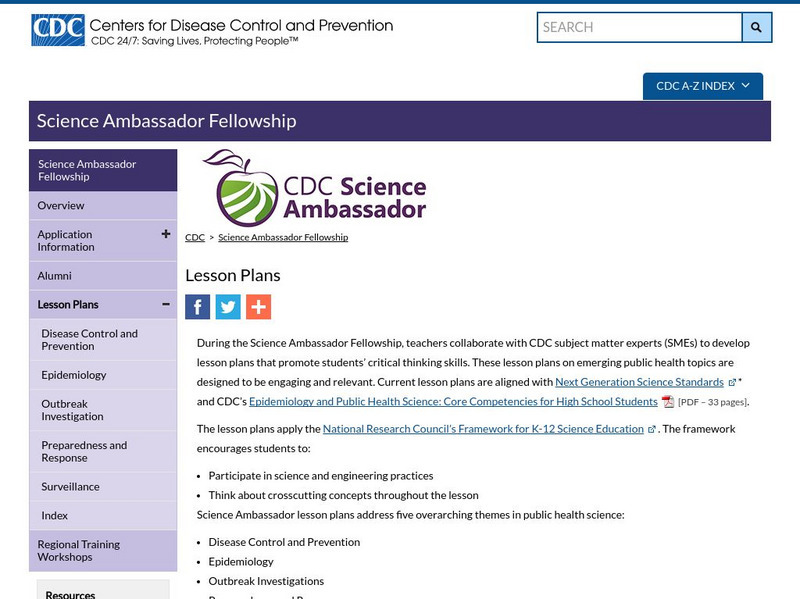
Centers for Disease Control: Science Ambassador Fellowship: Lesson Plans
This site gives many lesson plans for teaching middle and high school students about current and relevant science topics like autism, ADHD, Diabetes, Fetal Alcohol Syndrome, birth defects, genetics, and more. The lessons are based on...
Maine Historical Society
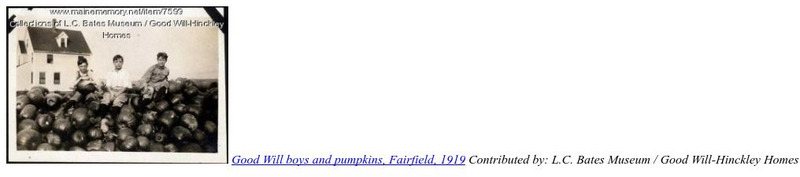
Henry Wadsworth Longfellow: An American Studies Approach for Middle School
The details of Longfellow's life, and the influence of his "Paul Revere's Ride" are explored in this lesson. Extensive materials, links and background information are strengths of this site.
Shodor Education Foundation
Shodor Interactivate: Lesson: Tessellations Geometry and Symmetry
This lesson plan deals with tessellations and their geometric concepts. Upper elementary and middle school students will also explore polygons, symmetry, analyze patterns and explore the role of mathematics in nature and culture.
Shodor Education Foundation
Shodor Interactivate: Lesson: Lines, Rays, Line Segments, & Planes
This robust lesson plan for upper elementary and middle school grades introduces the concepts for lines, rays, line segments, and planes. Resources are linked to it and ready for your use.
University of Regina (Canada)
University of Regina: Math Central: m.c.escher: Mathematics and Visual Arts
This cross-curricular middle school unit integrates mathematics and visual art. Through the study of the M.C. Escher?s work, students explore tiling from both a mathematical and artistic point of view. Points for discussion and...
American Chemical Society
Middle School Chemistry: Lesson Plans: A Catalyst and the Rate of Reaction
Students observe and investigate how a catalyst increases the rate of a chemical reaction while not becoming part of the products of the reaction.
Other popular searches
- Middle School Lessons Health
- Art Lessons Middle School
- Nouns Lessons Middle School
- Thematic Lessons Middle School