Hi, what do you want to do?






Incredible Art Department
The Incredible Art Department: Integration of Art and Drama
A 7-day unit of lessons integrating art with drama. Artists covered include Filippo Brunelleschi, Leonardo Da Vinci, Vincent Van Gogh, Henri de Toulouse-Lautrec, Henri Matisse, and five Indiana artists.
Incredible Art Department
The Incredible Art Department: Art Lesson Plans
The main page for this site's section on lesson plans. It describes how to build an art lesson plan and has links to lesson collections for all grade bands, for substitute teachers, integration with drama, cartoon drawing, assessment,...
Better Lesson
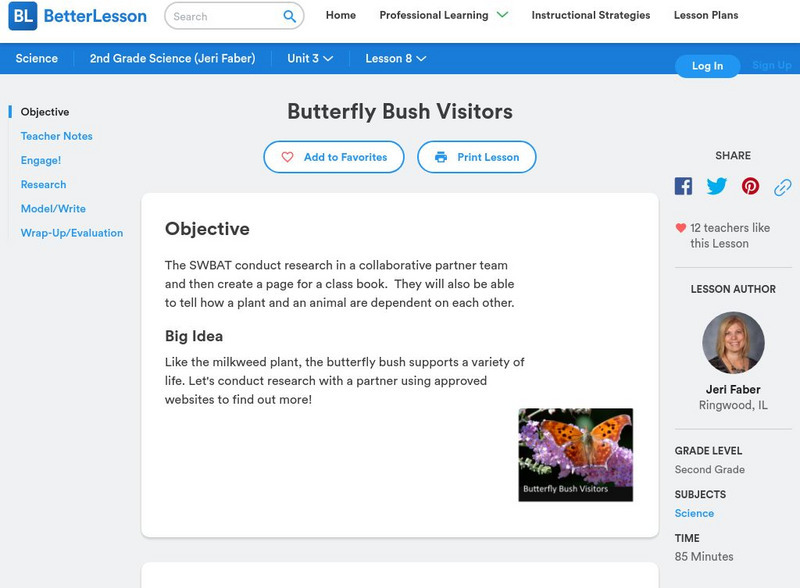
Better Lesson: Butterfly Bush Visitors
In this lesson, the children learn about how critters depend on the butterfly bush and how the butterfly bush, in turn, depends on it. Common Core writing skills are integrated as they take it to the next step, and create their own page...
Rutgers University
Rutgers: Lesson Module: Women and the Presidency
This module offers multiple resources and ideas for integrating gender into lessons on the presidency and/or creating a lesson solely focused on women and the presidency. It provides information on the women who have run for president...
PBS
Pbs Lesson Plan (Affluenza): Small World
A lesson focusing on over-consumption where students are challenged to consider the impact of the American lifestyle on the environment. Using an apple as a model, this lesson offers students a visual explanation of arable land and...
TeachEngineering
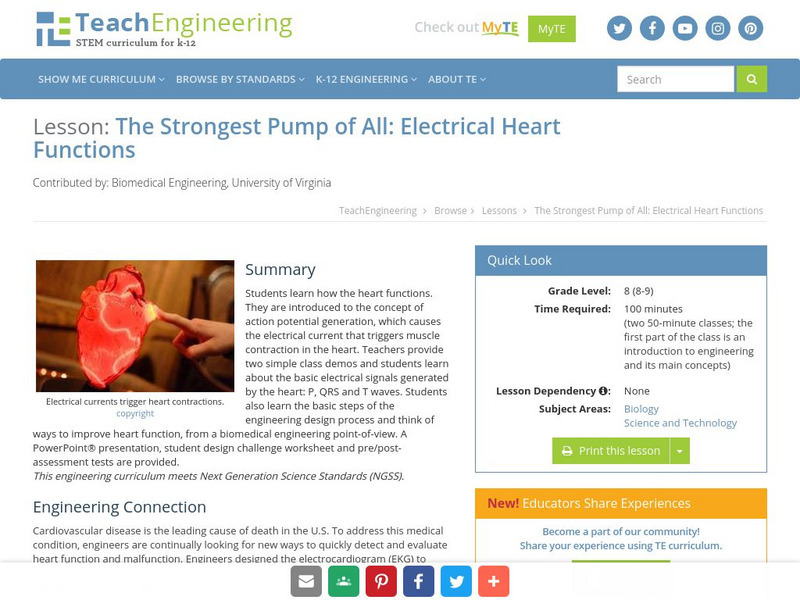
Teach Engineering: The Strongest Pump of All
In this lesson the students will learn how the heart functions. Students will be introduced to the concept of action potential generation. The lesson will explain how action potential generation causes the electrical current that causes...
TeachEngineering
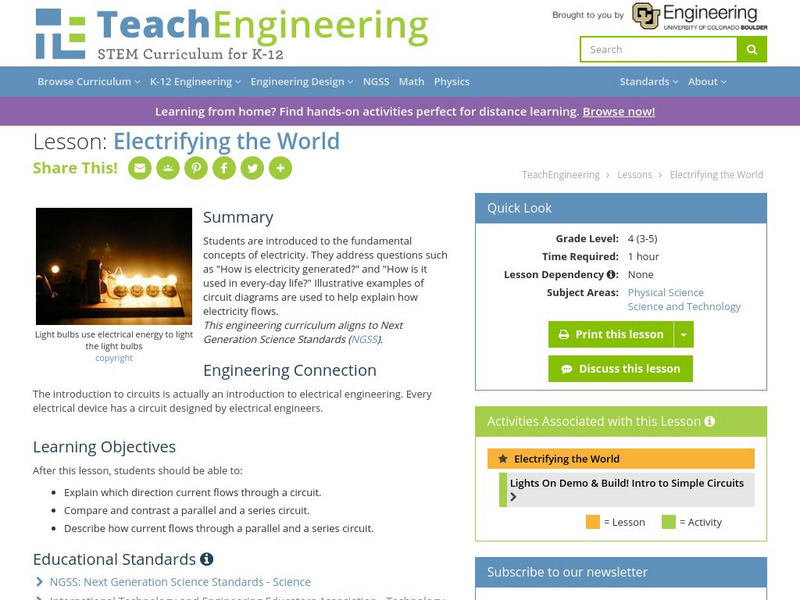
Teach Engineering: Electrifying the World
This lesson introduces students to the fundamental concepts of electricity. This is accomplished by addressing questions such as "How is electricity generated," and "How is it used in every-day life?" The lesson also includes...
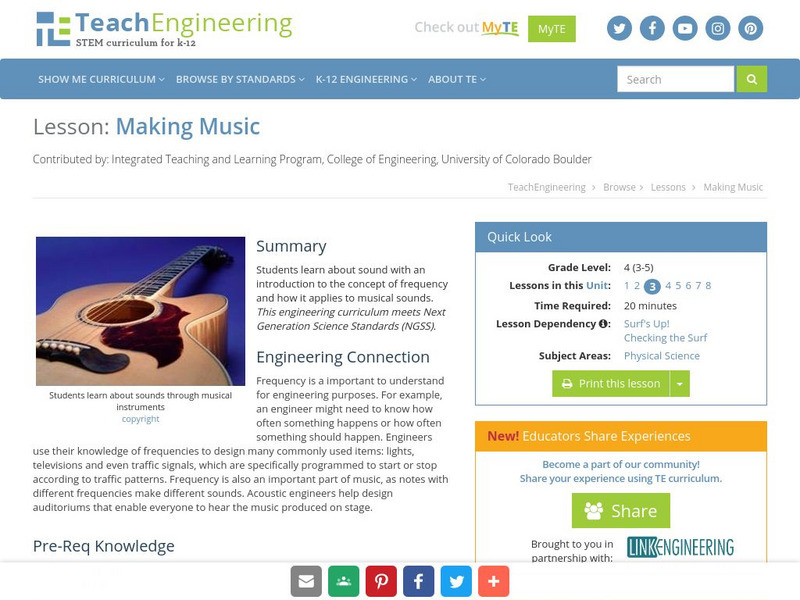
TeachEngineering
Teach Engineering: Making Music
In this lesson, young scholars learn about sound. Girls and boys are introduced to the concept of frequency and how it applies to musical sounds.
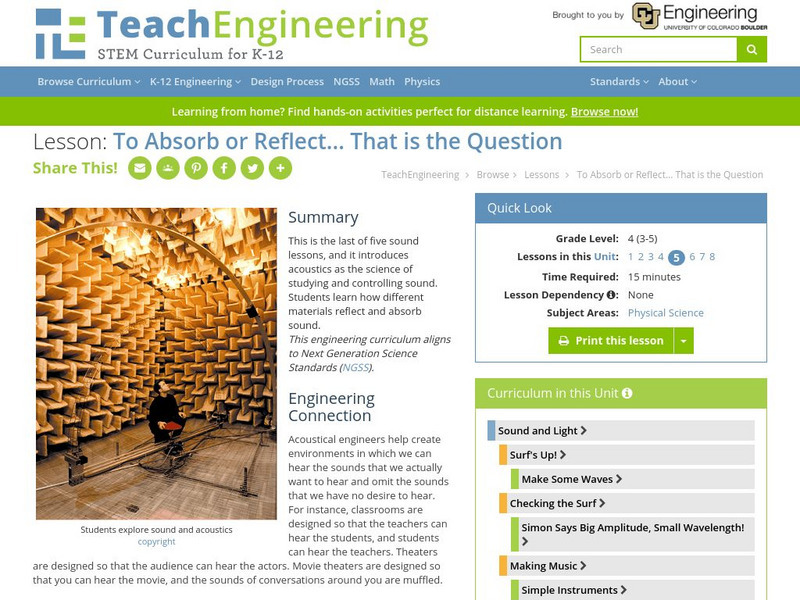
TeachEngineering
Teach Engineering: To Absorb or Reflect, That Is the Question
This is the last of five sound lessons, and it introduces acoustics as the science of studying and controlling sound. Learners learn how different materials reflect and absorb sound.
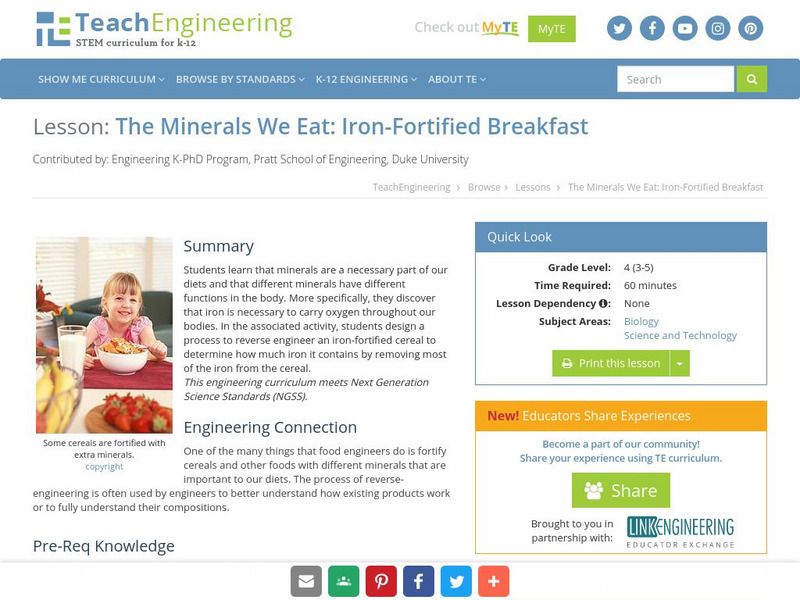
TeachEngineering
Teach Engineering: Fortified Breakfast
In this lesson, young scholars will learn that minerals are a necessary part of our diet. They will learn that different minerals have different functions in the body. More specifically, they will discover that iron is necessary to carry...
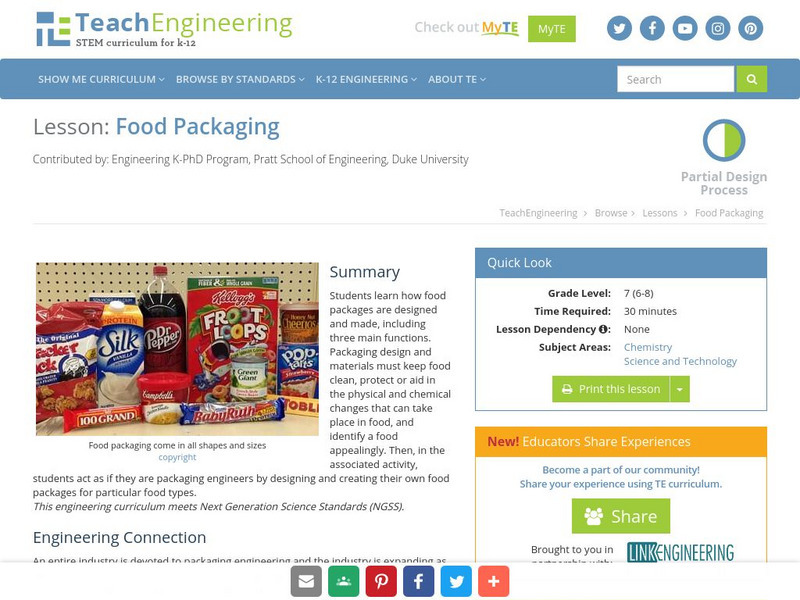
TeachEngineering
Teach Engineering: Food Packaging
This lesson focuses on how food packages are designed and made. Students will learn three of the main functions of a food package. They will learn what is necessary of the design and materials of a package to keep food clean, protect or...

Alabama Learning Exchange
Alex: Nocturnal Animals Lesson #1
This lesson can be part of a two-week integrated thematic unit on nocturnal animals. During this lesson, learners will be introduced to nocturnal animals. They will have an opportunity to navigate web sites to learn more about nocturnal...
Other
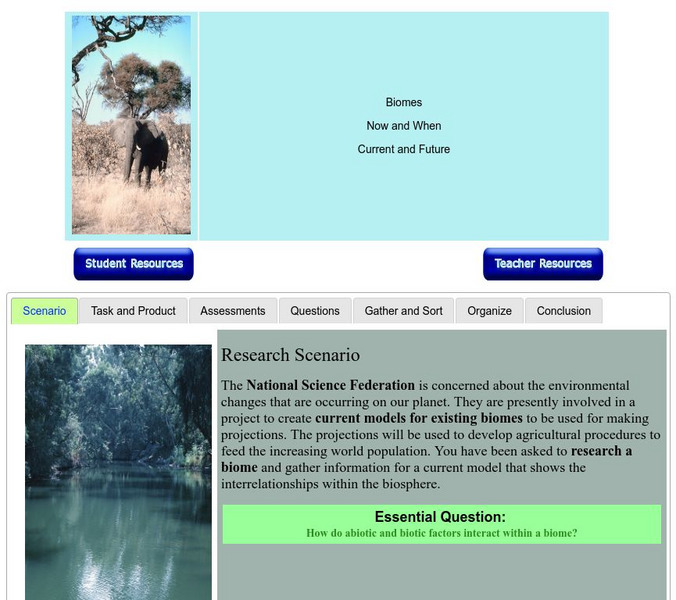
Baltimore County Public Schools: Biomes: Now and When (Online Research Model)
Biomes lesson designed to answer the question, how do abiotic and biotic factors interact within a biome? integrates biological concepts with literacy knowledge and skills. Includes directed questions, assessment guides, project...
University of Regina (Canada)
University of Regina: Math Central: m.c.escher: Mathematics and Visual Arts
This cross-curricular middle school unit integrates mathematics and visual art. Through the study of the M.C. Escher?s work, students explore tiling from both a mathematical and artistic point of view. Points for discussion and...
US Census Bureau
Us Census Bureau: The Art of Persuasion: Using Census Data to Influence Others
In this instructional activity, students will incorporate information from the U.S. Census Bureau's QuickFacts data access tool into an advertisement for a city of their choice. They will use persuasive and advertising techniques to...
TeachEngineering
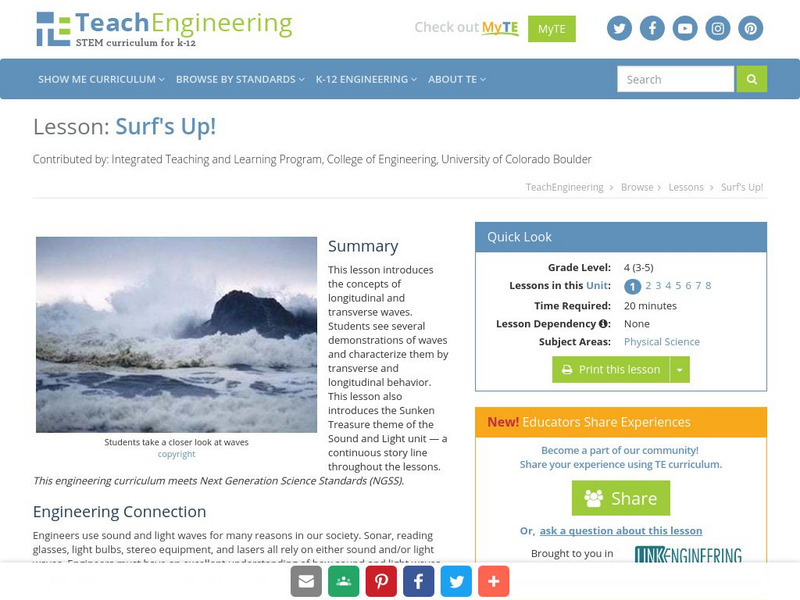
Teach Engineering: Surf's Up!
This lesson introduces the concepts of longitudinal and transverse waves. Students see several demonstrations of waves and characterize them by transverse and longitudinal behavior. This lesson also introduces the Sunken Treasure theme...
TeachEngineering
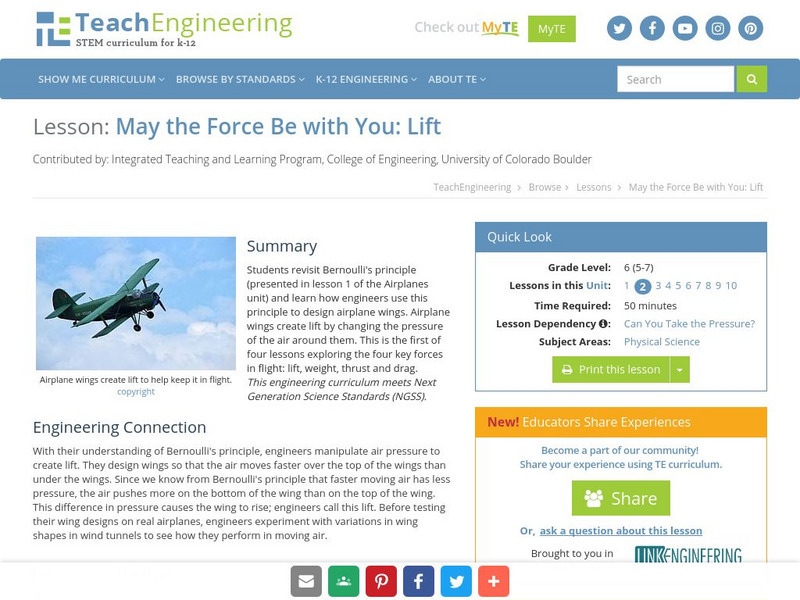
Teach Engineering: May the Force Be With You: Lift
Students revisit Bernoulli's Principle (Lesson 1 of the Airplanes unit) and learn how engineers use this principle to design airplane wings. Airplane wings create lift by changing the pressure of the air around it. This is the first of...
TeachEngineering
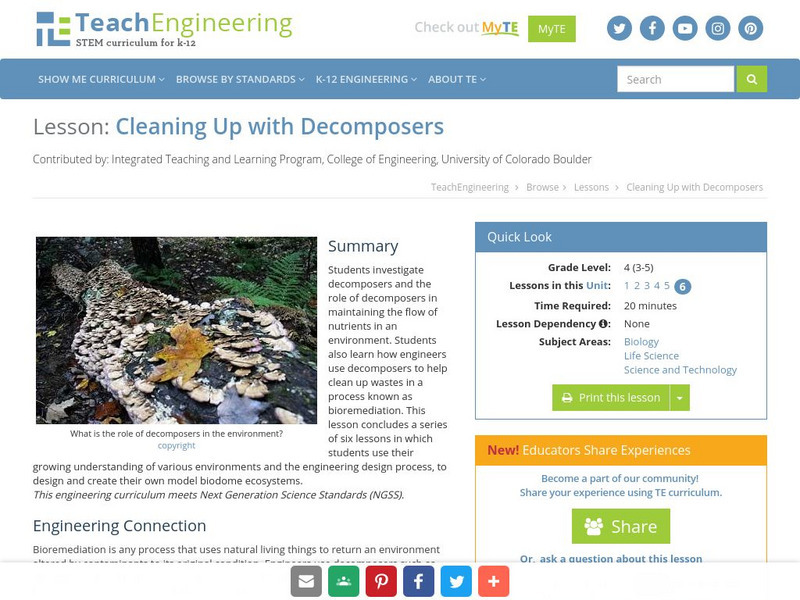
Teach Engineering: Cleaning Up With Decomposers
Students investigate decomposers and the role of decomposers in maintaining the flow of nutrients in an environment. Students also learn how engineers use decomposers to help clean up wastes in a process known as bioremediation. This...
TeachEngineering
Teach Engineering: Learn to Build a Rocket in 5 Days or Your Money Back
In this lesson, students discover the entire process that goes into designing a rocket for any customer. In prior lessons, students learned how rockets work, but now they learn what real-world decisions engineers have to make when...
TeachEngineering
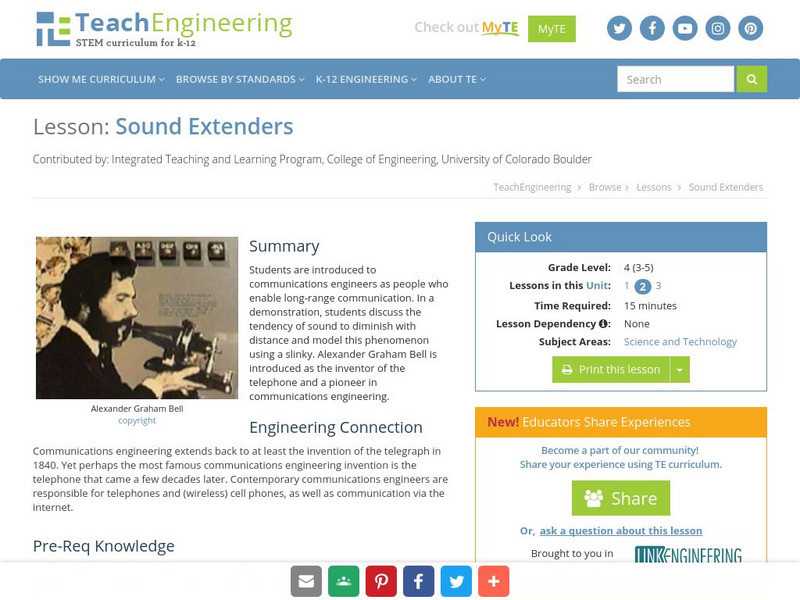
Teach Engineering: Sound Extenders
In this lesson, students are introduced to communications engineers as people who enable long-range communication. In the lesson demonstration, students discuss the tendency of sound to diminish with distance and model this phenomenon...
TeachEngineering
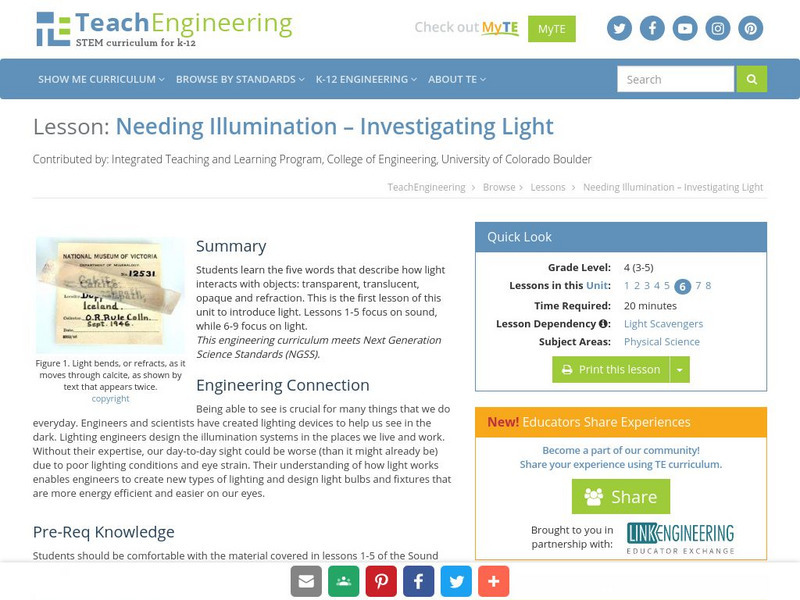
Teach Engineering: Needing Illumination: Investigating Light
This is the first lesson of this unit to introduce light. For this lesson, learners learn the five words that describe how light interacts with objects: "transparent," "translucent," "opaque," "reflection" and "refraction."
TeachEngineering
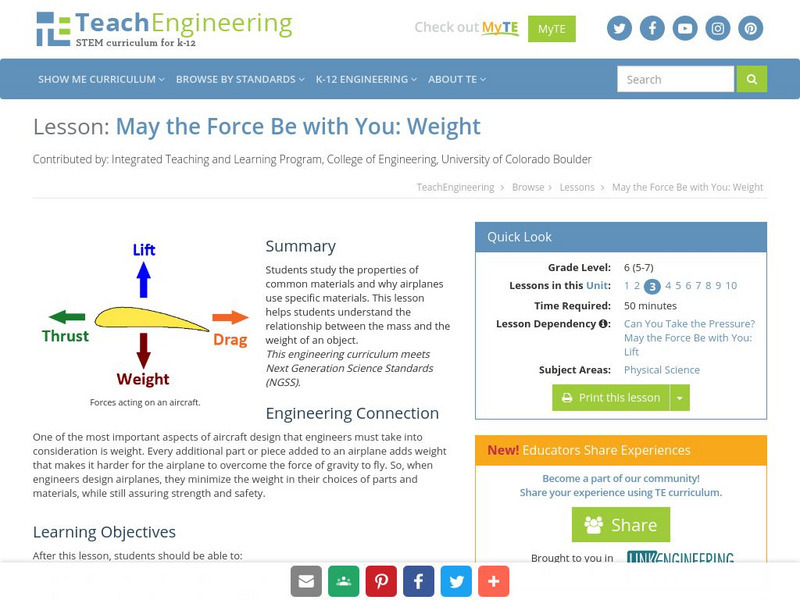
Teach Engineering: May the Force Be With You: Weight
The purpose of this lesson is to help students understand the relationship between the mass and the weight of an object. Students will study the properties of common materials and why airplanes use specific materials.
TeachEngineering
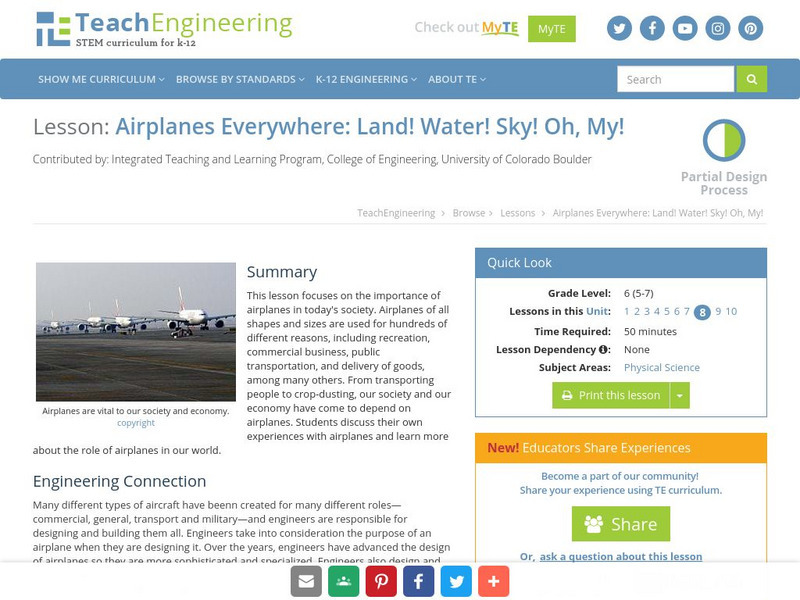
Teach Engineering: Land! Water! Sky! Oh My!
This lesson focuses on the importance of airplanes in today's society. Airplanes of all shapes and sizes are used for hundreds of different reasons, including recreation, commercial business, public transportation, and delivery of goods,...
TeachEngineering
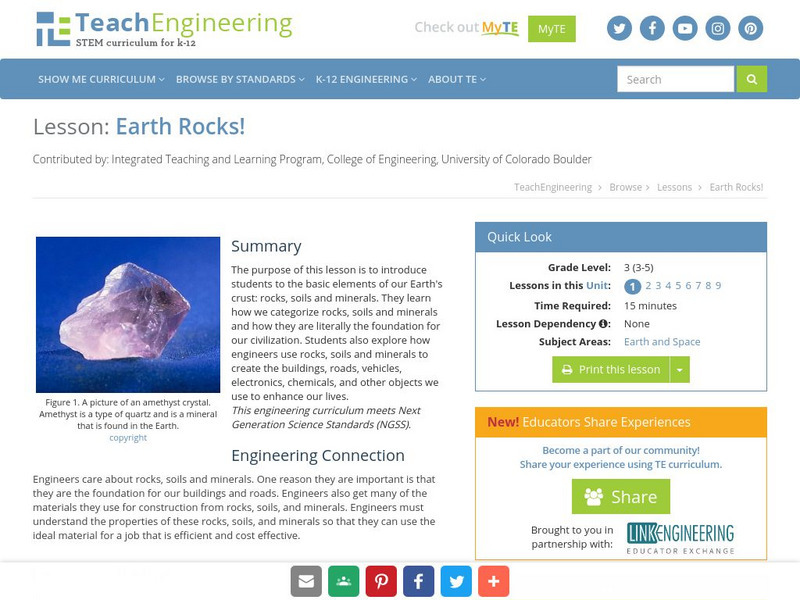
Teach Engineering: Earth Rocks!
The purpose of this lesson is to introduce students to the basic elements of our Earth's crust: rocks, soils and minerals. They learn how we categorize rocks, soils and minerals and how they are literally the foundation for our...