Hi, what do you want to do?





![Ruben R. Puentedura: Samr in the Classroom [Pdf] PPT](https://static.lp.lexp.cloud/images/attachment_defaults/resource/large/FPO-knovation.png "Ruben R. Puentedura: Samr in the Classroom [Pdf] PPT")
Other
Ruben R. Puentedura: Samr in the Classroom [Pdf]
Dr. Ruben Puentedura created the SAMR Model. This is a set of 38 slides from a presentation at Ridley College. He explains the four levels of SAMR, and the steps involved in implementing it with technology, along with examples. Most of...
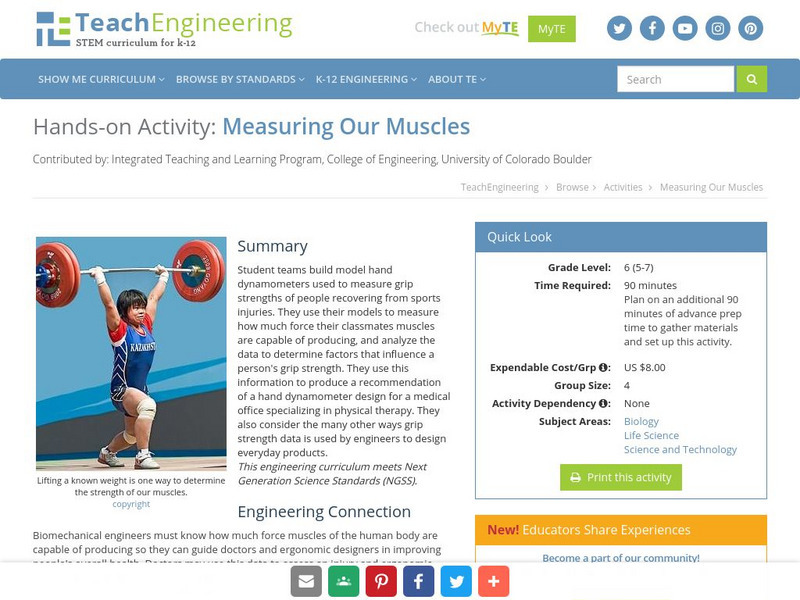
TeachEngineering
Teach Engineering: Measuring Our Muscles
Student teams build model hand dynamometers used to measure grip strengths of people recovering from sports injuries. They use their models to measure how much force their classmates muscles are capable of producing, and analyze the data...
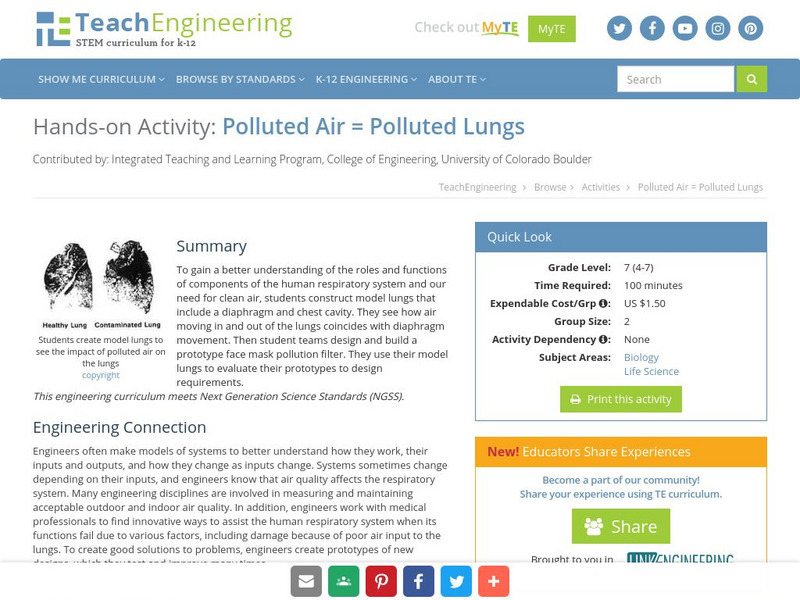
TeachEngineering
Teach Engineering: Polluted Air = Polluted Lungs
To gain a better understanding of the roles and functions of components of the human respiratory system and our need for clean air, students construct model lungs that include a diaphragm and chest cavity. They see how air moving in and...
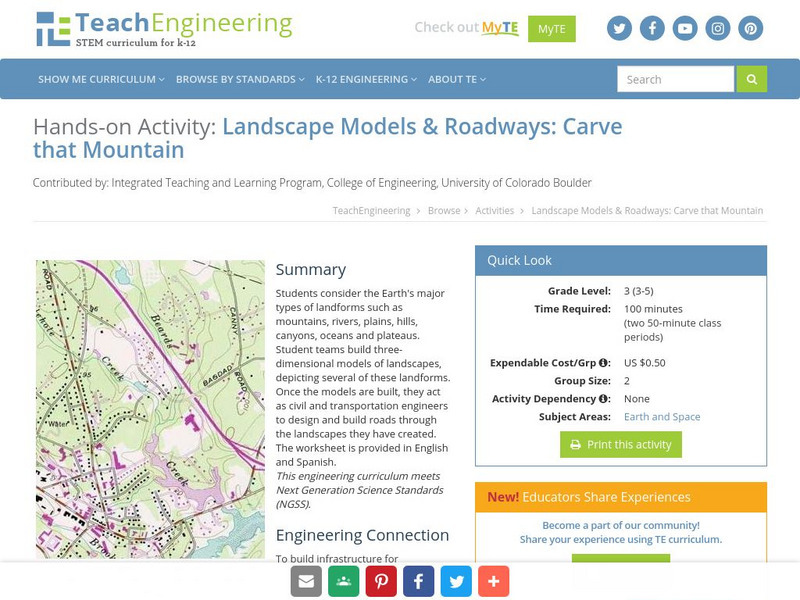
TeachEngineering
Teach Engineering: Carve That Mountain
In this activity, students further investigate major landforms (e.g., mountains, rivers, plains, hills, oceans and plateaus). They build a three-dimensional model of a landscape depicting several of these landforms. Once they have built...
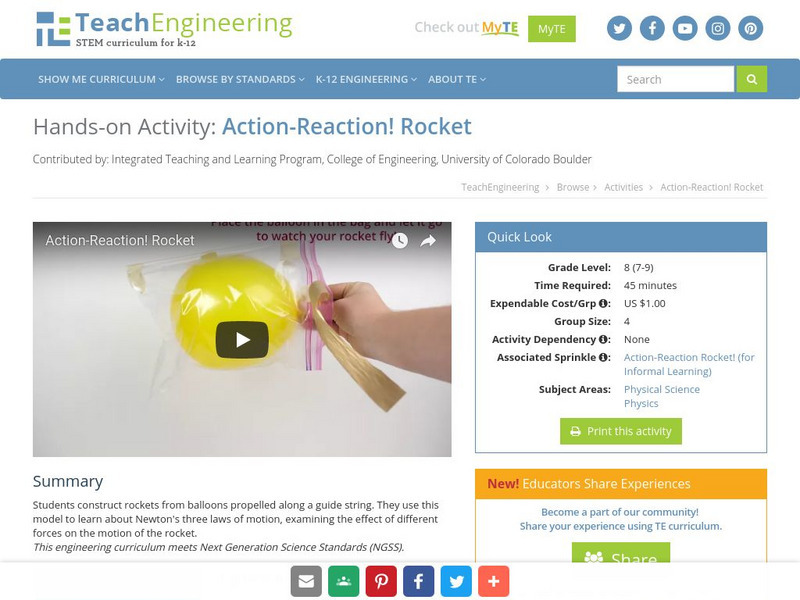
TeachEngineering
Teach Engineering: Action Reaction! Rocket
Students construct a rocket from a balloon propelled along a guide string. They use this model to learn about Newton's three laws of motion, examining the effect of different forces on the motion of the rocket.
TeachEngineering
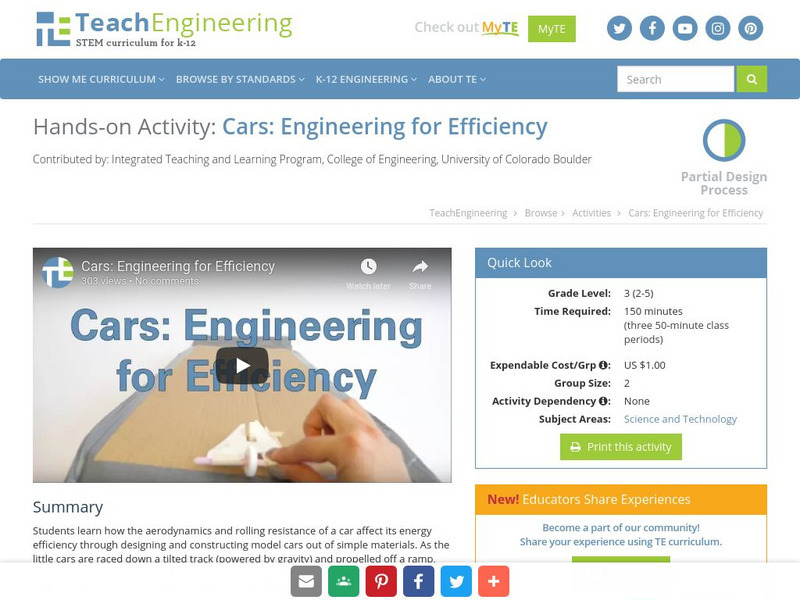
Teach Engineering: Cars: Engineering for Efficiency
Students learn how the aerodynamics and rolling resistance of a car affect its energy efficiency through designing and constructing model cars out of simple materials. As the little cars are raced down a tilted track (powered by gravity)...
TeachEngineering
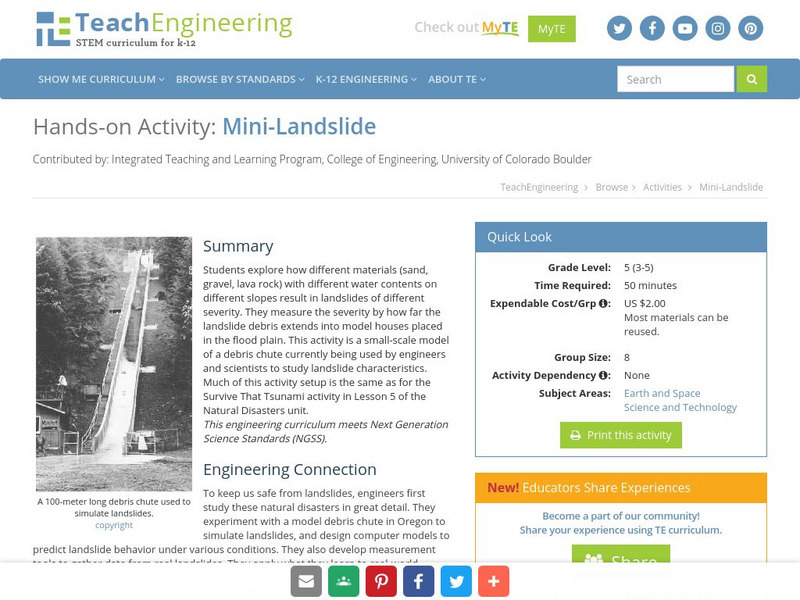
Teach Engineering: Mini Landslide
Students explore how different materials (sand, gravel, lava rock) with different water contents on different slopes result in landslides of different severity. They measure the severity by how far the landslide debris extends into model...
TeachEngineering
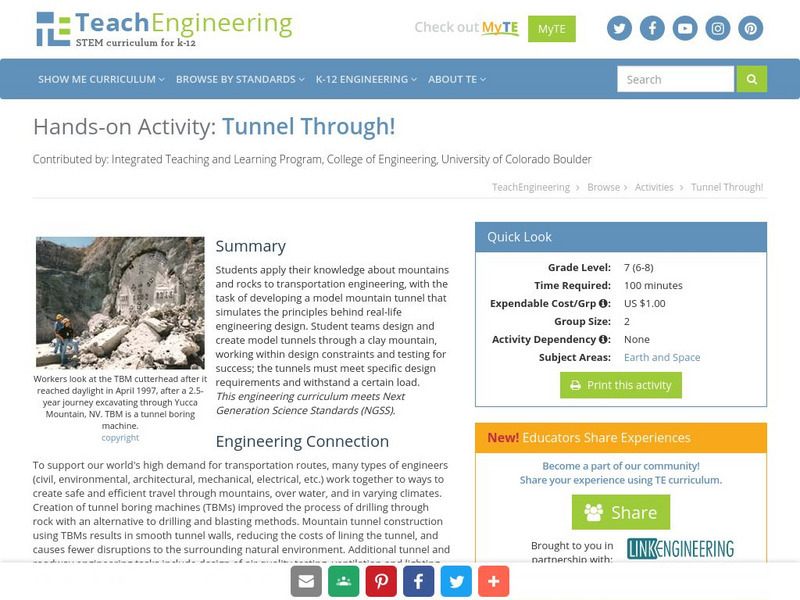
Teach Engineering: Tunnel Through!
Students apply their knowledge about mountains and rocks to transportation engineering, with the task of developing a model mountain tunnel that simulates the principles behind real-life engineering design. Student teams design and...
TeachEngineering
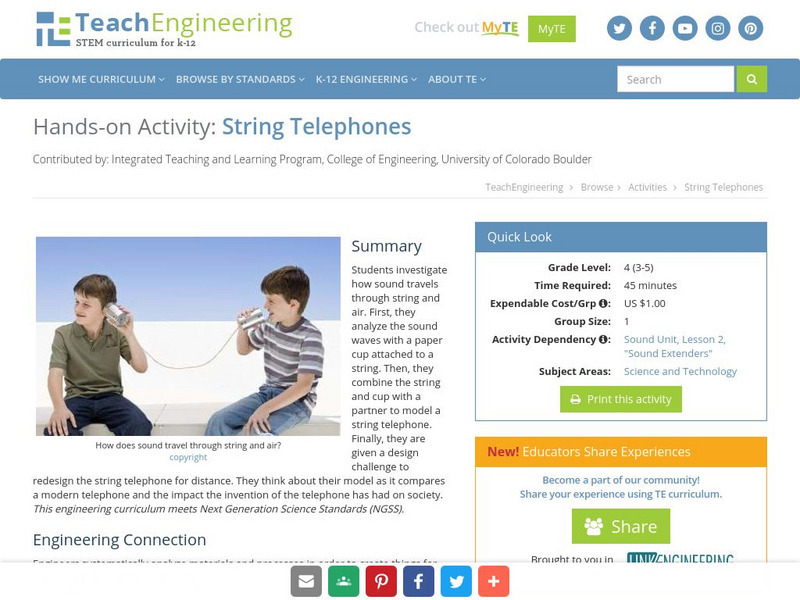
Teach Engineering: String Telephones
Students investigate how sound travels through string and air. First, they analyze the sound waves with a paper cup attached to a string. Then, they combine the string and cup with a partner to model a string telephone. Finally, they are...
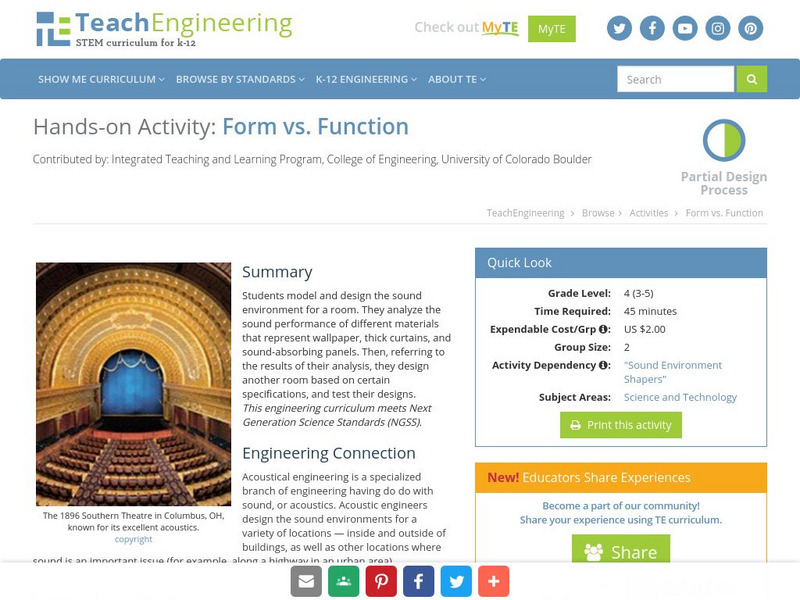
TeachEngineering
Teach Engineering: Form vs. Function
Students model and design the sound environment for a room. They analyze the sound performance of different materials that represent wallpaper, thick curtains, and sound-absorbing panels. Then, referring to the results of their analysis,...
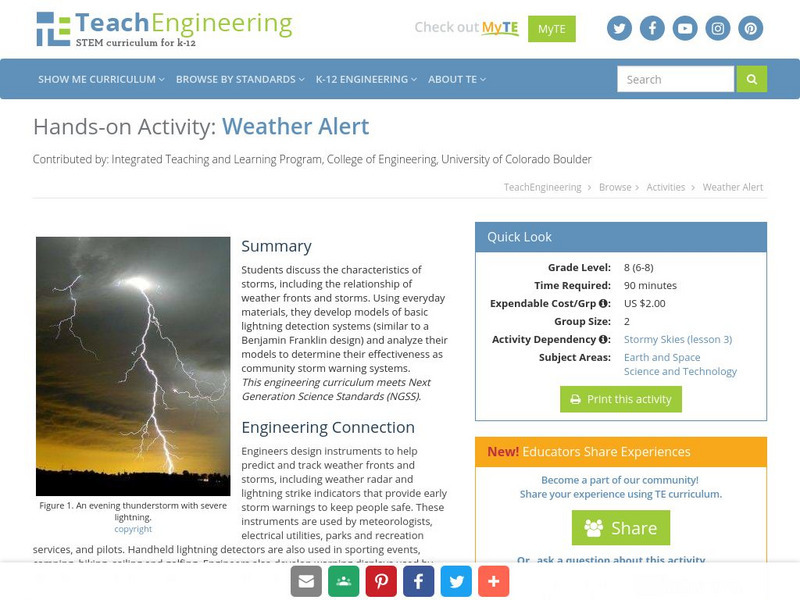
TeachEngineering
Teach Engineering: Weather Alert
Students discuss the characteristics of storms, including the relationship of weather fronts and storms. Using simple materials, the students develop a model of a simple lightning detection system and analyze their model to determine its...
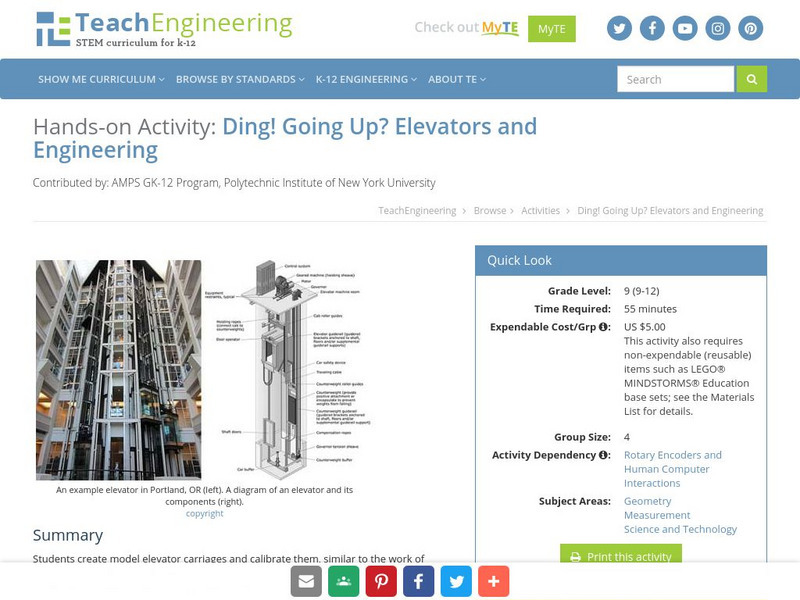
TeachEngineering
Teach Engineering: Ding! Going Up? Elevators and Engineering
Students create model elevator carriages and calibrate them, similar to the work of design and quality control engineers. Students use measurements from rotary encoders to recreate the task of calibrating elevators for a high-rise...
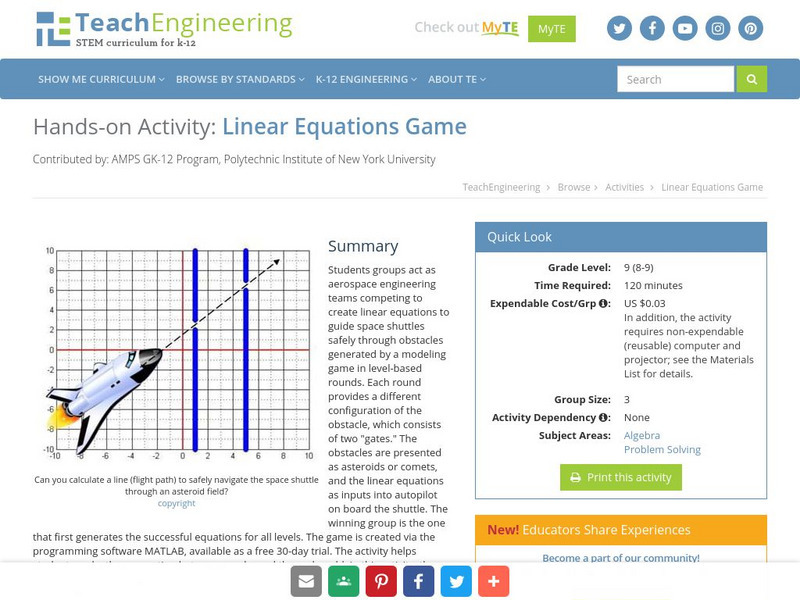
TeachEngineering
Teach Engineering: Linear Equations Game
Students groups act as aerospace engineering teams competing to create linear equations to guide space shuttles safely through obstacles generated by a modeling game in level-based rounds. Each round provides a different configuration of...
TeachEngineering
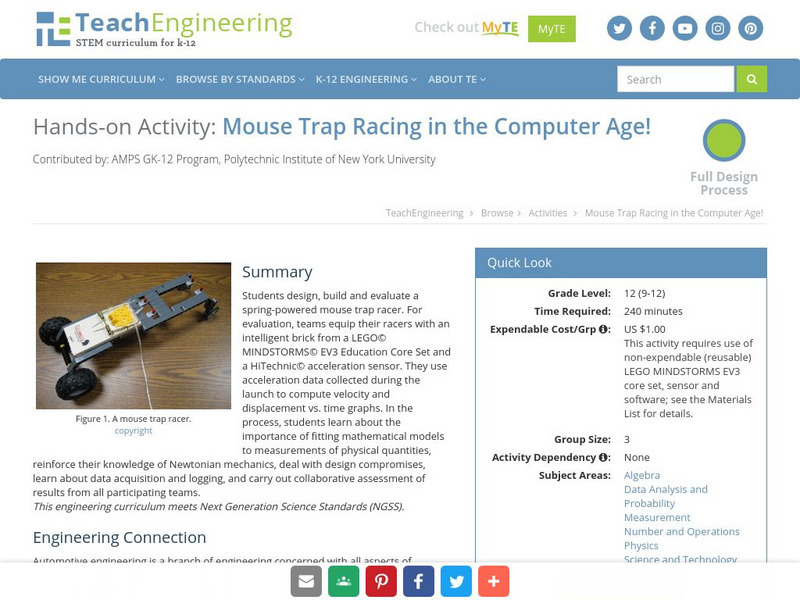
Teach Engineering: Mouse Trap Racing in the Computer Age!
Students design, build and evaluate a spring-powered mouse trap racer. For evaluation, teams equip their racers with an intelligent brick from a LEGO MINDSTORMS NXT Education Base Set and a HiTechnic acceleration sensor. They use...
TeachEngineering
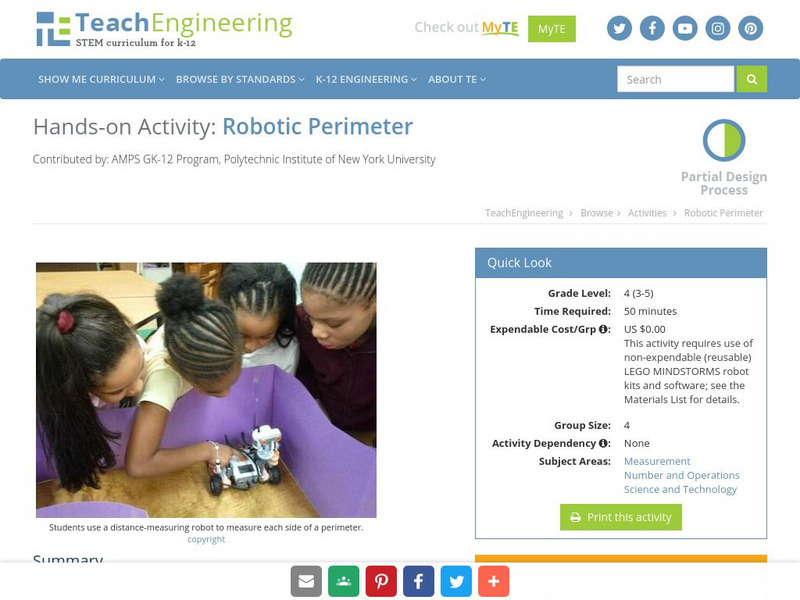
Teach Engineering: Robotic Perimeter
Students learn and practice how to find the perimeter of a polygonal shape. Using a ruler, they measure model rooms made of construction paper walls. They learn about other tools, such as a robot, that can help them take measurements....
TeachEngineering
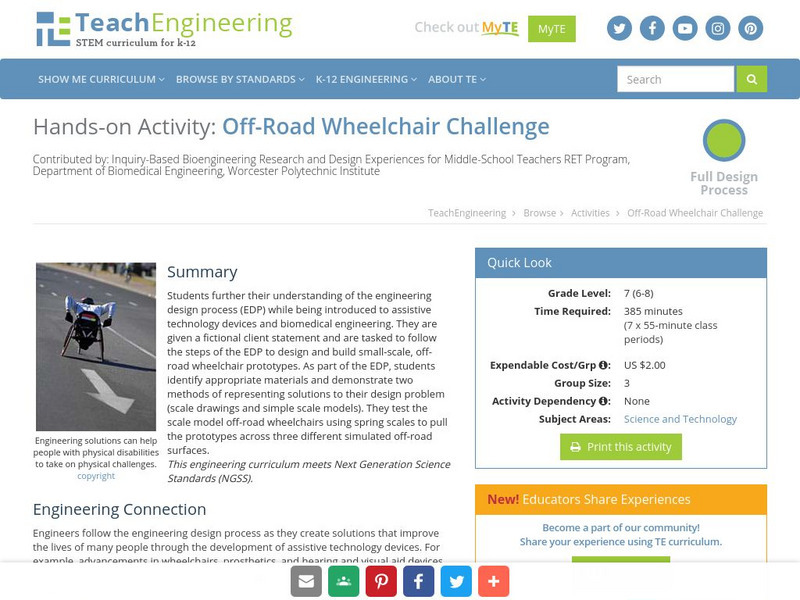
Teach Engineering: Off Road Wheelchair Challenge
Students further their understanding of the engineering design process (EDP) while being introduced to assistive technology devices and biomedical engineering. They are given a fictional client statement and are tasked to follow the...
TeachEngineering
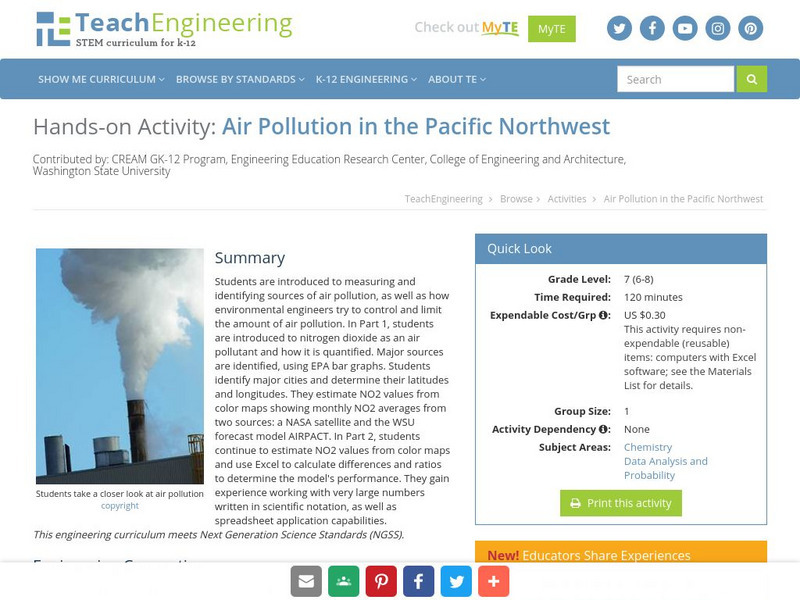
Teach Engineering: Air Pollution in the Pacific Northwest
Students are introduced to measuring and identifying sources of air pollution, as well as how environmental engineers try to control and limit the amount of air pollution. In Part 1, students are introduced to nitrogen dioxide as an air...
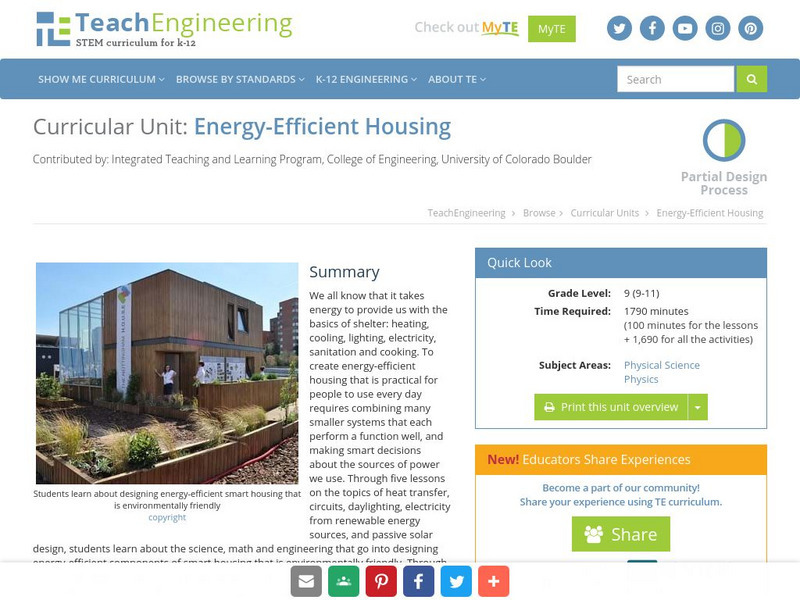
TeachEngineering
Teach Engineering: Energy Efficient Housing
We all know that it takes energy to provide us with the basics of shelter: heating, cooling, lighting, electricity, sanitation and cooking. To create energy-efficient housing that is practical for people to use every day requires...
TeachEngineering
Teach Engineering: Mechanics Mania
Through ten lessons and numerous activities, students explore the natural universal rules engineers and physicists use to understand how things move and stay still. Together, these rules are called "mechanics." The study of mechanics is...
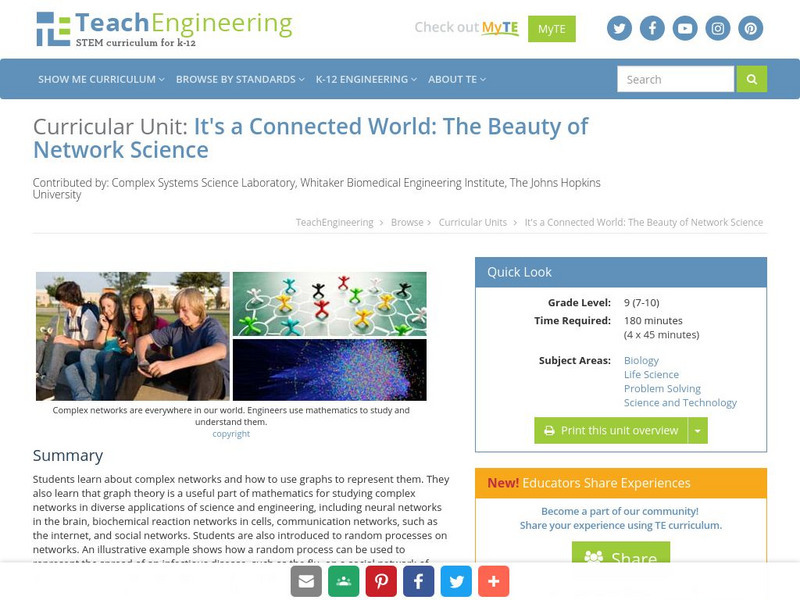
TeachEngineering
Teach Engineering: It's a Connected World: The Beauty of Network Science
Students learn about complex networks and how to use graphs to represent them. They also learn that graph theory is a useful part of mathematics for studying complex networks in diverse applications of science and engineering, including...
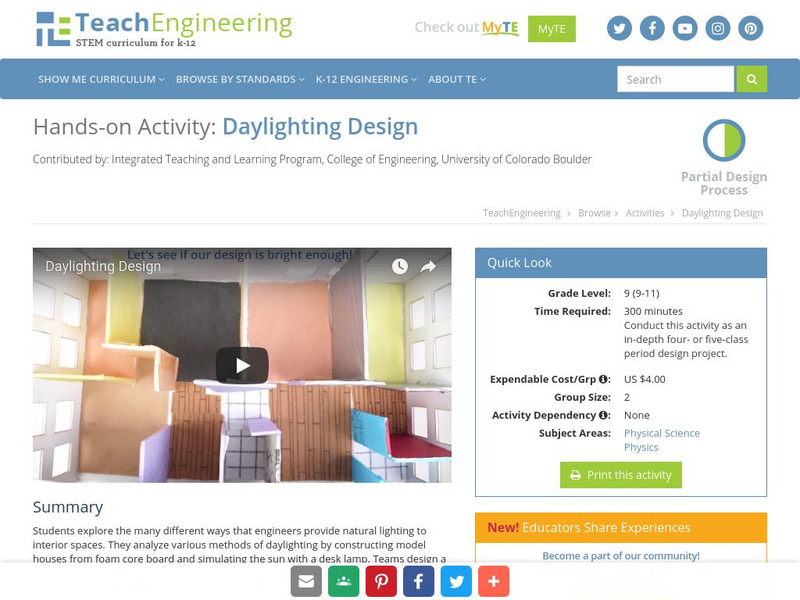
TeachEngineering
Teach Engineering: Daylighting Design
Students explore the many different ways that engineers provide natural lighting to interior spaces. They analyze various methods of daylighting by constructing model houses from foam core board and simulating the sun with a desk lamp....
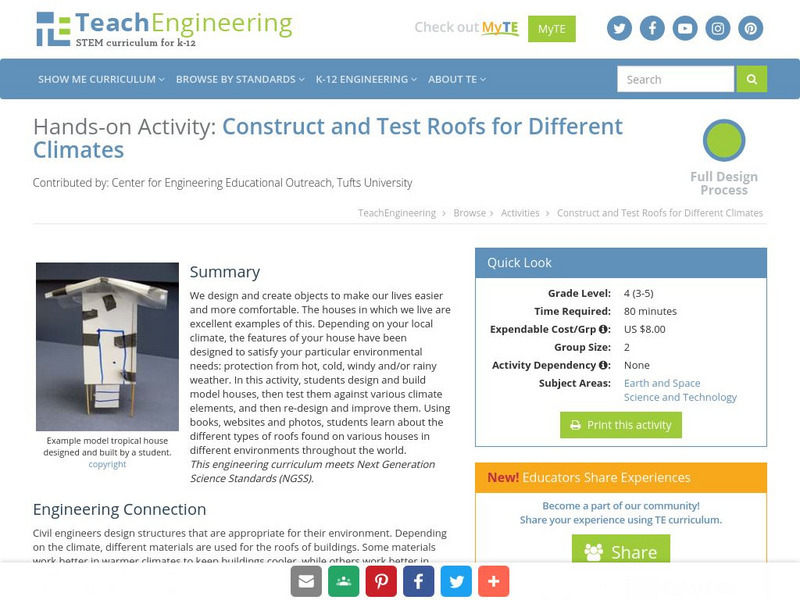
TeachEngineering
Teach Engineering: Construct and Test Roofs for Different Climates
We design and create objects to make our lives easier and more comfortable. The houses in which we live are an excellent example of this. Depending on your local climate, the features of your house will be different to satisfy your...

PBS
Pbs Teachers: Earth's Warming Climate: Are We Responsible?
We obviously don't want to feel responsible for the warming climate, but are we? For this lesson plan you will analyze CO2 data sets and study barriers involved in teaching about global climate change. PBS TeacherLine also provides a...
National Endowment for the Arts
National Endowment for the Arts: The Art in Peacemaking [Pdf]
A guide to integrating conflict resolution education into youth arts programs. This program was created to give after school youth teachers tools to help youth solve disputes they see on a daily basis.