TeachEngineering
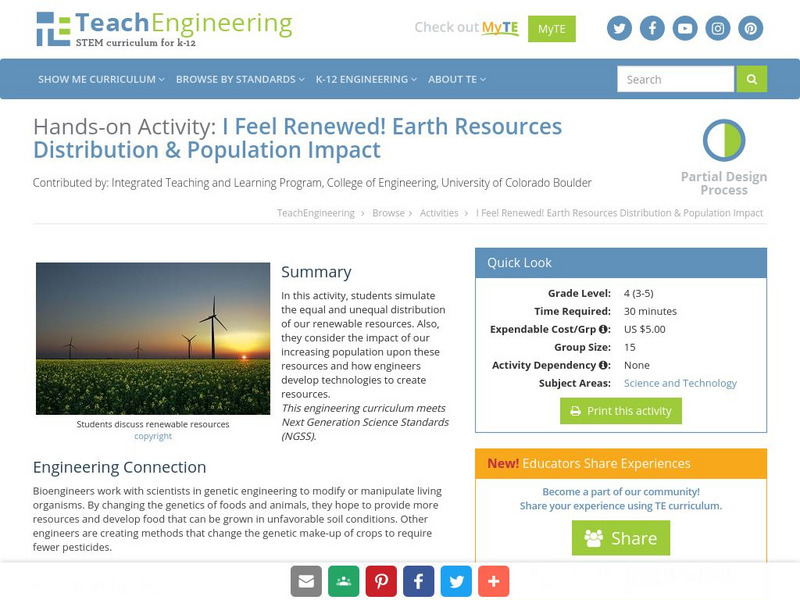
Teach Engineering: I Feel Renewed!
In this activity, students will simulate the equal and unequal distribution of our renewable resources. Also, they will consider the impact of our increasing population upon these resources and how engineers develop technologies to...
TeachEngineering
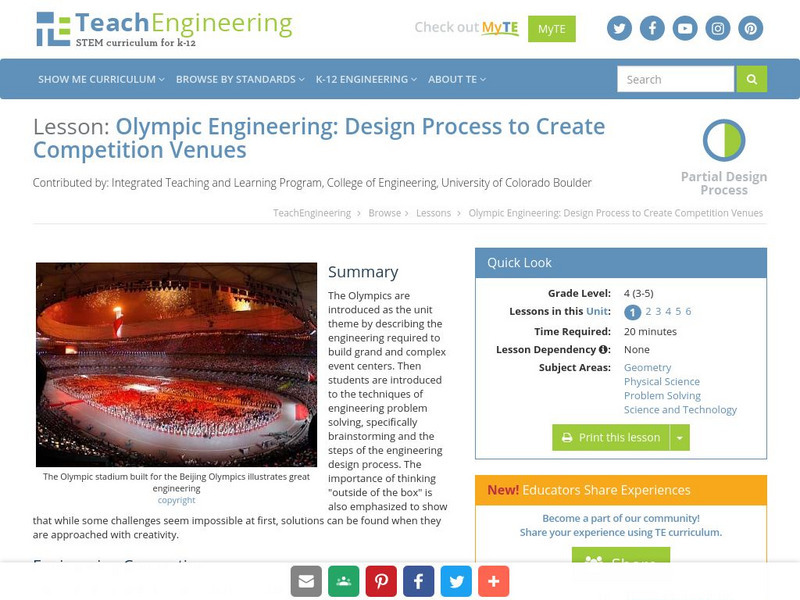
Teach Engineering: Olympic Engineering
The lesson begins by introducing Olympics as the unit theme. The purpose of this lesson is to introduce students to the techniques of engineering problem solving. Specific techniques covered in the lesson include brainstorming and the...
TeachEngineering
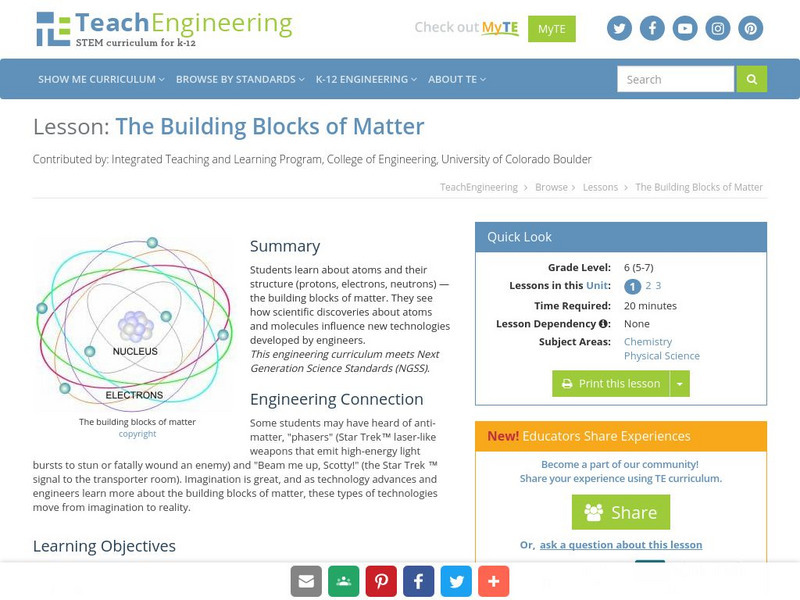
Teach Engineering: The Fundamental Building Blocks of Matter
This lesson plan explores the fundamentals of atoms and their structure. The building blocks of matter (protons, electrons, neutrons) are covered in detail. Students think about how atoms and molecules can influence new technologies...
TeachEngineering
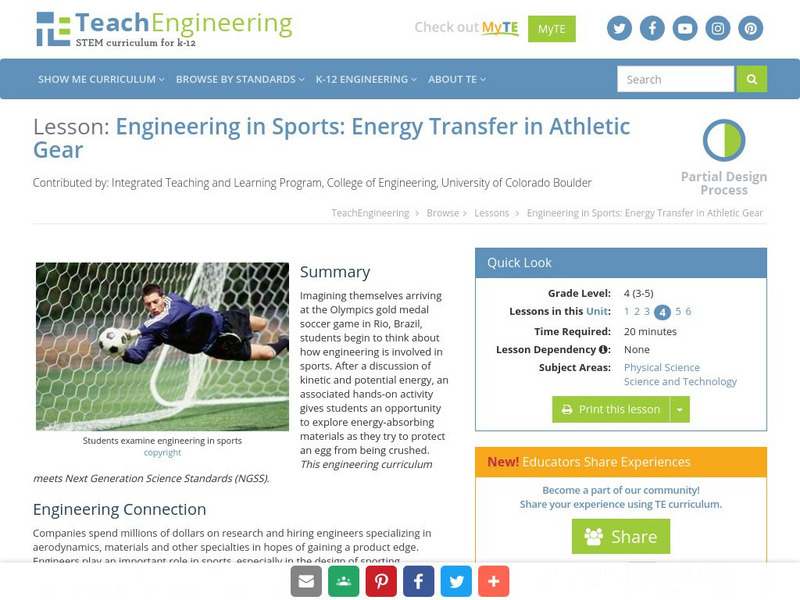
Teach Engineering: Engineering in Sports
Imagining themselves arriving at the Olympic gold medal soccer game in Beijing, students begin to think about how engineering is involved in sports. After a discussion of kinetic and potential energy, an associated hands-on activity...
TeachEngineering
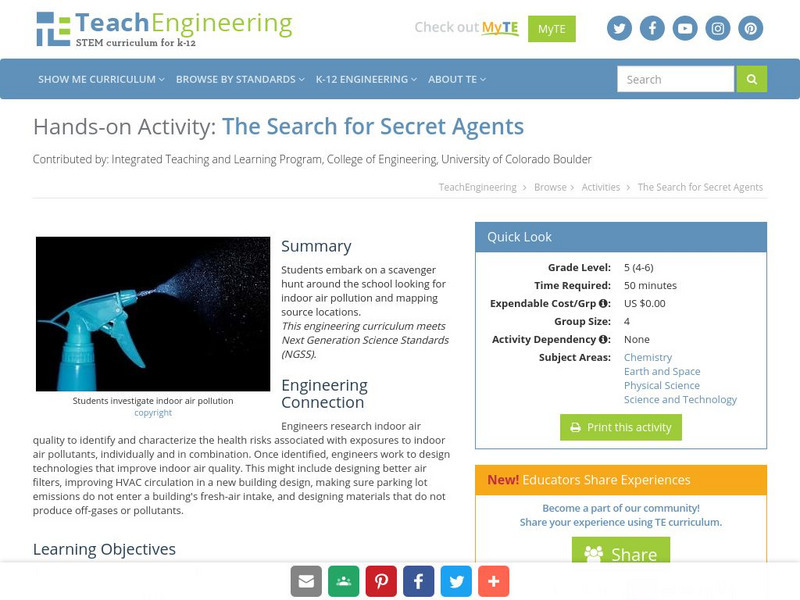
Teach Engineering: The Search for Secret Agents
Students embark on a scavenger hunt around the school looking for indoor air pollution and mapping source locations.
TeachEngineering
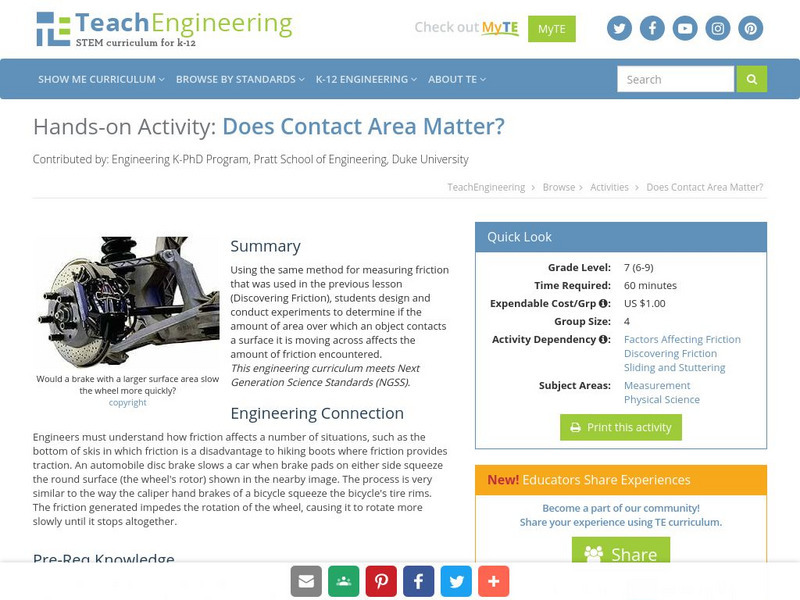
Teach Engineering: Does Contact Area Matter?
Using the same method for measuring friction that was used in the previous lesson (Discovering Friction), students design and conduct an experiment to determine if the amount of area over which an object contacts a surface it is moving...
TeachEngineering
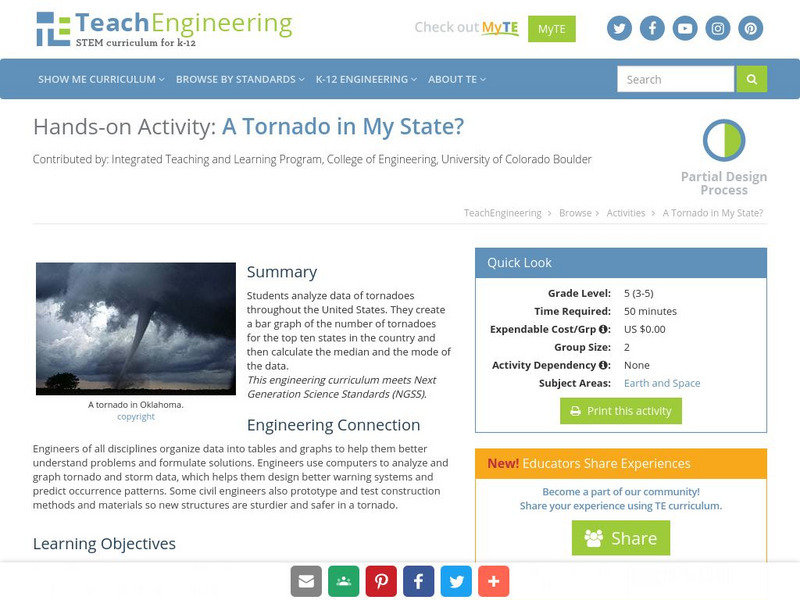
Teach Engineering: A Tornado in My State?
Students will analyze data of tornadoes throughout the United States. They will create a bar graph of the number of tornadoes for the top ten states in the country and then calculate the median and the mode of the data.
TeachEngineering
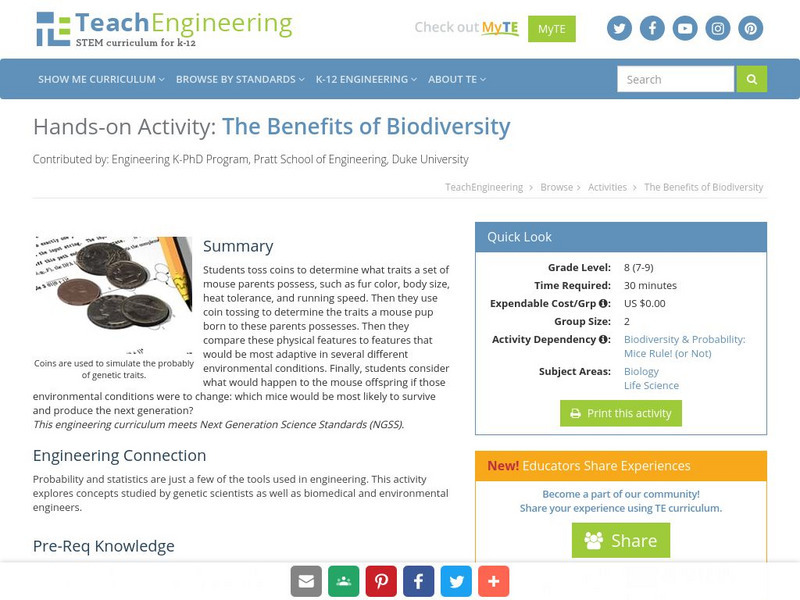
Teach Engineering: The Benefits of Biodiversity
First, students toss coins to determine what traits a set of mouse parents possess, such as fur color, body size, heat tolerance, and running speed. Next they use coin tossing to determine the traits a mouse pup born to these parents...
TeachEngineering
Teach Engineering: How Predictable!
Students follow weather forecasts to gauge their accuracy and produce a weather report for the class. They develop skills of observation, recording and reporting.
TeachEngineering
Teach Engineering: It's Really Heating Up in Here!
Students create and observe a greenhouse effect model and discuss the implications of global warming theory for engineers, themselves and the Earth.
TeachEngineering
Teach Engineering: Better by Design
The purpose of this activity is to use a scientific method to determine the effect of control surfaces on a paper glider. The students will construct a paper airplane/glider and test its performance to determine the base characteristics...
TeachEngineering
Teach Engineering: Balsa Glider Competition
The purpose of this activity is to bring together the students' knowledge of engineering and airplanes and the creation of a glider model to determine how each modification affects the flight. The students will use a design procedure...
TeachEngineering
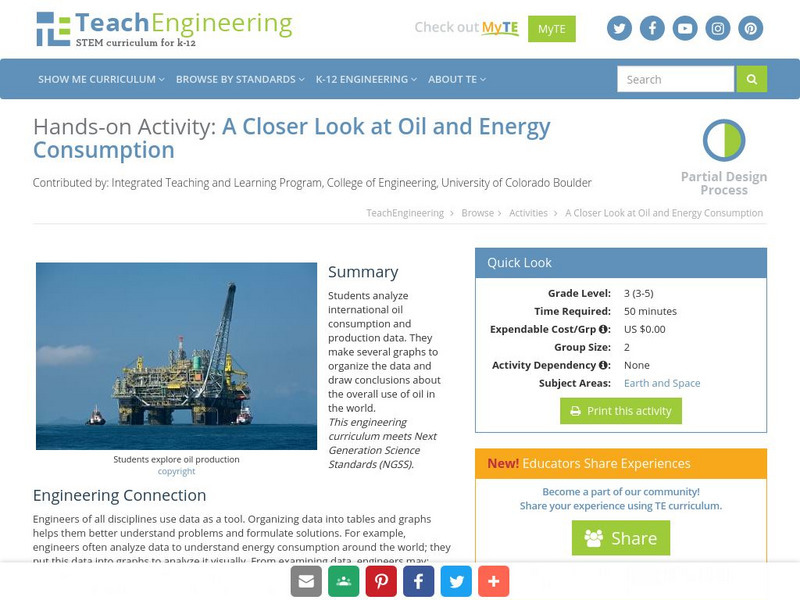
Teach Engineering: A Closer Look at Oil and Energy Consumption
Students analyze international oil consumption and production data. They make several graphs to organize the data and draw conclusions about the overall use of oil in the world.
TeachEngineering
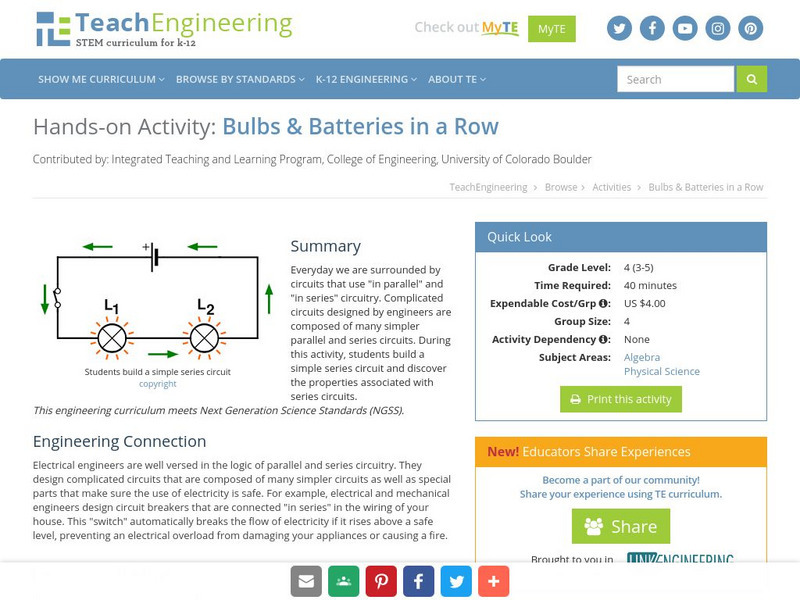
Teach Engineering: Bulbs & Batteries in a Row
Everyday we are surrounded by circuits that use "in parallel" and "in series" circuitry. Complicated circuits designed by engineers are composed of many simpler parallel and series circuits. During this activity, students build a simple...
TeachEngineering
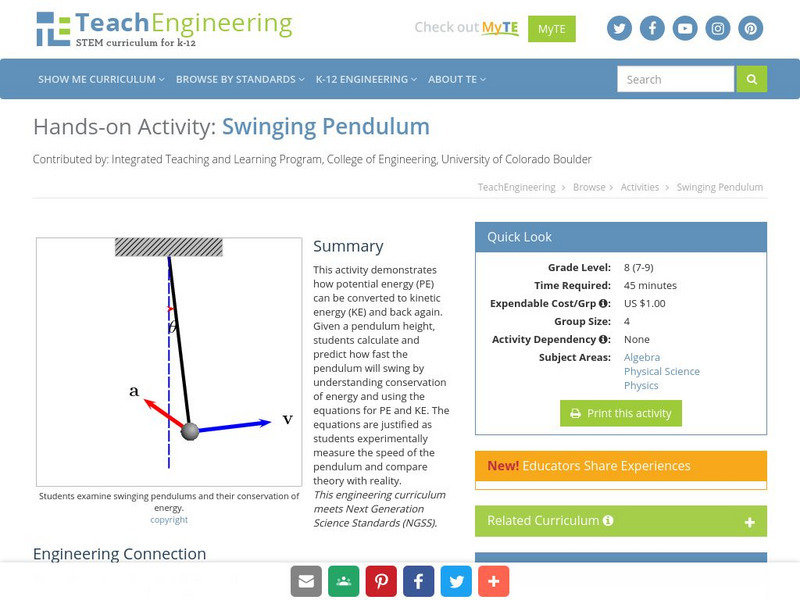
Teach Engineering: Swinging Pendulum
This activity demonstrates how potential energy (PE) can be converted to kinetic energy (KE) and back again. Given a pendulum height, students calculate and predict how fast the pendulum will swing by understanding conservation of energy...
TeachEngineering
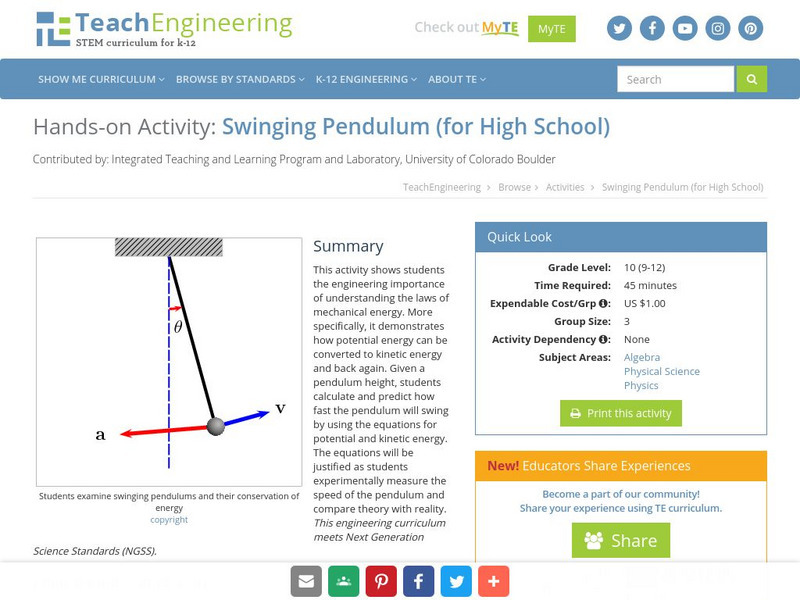
Teach Engineering: Swinging Pendulum
This activity shows students the engineering importance of understanding the laws of mechanical energy. More specifically, it demonstrates how potential energy can be converted to kinetic energy and back again. Given a pendulum height,...