TeachEngineering
Teach Engineering: What Is Energy?
With an introduction to the ideas of energy, students discuss specific types of energy and the practical sources of energy. Hands-on activities help them identify types of energy in their surroundings and enhance their understanding of...
TeachEngineering
Teach Engineering: Energy Conservation
Learners are introduced to the idea that energy use impacts the environment and our wallets. They discuss different types of renewable and nonrenewable energy sources, as well as the impacts of energy consumption. Through a series of...
TeachEngineering
Teach Engineering: How Clean Is That Water?
This lesson plan helps students understand the factors that affect water quality and the conditions that allow for different animals and plants to survive. Students will look at the effects of water quality on various water-related...
TeachEngineering
Teach Engineering: How Should Our Gardens Grow?
In this lesson, students will learn about types of land use by humans and evaluate the ways land is used in their local community. They will also consider the environmental effects of the different types of land use. Students will assume...
TeachEngineering
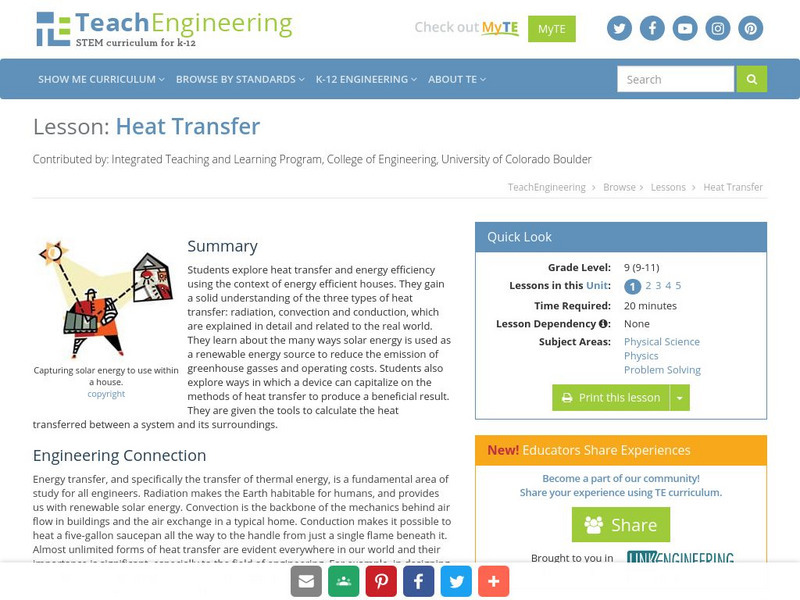
Teach Engineering: Heat Transfer
Students explore heat transfer and energy efficiency using the context of energy efficient houses. They gain a solid understanding of the three types of heat transfer: radiation, convection and conduction, which are explained in detail...
TeachEngineering
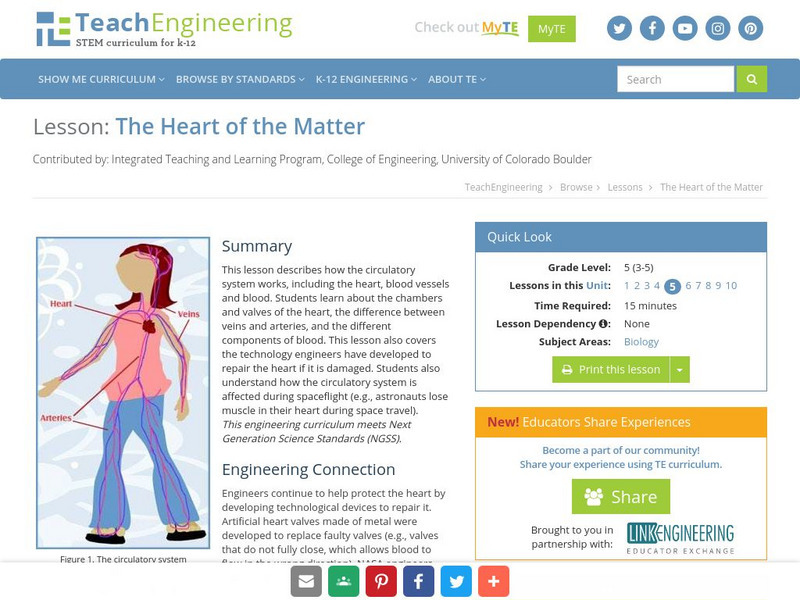
Teach Engineering: The Heart of the Matter
This lesson describes how the circulatory system works, including the heart, blood vessels and blood. Learners learn about the chambers and valves of the heart, the difference between veins and arteries, and the different components of...
TeachEngineering
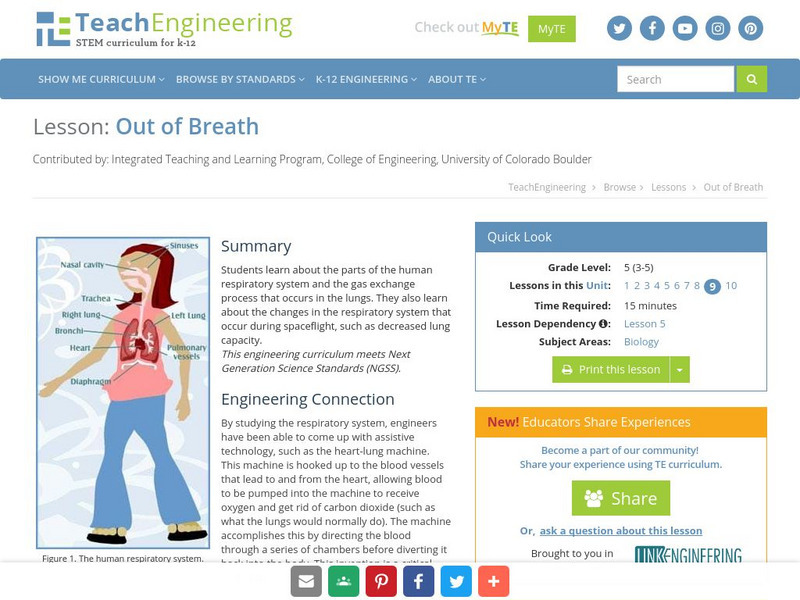
Teach Engineering: Out of Breath
This lesson goes over the parts of the human respiratory system and the gas exchange process that occurs in the lungs. It also covers changes in the respiratory system that occur during spaceflight, such as decreased lung capacity.

TeachEngineering
Teach Engineering: What Makes Airplanes Fly?
Students begin to explore the idea of a force. To further their understanding of drag, gravity and weight, they conduct activities that model the behavior of parachutes and helicopters. An associated literacy activity engages the class...
TeachEngineering
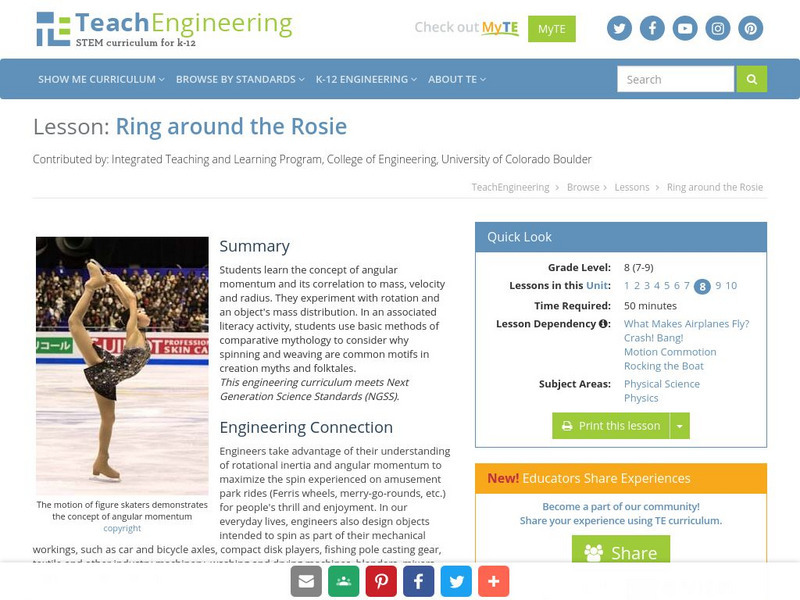
Teach Engineering: Ring Around the Rosie
Students learn the concept of angular momentum and its correlation to mass, velocity and radius. They experiment with rotation and an object's mass distribution. In an associated literacy activity, students use basic methods of...
TeachEngineering
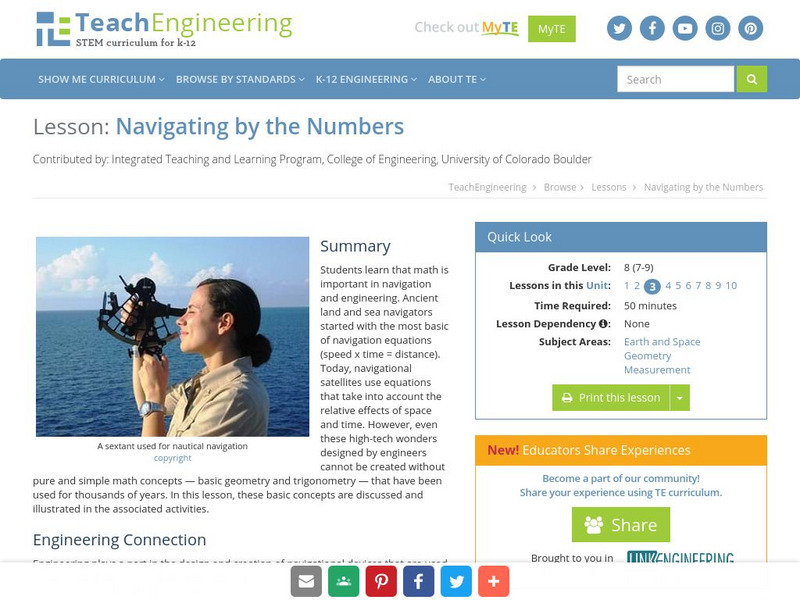
Teach Engineering: Navigating by the Numbers
In this lesson plan, students will learn that math is important in navigation and engineering. Ancient land and sea navigators started with the most basic of navigation equations (Speed x Time = Distance). Today, navigational satellites...
TeachEngineering
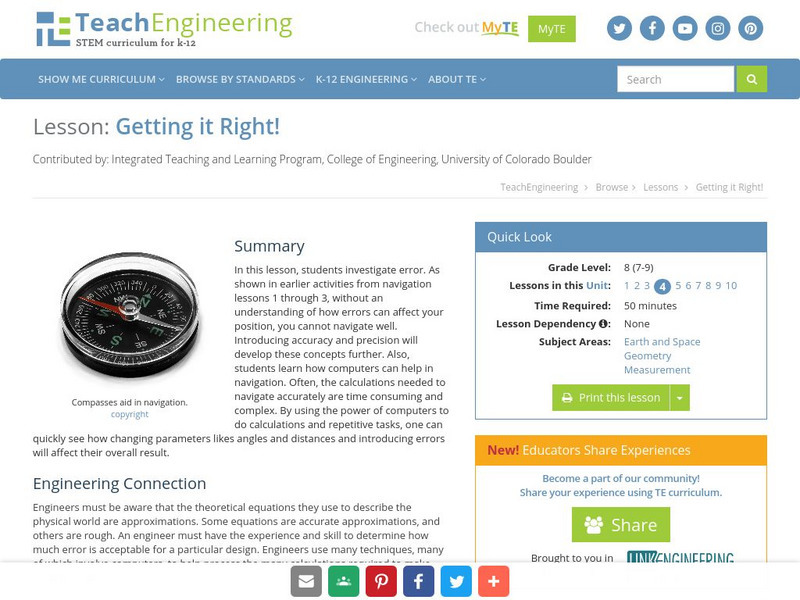
Teach Engineering: Getting It Right!
In this lesson, students will investigate error. As shown in earlier activities from navigation lessons 1 through 3, without an understanding of how errors can affect your position, you cannot navigate well. Introducing accuracy and...
TeachEngineering
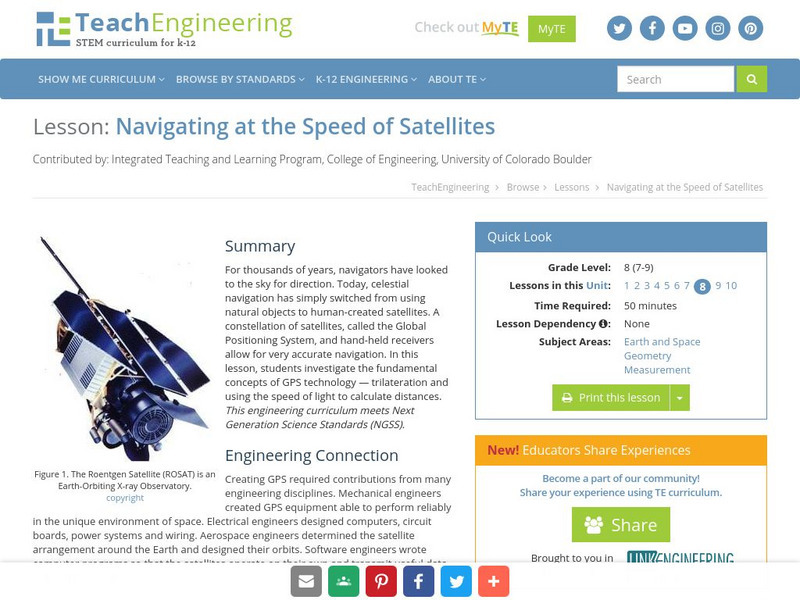
Teach Engineering: Navigating at the Speed of Satellites
For thousands of years, navigators have looked to the sky for direction. Today, celestial navigation has simply switched from using natural objects to human-created satellites. A constellation of satellites, called the Global Positioning...
TeachEngineering
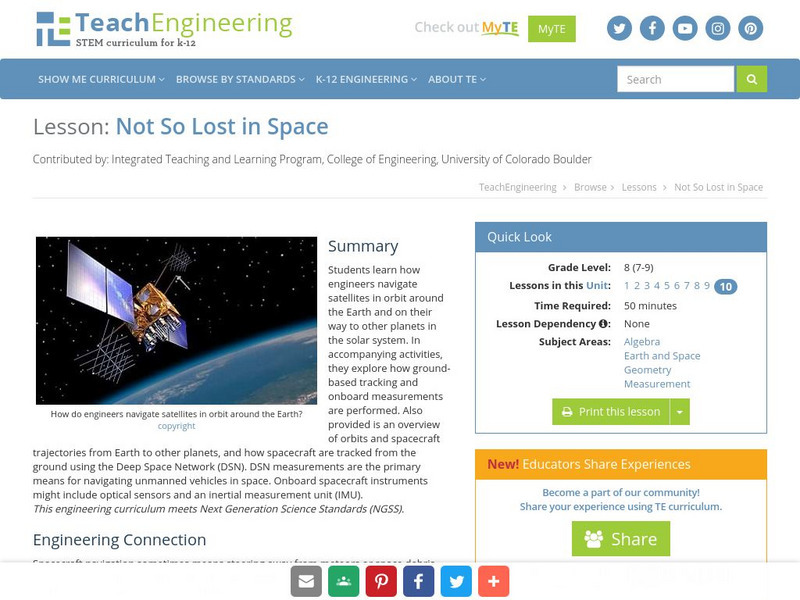
Teach Engineering: Not So Lost in Space
Students learn how engineers navigate satellites in orbit around the Earth and on their way to other planets in the solar system. In accompanying activities, they explore how ground-based tracking and onboard measurements are performed....
TeachEngineering
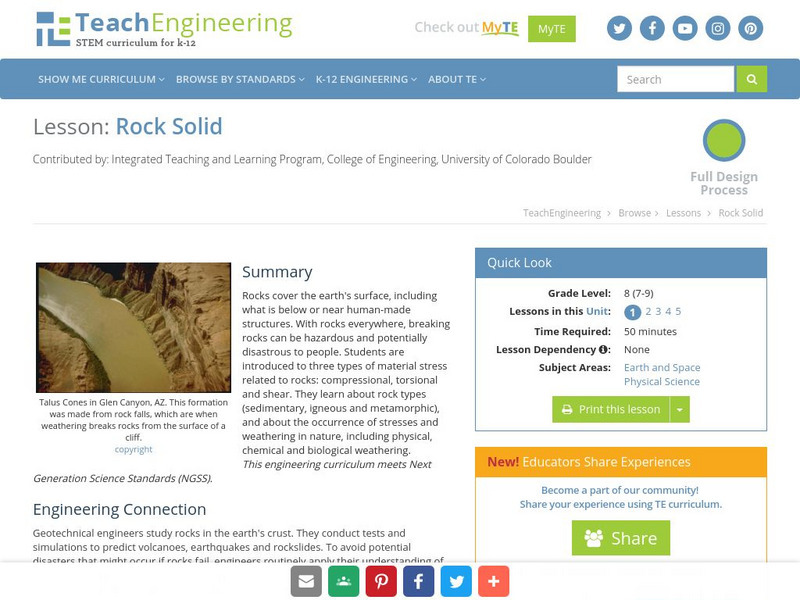
Teach Engineering: Rock Solid
Rocks cover the earth's surface, including what is below or near human-made structures. With rocks everywhere, breaking rocks can be hazardous and potentially disastrous to people. Students are introduced to three types of material...
TeachEngineering
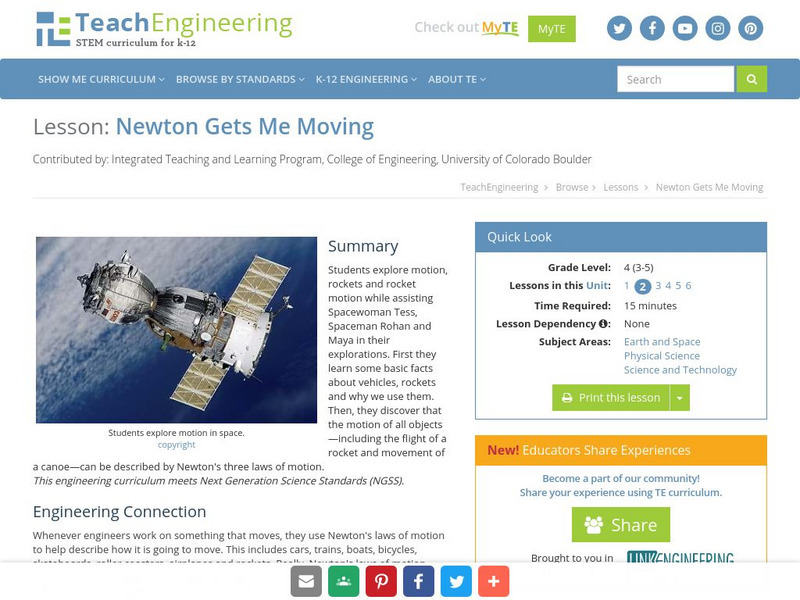
Teach Engineering: Newton Gets Me Moving
In this lesson, young scholars will explore motion, rockets and rocket motion while assisting Spacewoman Tess, Spaceman Rohan and Maya in their explorations. They will first learn some basic facts about vehicles, rockets and why we use...
TeachEngineering
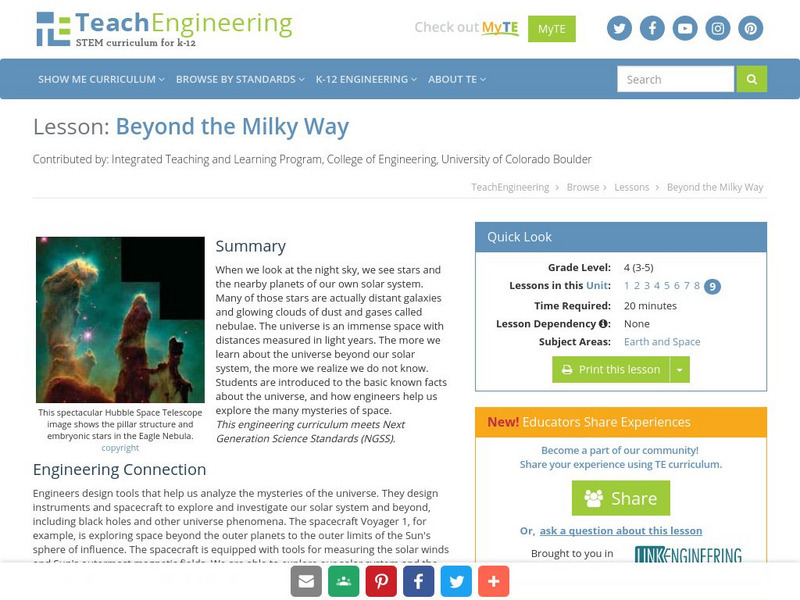
Teach Engineering: Beyond the Milky Way
When we look at the night sky, we see stars and the nearby planets of our own solar system. Many of those stars are actually distant galaxies and glowing clouds of dust and gases called nebulae. The universe is an immense space with...
TeachEngineering
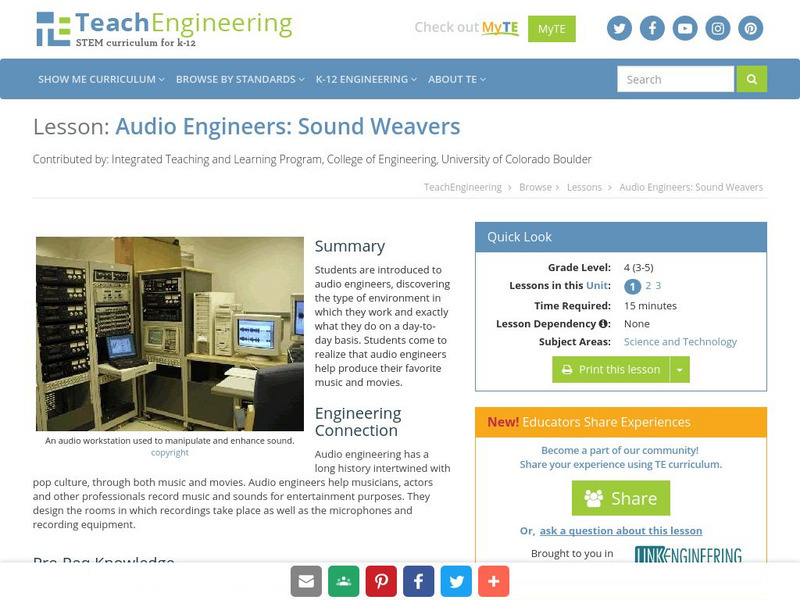
Teach Engineering: Audio Engineers: Sound Weavers
In this lesson, students are introduced to audio engineers. They discover in what type of an environment audio engineers work and exactly what they do on a day-to-day basis. Students come to realize that audio engineers help produce...
TeachEngineering
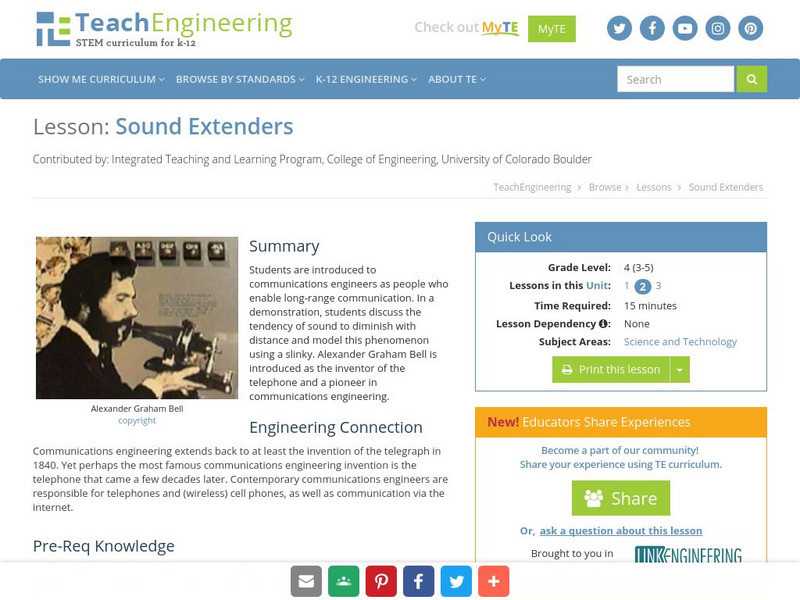
Teach Engineering: Sound Extenders
In this lesson, students are introduced to communications engineers as people who enable long-range communication. In the lesson demonstration, students discuss the tendency of sound to diminish with distance and model this phenomenon...
TeachEngineering
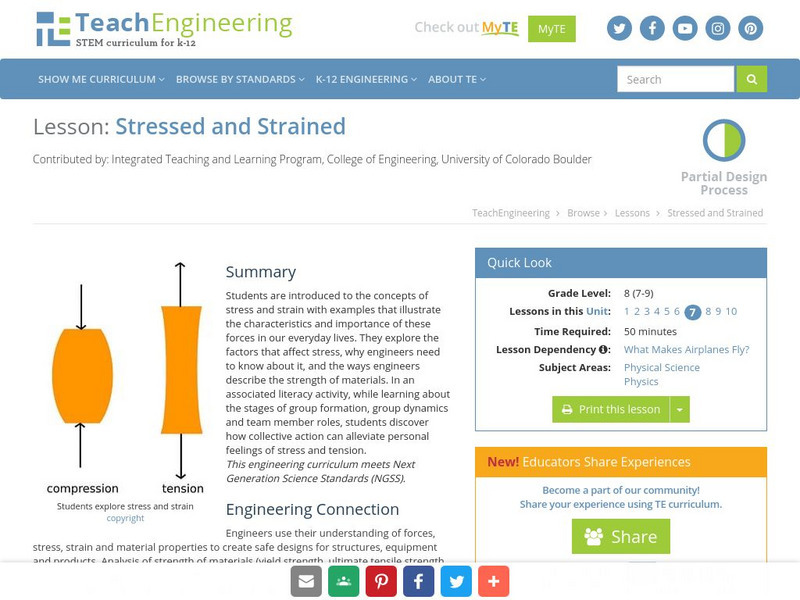
Teach Engineering: Stressed and Strained
Learners are introduced to the concepts of stress and strain with examples that illustrate the characteristics and importance of these forces in our everyday lives. They explore the factors that affect stress, why engineers need to know...

TeachEngineering
Teach Engineering: Build an Approximate Scale Model of an Object
Students will create a model of an object of their choice, giving them skills and practice in techniques used by professionals. The students will use sketches as they build their objects. This activity will facilitate a discussion on...
TeachEngineering
Teach Engineering: Design Packing to Safely Mail Raw Spaghetti
Students will use their creative skills to determine a way to mail raw spaghetti. The students will need to choose a way to safely package their raw spaghetti using only the materials provided. To test the packing designs, the spaghetti...

TeachEngineering
Teach Engineering: Glue Stick Activity
In this activity students will use hot glue gun sticks to show tension, compression and torsion.
TeachEngineering
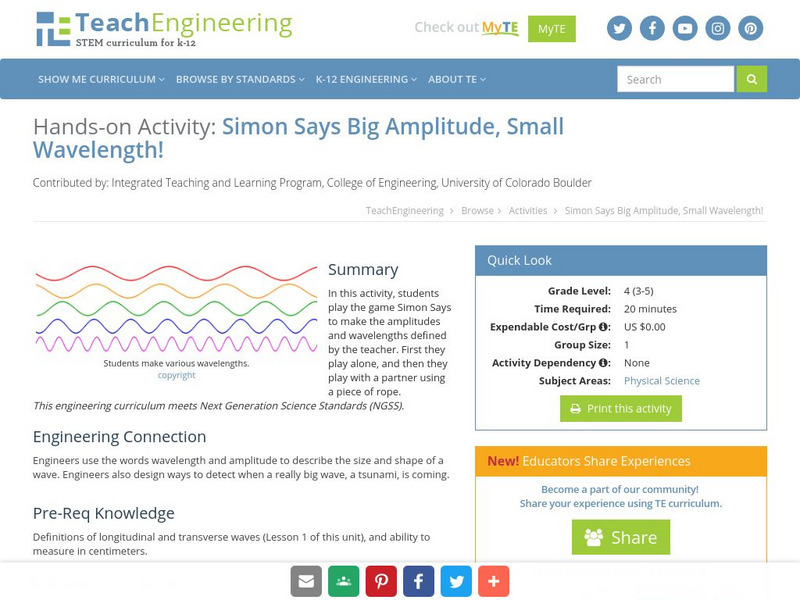
Teach Engineering: Simon Says Big Amplitude, Small Wavelength!
In this activity, students play the game Simon Says to make the amplitudes and wavelengths defined by the teacher. First they play alone, and then they play with a partner using a piece of rope.
TeachEngineering
Teach Engineering: Renewable Energy
In this lesson, students are introduced to the types of renewable energy resources. They are involved in activities to help them understand the transformation of energy (solar, water and wind) into electricity. Students explore the...