Hi, what do you want to do?






American Chemical Society
Energy Foundations
Only 10 percent of an incandescent bulb's energy is used to create light; the remaining 90 percent is heat. In the unit of activities, young chemists examine energy through hands-on activities, videos, discussions, and...

Government of South Australia
Don't Waste Your Energy
Don't lift another finger, this physical and environmental science unit has everything you need to begin teaching your class about energy. Starting with a look at the greenhouse effect, these lessons and activities take young scientists...

Curated OER
Spinning into Space
Students, through hands-on activities, teacher demonstrations, pictures, and informational books, complete a unit on the Earth and its place in the Universe. They make mobiles of the Milky Way and watch demonstrations of lunar and solar...

Curated OER
Our Universe: Always Moving, Always Changing
Students explore the main concepts of astronomy through the eleven lessons of this unit. The past, present, and future methods of studying the science are examined in this unit.

Curated OER
Astronomy
Students complete a unit of lessons on our solar system, its stars, and astronomers. They record information in a space journal, design constellations, define key vocabulary, observe the phases of the moon, and create a group planet...

Curated OER
Our Solar System
Students study the Earth and Solar System through a variety of activities. They compile a coloring book show the characteristics of the Sun and nine planets.
Texas Education Agency
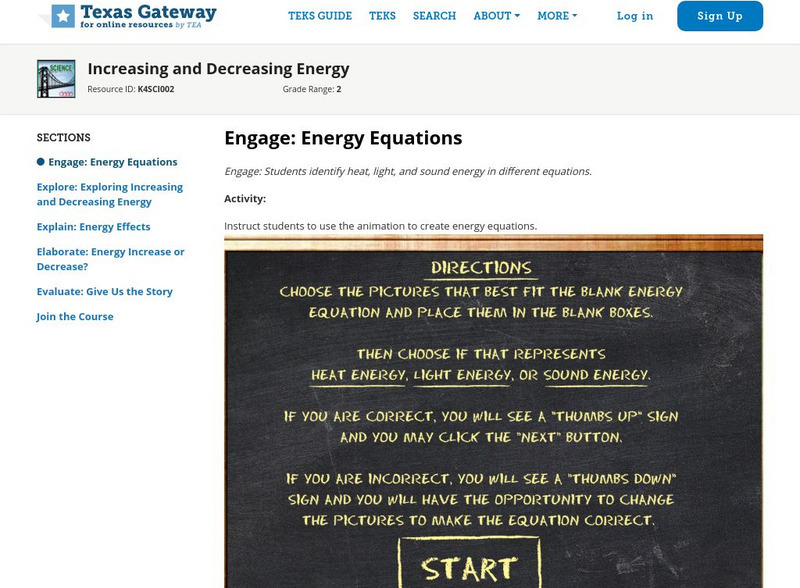
Texas Gateway: Increasing and Decreasing Energy
This tutorial will review over heat, light, and sound energy through interactive activities, videos, and quizzes.
Texas Education Agency
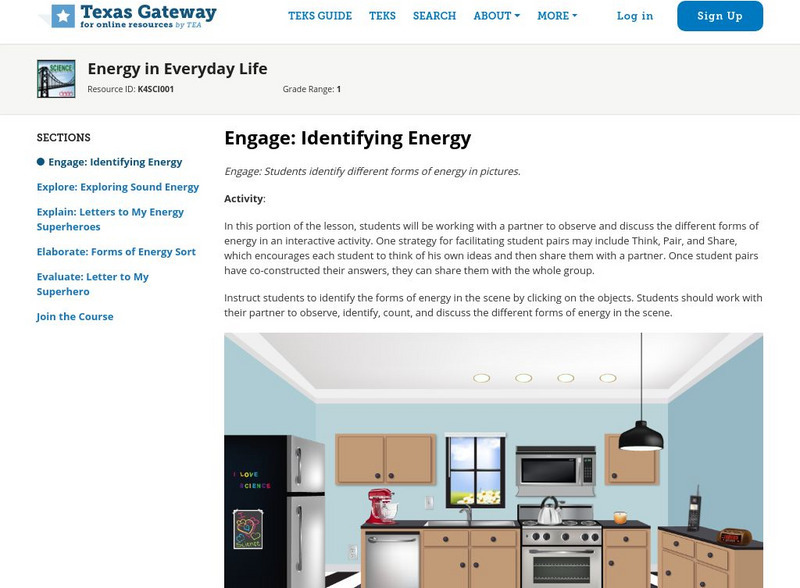
Texas Gateway: Energy in Everyday Life
In this interactive module students will identify, explore, and evaluate light, heat, and sound energy.
E-learning for Kids
E Learning for Kids: Science: Antilles: What Are the Different Forms of Energy?
Students will learn about the different types and sources of energy, including heat and light, electrical, potential, and kinetic energy.

TeachEngineering
Teach Engineering: Energy
Through nine lessons, students are introduced to a range of energy types--electrical, light, sound and thermal-as well as the renewable energy sources of wind, hydro (water) and solar power. Subjects range from understanding that the...
TeachEngineering
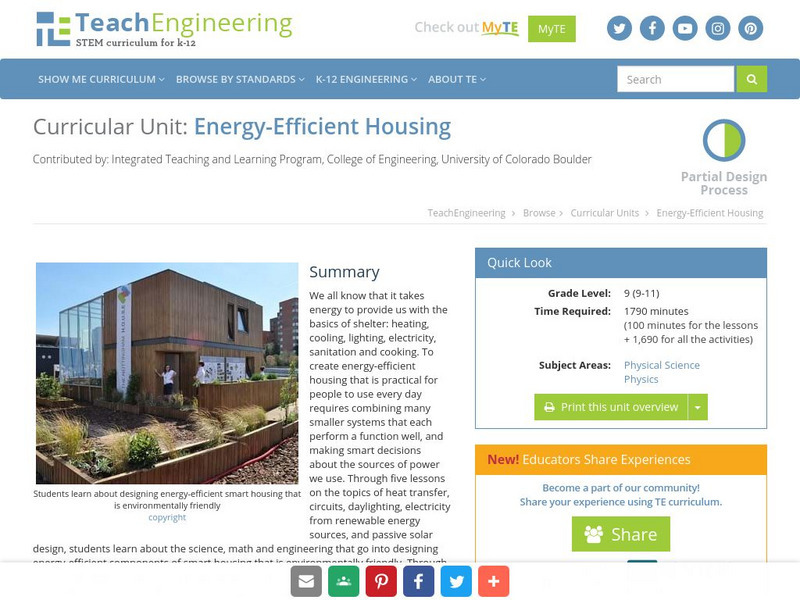
Teach Engineering: Energy Efficient Housing
We all know that it takes energy to provide us with the basics of shelter: heating, cooling, lighting, electricity, sanitation and cooking. To create energy-efficient housing that is practical for people to use every day requires...
Utah State Office of Education
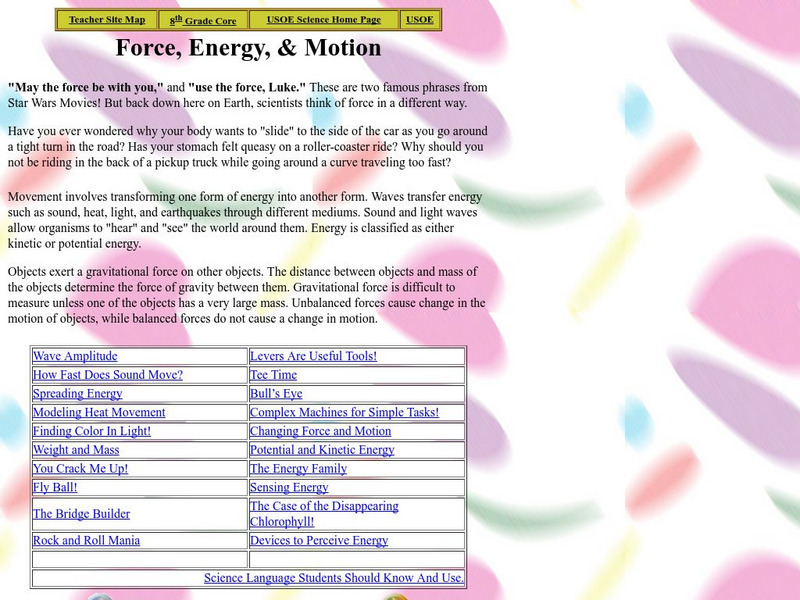
Utah State Office of Education: Force, Energy, & Motion
A unit on energy, force, and motion presented with interactive and classroom activities. Students gain an understanding of weight, mass, potential and kinetic energy, sound, and heat with this engaging resource.

Scholastic
Scholastic: Study Jams! Science: Energy, Light and Sound: Heat
A video and a short quiz on heat, covering its difference from temperature, thermal energy, and the means by which heat is transferred.
Utah State Office of Education
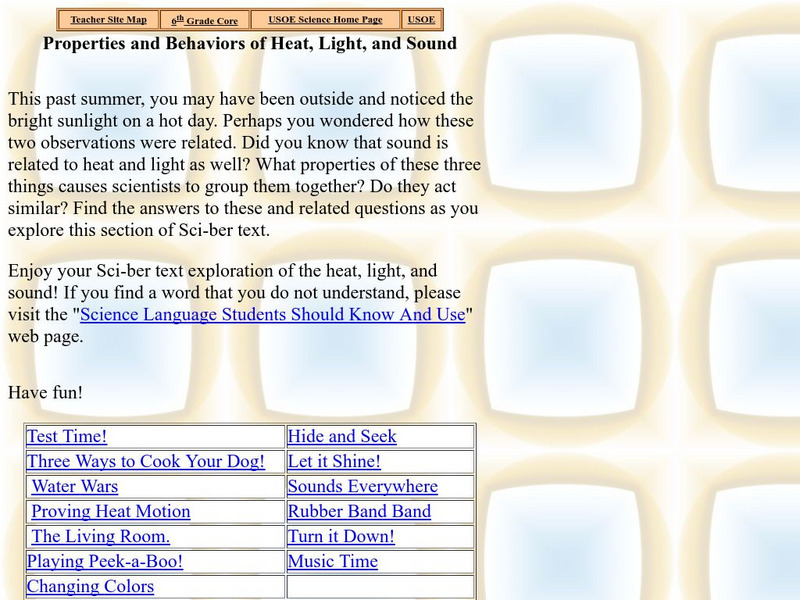
Utah Science: Properties and Behaviors of Heat, Light and Sound
How can scientists lump heat, light and sound together when investigating properties and behaviors? This learning module will address that question through a series of activities.