Hi, what do you want to do?






Stanford University
A Healthy You
Go beyond counting calories with a healthy eating unit that focuses on reading nutritional labels, making healthy choices, and incorporating fitness into daily life. After four lessons about the different ways kids can improve their...

State of Victoria
Making Healthy Choices, Making Healthy Food: PreK-3 Curriculum Support
From examining how much sugar is in foods and looking at fruit and vegetable varieties to making mini rainbow tarts, this unit provides youngsters with a fabulous overview of proper nutrition and eating habits.

State of Victoria
Making Healthy Choices, Making Healthy Food: 4-6 Curriculum Support
How much water should we drink every day? How can food preparation be both healthy and satisfying? Check out this great 10-lesson unit which not only covers the body's need for water, but also includes lessons on tasting and storing...

Council for the Curriculum, Examinations and Assessment
Managing Influences and Making Decisions
Internal and external factors influence behavior and decision making. The third session in a 10-lesson series focusing on Social, Physical, Emotional, Cognitive and Spiritual (SPECS) health explores the impact of these factors...

Florida Department of Health
Understanding the Risk of Substance Abuse Unit
Teenage brains are different! Understanding that the teenage brain is still developing and thus more impacted by substance abuse is the key concept in a three-lesson high school health unit. Participants learn about how the brain and...

Sacramento Country Day School
7th Grade Character Development Workshops
Be proactive. Begin with the end in mind. Synergize. These are just a few strategies outlined in Sean Covey's ground-breaking best-seller, The 7 Habits of Highly Effective Teens. With a series of five character development workshops...

Council for the Curriculum, Examinations and Assessment
Managing Change
Learning to embrace the opportunities and challenges change presents is the focus of the exercises and activities in this fifth session of a 10-lesson course on Social, Physical, Emotional, Cognitive and Spiritual (SPECS) health....

Council for the Curriculum, Examinations and Assessment
Health and the Whole Person
To begin the second year of a health and wellness course, class members review the aspects of social, physical, emotional, cognitive, and spiritual health investigated the previous year. After completing the...

Council for the Curriculum, Examinations and Assessment
Health and the Whole Person
The first lesson of the unit introduces class members to the social, physical, emotional, cognitive, and spiritual constituent elements of health and the need for balance among these elements. Class members used the provided assessment...

Northern Ireland Curriculum
Self Concept
It may not be possible to have control over all aspects of life, but through the activities and discussions in this lesson class members learn different ways to cope with those areas over which they have little or no control.

Council for the Curriculum, Examinations and Assessment
Morals, Values, and Beliefs
What is integrity? What are the barriers that could keep a person from acting with integrity? How might these barriers be overcome? Class members tackle these questions as part of a course on Social, Physical, Emotional, Cognitive...

Council for the Curriculum, Examinations and Assessment
Feelings and Emotions
The focus of the second in a 10-session course on Social, Physical, Emotional, Cognitive and Spiritual (SPECS) health is on learning to express and manage feelings appropriately. Class members learn different ways of...
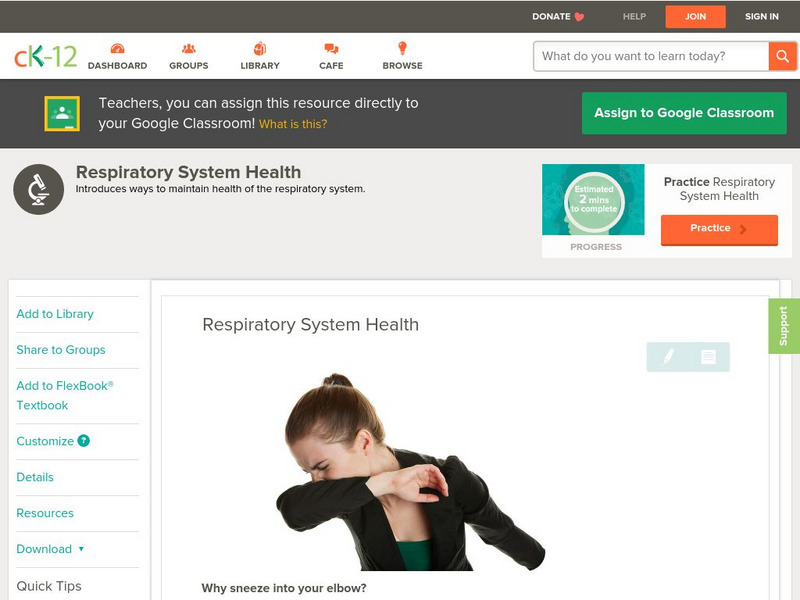
CK-12 Foundation
Ck 12: Life Science: Respiratory System Health
[Free Registration/Login may be required to access all resource tools.] Many of the diseases related to smoking are called lifestyle diseases: diseases that are caused by choices that people make in their daily lives. For example, the...
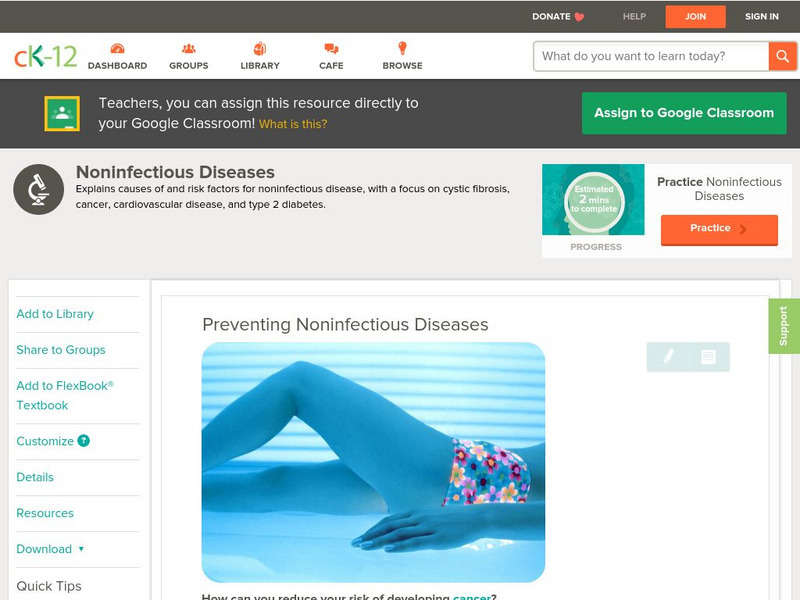
CK-12 Foundation
Ck 12: Life Science: Preventing Noninfectious Diseases
[Free Registration/Login may be required to access all resource tools.] Most allergies can be prevented by avoiding the substances that cause them. For example, you can avoid pollens by staying indoors as much as possible. You can learn...