Hi, what do you want to do?





US National Archives
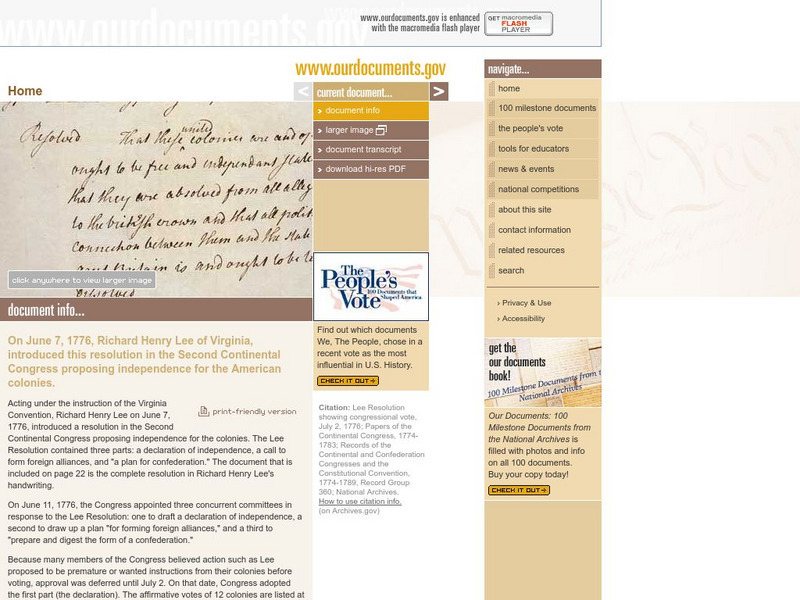
Our Documents: 19th Amendment to the u.s. Const.
This site contains a good overview of the 19th Amendment of the U.S. Constitution. It gives background information on women's suffrage, provides the transcript of the actual document, and allows you to view an image of the document.
Vocabulary University
My vocabulary.com: Bill of Rights: u.s. Constitution
This page has some puzzles and activities using terms from the Bill of Rights and the U.S. Constitution. It also provides an extensive word list pertaining to the Constitution.
US Senate
The u.s. Senate: The Senate and the United States Constitution
This site from the United States Senate provides information about the evolution of the Senate as the Constitution was being written by the Constitutional Congress.

PBS
Pbs News Hour: Constitutional Amendments and Gay Marriage
In this lesson, students examine and debate the issue of same sex marriage by studying background information, news articles, legal arguments and the 14th Amendment to the U.S. Constitution. They then draft an amendment of their own to...
Digital History
Digital History: u.s. Constitution and Organization of the National Government
Read about the structure of the U.S. Constitution and the thoughts of the framers behind the formation of each branch.

Other
Charleston County Public Library: Charles Pinckney and the U. S. Constitution
A good biography on Pinckney and his role in the formation of the Constitution.

US National Archives
Our Documents: 13th Amendment to the u.s. Constitution: Abolition of Slavery
Take a look at an image of the constitutional amendment that put an end to slavery in the United States. Interactive image is accompanied by an overview of the amendment's inception and adoption, as well as document transcript.
US National Archives
Docsteach: The Constitution at Work
In this activity students will analyze documents that span the course of American history to determine their connection to the U.S. Constitution. Students will then make connections between the documents they have examined and the big...
Bill of Rights Institute
Bill of Rights Institute: The Stolen Valor Act and False Speech
A lesson plan, including an extension opportunity, addressing whether the Stolen Valor Act violates the First Amendment to the U.S. Constitution.
Constitutional Rights Foundation
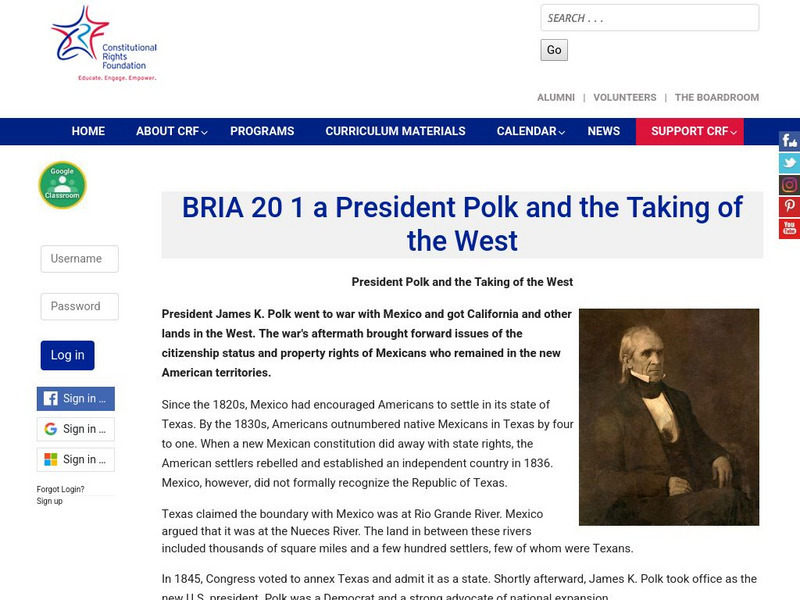
Constitutional Rights Foundation: Conflict of Cultures: President Polk and the Taking of the West
Lesson and activity on conflict of cultures in which students study U.S. overtaking lands of Mexico and California and form policy on property rights and citizenship of conquered cultures. Activity guidelines, questions for discussion...
US National Archives
Nara: Charters of Freedom: The Power of the Courts: Marbury vs. Madison, 1803
Website with primary source material on the making of the U.S. government and Constitution explains how Marbury vs. Madison brought the power of Judicial Review to the Supreme Court.
US Government Publishing Office
Ben's Guide to u.s. Government: Ways to Amend the Constitution
Ben's Guide is a fun way to present US laws to school aged children. This site presents a thorough investigation into ways to amend the Constitution. Links to related sites are available.

Library of Congress
Loc: The United States Constitution
See transcripts of the debates of the Federal Convention of 1787, the draft of the Constitution, or see the facsimiles of the original documents. Trace the progress of the Constitution using the historical documents themselves.
University of Chicago
The Founders' Constitution: Records of the Federal Convention
The original text of official Resolutions by members of the Constitutional Convention in Philadelphia in 1787 during the debate creating a new national U.S. Constitution.
US Government Publishing Office
Ben's Guide to u.s. Government: Learning Adventures: How Laws Are Made: The Language of the Law
Learning Adventures from Bensguide summarizes the process of lawmaking outlined in the U.S. Constitution and provides links to a glossary of legislative terms and Congressional Resolution from 2003.
Other
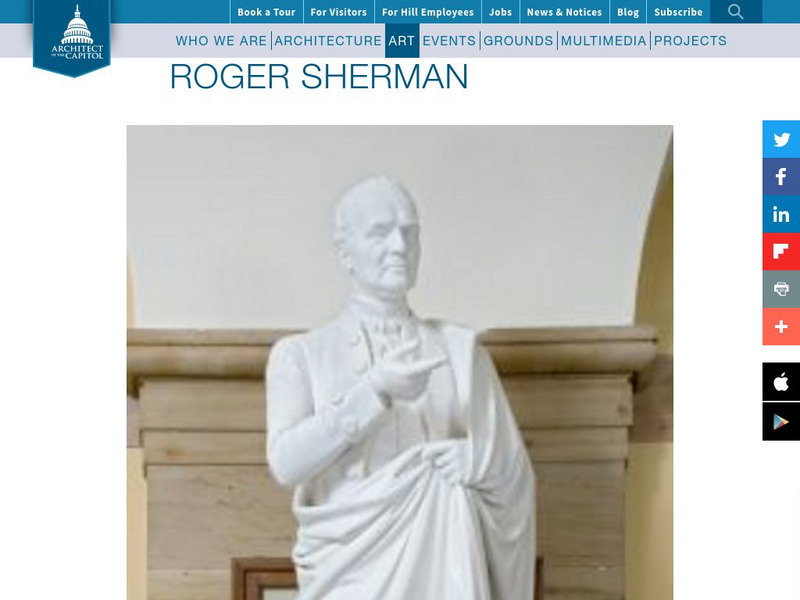
The Architect of the Capitol: Roger Sherman
This resource from the Architect of the Capitol is a government site that focuses on art and architecture in the U.S. Capitol. Features a picture of a marble statue of Sherman.
US Government Publishing Office
Ben's Guide to u.s. Government: Learning Adventures: Branches of Government
Beginning page of a Learning Adventure examines what parts of the Constitution give the branches of the Federal Government their specific powers. Those three parts are Article I, Article II, and Article III.
US National Archives
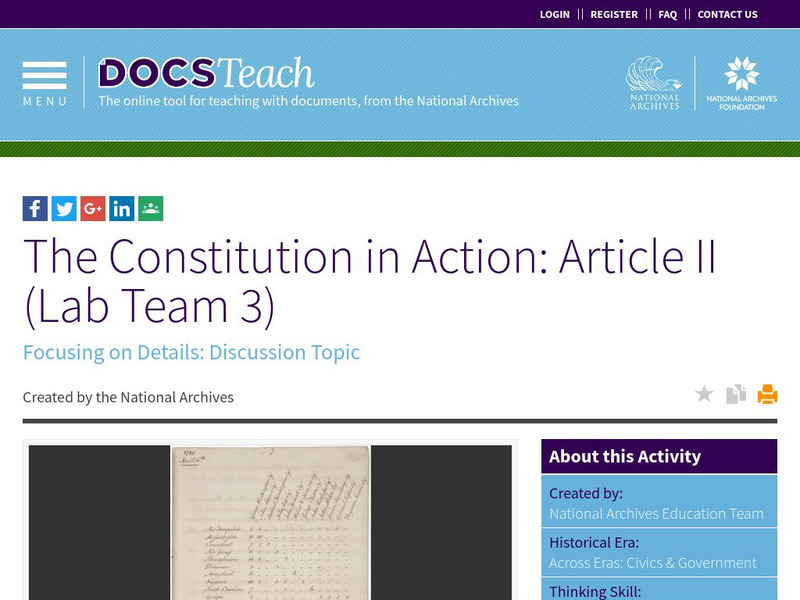
National Archives: The Constitution in Action: Article Ii
This activity can be used during a unit on the U.S. Constitution. Students will analyze the Senate Journal of the First Congress and identify how the document demonstrates content contained within Article II of the Constitution in...
National Endowment for the Humanities
Neh: Edsit Ement:the Preamble to the Constitution
These step-by-step lesson plans help students understand the historical background to the U.S. Constitution. Students simulate a hypothetical situation where they must create their own rules and figure out how to work together. Links to...
Other
Usa Gov: Three Branches of Government
Lesson plans for students to learn about the three branches of government. They can find information about the origins of the Constitution, separation of powers, and details about each of the three branches.
Schools of California Online Resources for Education
Score: The u.s. Constitution Power Grab Game
Politicians like power, but who actually gets to use their powers in different situations? Take this quiz to sort out the checks and balances that are used on the various power plays.

University of Missouri
Exploring Constitutional Conflicts: Delegates to the Constitutional Convention: Connecticut
Information about Connecticut's delegates to the Constitutional Convention. Includes information on Oliver Ellsworth, a key supporter of the Great Compromise, as well as William Samuel Johnson and Roger Sherman.
University of Oklahoma
University of Oklahoma Law Library: Federalist Papers
The complete text of the 85 Federalist Papers which explained why the authors believed the new Constitution should be ratified.
University of Groningen
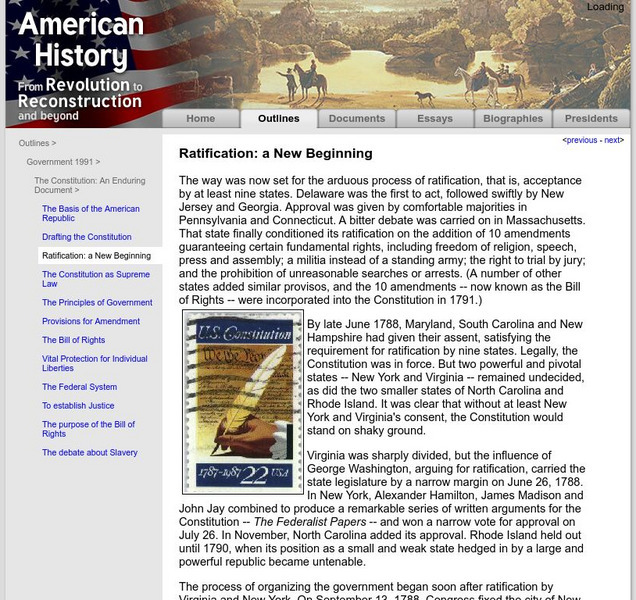
American History: Outlines: Ratification
This site from the University of Groningen provides a synopsis chronologically written on the ratification of the U.S. Constitution beginning with the first states who accepted the document to pressures exerted by the Federalists to...