Hi, what do you want to do?





Texas Instruments
Texas Instruments: Integration
This Computer Algebra System (CAS) activity encourages students to investigate the use of CAS to integrate a function.

Texas Instruments
Texas Instruments: Ti 89 Riemann Sum Activities for Calculus
In this Computer Algebra System (CAS) activity students use Riemann sums to estimate the distance traveled on a trip at various speeds. They utilize the concept of Riemann sums to calculate the area under a curve. Students find limits of...

Other
Eduscapes: One Computer Classroom
Use this site to see strategies that demonstrate some of the best ways to use the one computer in your classroom.

TeachEngineering
Teach Engineering: Program Analysis Using App Inventor
In computer science, program analysis is used to determine the behavior of computer programs. Flow charts are an important tool for understanding how programs work by tracing control flow. Control flow is a graphical representation of...
TeachEngineering
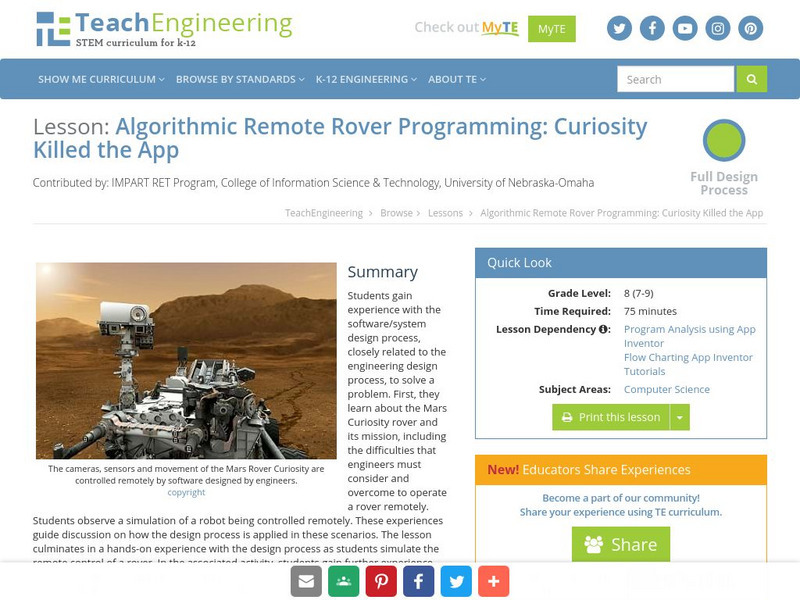
Teach Engineering: Curiosity Killed the App
Students gain experience with the software/system design process, closely related to the engineering design process, to solve a problem. First, they learn about the Mars Curiosity rover and its mission, including the difficulties that...
TeachEngineering
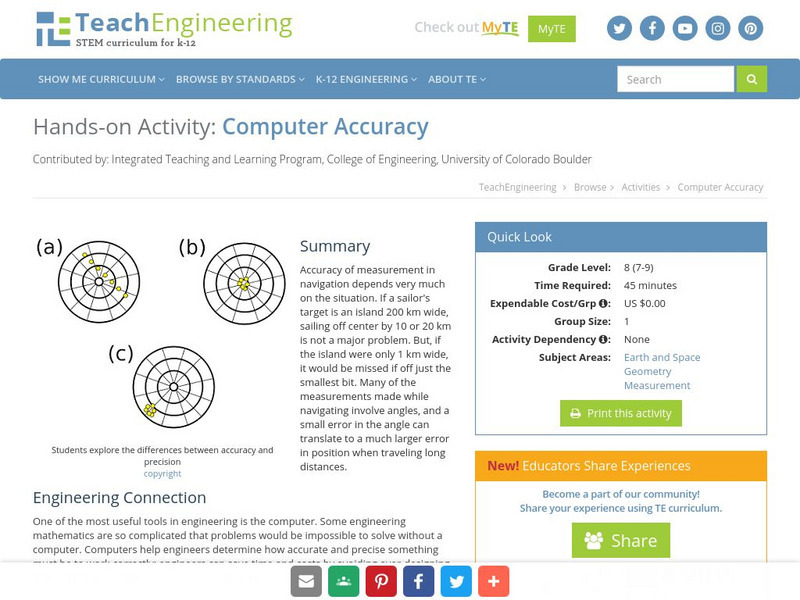
Teach Engineering: Computer Accuracy
Accuracy of measurement in navigation depends very much on the situation. If a sailor's target is an island 200 km wide, sailing off center by 10 or 20 km is not a major problem. But, if the island were only 1 km wide, it would be missed...
TeachEngineering
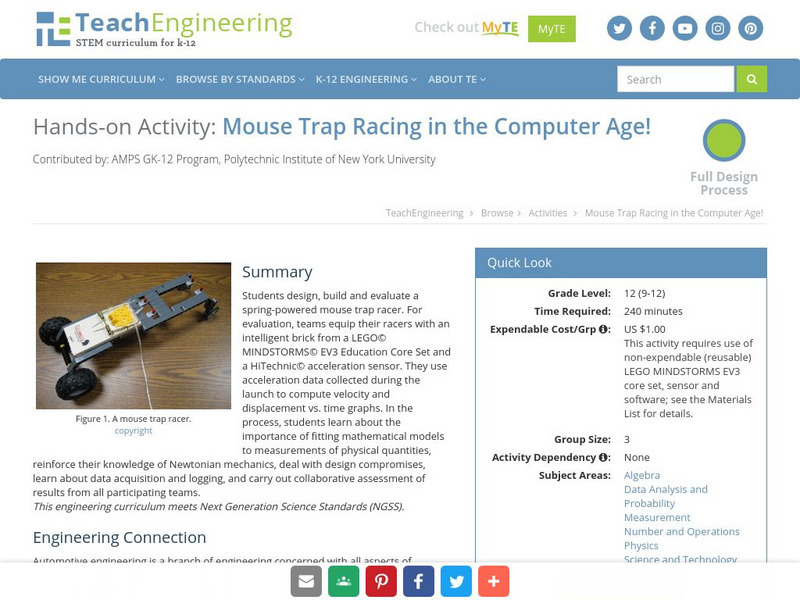
Teach Engineering: Mouse Trap Racing in the Computer Age!
Students design, build and evaluate a spring-powered mouse trap racer. For evaluation, teams equip their racers with an intelligent brick from a LEGO MINDSTORMS NXT Education Base Set and a HiTechnic acceleration sensor. They use...
Houghton Mifflin Harcourt
Houghton Mifflin Harcourt: Saxon Activity Center Real World Investigation: The Geometry of Quilts [Pdf]
Investigating designs and shapes in quilts around the world is the activity in this internet exploration. Learners will also design their own quilt on paper or on the computer. Acrobat Reader required.
TeachEngineering
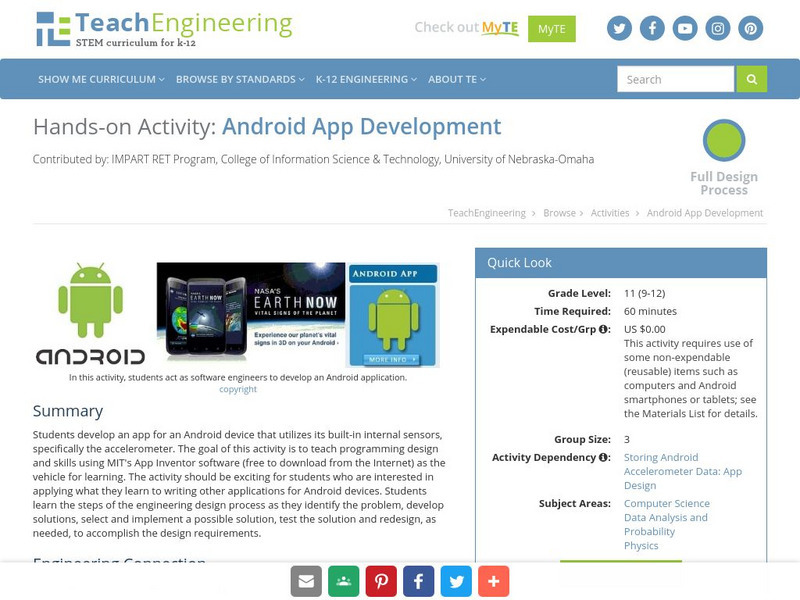
Teach Engineering: Android App Development
Students develop an app for an Android device that utilizes its built-in internal sensors, specifically the accelerometer. The goal of this activity is to teach programming design and skills using MIT's App Inventor software (free to...
TeachEngineering
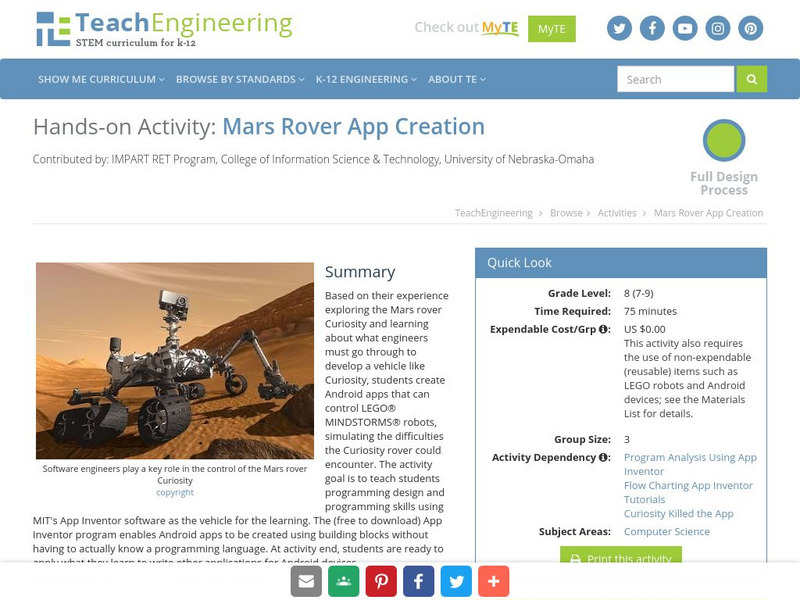
Teach Engineering: Mars Rover App Creation
Based on their experience exploring the Mars rover Curiosity and learning about what engineers must go through to develop a vehicle like Curiosity, students create Android apps that can control LEGO MINDSTORMS NXT robots, simulating the...
TeachEngineering
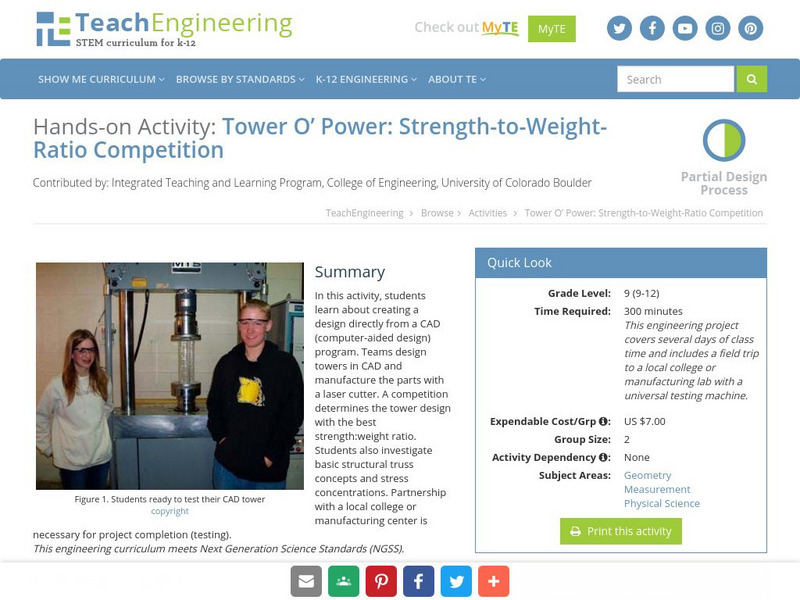
Teach Engineering: Tower O' Power
In this activity, students learn about creating a design directly from a CAD (computer-aided design) program. They will design a tower in CAD and manufacture the parts with a laser cutter. A competition determines the tower design with...

TeachEngineering
Teach Engineering: Hearing: How Do Our Ears Work?
Students learn about the anatomy of the ear and how the ears work as a sound sensor. Ear anatomy parts and structures are explained in detail, as well as how sound is transmitted mechanically and then electrically through them to the...

TeachEngineering
Teach Engineering: Graphing the Spread of Disease
Students simulate disease transmission by collecting data based on their proximity to other students. One option for measuring proximity is by having Bluetooth devices "discover" each other. After data is collected, students apply graph...
TeachEngineering
Teach Engineering: Putting It All Together: Peripheral Vision
In this culminating activity of the unit, students bring together everything they've learned in order to write the code to solve the Grand Challenge. The code solution takes two images captured by robots and combines them to create an...
TeachEngineering
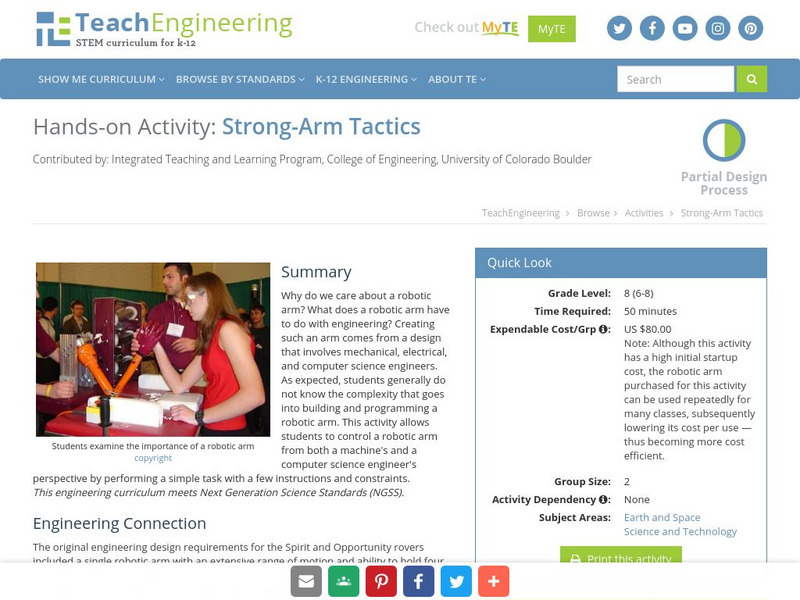
Teach Engineering: Strong Arm Tactics
Students generally do not know the complexity that goes into building and programming a robotic arm. In actuality, creating such an arm comes from a design that involves mechanical, electrical, and computer science engineers. This...
TeachEngineering
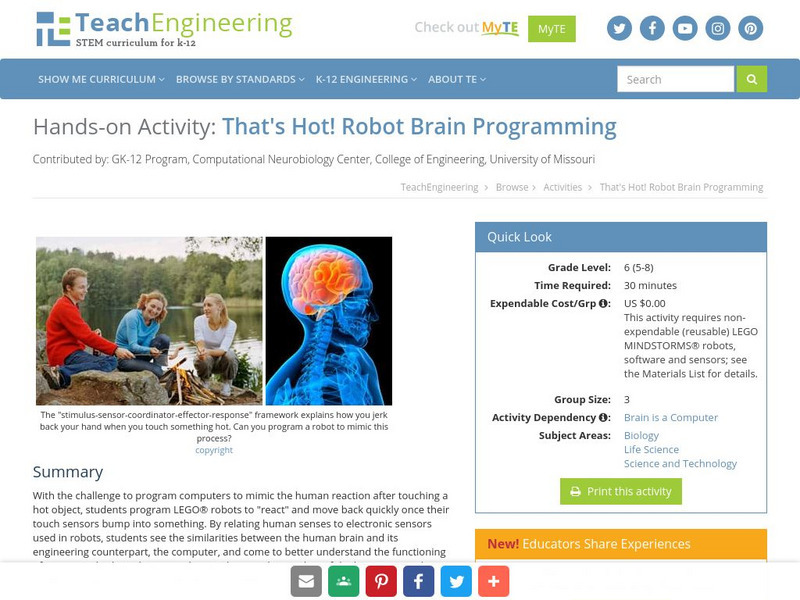
Teach Engineering: That's Hot! Robot Brain Programming
With the challenge to program computers to mimic the human reaction after touching a hot object, students program LEGO robots to "react" and move back quickly once their touch sensors bump into something. By relating human senses to...
TeachEngineering
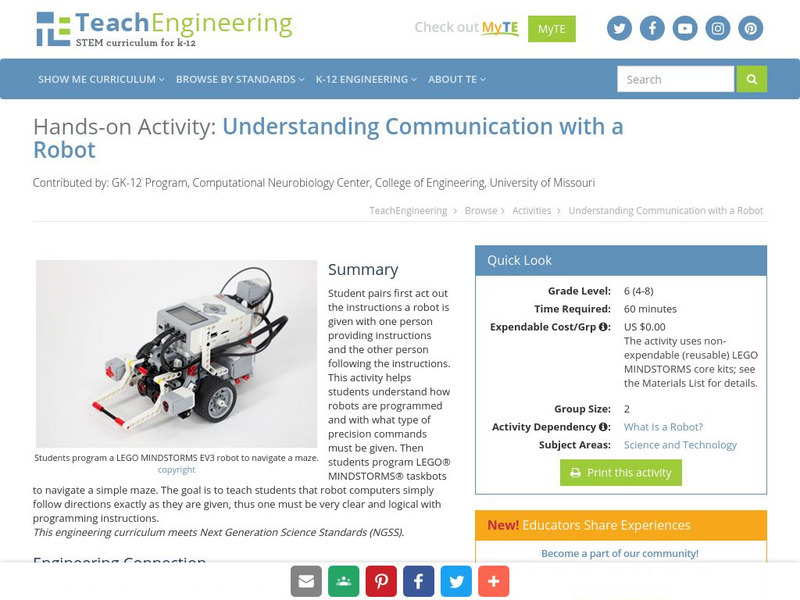
Teach Engineering: Understanding Communication With a Robot
Student pairs first act out the instructions a robot is given with one person providing instructions and the other person following the instructions. This activity helps students understand how a robot is programmed and with what type of...
TeachEngineering
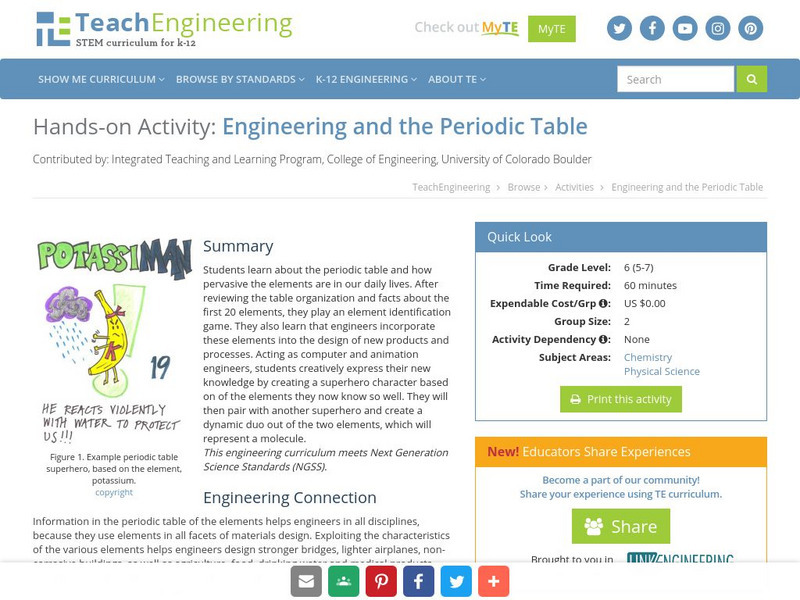
Teach Engineering: Engineering and the Periodic Table
Students learn about the periodic table and how pervasive the elements are in our daily lives. After reviewing the table organization and facts about the first 20 elements, they play an element identification game. They also learn that...
TeachEngineering
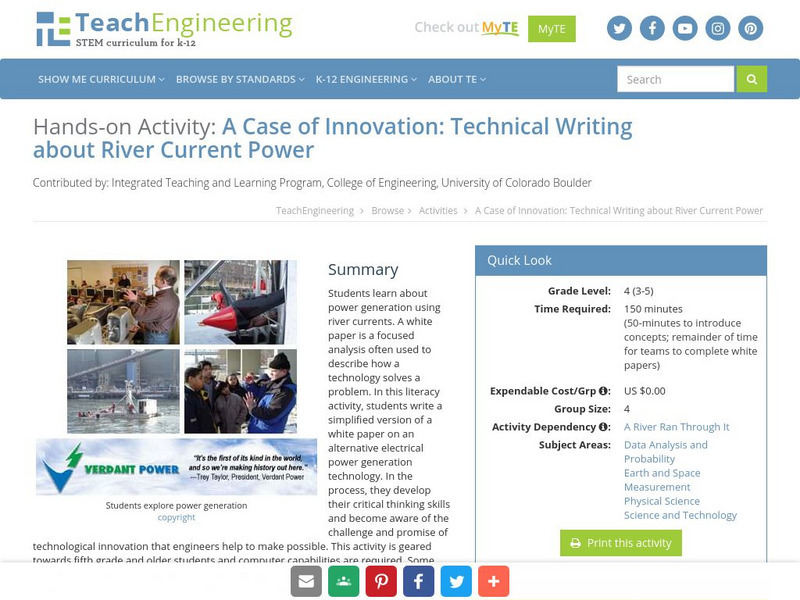
Teach Engineering: A Case of Innovation
A white paper is a focused analysis often used to describe how a technology solves a problem. In this literacy activity, students write a simplified version of a white paper on an alternative electrical power generation technology. In...
TeachEngineering
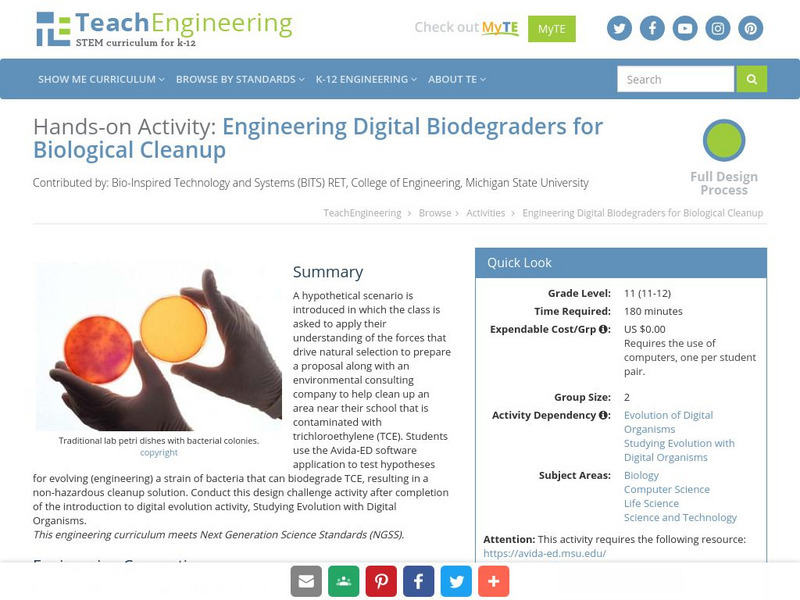
Teach Engineering: Evolving Tce Biodegraders
A hypothetical scenario is introduced in which the class is asked to apply their understanding of the forces that drive natural selection to prepare a proposal along with an environmental consulting company to help clean up an area near...
TeachEngineering
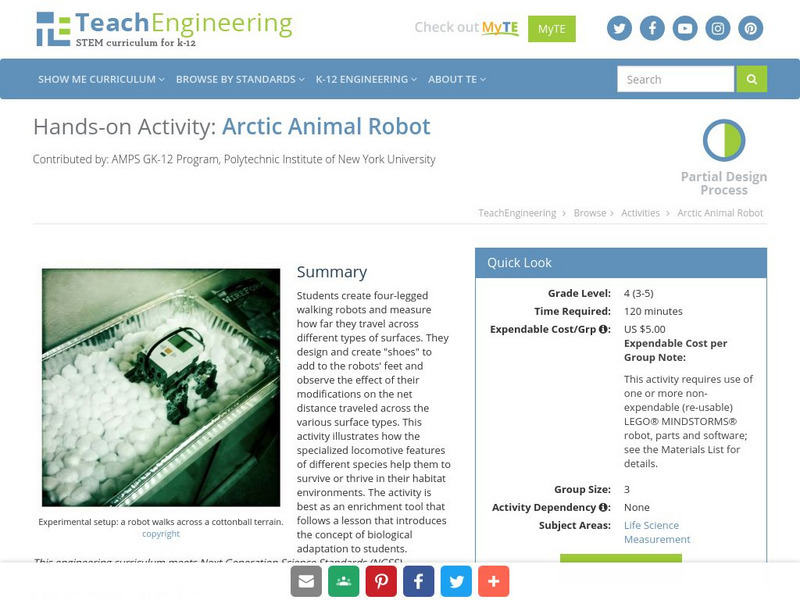
Teach Engineering: Arctic Animal Robot
Students create four-legged walking robots and measure how far they travel across different types of surfaces. They design and create "shoes" to add to the robots' feet and observe the effect of their modifications on the net distance...
TeachEngineering
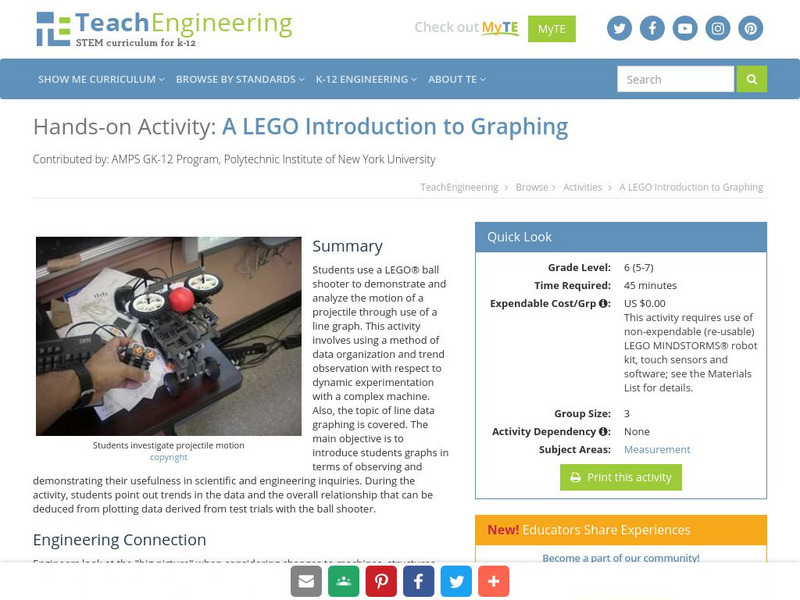
Teach Engineering: A Lego Introduction to Graphing
Students use a LEGO ball shooter to demonstrate and analyze the motion of a projectile through use of a line graph. This activity involves using a method of data organization and trend observation with respect to dynamic experimentation...

TeachEngineering
Teach Engineering: Testing With J Unit
JUnit is a testing method that is included with NetBeans (Java) installs or can be downloaded from the web and included in the Java build. In this activity, students design tests for a provided Java class before the class methods are...

TeachEngineering
Teach Engineering: Wide World of Gears
In an interactive and game-like manner, students learn about the mechanical advantage that is offered by gears. By virtue of the activity's mechatronics presentation, students learn to study a mechanical system as a dynamic system under...