Hi, what do you want to do?





Environmental Education for Kids
Eek!: Chemical Engineer
This site provides interesting and relevant information on engineering careers by offering a look into the life of a chemical engineer. Also, site describes what type of courses a student should study to pursue an engineering career.

Career Cornerstone Center
Profiles of Chem. Engineers: Fluor Daniel Process Eng.
Presents a profile of Mr. William Huang, a process engineer for Fluor Daniel Inc, located in Sugar Land, Texas. Includes the transcript from a video interview with Mr. Huang, covering time management skills, job responsibilities, and...
Open Ed
Open Ed Sci: 7.2 Chemical Reactions & Energy
In this 21-day unit, students are introduced to the anchoring phenomenon-a flameless heater in a Meal, Ready-to-Eat (MRE) that provides hot food to people by just adding water. They complete investigations to collect evidence to support...
TeachEngineering
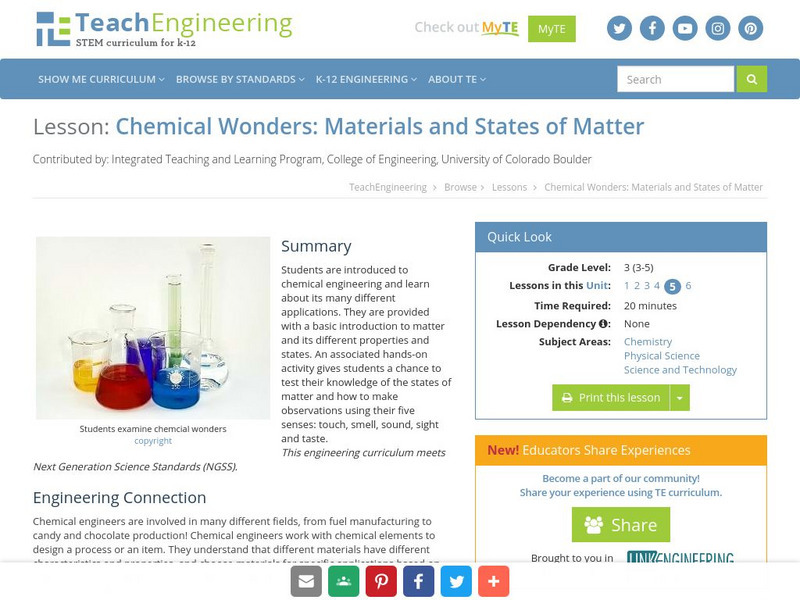
Teach Engineering: Chemical Wonders
Young scholars are introduced to chemical engineering and learn about its many different applications. They are provided with a basic introduction to matter and its different properties and states. An associated hands-on activity gives...
TeachEngineering
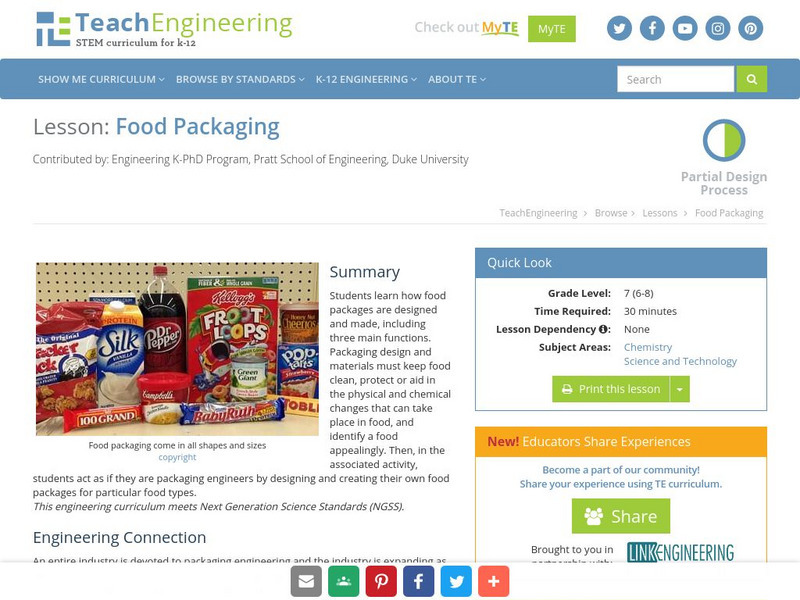
Teach Engineering: Food Packaging
This lesson focuses on how food packages are designed and made. Students will learn three of the main functions of a food package. They will learn what is necessary of the design and materials of a package to keep food clean, protect or...
TeachEngineering
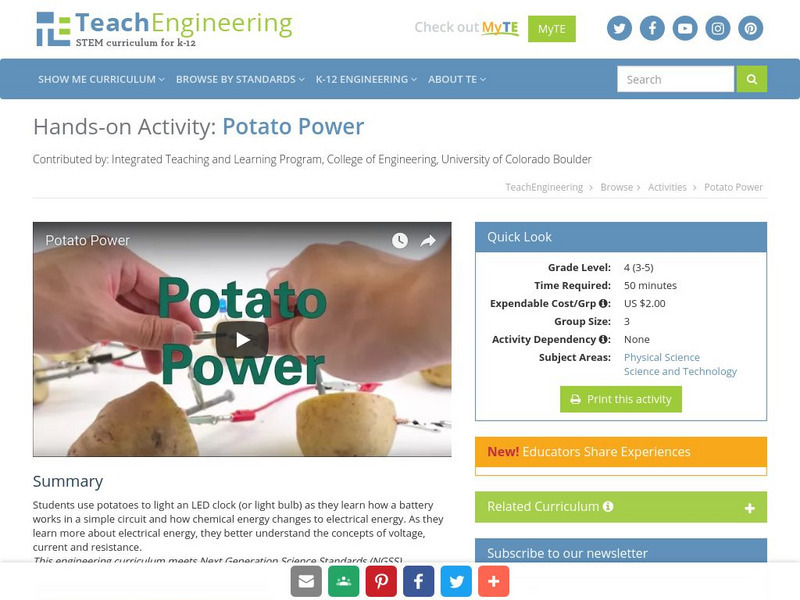
Teach Engineering: Potato Power
Students use potatoes to light an LED clock (or light bulb) as they learn how a battery works in a simple circuit and how chemical energy changes to electrical energy. As they learn more about electrical energy, they better understand...
TeachEngineering
Teach Engineering: Acid Attack
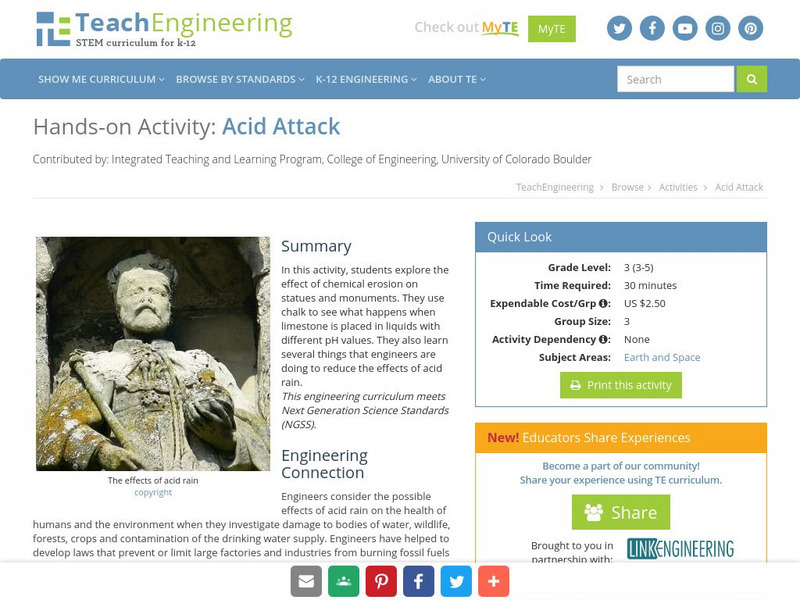
In this activity, students explore the effect of chemical erosion on statues and monuments. They use chalk to see what happens when limestone is placed in liquids with different pH values. They also learn several things that engineers...
TeachEngineering
Teach Engineering: Where Does All the Water Go?
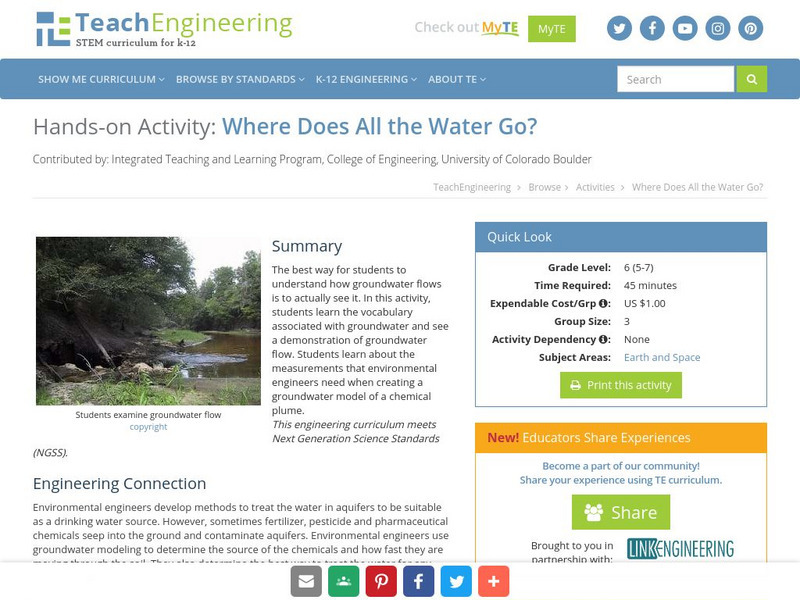
The best way for students to understand how groundwater flows is to actually see it. In this activity, students will learn the vocabulary associated with groundwater and see a demonstration of groundwater flow. Students will learn about...
TeachEngineering
Teach Engineering: Fuel Mystery Dis Solved!
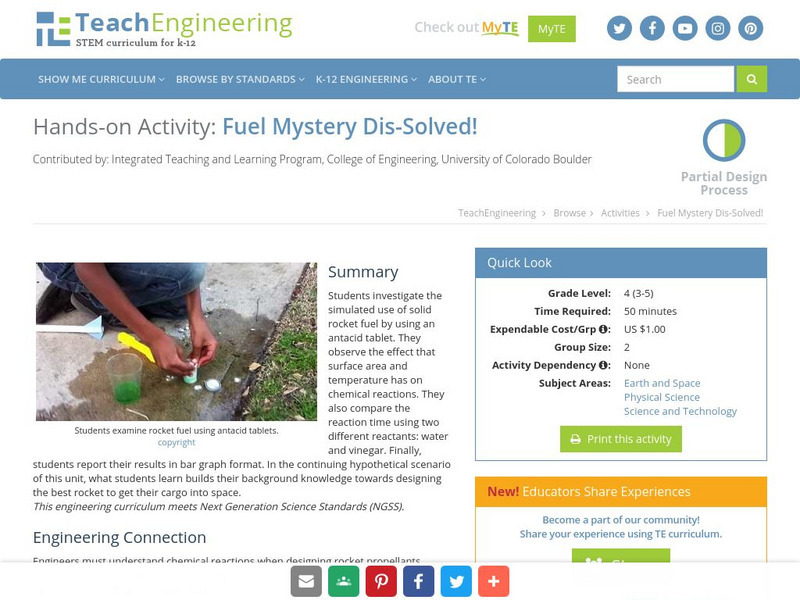
In this activity, students investigate the simulated use of solid rocket fuel by using an antacid tablet. Students observe the effect that surface area and temperature has on chemical reactions. Also, students compare the reaction time...
TeachEngineering
Teach Engineering: Understanding Elements
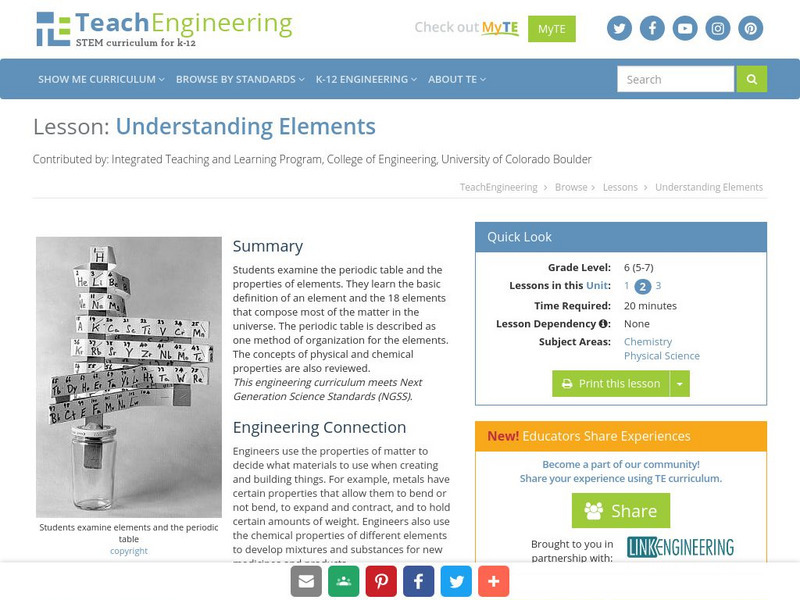
This lesson plan examines the properties of elements and the periodic table. Students learn the basic definition of an element and the 18 elements that build most of the matter in the universe. The periodic table is described as one...
TeachEngineering
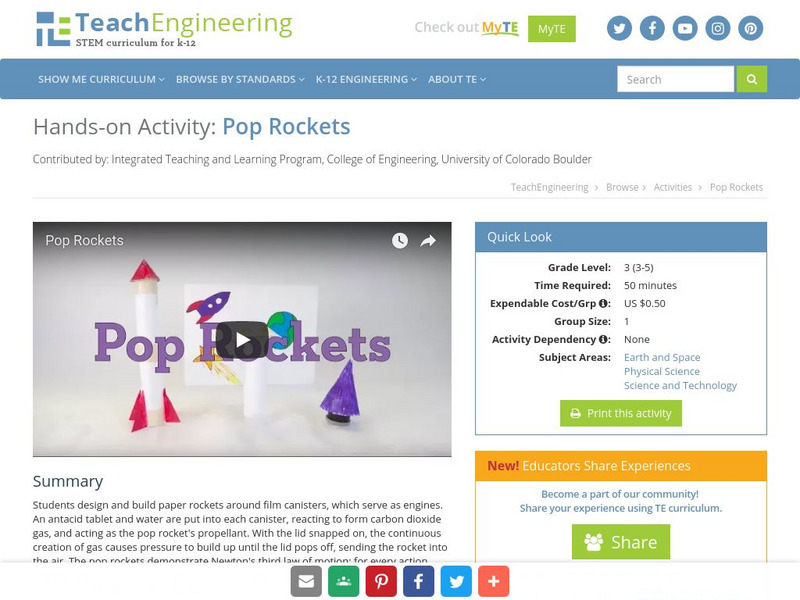
Teach Engineering: Pop Rockets
Students design and build a paper rocket around a film canister, which is used as the engine. An antacid tablet and water are put into the canister, react to form carbon dioxide gas, and act as the pop rocket's propellant. With the lid...
TeachEngineering
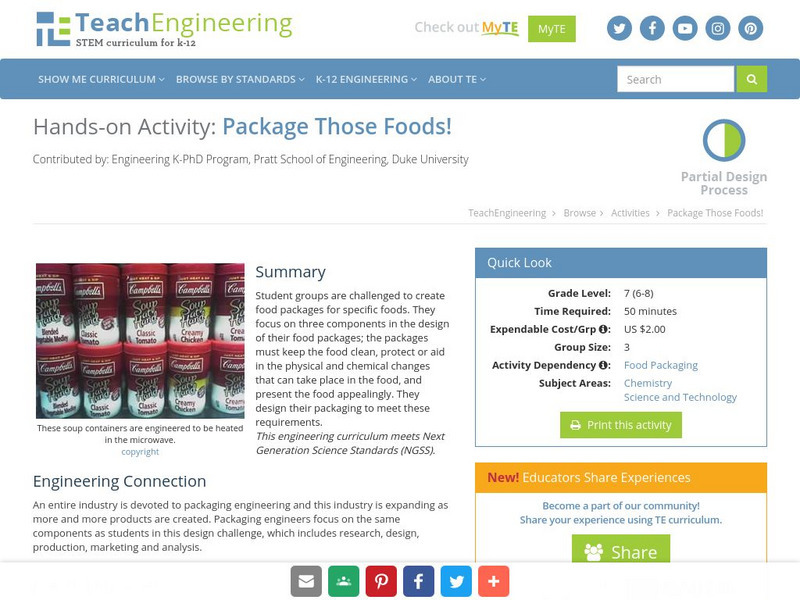
Teach Engineering: Package Those Foods!
This activity provides students with the opportunity to create a food package for a specific food. The students have three components to focus on in the design of their food package. The package will have to keep the food clean, protect...
TeachEngineering
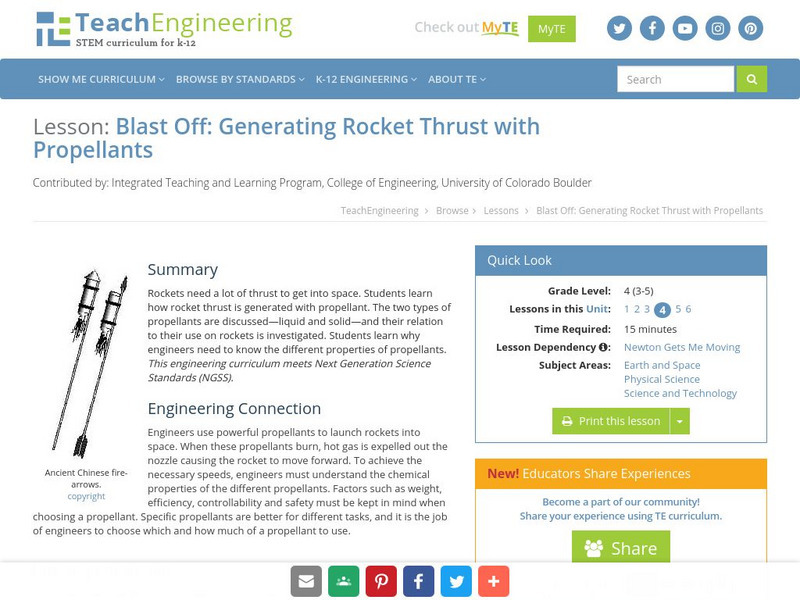
Teach Engineering: Blast Off
Rockets need a lot of thrust to get into space. In this instructional activity, students learn how rocket thrust is generated with propellant. The two types of propellants are discussed and relation to their use on rockets is...
TeachEngineering
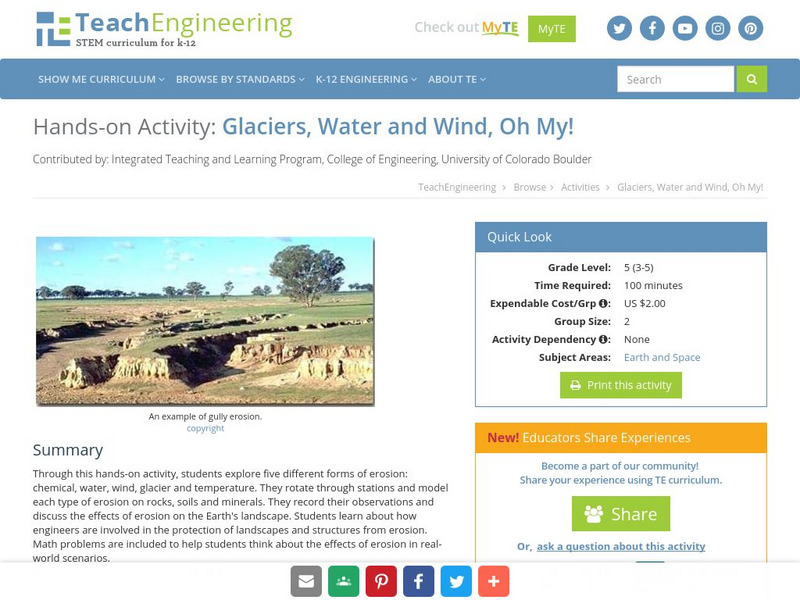
Teach Engineering: Glaciers, Water and Wind, Oh My!
This hands-on activity explores five different forms of erosion (chemical, water, wind, glacier and temperature). Students rotate through stations and model each type of erosion on rocks, soils and minerals. The students record their...
TeachEngineering
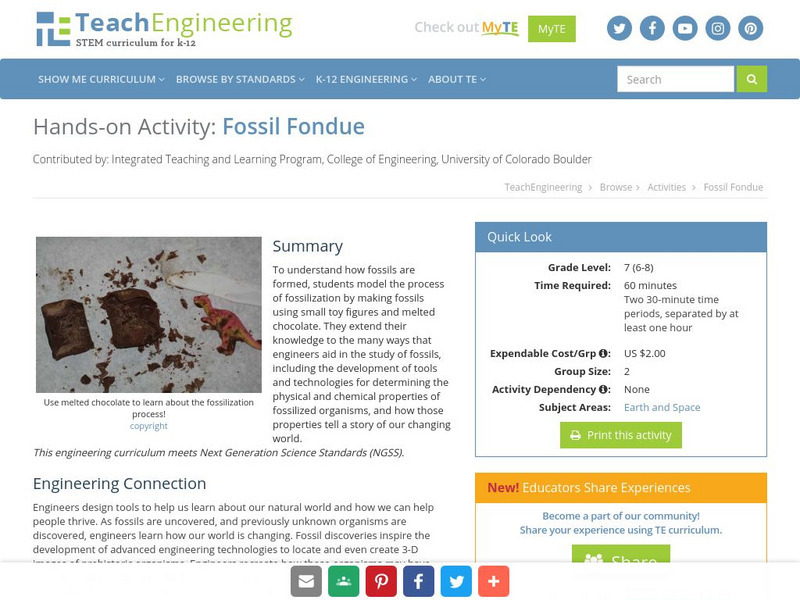
Teach Engineering: Fossil Fondue
To understand how fossils are formed, students model the process of fossilization by making fossils using small toy figures and melted chocolate. They extend their knowledge to the many ways that engineers aid in the study of fossils,...
TeachEngineering
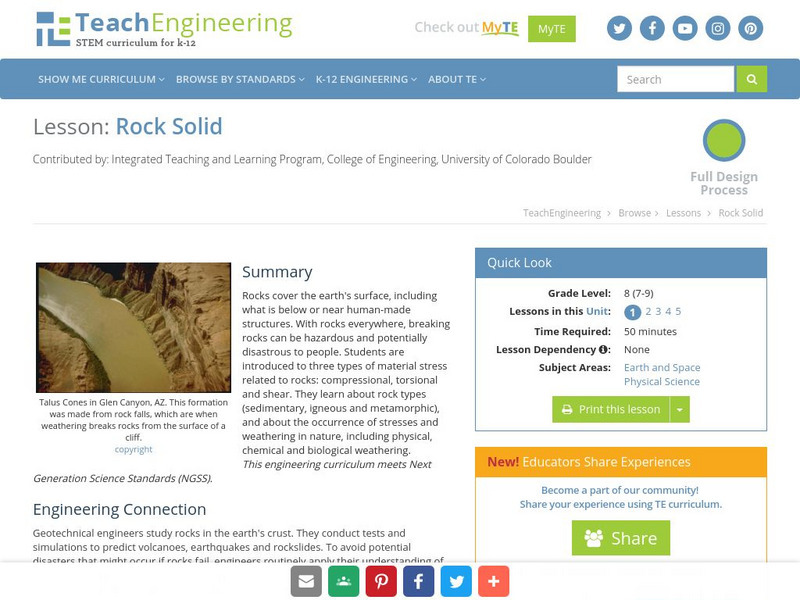
Teach Engineering: Rock Solid
Rocks cover the earth's surface, including what is below or near human-made structures. With rocks everywhere, breaking rocks can be hazardous and potentially disastrous to people. Students are introduced to three types of material...
TeachEngineering
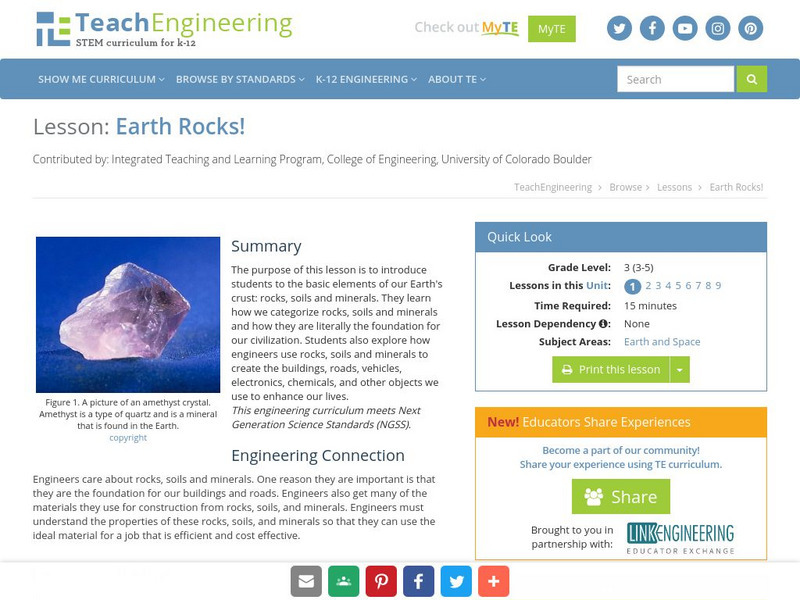
Teach Engineering: Earth Rocks!
The purpose of this instructional activity is to introduce students to the basic elements of our Earth's crust: rocks, soils and minerals. They learn how we categorize rocks, soils and minerals and how they are literally the foundation...
TeachEngineering
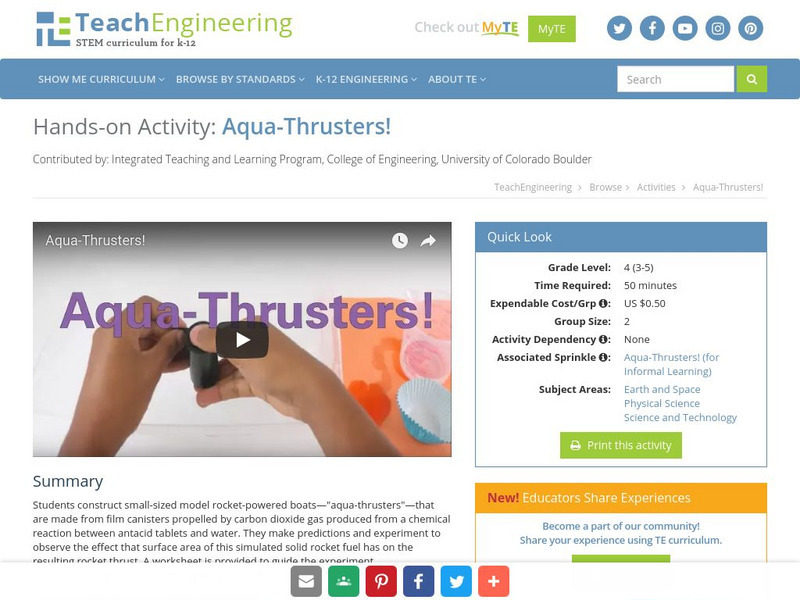
Teach Engineering: Aqua Thrusters!
In this activity, students construct their own rocket-powered boat called an "aqua-thruster." These aqua-thrusters will be made from a film canister and will use carbon dioxide gas - produced from a chemical reaction between an antacid...
TeachEngineering
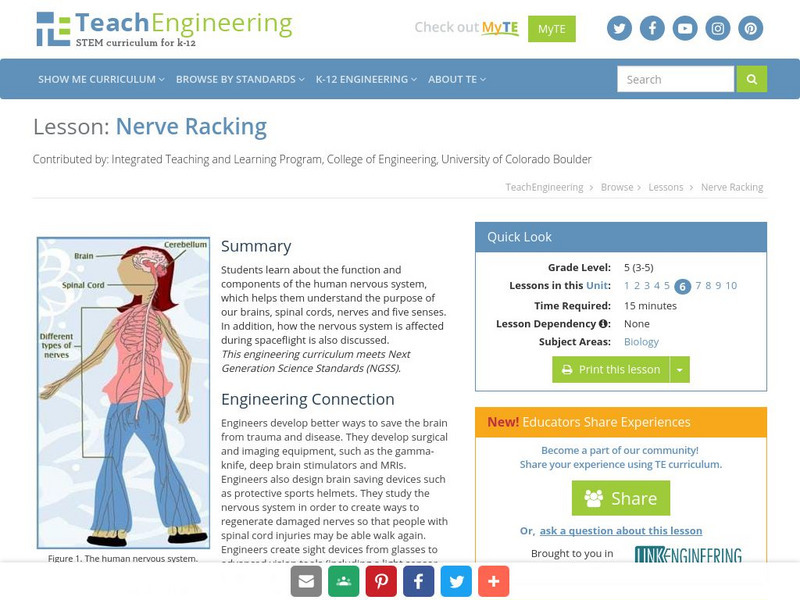
Teach Engineering: Nerve Racking
This instructional activity describes the function and components of the human nervous system. It helps students understand the purpose of our brain, spinal cord, nerves and the five senses. How the nervous system is affected during...

TeachEngineering
Teach Engineering: Solid, Liquid or Gas?
Students are given a variety of materials and asked to identify if each material as a solid, liquid or gas. They use their five senses - sight, sound, smell, texture and taste - to identify the other characteristics of each item.
Famous Scientists
Famous Scientists: Carl Bosch
Learn about the life and work of German chemist, engineer, and Nobel laureate in chemistry, Carl Bosch.
Science Buddies
Science Buddies: Rubber Band Elasticity and Temperature
Many materials expand when heated and contract when cooled. What do you think will happen to the elasticity (stretchiness) of a rubber band when it is heated or cooled to various temperatures?
TeachEngineering
Teach Engineering: What Is Energy? Short Demos
Three short, hands-on, in-class demos expand students' understand of energy. First, using peanuts and heat, students see how the human body burns food to make energy. Then, students create paper snake mobiles to explore how heat energy...
Science Buddies
Science Buddies: Project Ideas: Experiment With Genetically Modified Seeds
Compare the growth of normal plants with plants that have been genetically modified to make them resistant to the chemical herbicide Roundup. The Science Buddies project ideas are set up consistently beginning with an abstract,...