Hi, what do you want to do?






Visual Learning Systems
The Rock Cycle: the Rock Cycle in Action
Upon viewing the The Rock Cycle video series, students will be able to do the following: Explain that rocks are non-living substances made up of one or more minerals. Understand that a mineral is a natural substance with a definite...
Visual Learning Systems
Rocks and the Rock Cycle: the Rock Cycle
The rock cycle is illustrated in detail using easy-to-understand animations. Examples of the various types of rocks are introduced and the characteristics of different rocks are compared. Other terminology includes: rock cycle, igneous,...
Visual Learning Systems
Understanding Geologic Time
This video explains the concept of geologic time and how geologists determine the age of Earth and its rock layers. It introduces the idea of relative time and absolute time, and highlights the law of superposition. A Journey Through...

Scholastic
Study Jams! Sedimentary Rocks
Fascinating photos of sedimentary rocks and formations supply a brief overview for your geology class. By viewing these slides, learners discover that sedimentary rocks are made of tiny bits of rock, dirt, or shell that have settled,...

PBS
Pbs Learning Media: The Grand Canyon: Evidence of Earth's Past
In this video segment adapted from NOVA, a fossil found among the Grand Canyon's rock layers reveals the existence of a shallow sea that once covered most of western North America.
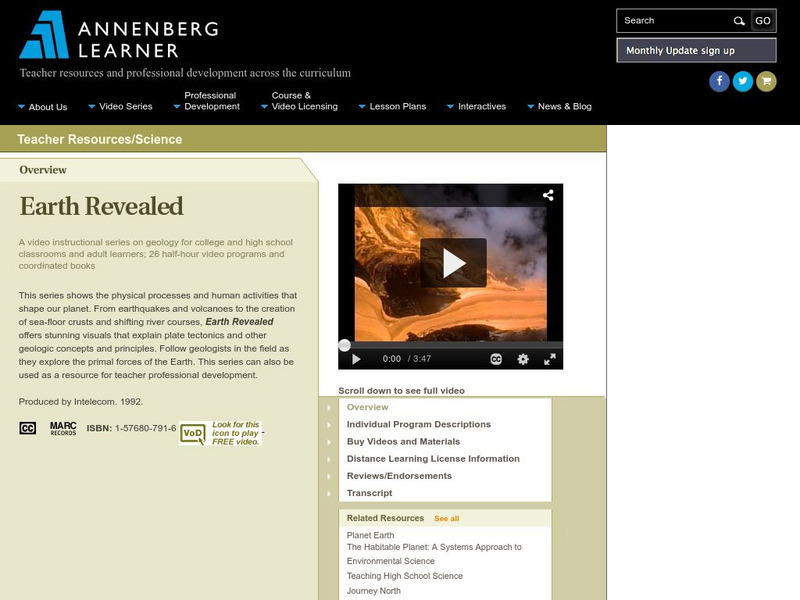
Annenberg Foundation
Annenberg Learner: Earth Revealed
To support or supplement a course in earth science or geography, Annenberg Media offers twenty-six Videos on Demand (VoDs). The topics coverd range from why Earth can sustain life, to plate tectonics, to rock types and landscape...
PBS
Pbs Learning Media: The Grand Canyon: The Top Two Rock Layers
This brief video segment adapted from NOVA uses illustrations and the well-preserved footprints of a small reptile to portray the history of the Grand Canyon's top two rock layers.