Hi, what do you want to do?






Kentucky School for the Deaf
Levels of Organization within an Ecosystem
From tiny organisms to entire biomes, young scientists examine the interdependent relationships tying all living and non-living things together with this collection of ecology resources.

Science Matters
Lotusland
It's time for a field trip! Scholars take their new-found knowledge of adaptations and seed dispersal on a field trip to a local botanical garden. They gain an up-close look at how ecological interdependence works in a distinct...

Curated OER
The Marvels of Mud
Young scientists roll up their sleeves and get a little dirty in this three-day earth science investigation. Following the scientific method, children monitor the growth of algae in pond water samples in order to determine...

Science Matters
Ecosystem Pre-Assessment
Test scholars' knowledge of ecosystems with a 20-question pre-assessment. Assessment challenges learners to answer multiple choice questions, read diagrams, and complete charts.

Science Matters
Post-Assessment
Twenty questions make up an assessment designed to test super scientists' knowledge of ecosystems. Scholars answer multiple-choice and short-answer questions about organisms, food chains, energy flow, and more.

National Park Service
Living & Non-Living Interactions
What better way to learn about ecosystems than by getting outside and observing them first hand? Accompanying a field trip to a local park or outdoor space, this series of collaborative activities engages children in...

Biology Junction
What Is Ecology?
Do you know the name for the biological study of interactions? A short presentation with accompanying worksheet introduces individuals to ecology. The materials offer a broad overview of the subject and the levels of organization to...

Science Matters
Formative Assessment #1
Discover how much your young scientists know about biotic and abiotic factors with a two-question formative assessment that requires them to observe, list, and describe.

Random House
Recipe for an Ecosystem
Creating an ecosystem is as simple as baking a cake. Well, maybe not, but using a recipe analogy helps learners realize that ecosystems consist of different components that come together in unique ways. Offer this worksheet as an...

College Board
1999 AP® Environmental Science Free-Response Questions
Pollution is a real concern in most areas of Earth. A four-question AP® assessment has learners analyze data related to water pollution and air pollution as well as consider the pros and cons of recycling. Each question has several...

Science Matters
Basic Needs
Scholars take part in a grand conversation about the basic needs of living things. Working collaboratively, pupils brainstorm and identify similarities to come to the conclusion that the environment meets the needs of all living...

EduGAINs
Go Eco! Ecosystems
How is a movie theater like a desert biome? Compare systems to ecosystems with a set of activities that focuses on accessing multiple intelligences and building upon knowledge. As learners discuss the ways elements of an ecosystem depend...

Wild BC
Is Climate Change Good for Us?
Is it really that big of a deal if the global climate undergoes a little change? Young environmentalists consider this very question as they discuss in small groups the impact of different climate change scenarios on their lives,...
Texas Education Agency
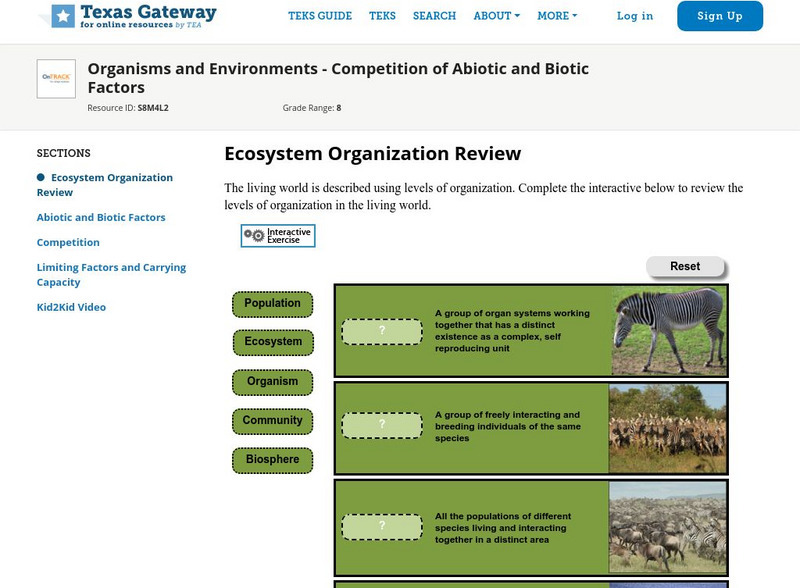
Texas Gateway: Competition of Abiotic and Biotic Factors
This tutorial explores abiotic and biotic factors with videos and interactive activities.

National Geographic
National Geographic: Ocean Abiotic Factors
After looking at examples of biotic and abiotic factors in ecosystems, students focus on abiotic factors in marine ecosystems, the physical processes that are involved, and the impact human activities can have on these. Includes handouts...
Concord Consortium
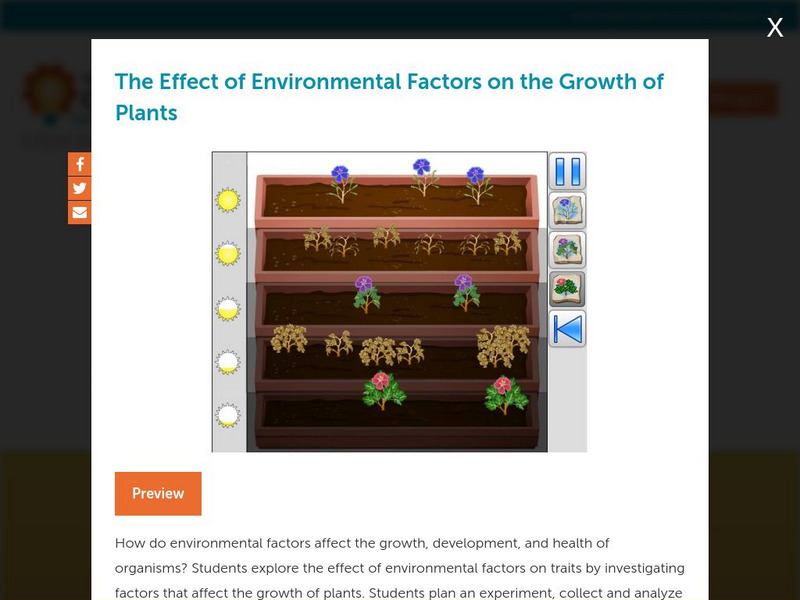
Concord Consortium: The Effect of Environmental Factors on the Growth of Plants
How do environmental factors affect the growth, development, and health of organisms? Students explore the effect of environmental factors on traits by investigating factors that affect the growth of plants.

E-learning for Kids
E Learning for Kids: Science: Marshall Islands: How Can We Tell Living Things From Non Living Things?
Andrea lives on the Marshall Islands, and she will teach you about living and nonliving things.
CPALMS
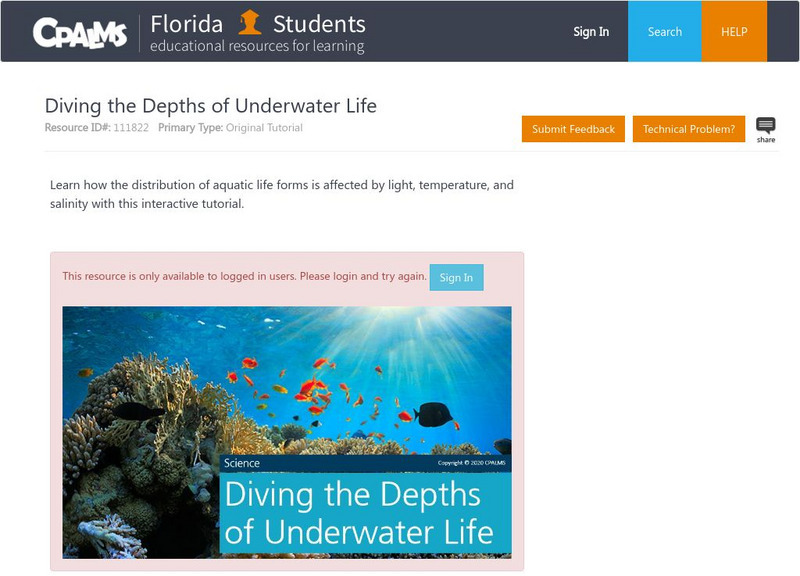
Florida State University Cpalms: Florida Students: Diving the Depths of Underwater Life
A tutorial that explores how and why the distribution of aquatic life is affected by abiotic factors, such as light, temperature, and salinity.
CK-12 Foundation
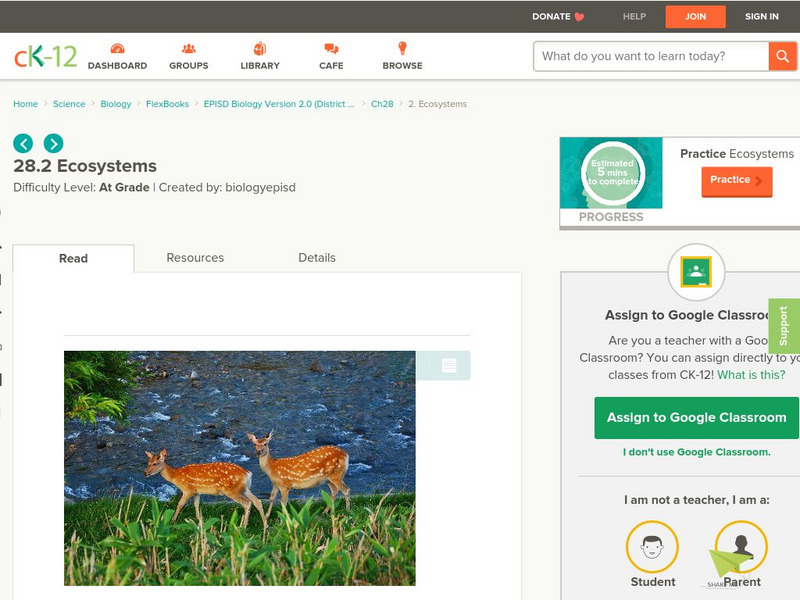
Ck 12: Episd: Ecosystems
[Free Registration/Login may be required to access all resource tools.] Explore ecosystems and ecology on an introductory level uncovering fact about types of ecosystems and the competitive exclusion principle.

SMART Technologies
Smart: Living and Nonliving Things
Students define the characteristics of living and non-living things, identify living and non-living components of an ecosystem, and identify the roles of organisms in living systems.

National Geographic
National Geographic: Ocean Abiotic Factors
Students define and provide examples of abiotic and biotic factors of different ecosystems. Then they investigate the importance of abiotic factors and physical processes within ocean ecosystems.
CK-12 Foundation
Ck 12: Life Science: 12.11 Habitat and Niche
See how organisms each have their own role in the ecosystem.

Scholastic
Scholastic: Study Jams! Science: Ecosystems
A video and a short multiple-choice quiz on the topic of ecosystems, covering biotic and abiotic factors, and the roles organisms play in an ecosystem.
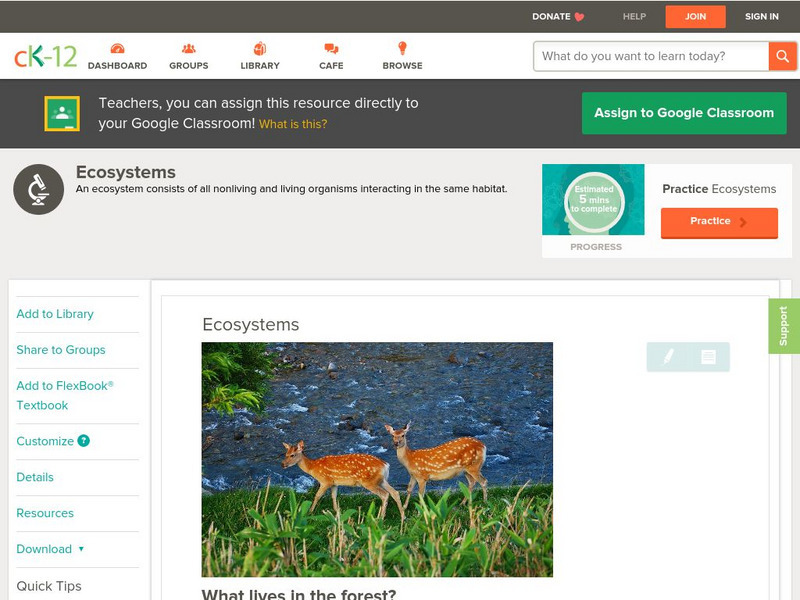
CK-12 Foundation
Ck 12: Biology: Ecosystems
[Free Registration/Login may be required to access all resource tools.] Introduction to ecosystems and other ecological concepts.
Other popular searches
- Biotic and Abiotic Factors
- Biotic and Abiotic
- Abiotic and Biotic Elements
- Abiotic and Biotic Resources
- Abiotic and Biotic Environment