Hi, what do you want to do?






EngageNY
TASC Transition Curriculum: Workshop 12
How can opinions slant facts? Workshop participants learn how to examine primary and secondary sources and identify the author's point of view. They also examine how visual art impacts the meaning and rhetoric of sources. Full of...

William & Mary
Inferential Reading Comprehension Considerations Packet
Don't forget to read between the lines! Educators learn tips and activities to help scholars learn to infer to increase reading comprehension. Activities suggested include think alouds, backwards words, and who's who. the packet includes...

New York State Education Department
TASC Transition Curriculum: Workshop 4
Why is it important to use precise language? Participants explore this question in the fourth activity in a series of 15 on effective instruction. Perfect for all content areas, the activity promotes appropriate language choice through...
Read Works
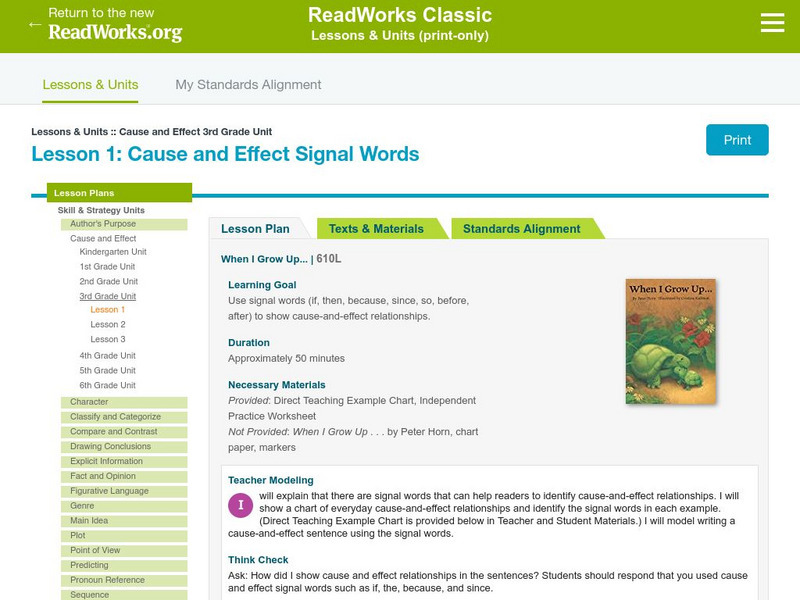
Read Works: Lesson: Cause and Effect
[Free Registration/Login Required] Using the book "When I Grow Up", this lesson plan aids students in learning about cause and effect relationships and the words that signify them.
ReadWriteThink
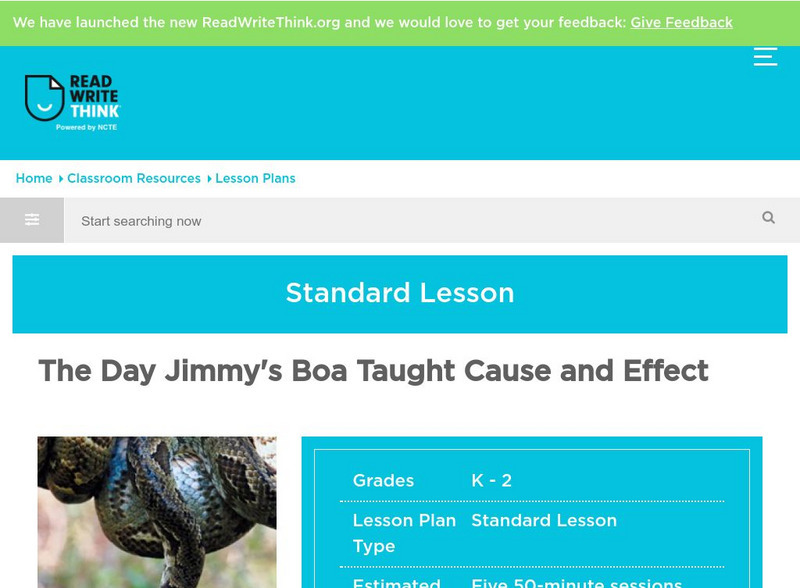
Read Write Think: The Day Jimmy's Boa Taught Cause and Effect
Contains plans for five lessons that teach about cause and effect relationships using Trinka Hakes Noble's books about Jimmy and his boa constrictor. In addition to objectives and standards, this instructional plan contains links to...
Read Works
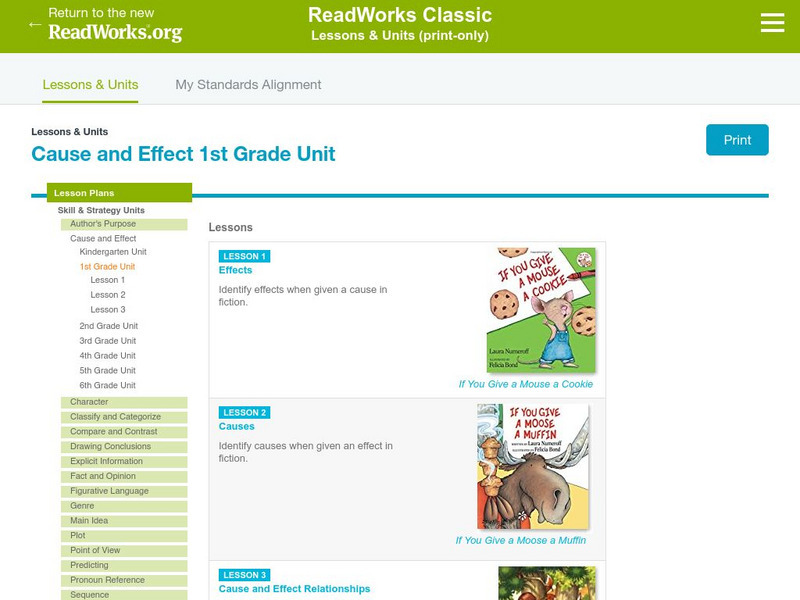
Read Works: Cause and Effect 1st Grade Unit
[Free Registration/Login Required] A three-lesson unit on cause and effect intended to improve reading comprehension. Students learn to identify causes based on effects and effects based on causes. Students also use explicit information...

E Reading Worksheets
E Reading Worksheets: Patterns of Organization: Cause and Effect
This learning module provides an explanation of the cause and effect text structure. An explanation of the cause and effect text structure is provided, and a video tutorial lesson [0:53] provides additional examples to supplement the...
Read Works
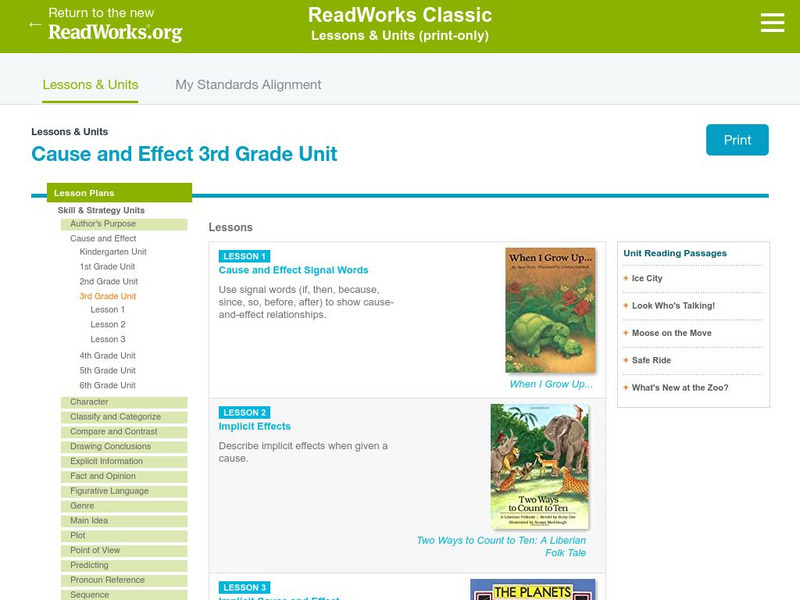
Read Works: Cause and Effect 3rd Grade Unit
[Free Registration/Login Required] A three-lesson unit on cause and effect. Young scholars learn to use signal words to identify cause and effect relationships and to describe possible effects when given a cause in fiction. Students also...
ArtsNow
Arts Now Learning: Cause and Effect Commotion [Pdf]
Instilling a strong understanding of cause and effect will increase students' reading comprehension skills. By acting out cause and effect situations, students will deepen the foundation of this important concept.
Read Works
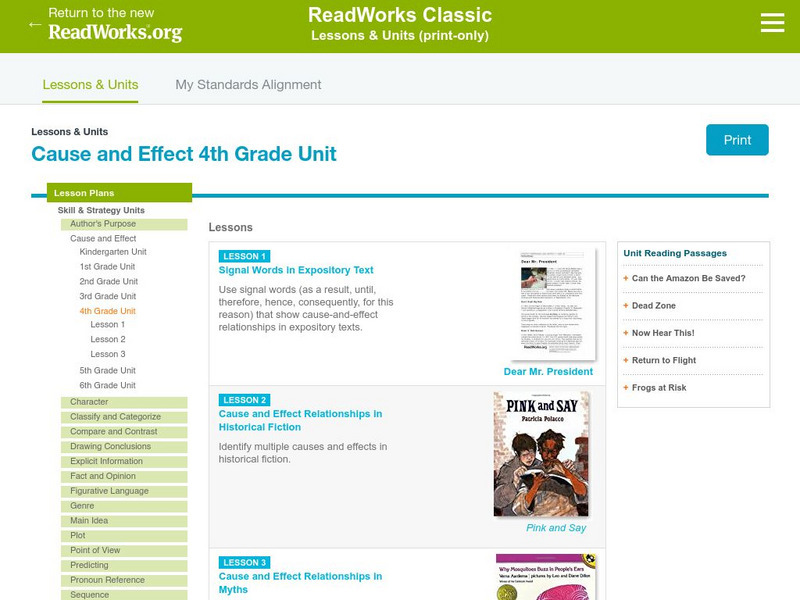
Read Works: Fourth Grade: Three Lesson Unit: Cause and Effect
[Free Registration/Login Required] A three-lesson unit on cause and effect where students learn signal words to identify cause and effect relationships and then examine those relationships in historical fiction with Pink and Say by...
![Scholastic: Informational Text: Reading Response: Cause and Effect [Pdf] Graphic](https://content.lessonplanet.com/knovation/original/362057-df6bdead3be3f2e4ac48ce2bbdb8424d.jpg?1661510819 "Scholastic: Informational Text: Reading Response: Cause and Effect [Pdf] Graphic")
Scholastic
Scholastic: Informational Text: Reading Response: Cause and Effect [Pdf]
This graphic organizer can be used as a reading response when working with informational text. Students will write two different effects and record multiple causes for each effect.
University of South Florida
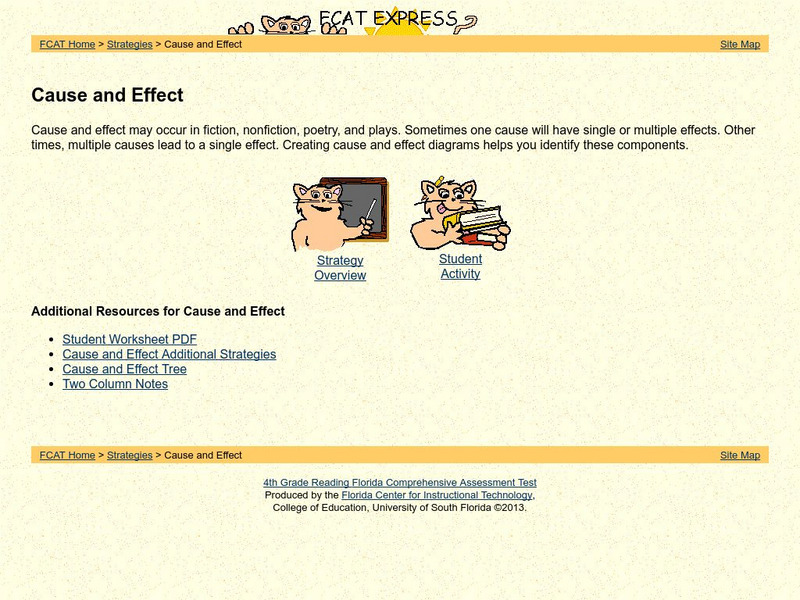
Fcat Express: Cause and Effect
Site provides extensive assistance in preparing 4th grade students for Florida Comprehensive Assessment Test. This section helps students identify cause and effect in literature.
University of South Florida
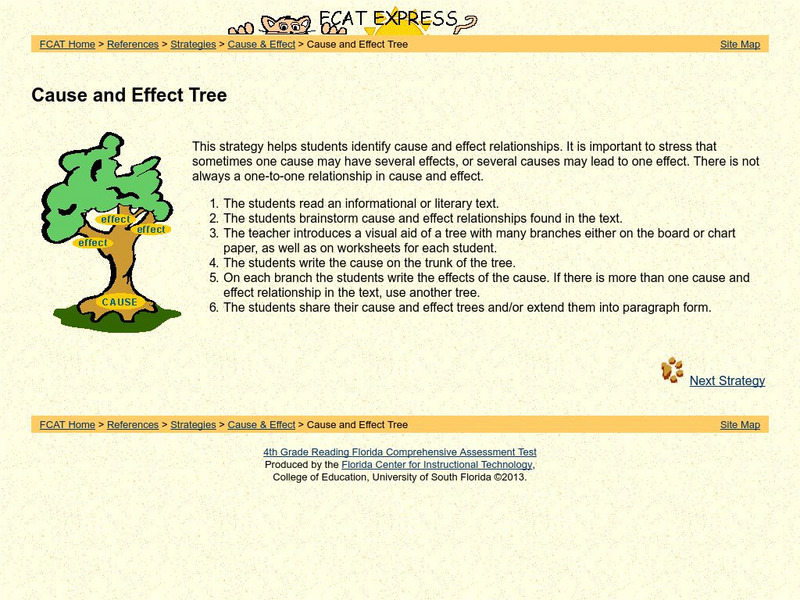
Fcat Express: Cause & Effect Tree
Strategy to help students recognize cause and effect relationships provided by a standardized test preparation site intended for fourth grade. Includes simple instructions and a visual.
Teachers.net
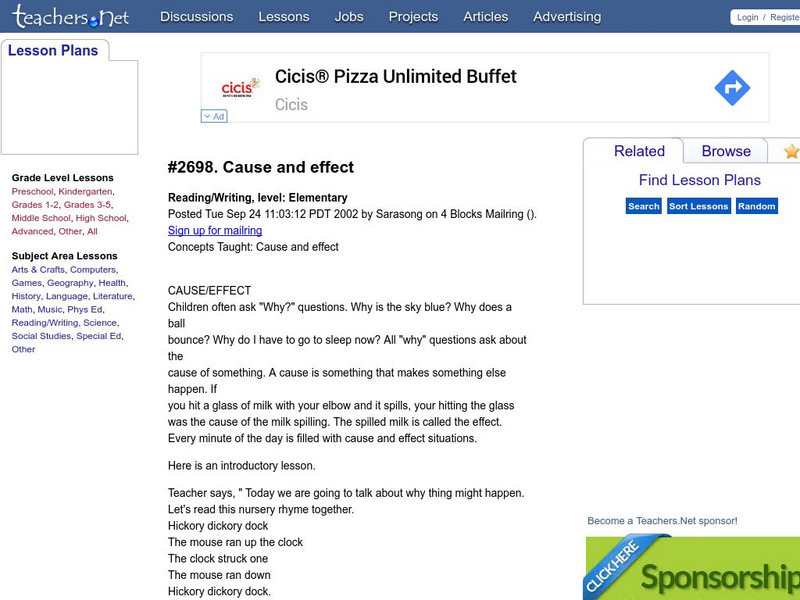
Teachers.net: Cause and Effect
Simple and effective method for introducing primary students to the concept of cause and effect in literature.
Read Works
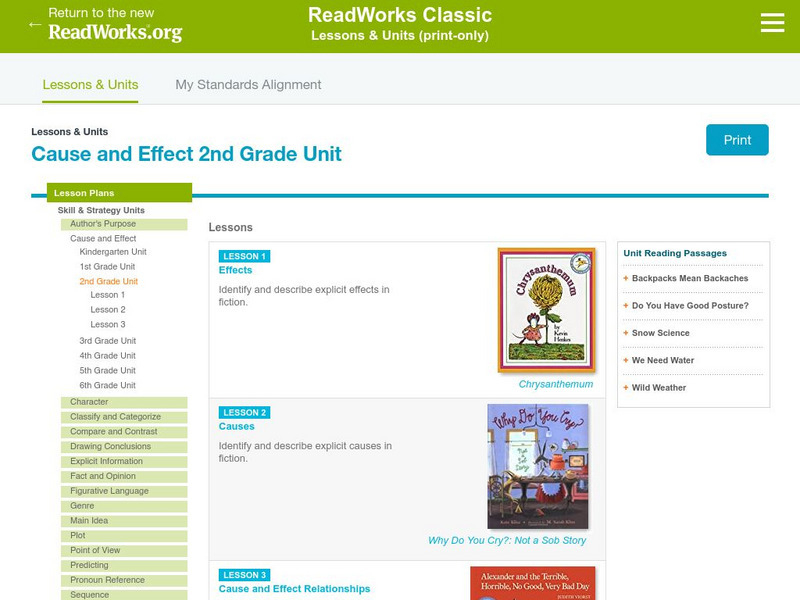
Read Works: Grade 2: Three Lesson Unit: Cause and Effect
[Free Registration/Login Required] A series of three lesson plans designed to teach students to identify effects, causes, and the relationship between them. Lessons are based on the books Chrysanthemum by Kevin Henkes, Why Do You Cry?:...
Beacon Learning Center
Beacon Learning Center: What Caused It?: Student Web Lesson
Students are asked to be detectives while they read and to look for the cause/effect sentences in the paragraphs. In this lesson plan, students read paragraphs and answer questions about it by either typing in their responses or...

Read Works
Read Works: Implicit Effects
[Free Registration/Login Required] Students will listen to this read aloud story and listen for cause and effect relationships in order to better understand the story.
Annenberg Foundation
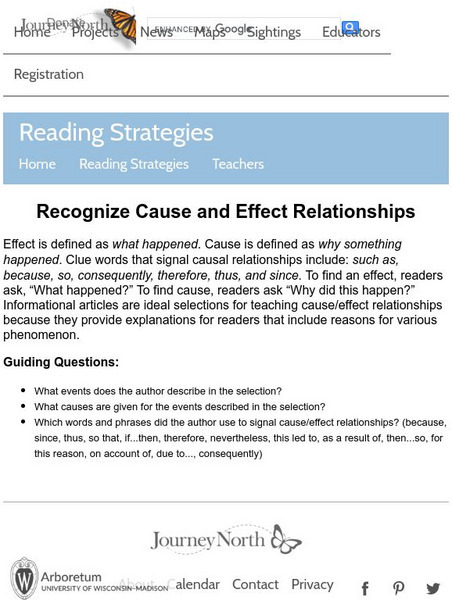
Annenberg Learner: Journey North: Reading Strategies: Recognize Cause and Effect Relationships
Learn how to identify the cause and effect relationships within a text by using a list of guiding questions.
Beacon Learning Center
Beacon Learning Center: Cause and Effect Scavenger Hunt
After reading the definitions and examples of cause and effect, 3rd graders complete a cause and effect scavenger hunt through a text to complete a activity.
University of South Florida
Fcat Express: Cause and Effect Worksheet [Pdf]
This Cause and Effect graphic organizer helps students organize information from a text they are reading.
Other
Graphic Organizers: Cause and Effect: Healthy Eating [Pdf]
This PDF resource provides a blank cause and effect graphic organizer for healthy eating. Requires Adobe Reader.
University of South Florida
Fcat Express: Teaching Strategies (Reading) [Pdf]
Printable, fifty-five page PDF file of a staff development manual containing strategies for teaching reading. Includes chapters on vocabulary, main ideas and supporting details, author's purpose, chronological order, plot and conflict...
Read Works
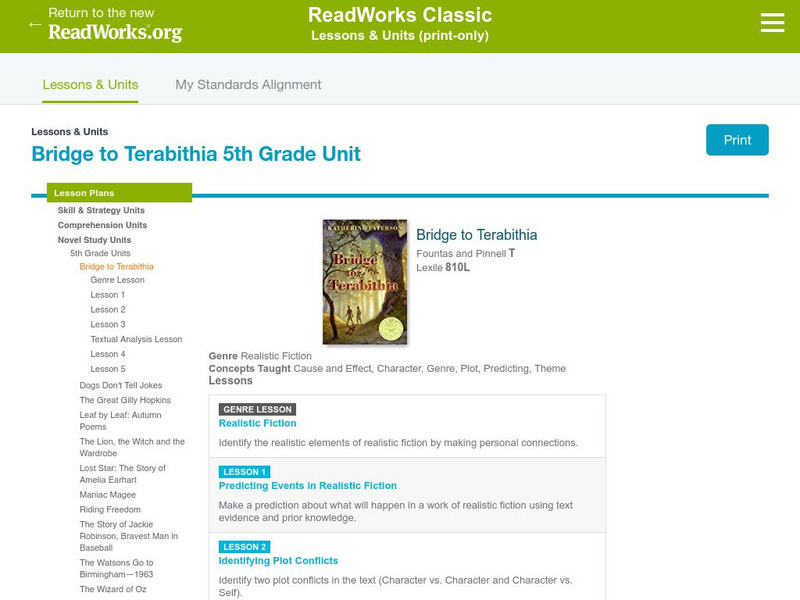
Read Works: Bridge to Terabithia 5th Grade Unit
A Grade 5 literature study unit for the novel "Bridge to Terabithia" by Katherine Paterson. The concepts covered include cause and effect, character, genre, plot, predicting, and theme.
Other
Reading Worksheets: Cause and Effect [Pdf]
This PDF resource allows students to practice identifying what part of a sentence is the effect (what happened) and what part of the sentence is the cause (why it happened). Requires Adobe Reader.