Hi, what do you want to do?






Curated OER
Early Human Progress: Writing Activity
In this early humans worksheet, students look at 2 pictures of early humans, then write an essay explaining what is different about the lives of the people shown in the 2 pictures. Students are given a list of terms to include.

Curated OER
The Reformers: Martin Luther and César Chávez
Kids consider the characteristics needed to be reformers like Martin Luther King and Cesar Chavez. They read a series of quotes focused on both animal and human rights to answer eight critical thinking questions.

K5 Learning
Grandma’s Puppy
Read, copy, write, and draw; these are the four to dos when your early readers get hold of this worksheet. First, scholars read a short story about a child and her grandmother's dog. Readers then practice copying and writing...

American Museum of Natural History
Being a Zoologist: Sandra Olsen
Are your students wild about horses? Then introduce them Sandra Olsen, a zooarchaeologist, who has been studying horses and the people who herd them. Ms Olsen responds to 15 interview questions and details how she goes about her...

National Constitution Center
Interactive Constitution
Did you know there are seven Articles and 27 Amendments to the US Constitution? Explore each and every one of them, including the Bill of Rights and other rights around the world, in a super neat US Constitution interactive.

American Museum of Natural History
What's This? Gold
Cell phones are likely made of gold—at least part of them! An interesting lesson explains the conventional and not-so-conventional uses of the popular element gold. From the Inca empire to modern-day technology, learners discover gold...

Curated OER
Virginia: Reading Comprehension
In this Virginia reading comprehension worksheet, students read a multiple-page selection regarding the state and then respond to 10 true or false questions.

Curated OER
What Causes Earthquakes?
In this earthquakes worksheet, students will read information about how different myths and legends have been created to describe the cause of earthquakes. Students will use this information to complete 3 short answer questions.

Curated OER
Ancient Egypt
In this Ancient Egypt instructional activity, students read a 2 page article on Ancient Egypt, answer 3 statements as true or false and choose which multiple choice answers best answers 3 questions/statements.

Curated OER
Breaking News English: Laboratory-Created Eggs and Sperm
In this English learning exercise, students read "Laboratory-Created Eggs and Sperm," and then respond to 47 fill in the blank, 7 short answer, 20 matching, and 8 true or false questions about the selection.
National Humanities Center
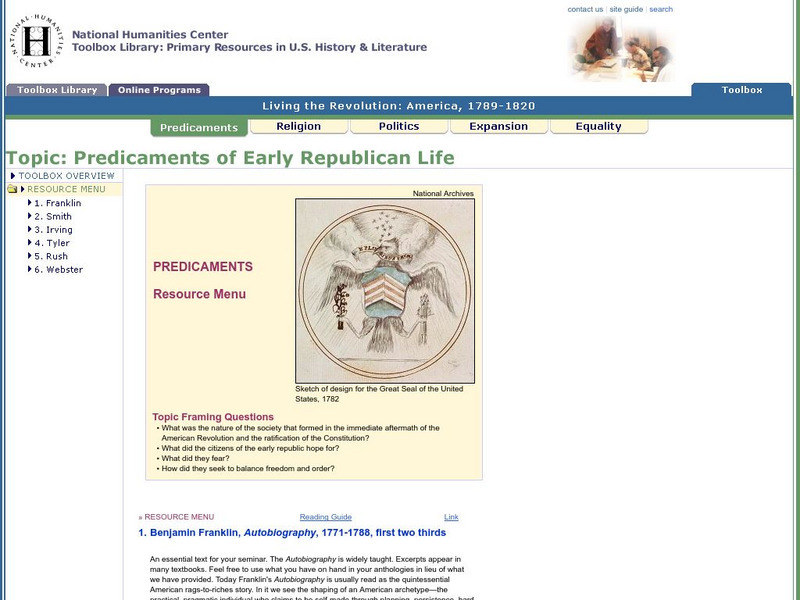
National Humanities Center: Toolbox Library: Predicaments of Early Republican Life
Primary resource material focusses on predicaments in early American history. Students read primary source text to answer questions surrounding the nature of society following the American Revolution, learning about the hopes and fears...

Khan Academy
Khan Academy: Us History: Market Revolution: Society and Culture
A quick comprehension check over the society and culture of the market revolution in the early 1800s.
National Humanities Center
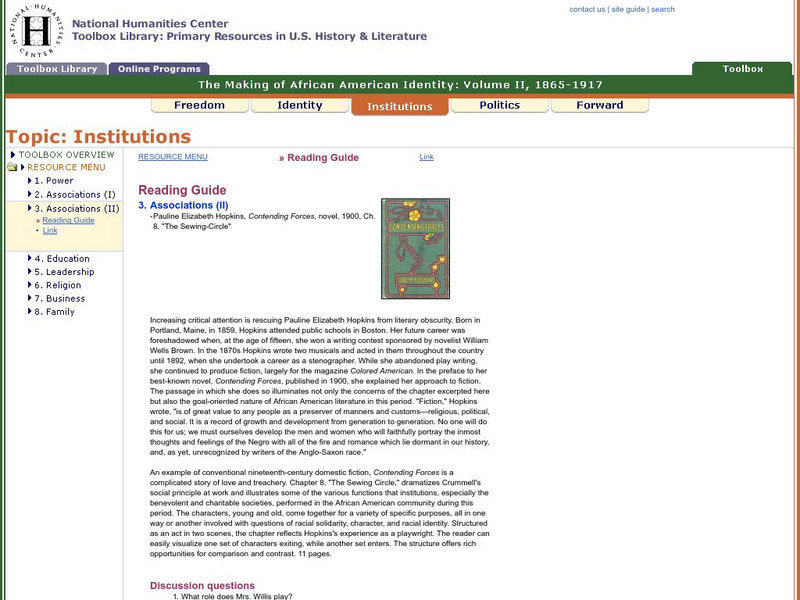
National Humanities Center: Toolbox Library: Associations (Ii), Making of African American Identity: V. 2
Chapter from a novel that describes the workings of a charitable society. This chapter, "The Sewing Circle," illustrates some of the various functions that institutions, especially the benevolent and charitable societies, performed in...
National Humanities Center
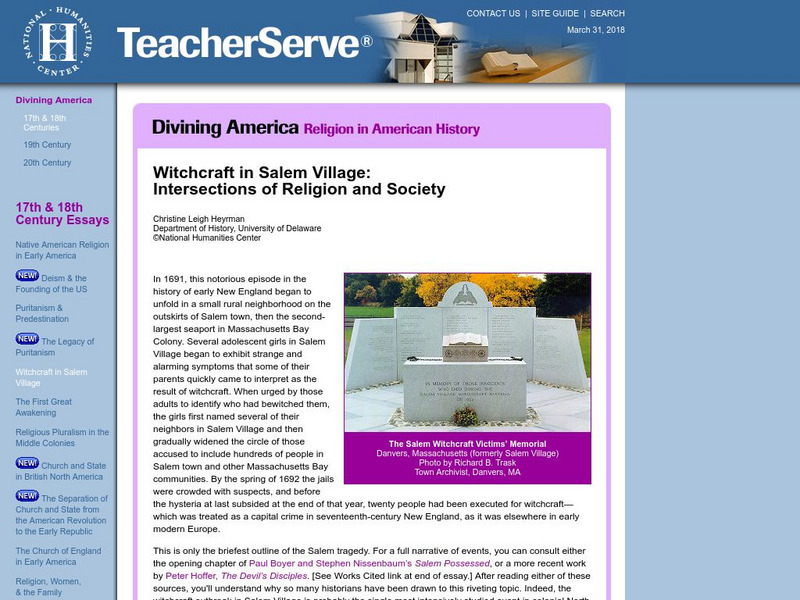
National Humanities Center: Teacher Serve: Witchcraft in Salem Village
This National Humanities site gives a brief description of "This notorious episode in the history of early New England," and some ideas for presenting the topic of witchcraft to students.
National Humanities Center
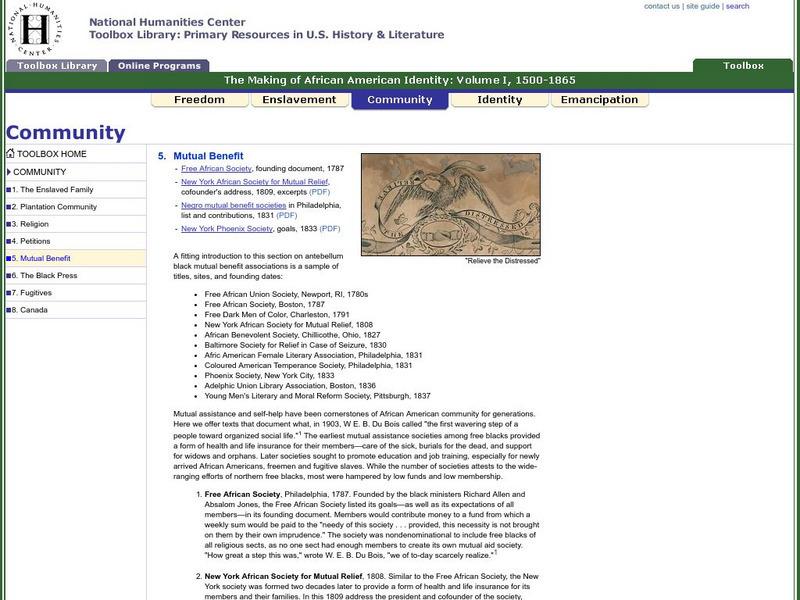
National Humanities Center: Toolbox Library: Mutual Benefit, Making of African American Identity: V. 1
Four documents establishing black mutual assistance and self-help organizations from the late-eighteenth and early-nineteenth centuries. A link to each document is provided.

Khan Academy
Khan Academy: World History: Unit: Beginnings 600 Bce
This virtual course from Khan Academy is a series of video tutorials and practice links that follow the world's prehistory through 600 BCE.

Other
International World History: Agriculture and the Origins of Civilization
Read here about the Neolithic Revolution and the development of early Stone Age humans into an Agrarian society. Causes of the agrarian transformation are addressed as well as the domestication of plants and animals. The spread of the...
The Field Museum
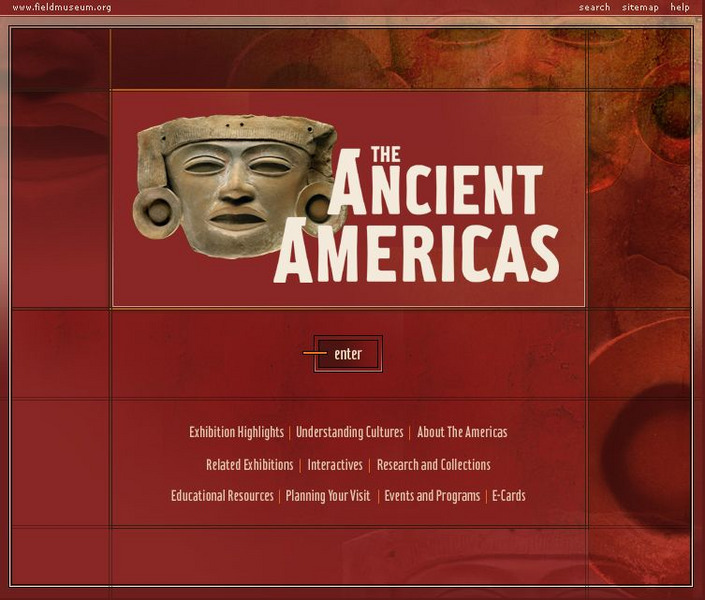
Field Museum: Exhibits: The Ancient Americas
Gain a deeper understanding of the Americas on this journey through 13,000 years of human ingenuity and achievement in the western hemisphere.
Khan Academy
Khan Academy: American Indian Culture of the Plains
The Plains Indians had a dynamic society that changed over time. See how the introduction of the horse changed their way of life. Read about their religion, societal structure, housing, and tools. Included are pictures, maps, critical...
Khan Academy
Khan Academy: American Indian Culture of the Southwest
We can thank the Indian tribes from the Southwest for introducing us to corn. Corn was seen as a spiritual gift in Pueblo societies. Study more of the cultural characteristics of these tribes such as their irrigation system which allowed...
Khan Academy
Khan Academy: American Indian Culture of the Southeast
The Southeast Indian tribes were known for their agricultural success. Examine their farming practices, pottery, mound building traditions, and societal structure in the following summary. Also included are pictures, maps, critical...

Khan Academy
Khan Academy: What Is an Inka Ushnu?
The Inka capital Cusco and principal outlying towns of the Inka Empire were organized around a public plaza with a specially-constructed platform placed facing a designated sacred central space called the ushnu. The ushnu platform was a...

Khan Academy
Khan Academy: Keru Vessel
A keru is a ceremonial Andean beaker that was an important part of Inka culture prior to the arrival of the Spaniards. The designs on these objects provides us with insights into a complex and fascinating society. View pictures of kerus...
Khan Academy
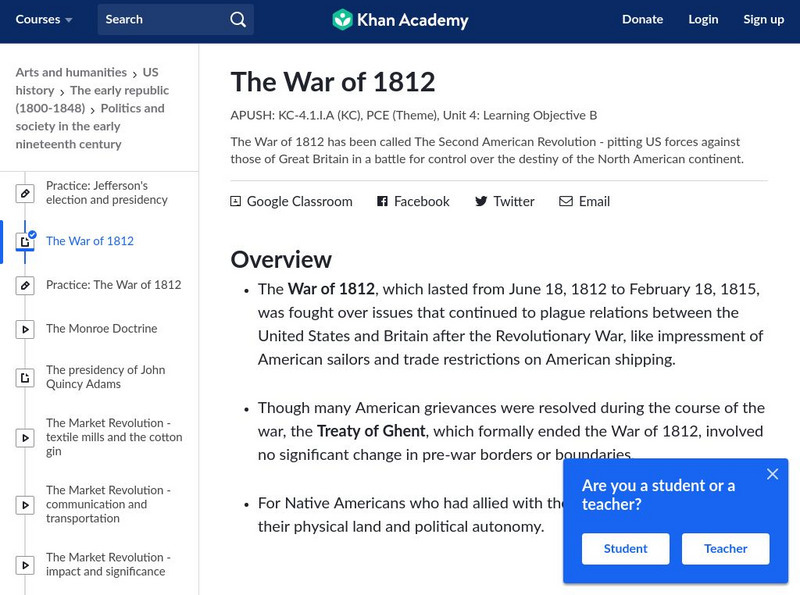
Khan Academy: The War of 1812
This Khan Academy resource provides information about the War of 1812, including the surround issues before and after the fighting of it.