Hi, what do you want to do?





Science Friday Initiative
Science Friday: Desktop Diaries: Sylvia Earle
How do you become a scientist? "It's really easy: you start out as a little kid and then you never grow up," says explorer and biologist Sylvia Earle. Step into her office.

Science Friday Initiative
Science Friday: James Watson: Studio Session
In 1953, James Watson and Francis Crick pieced together the structure of DNA the now-famous double helix. To celebrate the release of a new annotated and illustrated edition of his 1968 book, The Double Helix, James Watson reflects on...
Science Friday Initiative
Science Friday: Wild California Condors Made Here
In 1982, fewer than two dozen California condors existed. Now, over 200 live in the wild, thanks in part to The Peregrine Fund -- the largest California condor breeding center in the U.S.
Science Friday Initiative
Science Friday: Comet's Tail Shines Light on Sun
In 2011, comet Lovejoy traveled through the sun's corona and lived to tell the tale. But its tail was the most telling. Reporting in the journal Science, Cooper Downs, says that the wiggle of the comet's tail helps explain the sun's...
Science Friday Initiative
Science Friday: Step Into an Optical Illusion
In Demon Hill, the rules of gravity don't apply as you expect them to. Down is not down, exactly. The room, created by Los Angeles artist Julian Hoeber and on display at the Harris Lieberman Gallery in New York, is modeled on a stock...

Science Friday Initiative
Science Friday: Getting a Leg Up: High Jump Explained
Explains the biomechanics of the high jump, where an athlete propels him- or herself over a bar. The world record for this is over eight feet. Aired Jul. 20, 2012. [4:45]
Science Friday Initiative
Science Friday: 2012 Nobel Prizes Recognize Pioneering Science
Nobel laureates from 2012 changed our understanding of our bodies and the world around us.
Science Friday Initiative
Science Friday: Ice Age Co Stars: Horses, Camels, and Cheetahs
Discusses some of the animals that lived in North America during the Ice Age, ones that are usually overlooked, and reasons they either went extinct or evolved and survived. Aired Sep. 28, 2012 [21:39]
Science Friday Initiative
Science Friday: How Wood Smoke Is Dirtying Alaska's Air
The air quality in Alaskan cities such as Fairbanks has been determined to be worse than most places in the United States, and is having adverse effects on residents' health. The source of this pollution is the smoke from wood stoves,...

Science Friday Initiative
Science Friday: Identifying the Real Culprit Behind Killer Vascular Diseases
Contrary to what was previously believed, researchers now think that stem cells cause artery blockages, leading to heart attacks and stroke. Aired Jun. 8, 2012 [18:04 min]
Science Friday Initiative
Science Friday: Art Meets Geek in Toni Dove's Studio
Toni Dove employs infrared motion-sensing, voice recognition software, 3-D mechanical projection screens, video puppets, and lots of other tech to bring her mixed media productions to life. [4:30]

Science Friday Initiative
Science Friday: How Secure Are Electronic Voting Machines?
The security of electronic voting machines is a concern, as there are fears that they could be hacked into. An expert discusses the technology behind them. Aired Nov. 2, 2012 [16:31 min]
Science Friday Initiative
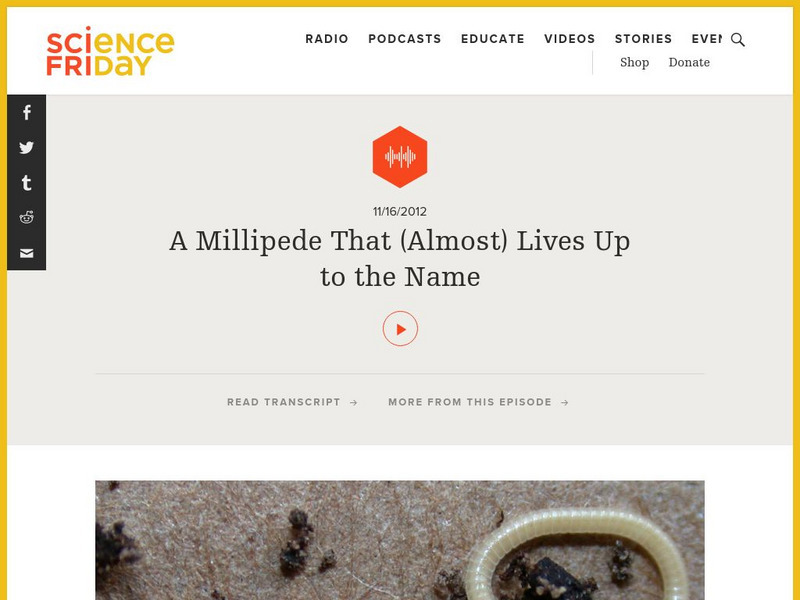
Science Friday: A Millipede That (Almost) Lives Up to the Name
No millipede has 1000 feet, but the species Illacme plenipes comes closest, with up to 750 feet! Entomologist Paul Marek, who rediscovered the rare species a few years ago in California's coastal mountains, calls counting legs and...
Science Friday Initiative
Science Friday: Hello, Is There Anybody Out There?
An interview with Jill Tarter, who works for the SETI (Search for Extraterrestrial Intelligence) Institute looking for evidence of life in outer space. Aired May 10, 2014 [24:20 min]

Science Friday Initiative
Science Friday: Rap Nerdy to Me
MC Frontalot and Dr. Awkward rap about data encryption, video games and the nerd life.
Science Friday Initiative
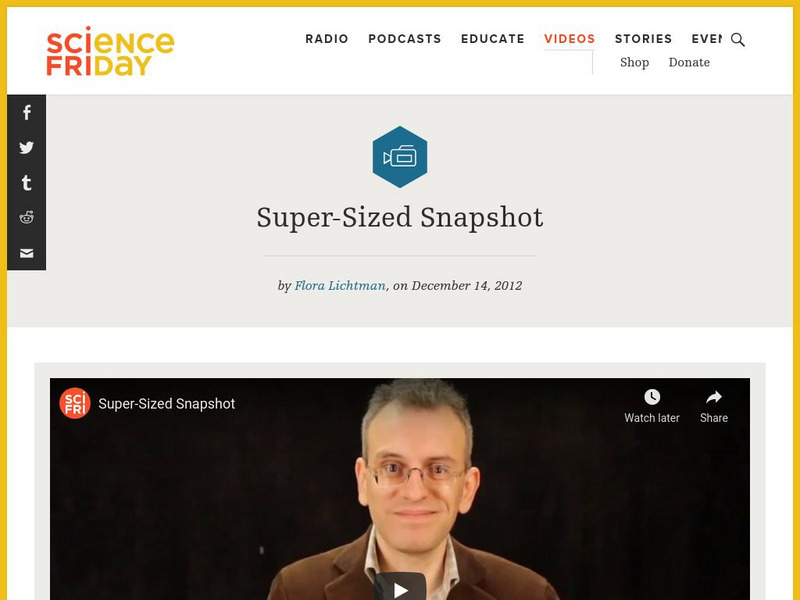
Science Friday: Super Sized Snapshot
Meet a Polaroid camera that weighs 235 pounds and takes 2-foot-tall instant snapshots.

Science Friday Initiative
Science Friday: Living Inside the Box
Michele Bertomen and David Boyle bought an empty 20-by-40-foot lot in Williamsburg, Brooklyn and built a home constructed from shipping containers.
Science Friday Initiative
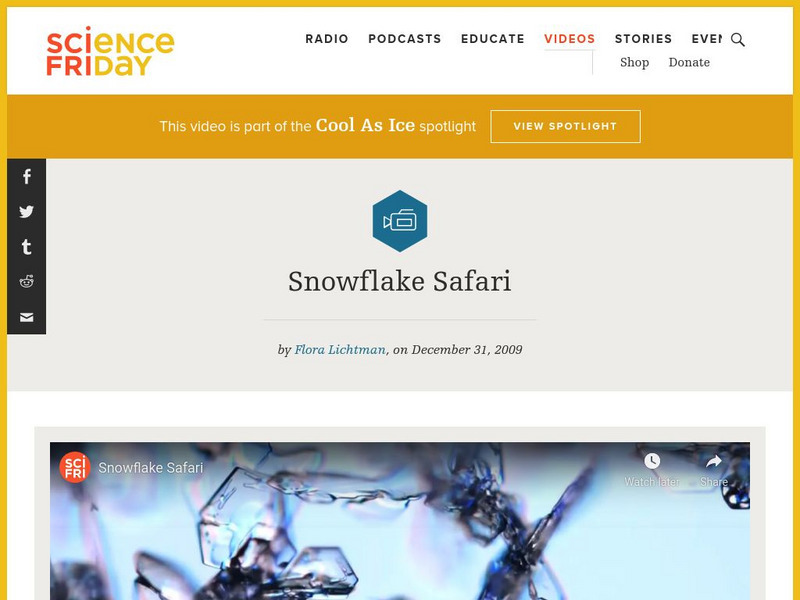
Science Friday: Snowflake Safari
Next snowstorm, grab a magnifying glass and try snowflake hunting. Bullet rosettes, stellar plates, and capped columns are just a few of the varieties of snow crystal you can find in your backyard.
Science Friday Initiative
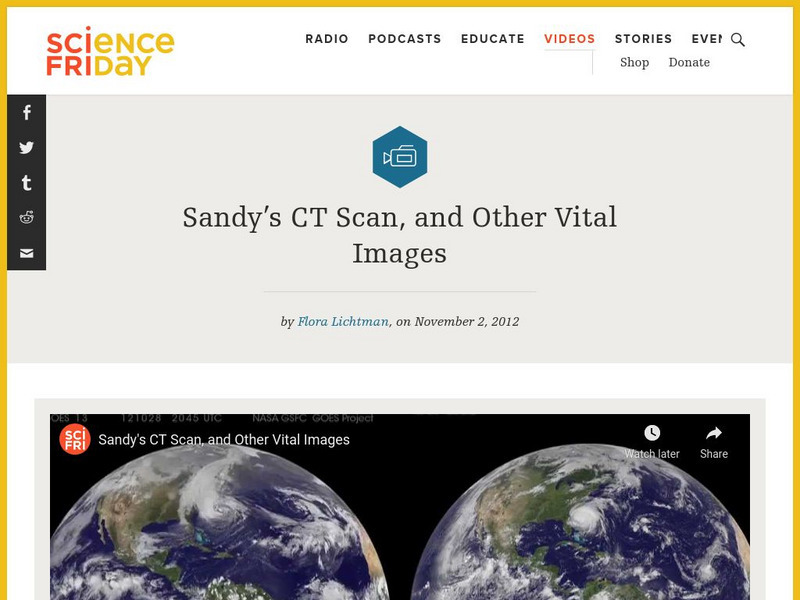
Science Friday: Sandy's Ct Scan, and Other Vital Images
Owen Kelley, a research scientist at NASA Goddard, works with data from the TRMM satellite to image the insides of storms. The satellite snapshots of Sandy also help put the storm in context. J. Marshall Shepherd explains.
Science Friday Initiative
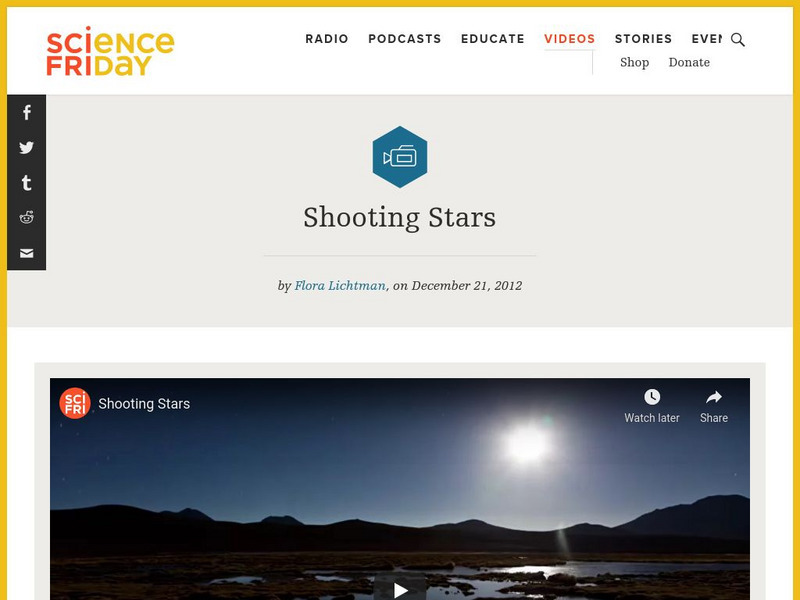
Science Friday: Shooting Stars
Photographer Colin Legg makes time-lapse movies of celestial scenes. Legg shares tips, and describes some of the challenges of landscape astrophotography -- from babysitting cameras for days and nights on end to running electronics off...
Science Friday Initiative
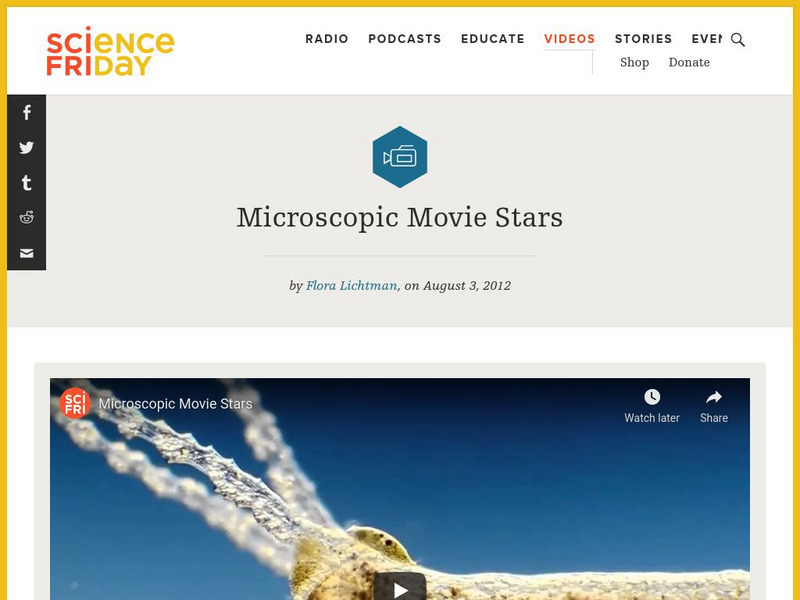
Science Friday: Microscopic Movie Stars
Photographer Roman Vishniac was a pioneer of filming through the microscope. The craft has changed with digital photography, says Dutch photographer Wim van Egmond, who has won numerous awards for his photomicrographs.
Science Friday Initiative
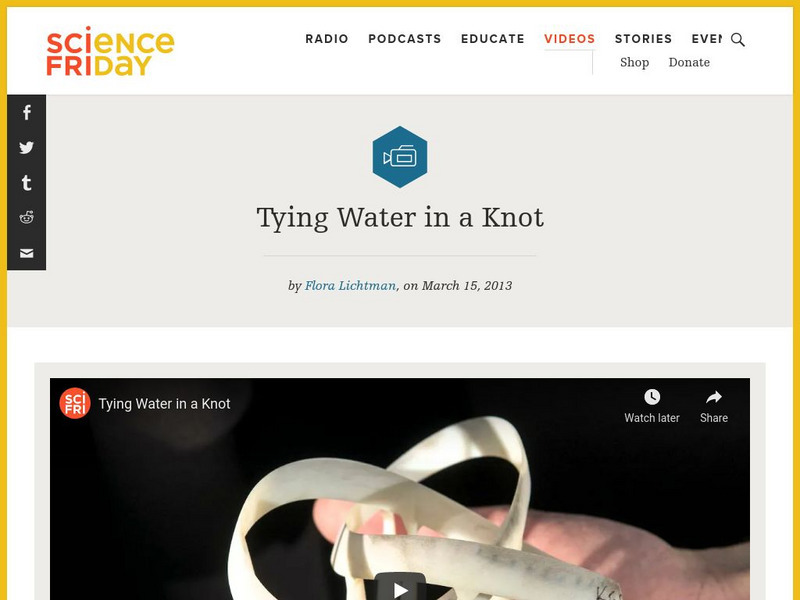
Science Friday: Tying Water in a Knot
Physicists report making fluid knots. They are like smoke rings--but made of water and shaped like a pretzel instead of a donut.
Science Friday Initiative
Science Friday: Physics of Giant Pumpkins
Pumpkins of the Atlantic Giant variety can weigh more than 1800 pounds. For a mechanical engineer with an interest in plus-sized fruit, like Georgia Tech's David Hu, this raises an interesting physics question: how can the pumpkin get so...
Science Friday Initiative
Science Friday: Magnified Sun Burns
Ready for some fun in the sun? At the right angle, a magnifying glass will concentrate sunshine into a burning hot circle. Thomas Baer, executive director of the Stanford Photonics Research Center, explains how to calculate the solar...