Hi, what do you want to do?






Curated OER
Pumpkin Carving for K-2 Students
Students engage in a variety of pumpkin activities. This lesson is especially rich for ESL students, who probably have little experience with this holiday and custom.

Curated OER
Exploding Numbers
Students discuss how numbers increase when exponential growth is occurring. They view a video and compare exponential and linear growth with a graphing calculator.

Curated OER
What's Your Expression
First graders explore facial expressions in a mirror and create drawings of people with a facial expression of their choice. They graph the facial expressions drawn.

Curated OER
SOS Lesson One: Librarian Introduction
Students experience completing research in a library. They explore a personal myth and examine sources to answer questions about the myth. They develop research questions for exploring a personal myth and explain how some sources may...

Curated OER
The Hantavirus Haunting: Solving the Case
Students engage in research about the hantavirus. They use a variety of resources to obtain information. Students distinguish the differences between hantavirus pulmonary syndrome, hantavirus transmission, and hantavirus prevention.

Curated OER
Extraordinary Compilations
Students discuss and record why people have various types of collections. They interpret the class collection of information then use details about the Morgan Dollar to understand what collection characteristics it may have.

Curated OER
The Legend of the Indian Paintbrush: Native American Life
Students read," The Legend of the Indian Paintbrush" by Tomie dePaola and discuss the way legends are passed down orally. They then create their own legend and illustrate it on a simulated "Buffalo Skin" made from brown paper.

Curated OER
No Title
Fourth graders, after brainstorming a list of things good friends do for each other, apply prereading strategies to the book, "Be A Friend to Trees," and create similes and metaphors utilizing content ideas. They also sketch an...

PBS
Pbs Teachers: Story Writing With Arthur
This series of 12 downloadable activities teach students some basics of story writing, using books or videos from the PBS "Arthur" series as a springboard. Activities include creating story maps, asking questions about characters and...

Capital Community College Foundation
Guide to Grammar and Writing: Principles of Composition
If you are a teacher OR a student looking for a well-informed website on elements of the writing process, you are in luck! This site from the Capital Community College is very comprehensive and easy-to-navigate. From grammar basics to...
ReadWriteThink
Read Write Think: Sequencing a Strategy to Succeed at Reading Comprehension
Contains plans for lessons that use the story of Paul Bunyan to teach about sequencing and order of events. In addition to objectives and standards, this instructional plan contains links to sites used in the lessons as well as...

ReadWriteThink
Read Write Think: Sequence of Events Chart
A printable graphic organizer to help students sequence events and recognize cause and effect relationships within a story. Directions on how to use this graphic organizer as well as lists of teaching ideas and related resources are also...
Writing Fix
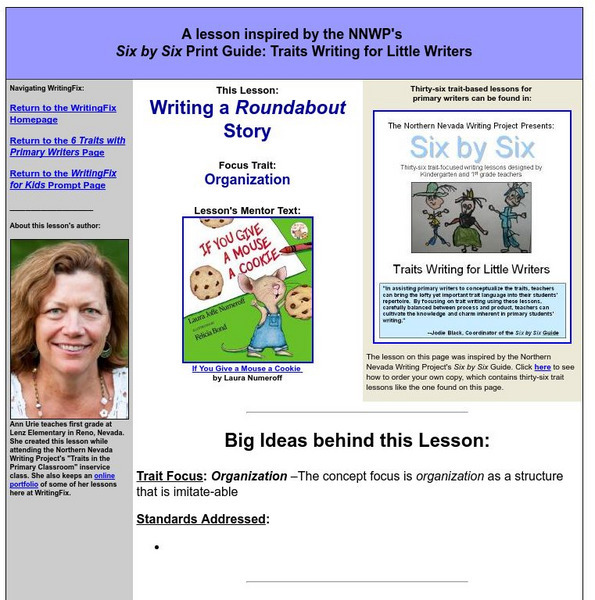
Writing Fix: Writing a Roundabout Story
In this lesson plan, If You Give a Mouse a Cookie, by Laura Numeroff, is used as a mentor text to highlight the trait of organization. The content focus of the lesson is to highlight that authors' story structures can be imitated. Story...
![Kids World Fun: The Magical Mr. Tumblebuddy Flipet Writes Stories [Pdf] Lesson Plan](https://statictemp.lp.lexp.cloud/images/attachment_defaults/resource/large/FPO-knovation.png "Kids World Fun: The Magical Mr. Tumblebuddy Flipet Writes Stories [Pdf] Lesson Plan")
LM Digital Media
Kids World Fun: The Magical Mr. Tumblebuddy Flipet Writes Stories [Pdf]
This site shares a lesson plan. Teachers will use the mythical character named The Magical Mr. Tumblebuddy Flipet to help share students engage in the writing process of stories. Directions for a puppet activity related to the...
ReadWriteThink
Read Write Think: Draw a Story: Stepping From Pictures to Writing
Help young students move from drawing pictures into writing simple stories. Good plan for having students put pictures in sequential order and teaching them about sequential order.
Houghton Mifflin Harcourt
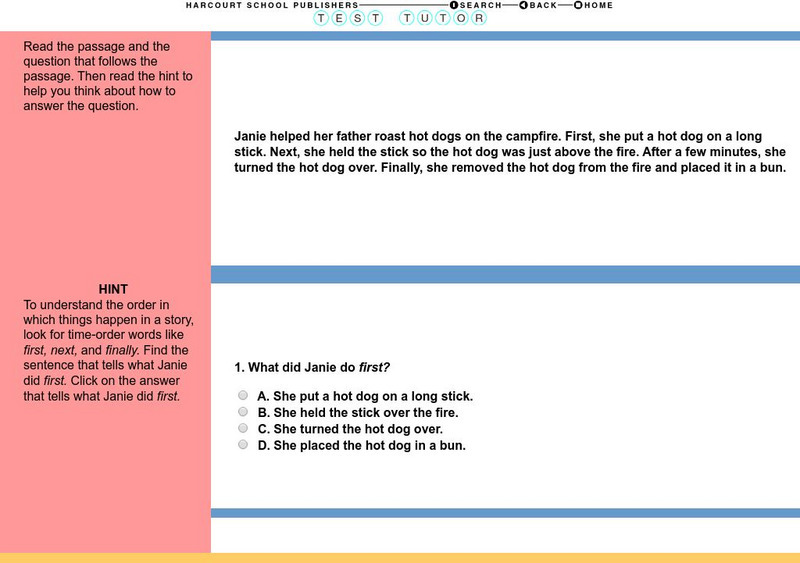
Harcourt: School Publishers: Test Tutor: Sequence
Students will increase their reading comprehension skills and understanding of story sequence by reading a passage of text and then answering questions about the order of events.
Centers for Disease Control and Prevention
Centers for Disease Control: Bam! Your Life: Kabam! Comic Creator
Students learn about making choices when dealing with bullies, peer pressure, and conflict, then create their own comics, using speech bubbles to write dialogue, in response to what they have learned. Requires Adobe Flash.
ReadWriteThink
Read Write Think: Buddies Create Power Point Stories
Contains plans for five lessons that ask students to create PowerPoint presentations about shared experiences like field trips or other activities. Students take pictures of what happen, and then explain the sequence of events in words...

Library of Congress
Loc: West Side Story: Birth of a Classic
View the online exhibit featuring photographs, documents--opening night telegraphs, letters, notes by Jerome Robbins and Leonard Bernstein, set designs--and other items such as posters, DVD covers, and a pair of slippers worn in the...

ReadWriteThink
Read Write Think: Expository Escapade: Detective's Handbook
Working on higher-level thinking skills with your readers is made easier with this lesson. You will have your students connect with and analyze a mystery story at their grade-appropriate level. Lesson plan, printable worksheets, and...
Better Lesson
Better Lesson: Tie It Up With Transition Words to Write a Story!
Read, write, and present a digital narrative with transition words to help us put the events in order! After modeling the lesson, groups of students will write narratives to recount a short sequence of events, they will include details...
New Zealand Ministry of Education
Nz Ministry of Education: Conflict and War
This lesson requires three writing assignments on the topic or war or conflict: 1. Once familiar with the language, types, rhyme and metre used in poetry, students then write their own. They are given a selection of types to write, and...
Education.com
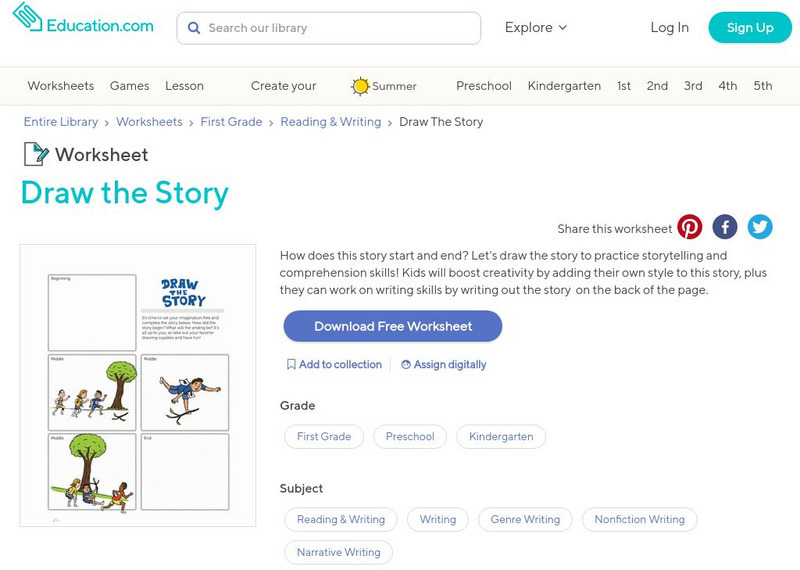
Education.com: Draw the Story
[Free Registration/Login Required] Students will use their imagination to complete the story. How will it begin? How will it end? Great lesson for practicing sequencing.
ReadWriteThink
Read Write Think: Integrating Language Arts: If You Give a Mouse a Cookie
This instructional activity integrates reading, writing, listening, and speaking to boost students' comprehension skills. Students explore Laura Joffe Numeroff 's If You Give a Mouse a Cookie using a variety of techniques, beginning with...