Hi, what do you want to do?






TeachEngineering
Teach Engineering: Energy
Through nine lessons, students are introduced to a range of energy types--electrical, light, sound and thermal-as well as the renewable energy sources of wind, hydro (water) and solar power. Subjects range from understanding that the...
TeachEngineering
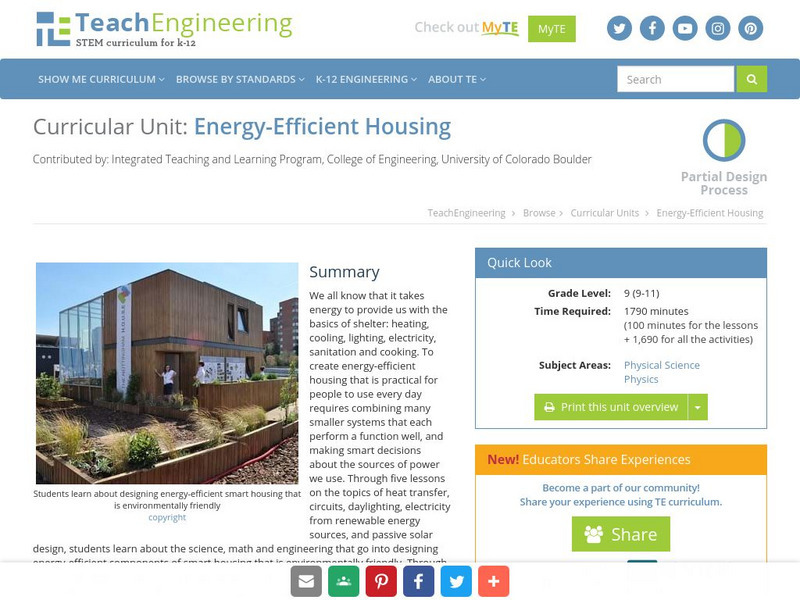
Teach Engineering: Energy Efficient Housing
We all know that it takes energy to provide us with the basics of shelter: heating, cooling, lighting, electricity, sanitation and cooking. To create energy-efficient housing that is practical for people to use every day requires...
TED Talks
Ted: Ted Ed: Dark Matter: The Matter We Can't See
The Greeks had a simple and elegant formula for the universe: just earth, fire, wind, and water, but this visible matter comprises only 4% of the universe. CERN scientist James Gillies tells us what accounts for the remaining 96% (dark...

TeachEngineering
Teach Engineering: Environment
Through 10 lessons and more than 20 hands-on activities, students are introduced to the concept of an environment and the many interactions within it. As they learn about natural and human-made environments, as well as renewable and...
Read Works
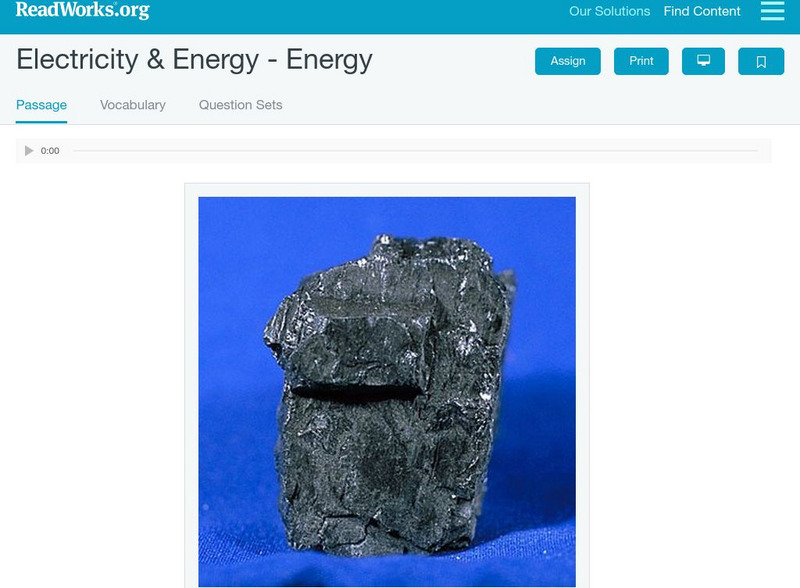
Read Works: Electricity & Energy Energy
[Free Registration/Login Required] An informational text about energy. A question sheet is available to help students build skills in reading comprehension.
ClassFlow
Class Flow: Energy From the Sun
[Free Registration/Login Required] Energy from the sun causes great things to happen on Earth from the water cycle to wind and waves. This flipchart includes video clips and student assessment.
TeachEngineering
Teach Engineering: Renewable Energy Living Lab
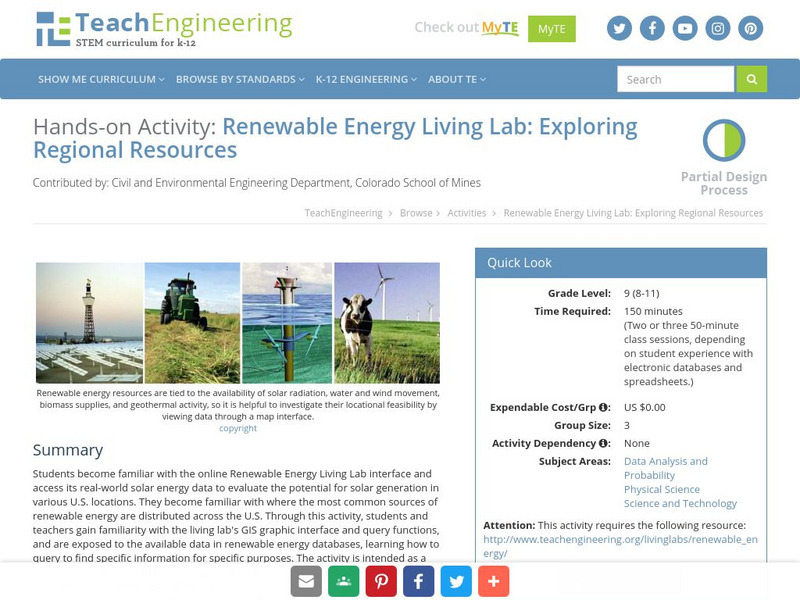
Students become familiar with the online Renewable Energy Living Lab interface and access its real-world solar energy data to evaluate the potential for solar generation in various U.S. locations. They become familiar with where the most...

Other
Abc Da Energia
ABC Da Energia describes the many ways that energy can be obtained and conserved. It explains different sources of energy, how each works, and how energy can be saved in our daily lives. Interactive energy-saving activities and games...

PBS
Pbs Kids: Design Squad Game: Fidgit Power
Help Fidgitville by designing wind turbines that make electricity and keep the air and water clean.
Ministry of Education, Sports & Culture (Samoa) Government
Mesc: Samoa School Net: Forces to Make Weather: Weather & Water Cycle
Explains three forces of nature and how they impact the weather. These include infrared rays from the sun, differences in air pressure, and wind flow when hot and cold air masses meet. Supported by lots of visuals.
TeachEngineering
Teach Engineering: Engineering for the Earth
Young students are introduced to the complex systems of the Earth through numerous lessons on its natural resources, processes, weather, climate and landforms. Key earth science topics include rocks, soils and minerals, water and natural...
TeachEngineering
Teach Engineering: Off the Grid
Students learn and discuss the advantages and disadvantages of renewable and non-renewable energy sources. They also learn about our nation's electric power grid and what it means for a residential home to be "off the grid."
PBS
Pbs: El Nino
You can link to the anatomy of El Nino, chasing El Nino, and El Nino's reach. There is a resource page and a search page.
Other
Digital Library for Earth System Education: Teaching Box: Essentials of Weather
A suite of lessons focusing on the basic elements of climate and weather. Inquiry-based exploration of extreme weather events and the factors of weather including clouds, wind, air pressure, temperature, and the water cycle.