Hi, what do you want to do?






Curated OER
Reflection and Refraction
What is a prism? A place for light waves that commit minor refractions! The thorough resource includes three hands-on investigations covering light reflection and refraction; mirrors, lenses, and images; and optical systems. Subject...

Multiverse
Rainbows of Light: The Visible Light Spectrum
Rainbows can teach us about the visible light spectrum. Learners observe multiple items that clearly display a rainbow to develop better connections. The lesson then explains wavelength using a rope to make waves.

National Institute of Open Schooling
Radioactive Pollution
Radioactive pollutants can enter the body through ingestion, inhalation, absorption, or injection. The last lesson in a series of 36 introduces pupils to radioactive pollution. They study its sources, both natural and man-made, its...
Georgia State University
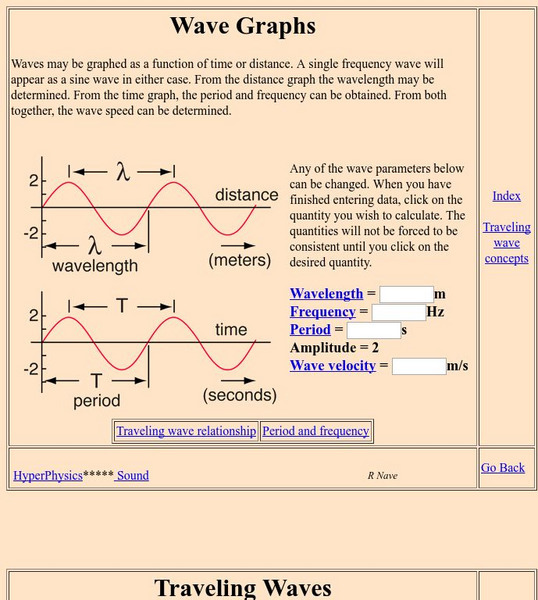
Georgia State University: Hyper Physics: Wave Motion
Two wave graphs depicting a sine wave and relating the various characteristics (wavelength, amplitude, frequency, and period) of a wave to each other. The site includes an interactive JavaScript form in which the visitor enters one...
Wikimedia
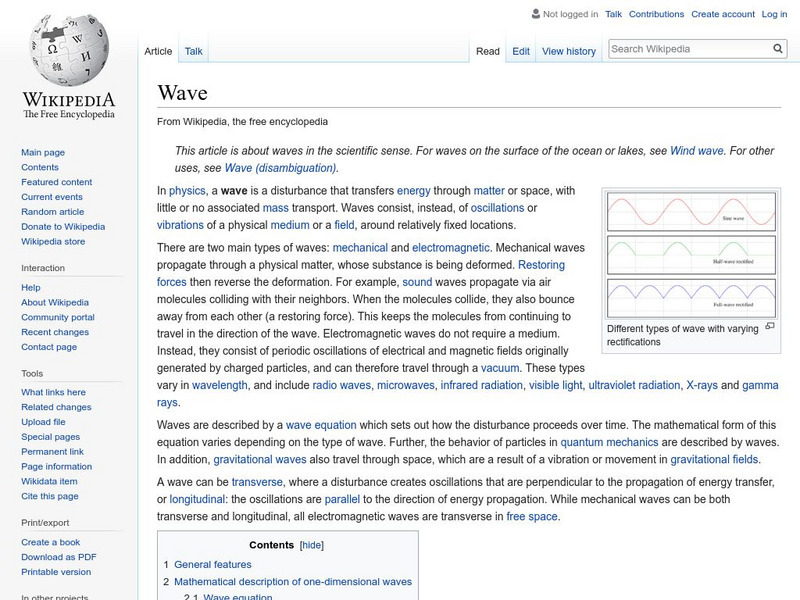
Wikipedia: Wave
An in-depth encyclopedia article from Wikipedia on waves gives a definition for what a wave is. Other content in the article includes a list of examples and characteristics of waves, information about the difference between transverse...

Science Struck
Science Struck: Electromagnetic Waves: Origin and Theory
Discusses the history of the discovery and study of electromagnetism, the scientists who worked on it, the basic principle, how wavelength and frequency are related, and types of electromagnetic waves.
Georgia State University
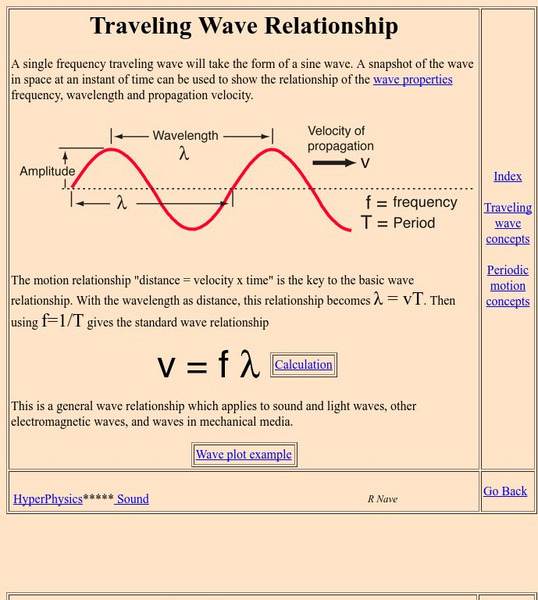
Georgia State University: Hyper Physics: Traveling Wave Relationship
Online physics text that illustrates and explains the various characteristics of waves such as amplitude, period, frequency, wavelength, and speed. Includes interactive exercises.
Science Struck
Science Struck: Wavelength of Light
Describes the characteristics of light, presents two formulas for calculating its wavelength, and provides a table of the different wavelength ranges across the electromagnetic spectrum.
NASA
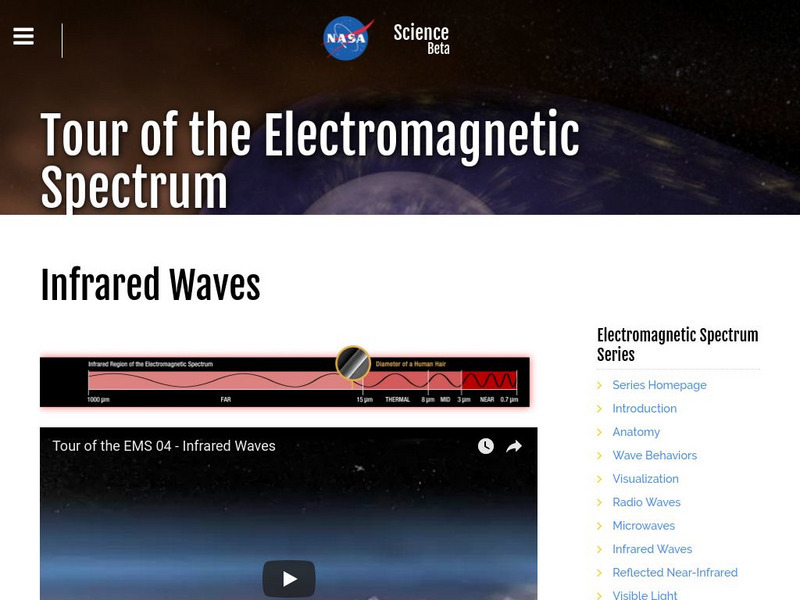
Nasa: Mission: Science: Electromagnetic Spectrum: Infrared Waves
Infrared light lies between the visible and microwave portions of the electromagnetic spectrum. Infrared light has a range of wavelengths, just like visible light has wavelengths that range from red light to violet.
NASA
Electromagnetic Spectrum: Ultraviolet Waves
Ultraviolet (UV) light has shorter wavelengths than visible light. Though these waves are invisible to the human eye, some insects can see them. The specific wavelength values are given. Uses and applications of these waves are explained.
Cornell University
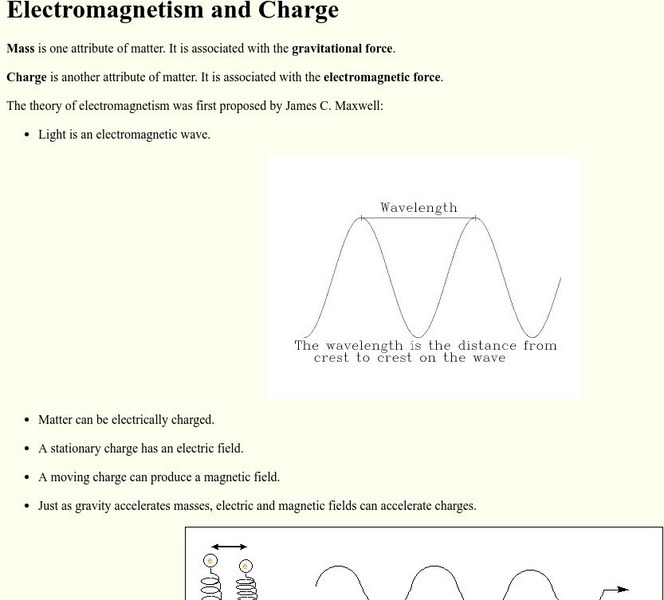
Cornell University: Astronomy: Electromagnetism and Charge
This site from Cornell University provides a very short, very telling comparison of matter and charge. This is a good site to check out on the subject, with a chart diagram to help with further information.
Florida State University
Florida State University: Molecular Expressions: Electromagnetic Radiation
This Florida State University page introduces light as an electromagnetic wave and discusses the frequency and wavelength range of the various regions of the electromagnetic spectrum. Includes links to some interactive Java applets.
Trinity College Dublin
The History of Mathematics: Young
A short sketch of the life and work of Thomas Young (1773-1829 CE). Traces early upbringing and education and his scientific discoveries and contributions.
Oklahoma Mesonet
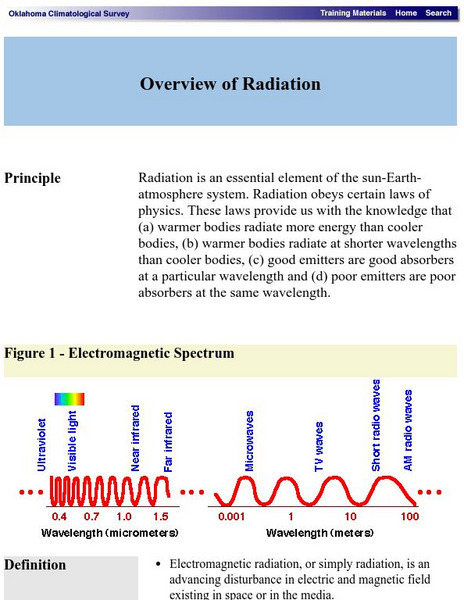
Oklahoma Climatological Survey: Overview of Radiation
This site details what radiation is, the physics of radiation, and radiative transfer as it occurs in nature. Content explores the electromagnetic spectrum, electromagnetic waves, properties of radiation, and solar radiation.
Georgia State University
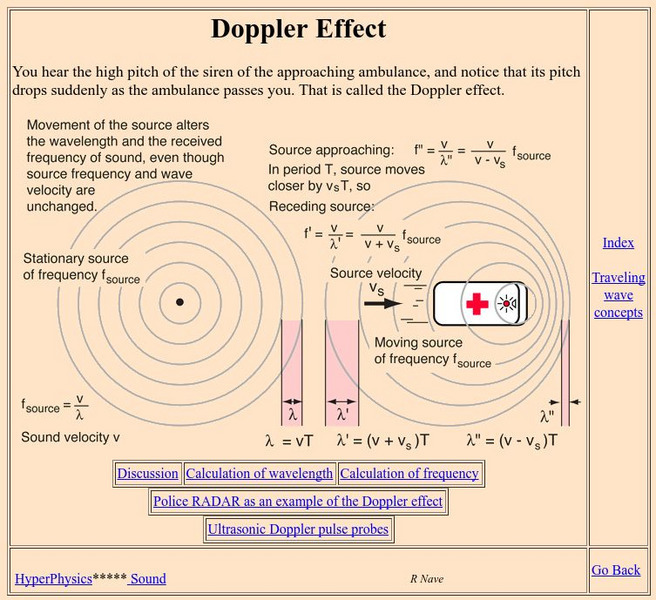
Georgia State University: Hyper Physics: Doppler Effect
This hypertext physics course page illustrates and explains the Doppler effect. Users perform practice calculations for frequency shifts using the Doppler equation.
NASA
Nasa: Tour of the Electromagnetic Spectrum: Visible Light
Visible light waves are the only electromagnetic waves we can see. We see these waves as the colors of the rainbow. Each color has a different wavelength. Red has the longest wavelength and violet has the shortest wavelength. When all...
Other
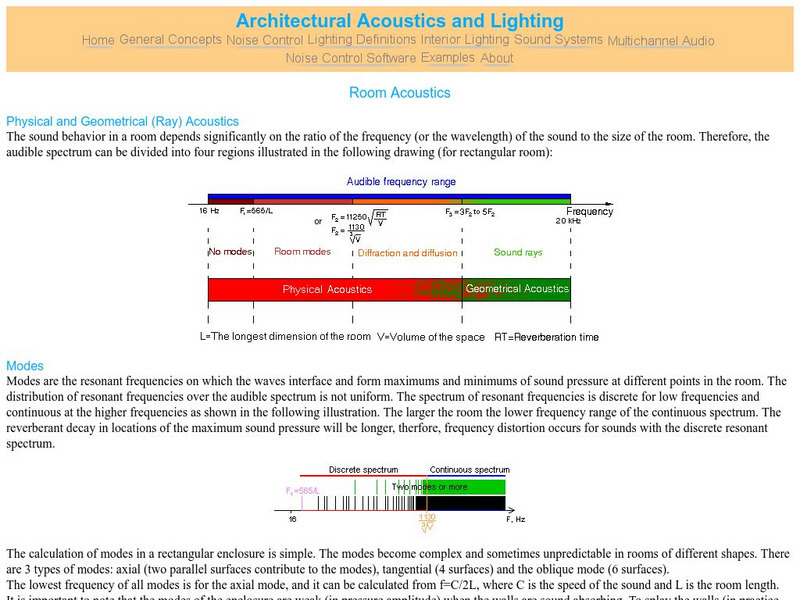
Architectural Acoustics and Lighting: Room Acoustics
This site from Architectural Acoustics and Lighting provides a discussion of various factors affecting the acoustics of a given room. Room dimensions, the wavelength of the sound wave, the physical characteristics of the walls, the...

American Association of Physics Teachers
Com Padre Digital Library: Open Source Physics: Multiple Slit Diffraction Model
Simulation that shows the diffraction of light through single or multiple slits. Simulation allows modification of the number of slits, slit width, slit separation, and the wavelength.
University of California
Uc Berkeley: Radio Spectrum
From a course titled "Structure and Interpretation of Signals and Systems." A discussion of the entire radio spectrum, listing wavelength and frequency values for its various parts. The uses of each region of the radio spectrum is...
Other
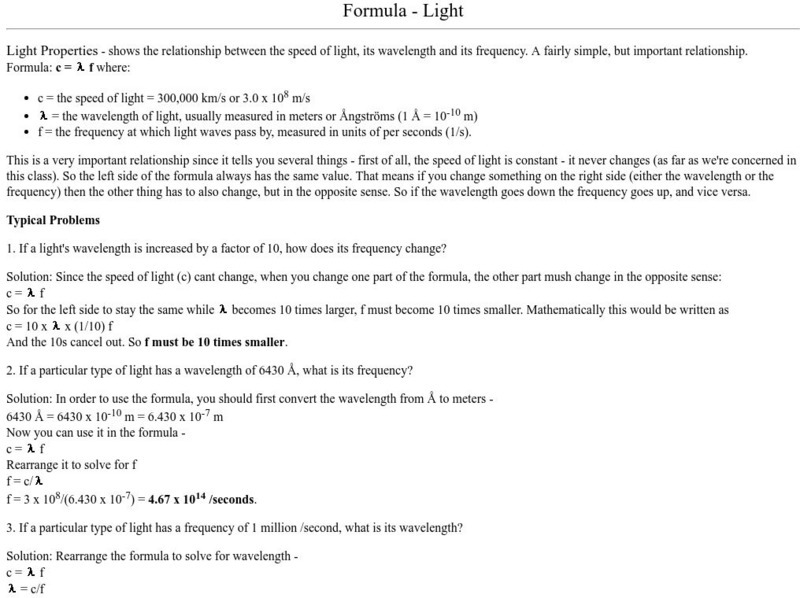
Uni: Astronomy: Formula Light
Learn about light properties through practice with formulas. This resource shows the relationship between the speed of light, its wavelength, and its frequency. A fairly simple, but important relationship.