Hi, what do you want to do?






New South Wales Department of Education
Plant Groups
Bryophytes can grow in temperatures just above zero degrees. This 17th installment in a series of 20 introduces learners to the five groups of plants: algae, bryophytes, pteridophytes, gymnosperms, and angiosperms. Classes then explore...

Foundation for Water & Energy Education
How Can Work Be Done with Water Power? Activity C
Third in a set of lessons regarding reservoirs, dams, and hydropower, this involves a two-day hydropower plant simulation. Collaborative groups build, maintain, and finance the plant. The transparency of the reservoir setup can be...

Teach Engineering
Glowing Flowers
What a bright idea! Young scientists conduct an experiment on flowers to finish the last of a six-lesson unit on Cells. Putting the stems into dye-injected water and leaving it overnight results in flowers that glow. This is to simulate...
TeachEngineering
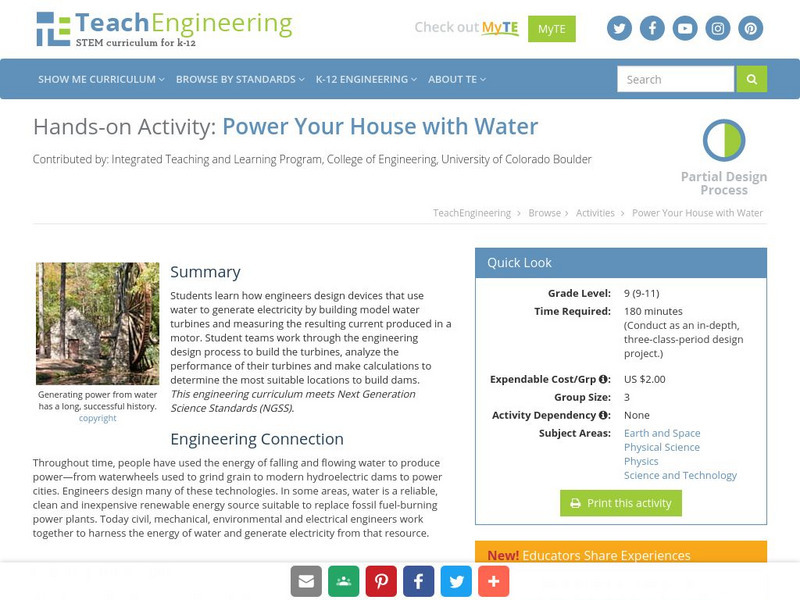
Teach Engineering: Power Your House With Water
Students learn how engineers design devices that use water to generate electricity by building model water turbines and measuring the resulting current produced in a motor. Students work through the engineering design process to build...
TeachEngineering
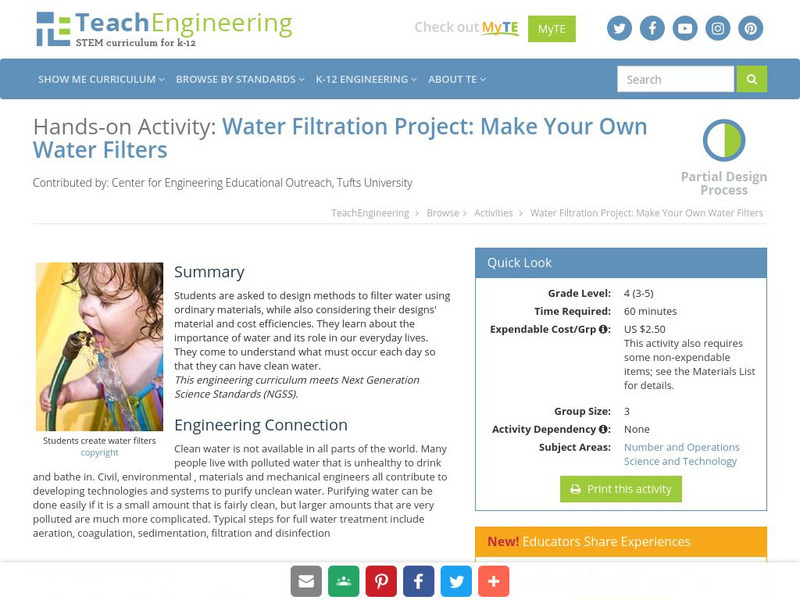
Teach Engineering: Water Filtration
Students will learn about the importance of water and the role it plays in our lives. Students will be exposed to what must occur each day so that they can have clean water.
TeachEngineering
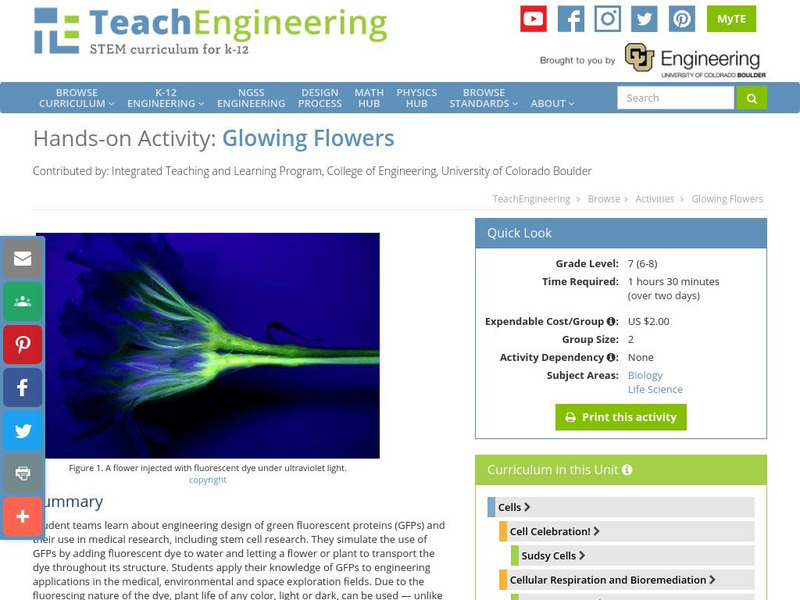
Teach Engineering: Glowing Flowers
Student teams learn about engineering design of green fluorescent proteins (GFPs) and their use in medical research, including stem cell research. They simulate the use of GFPs by adding fluorescent dye to water and letting a flower or...
TeachEngineering
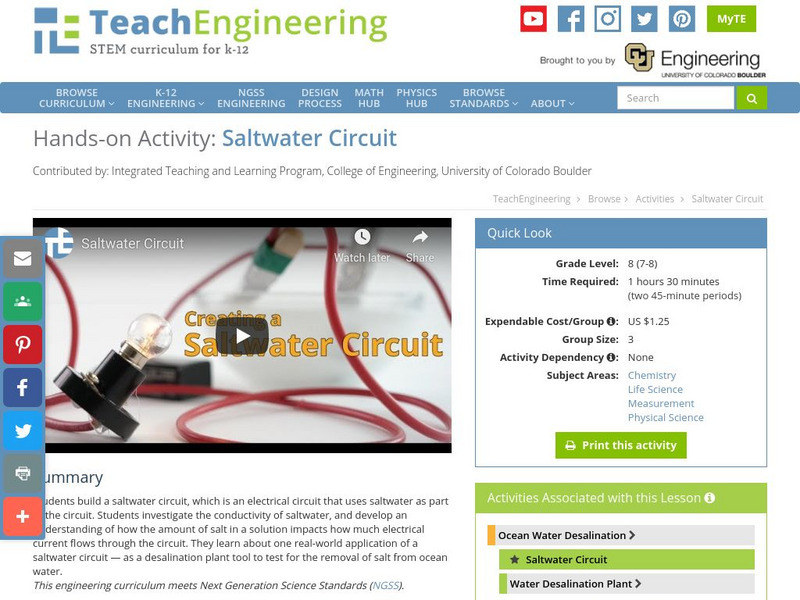
Teach Engineering: Saltwater Circuit
Students build a saltwater circuit, which is an electrical circuit that uses saltwater as part of the circuit. Students investigate the conductivity of saltwater, and develop an understanding of how the amount of salt in a solution...

Museum of Science
Museum of Science and Industry: Online Science: Color Changing Carnations
A popular plant experiment where food coloring is added to the water that flowers sit in, to see how this affects the color of the flowers. It demonstrates how water travels through the xylem of a flower stem.
TeachEngineering
Teach Engineering: Bubbling Plants
Students learn a simple technique for quantifying the amount of photosynthesis that occurs in a given period of time, using a common water plant (Elodea). They can use this technique to compare the amounts of photosynthesis that occur...