Hi, what do you want to do?





TeachEngineering
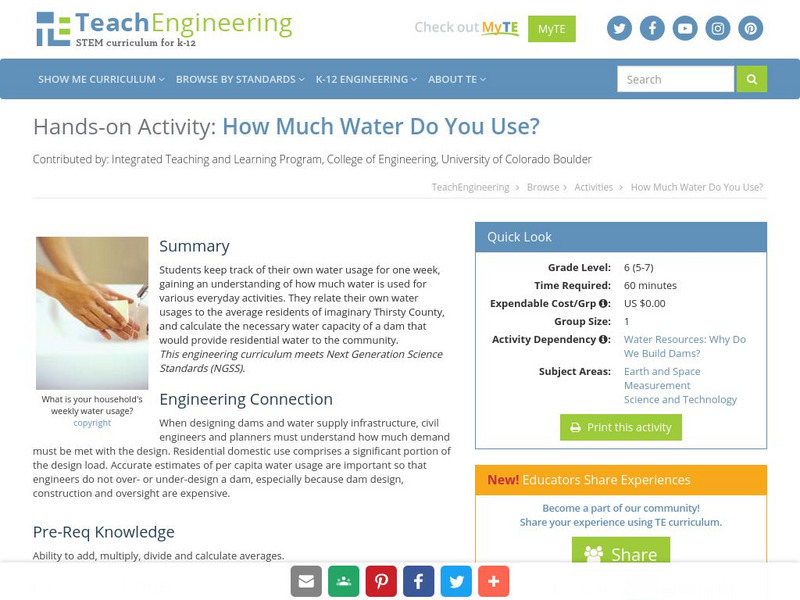
Teach Engineering: How Much Water Do You Use?
Students keep track of their own water usage for one week, gaining an understanding of how much water is used for various everyday activities. They relate their own water usages to the average residents of imaginary Thirsty County, and...

National Geographic
National Geographic: Programs: Chesapeake Bay Water Quality Project
A project-based collaborative unit of study that teaches students about watershed health using real-time geospatial technology. Students engage in outdoor field experiences while using twenty-first century learning skills.
TeachEngineering
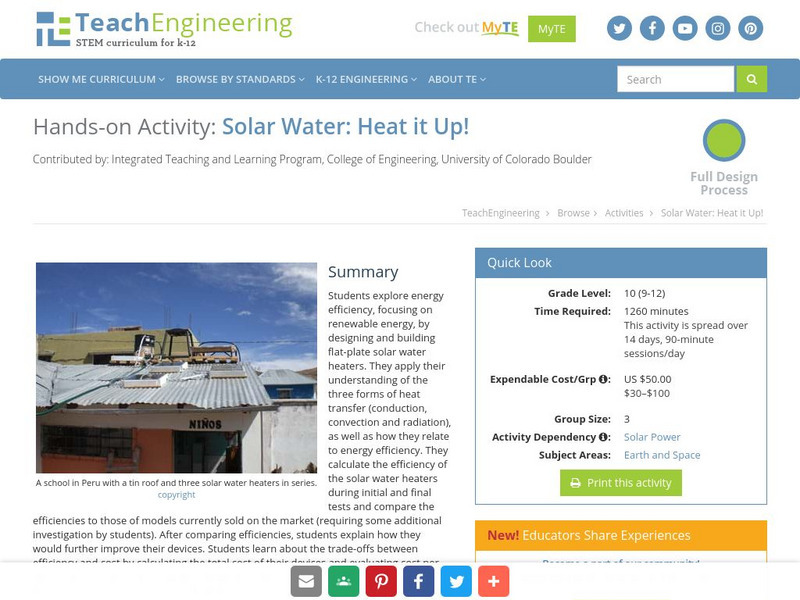
Teach Engineering: Solar Water: Heat It Up!
Students explore energy efficiency, focusing on renewable energy, by designing and building flat-plate solar water heaters. They apply their understanding of the three forms of heat transfer (conduction, convection and radiation), as...
TeachEngineering
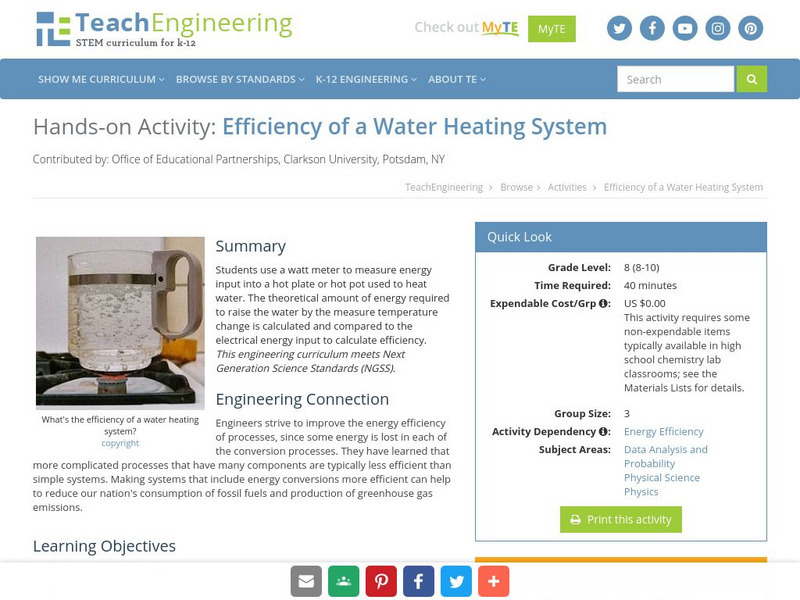
Teach Engineering: Efficiency of a Water Heating System
Students use a watt meter to measure energy input into a hot plate or hot pot used to heat water. The theoretical amount of energy required to raise the water by the measure temperature change is calculated and compared to the electrical...
TeachEngineering
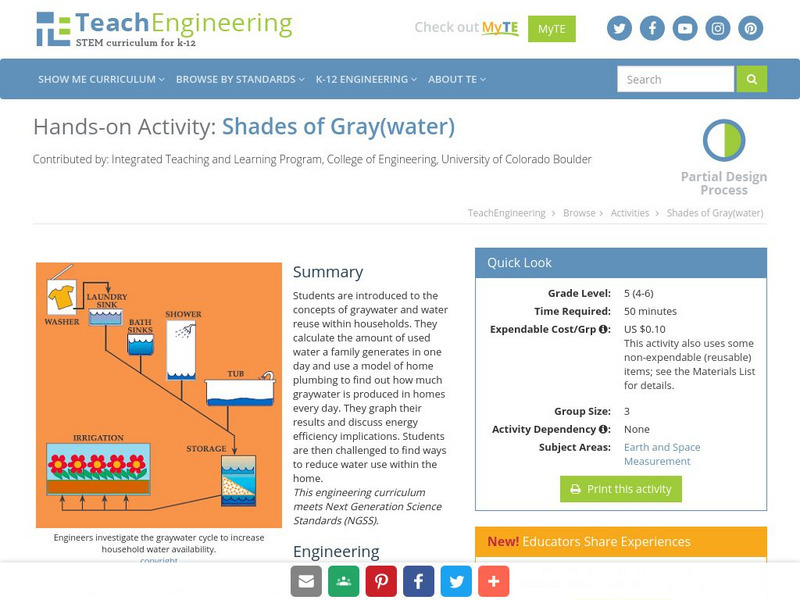
Teach Engineering: Shades of Gray(water)
Students are introduced to the concepts of graywater and water reuse within households. They calculate the amount of used water a family generates in one day and use a model of home plumbing to find out how much graywater is produced in...
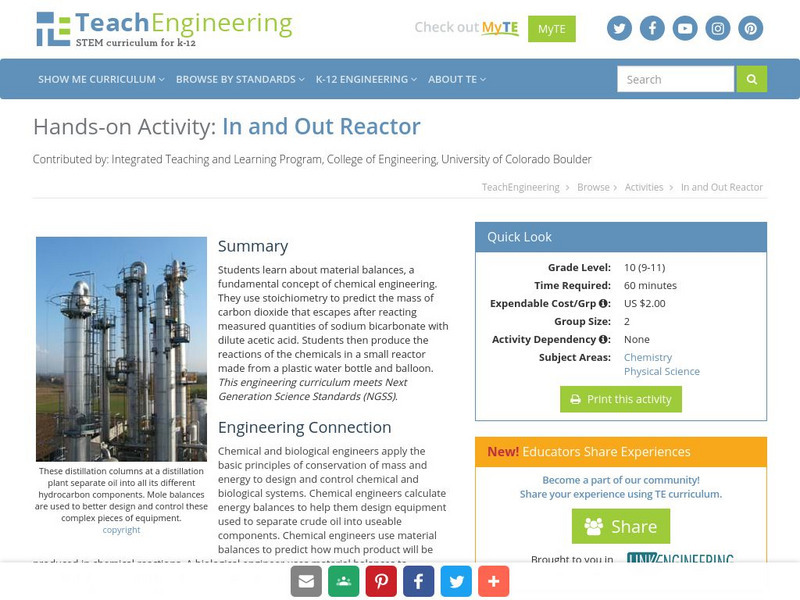
TeachEngineering
Teach Engineering: In and Out Reactor
Students learn about material balances, a fundamental concept of chemical engineering. They use stoichiometry to predict the mass of carbon dioxide that escapes after reacting measured quantities of sodium bicarbonate with dilute acetic...