Hi, what do you want to do?






Curated OER
Vocal Exploration
Students explore vocal anatomy. In this biology/music lesson, students first learn vocabulary associated with the voice and body. They then use straws, microphones and recorders to differentiate between high and low pitches and...

Curated OER
Vibrations
Students explore how vibrations create sound by strumming a rubber band. They feel the vibration of their own vocal chords. Then they explore the motion of sound waves and echoes. They rely on their own hearing to locate others in their...

Curated OER
The Respiratory System
Students explore the parts of the respiratory system in this six lessons unit. The lessons presnt the concepts of the breathing, the function of oxygen in the system, how sounds are made, and the effects of pollution, smoking and disease...

K12 Reader
They See with Their Ears
Sometimes bats get a bad rap, even though they are fascinating creatures! Teach your class about echolocation with a reading passage. After reading, class members respond to five questions based on the text.

Curated OER
The Phenomenon of Sound: Waves
Students explore sound waves. For this sound waves lesson, students brainstorm different sounds and how sounds move or travel. Students then create a KWL chart and work through six different lab activities to examine how sound waves...
Other
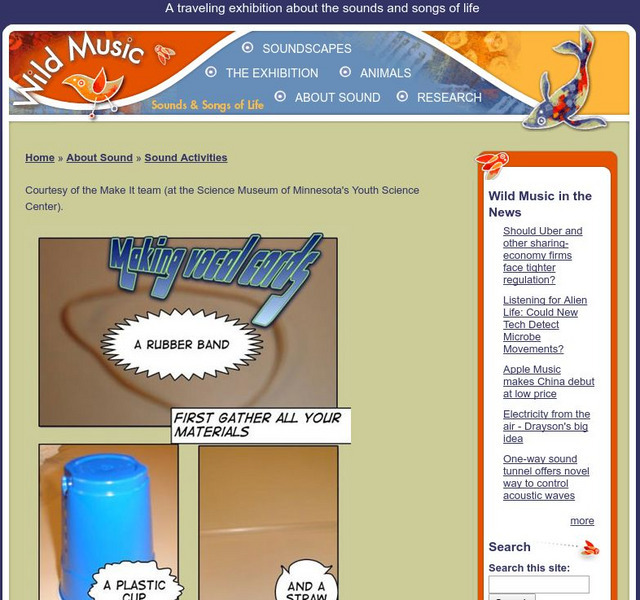
Science Museum of Minnesota: Wild Music: Sound Activities: Making Vocal Chords
Directions for making a simple model of vocal chords. All you need is a plastic cup, a rubber band, and a straw.
PurposeGames
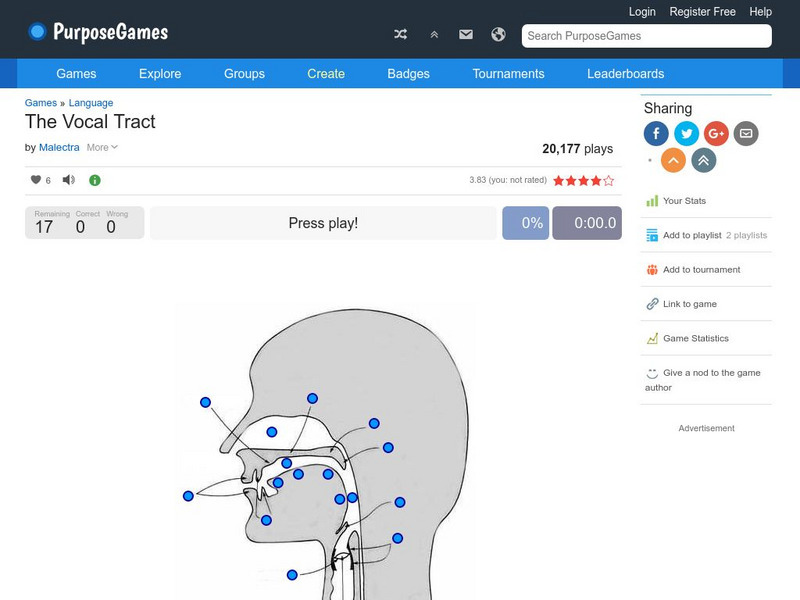
Purpose Games: The Vocal Tract
Players will test their knowledge of the vocal tract by taking this 17 question quiz.

Wonderville Media
Wonderville: Baboons
Baboons have incredible vocal chords, and they can make more than 30 distinct noises, from short grunting sounds to full-blown screaming. Learn more about Baboons in this well-constructed overview by Wonderville.