Hi, what do you want to do?





Stanford University
Sheg: Document Based History: Reading Like a Historian: u.s. Entry Into Wwi
[Free Registration/Login Required] In this historical inquiry lesson, students address the question, "What changed between 1914 and 1917 that caused the U.S. to enter WWI?" to corroborate a textbook account with two documents: a speech...
University of Groningen
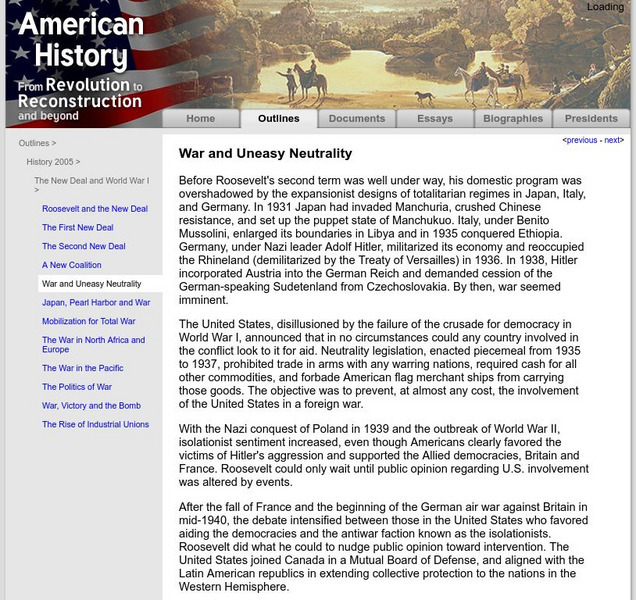
American History: Outlines: War and Uneasy Neutrality
Overview of Roosevelt administration U.S. foreign policy and the challenge to remain neutral in an era of expansionist totalitarian regimes of Italy, Germany and Japan.
University of Groningen
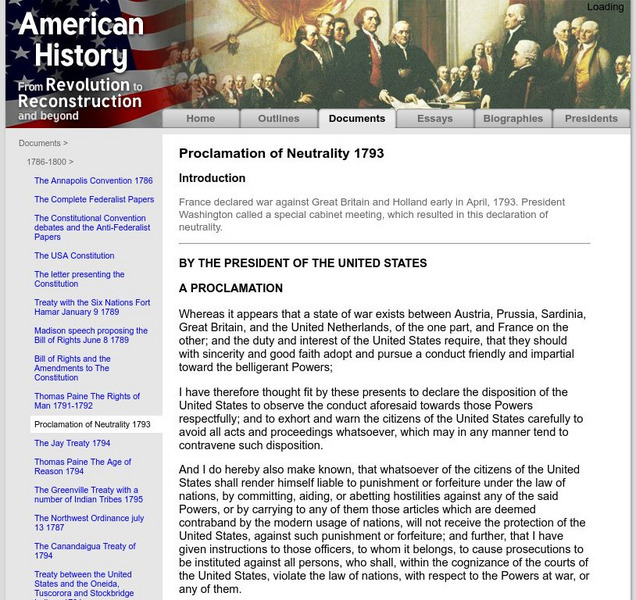
American History: Documents: Proclamation of Neutrality 1793
The Proclamation of Neutrality was a formal announcement issued by President George Washington in May 1793, declaring the nation neutral in the conflict between France and Great Britain. It threatened legal proceedings against any...
Tom Richey
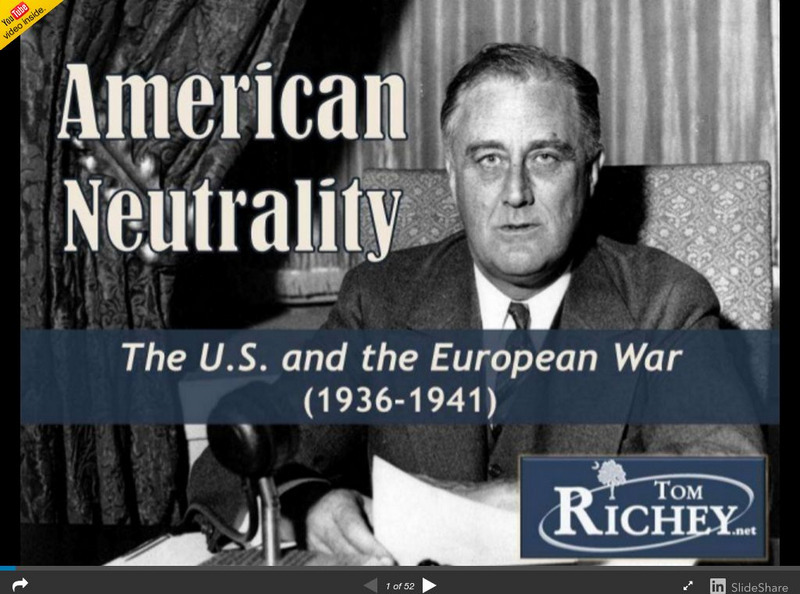
Tom Richey: American Neutrality (The u.s. And the European War)
A detailed PowerPoint reviewing the neutral position the United States held at the beginning of World War II.
Independence Hall Association
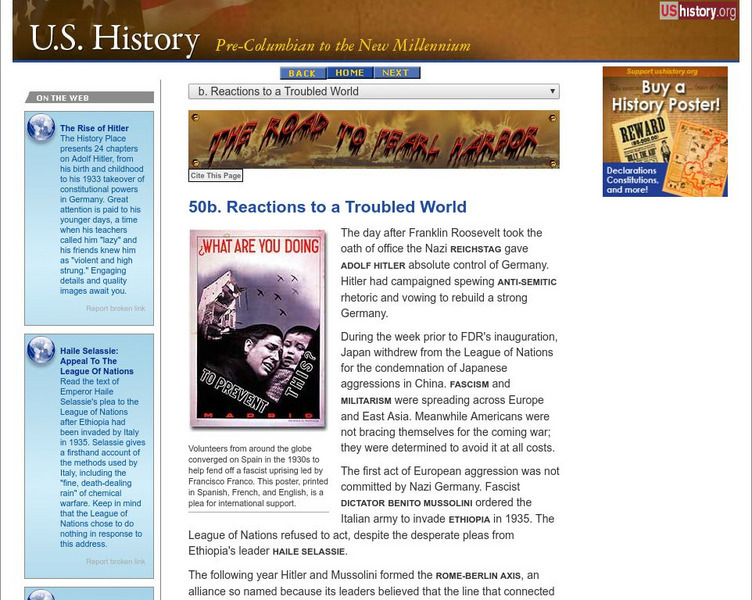
U.s. History: Reactions to a Troubled World
Read about the rising militarism and fascism in Europe and Asia as dictators expanded their territories. See how the United States reacted with its series of three neutrality acts.
National Endowment for the Humanities
Neh: Edsit Ement: u.s. Entry Into World War 1: Curriculum Unit
A teacher-directed curriculum unit that deals with the issue of why the United States entered World war 1. Includes an extensive list of additional resources and activities.
University of Groningen
American History: Outlines: War and Neutral Rights
Overview of the outbreak of World War I in Europe and America's desire to remain neutral.
Independence Hall Association
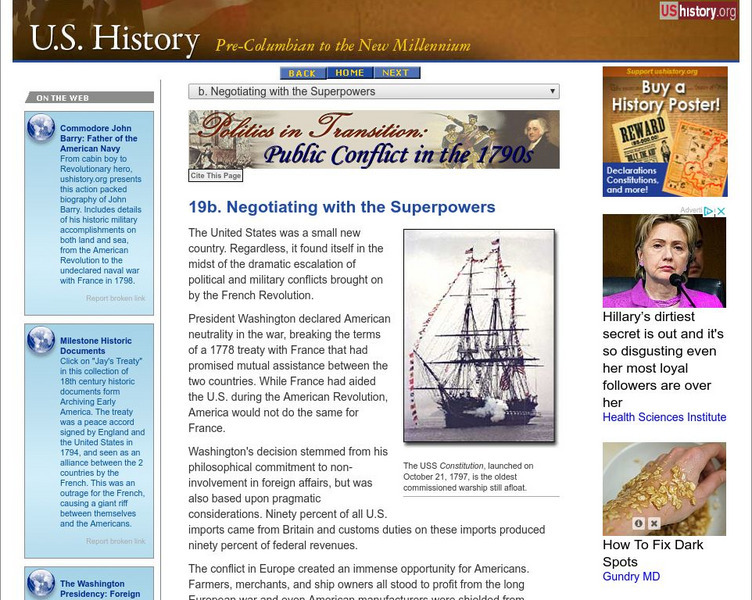
U.s. History: Negotiating With the Superpowers
Read about the problems President George Washington had with foreign affairs. Both France and Great Britain ignored American sovereignty and claims of neutrality. Read about Great Britain's disregard of the Treaty of Paris which ended...
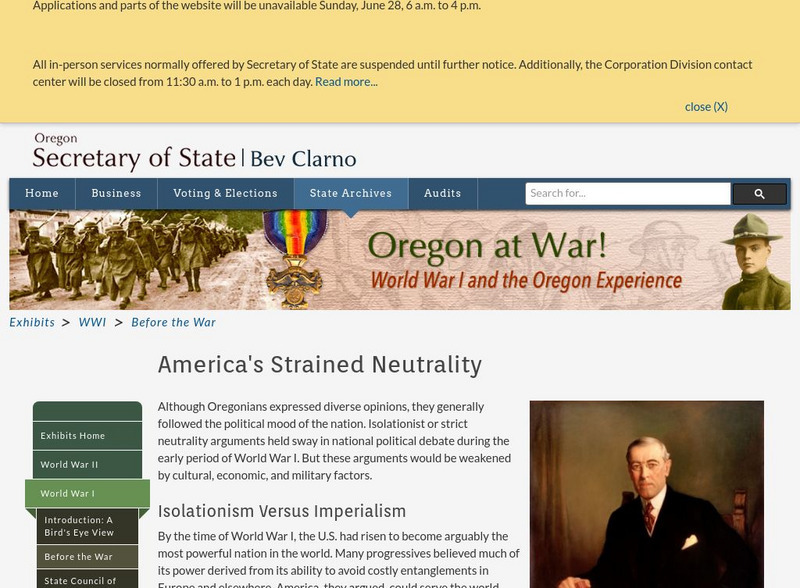
Oregon Secretary of State
Oregon at War: Before the War America's Strained Neutrality
Read about the attempts of the United States to remain neutral during World War I raging in Europe. Find out what finally made U.S. entrance into the war inevitable.
![Digital History: Neutrality and the Lusitania [Pdf] Website](https://static.lp.lexp.cloud/images/attachment_defaults/resource/large/FPO-knovation.png "Digital History: Neutrality and the Lusitania [Pdf] Website")
Digital History
Digital History: Neutrality and the Lusitania [Pdf]
American neutrality in World War I was sorely tested with the attack and sinking of the passenger ship, Luisitania. Read information about the attack and find conflicting reactions by Franklin Roosevelt and William Jennings Bryan about...
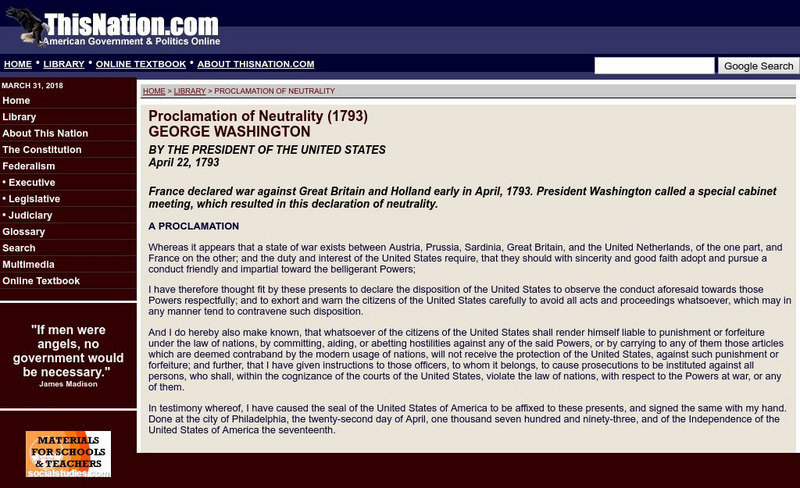
This Nation
This Nation: Proclamation of Neutrality (1793)
Read the text of the Proclamation of Neutrality issued by George Washington in April, 1793, showing his effort to keep his new nation safe from unhealthy alliances.
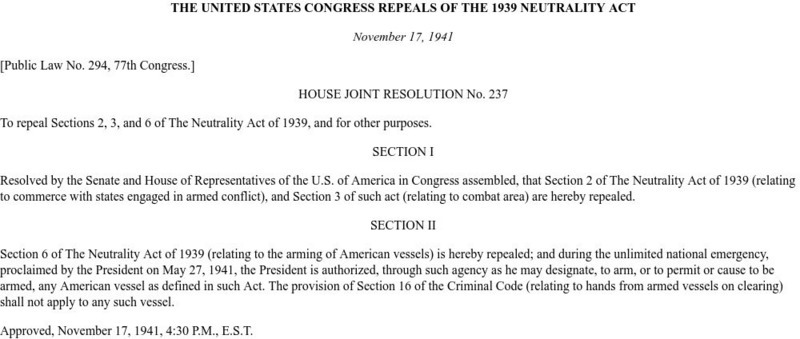
ibiblio
Ibiblio: Words of War: The u.s. Congress Repeals of the 1939 Neutrality Act
Contains the text of a joint resolution to repeal sections of the 1939 Neutrality Act.
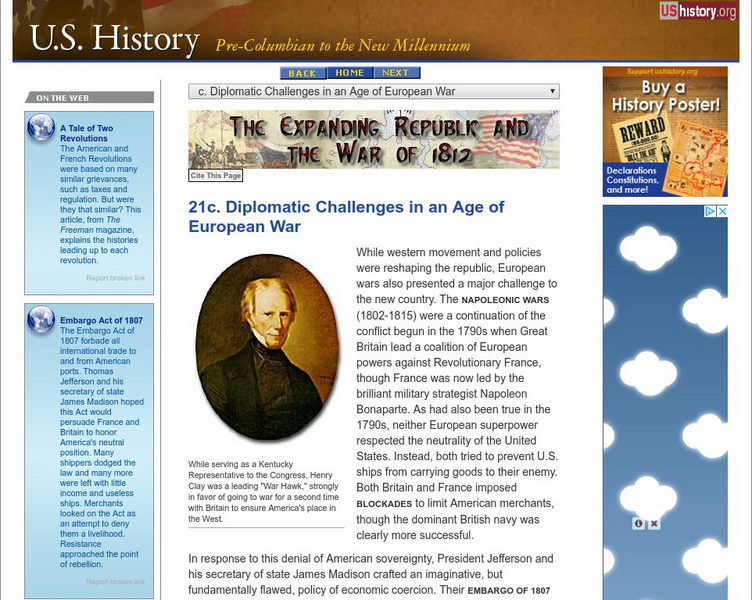
Independence Hall Association
U.s. History: Diplomatic Challenges in an Age of European War
Both the British and French challenged American sovereignty and neutrality on the high seas. Read about the solution favored by Thomas Jefferson, but despised by the American shippers. See why this a cause of the War of 1812, along with...
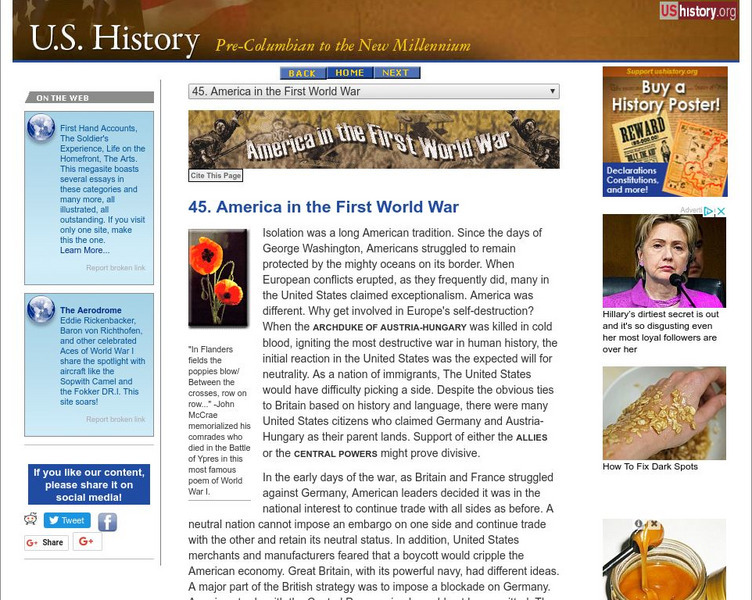
Independence Hall Association
U.s. History: America in the First World War
A brief overview of the United States in the World War I era. Read about initial American neutrality, American entrance into the war, and the American homefront.
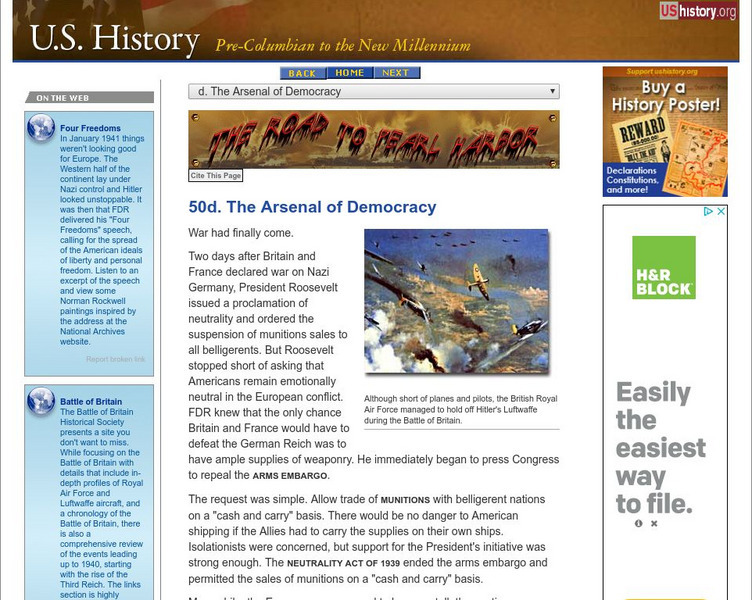
Independence Hall Association
U.s. History: The Arsenal of Democracy
Although Americans remained isolationist in their thinking, President Roosevelt understood that the European allies needed help against the Germans. Read about the incremental ways America became involved in World War II in Europe...
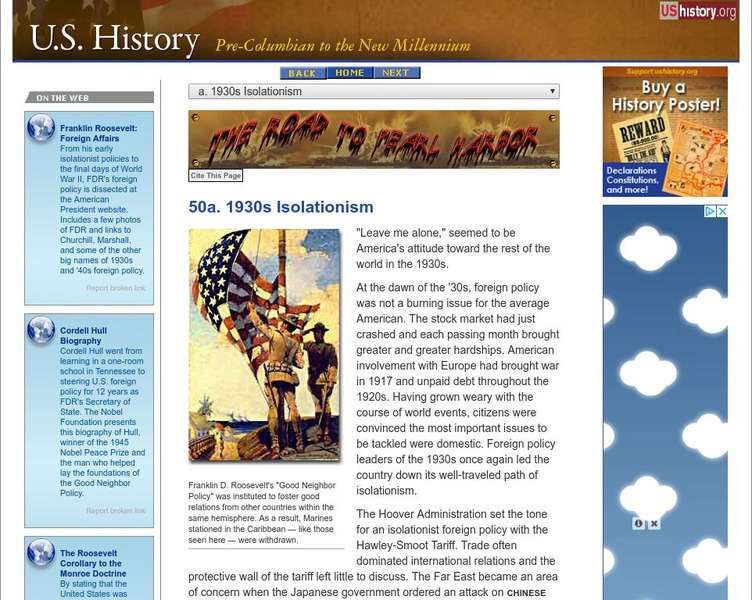
Independence Hall Association
U.s. History: 1930s Isolationism
Read about the ways the American government and people looked inward during the 1930s, isolating themselves from actions taking place in Europe and Asia.
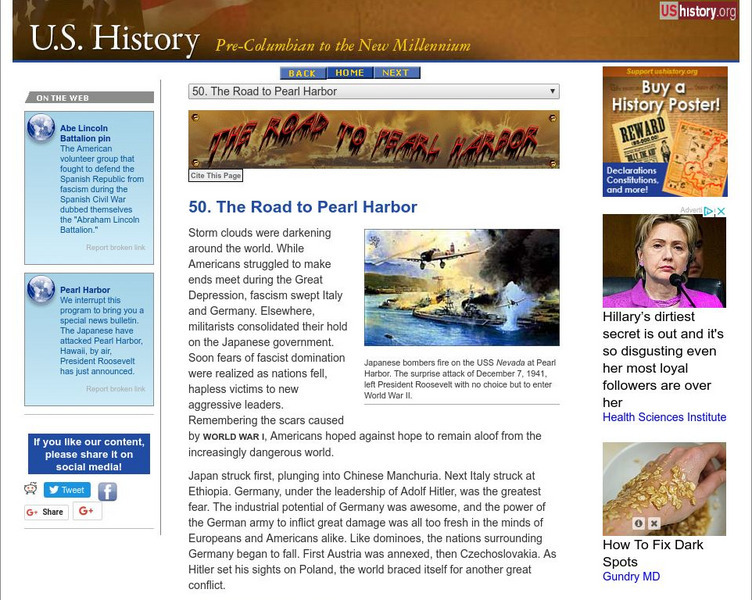
Independence Hall Association
U.s. History: The Road to Pearl Harbor
A brief overview of the decade prior to the American entrance into World War II. Read about the rise in militarism in both Europe and Japan.
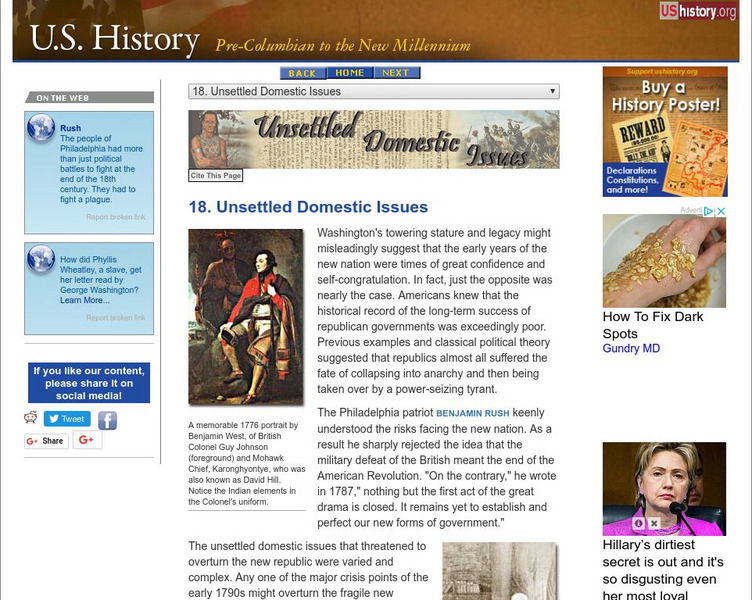
Independence Hall Association
U.s. History: Unsettled Domestic Issues
The new United States government faced many threats to its success. Read this overview of the possible problems.
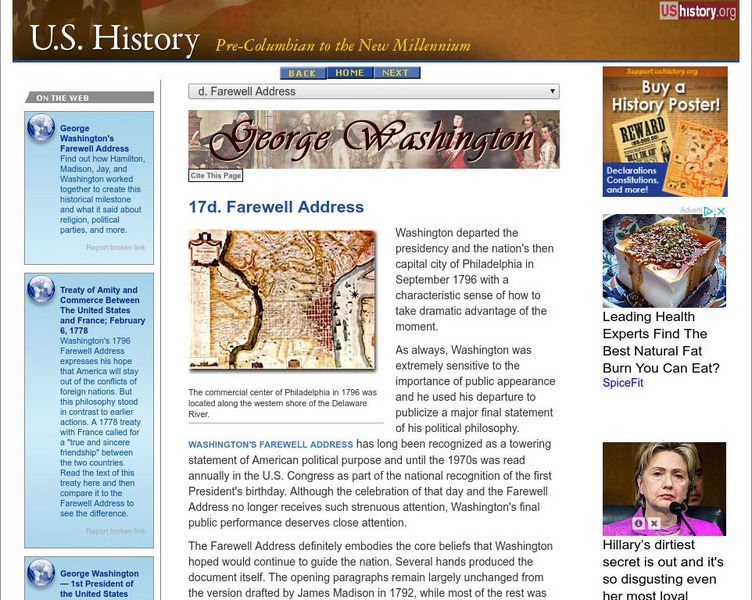
Independence Hall Association
U.s. History: George Washington: Farwell Address
Although he surely could have remained in office longer, George Washington served only two terms in office. Read about his Farewell Address, one of the important speeches in American history. He gave advice concerning both national and...
Henry J. Sage
Sage American History: The New Republic: The United States, 1789 1800
Article discussing the particular events of post-Revolutionary America, 1789-1800, and how they shaped the era of the New Republic. The author covers the first presidency, the emergent party system and foregin affairs.
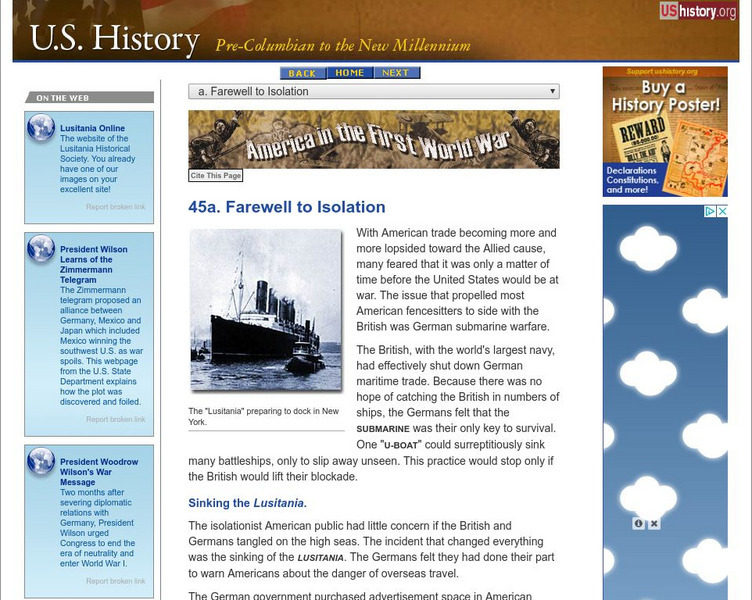
Independence Hall Association
U.s. History: Farewell to Isolation
President Wilson's claim, "he kept us out of war," did not last. Read about the increasing number of reasons for American to declare war against Germany. See why war was finally declared in April, 1917.
University of Maryland
Howard County History Labs: United States Have Entered World War I? [Pdf]
For this activity, students will analyze excerpts from two speeches in order to understand and evaluate the reasons why the United States joined the war. They will then write a letter in which they argue for or against U.S. entry into...
Yale University
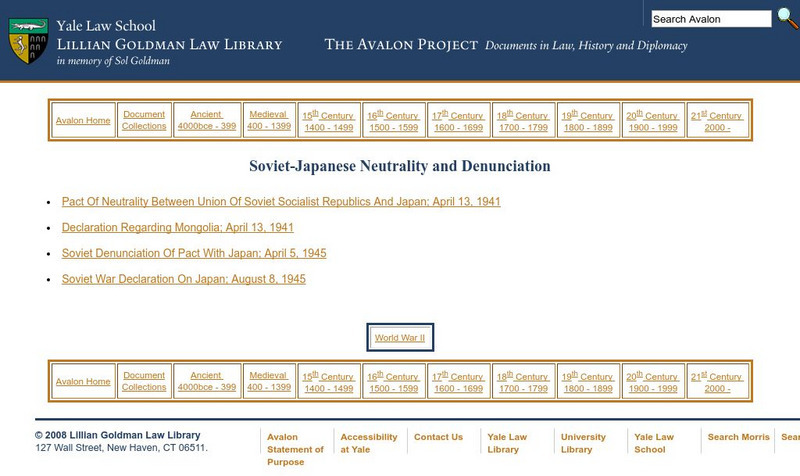
Avalon Project: Soviet Japanese Neutrality and Denunciation
Site consisting of four documents between the Soviet Union and Japan. Articles outlined mutual respect of territorial boundaries during World War II and Soviet denunciation of the pacts in 1945.
Digital History
Digital History: America Goes to War [Pdf]
President Woodrow Wilson tried to maintain American neutrality in World War I. Find out why he decided that the U.S. needed to join the war and read a portion of his message to Congress asking for a declaration of war against Germany....