Hi, what do you want to do?






Judicial Learning Center
The Constitution
Supreme Court justices debate the meaning of the US Constitution, but we expect teachers to explain it to scholars with far less training and experience. A daunting task for sure, but it's not insurmountable with resources that simplify...

US Government Publishing Office
Ben's Guide to u.s. Government: Rights of Citizens: The Bill of Rights (Grades 9 12)
Ben's Guide is a fun way to present US laws to students grades K-12. This site presents a brief overview of the Bill of Rights. Links to related sites are available.
Teaching American History
Teaching American History: The Documentary Origins of the Bill of Rights I
Explore both the British and state influences on the U.S. Bill of Rights. Understand the origins of each amendment to the Constitution.
US National Archives
Nara: Charters of Freedom: The Bill of Rights
This site contains a complete transcription of The Bill of Rights, along with zoomable graphics of the original handwritten text. It also includes information about the historical context of the document, links to more constitutional...
US Government Publishing Office
Ben's Guide to u.s. Government: Rights of Citizens: The Bill of Rights
This site provides a full-text version of the Bill of Rights, the document that secures and protects individual, political and economic freedoms.
Digital History
Digital History: The Bill of Rights
Find a list of the first ten amendments to the Constitution, the Bill of Rights, and see why these additions were made to the ruling document.
Teaching American History
Teaching American History: Bill of Rights Introduction
What is the Bill of Rights? Why were they created? Find out the purpose of these ten amendments to the U.S. Constitution and how they work to protect the citizens in the U.S.
US Government Publishing Office
Ben's Guide to u.s. Government: Rights of Citizens: The Bill of Rights (Grades 6 8)
Ben's Guide is a fun way to present US laws to students grades K-12. This site presents a brief history of the Bill of Rights. Links to related sites are available.
Teaching American History
Teaching American History: The Politics of the Bill of Rights: Part Iii
Investigate what the politics were leading to the creation of the Bill of Rights. Identify how the debates in the first congress led to the stages of approval and ultimately the adoption of the ten amendments to the U.S. Constitution.
Teaching American History
Teaching American History: Bill of Rights
Enrich learning about the U.S. Constitution's Bill of Rights with the help of this comprehensive resource. Find details about the amendments added to the new national document.
Teaching American History
Teaching American History: The Federalist/antifederalist Debate Bill of Rights
Identify the role of the debates between the Federalists and Antifederalists during the creation of the ten amendments to the U.S. Constitution.
US Government Publishing Office
Ben's Guide to u.s. Government: Rights of Citizens
What are the rights of citizens of the U.S.? Solid information provided at this site from a government source. Click on "The Right to Vote" and "The Bill of Rights" to find out more.
University of Groningen
American History: Outlines: Ratification and Bill of Rights
This site is provided for by the University of Groningen. Learn about the struggle for approval by the states of the U.S. Constitution, continuous disagreements after the Constitutional Convention between the Federalists and the...

Scholastic
Scholastic: Explaining the Bill of Rights
Read about the need for a Bill of Rights to be added to the Constitution. Find out what each of the first ten amendments means.
Independence Hall Association
U.s. History: The Bill of Rights
The Constitution spelled out the powers of the national government, but many Anti-federalists felt there should be equally explicit a guarantee of individual rights. Read about the compiliation of what became known as the Bill of Rights...
Bill of Rights Institute
Bill of Rights Institute: Gouverneur Morris
A lesson plan introducing or revisiting the role of Gouverneur Morris in the planning and writing of the United States Constitution.
Thomson Reuters
Find Law: u.s. Constitution: Eighth Amendment
This resource contains the text of the Eighth Amendment and legal annotations.

Ducksters
Ducksters: Us Government for Kids: United States Bill of Rights
Kids learn about the Bill of Rights of the United States government. The first 10 amendments to the Constitution.
US Department of Veterans Affairs
U.s. Department of Veterans Affairs: The Gi Bill's History
The GI Bill has been a great piece of legislation that has improved the country economically and socially. Find the history of the bill, how difficult it was to pass, and President Roosevelt's speech heralding its passage.
University of Virginia
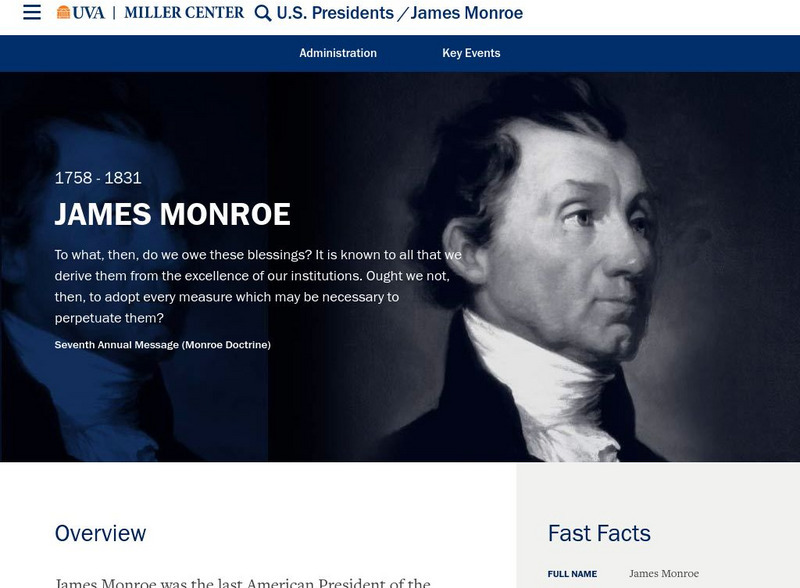
Miller Center at Uva: u.s. Presidents: James Monroe
This site gives a biography of President James Monroe. From the left-hand toolbar, select information about his life before presidency, campaigns and elections, and also domestic affairs. Links to the first lady, cabinet members , and...

University of Virginia
Miller Center at Uva: u.s. Presidents: Harry S. Truman: Domestic Affairs
A broad look at the Truman presidency domestically including the labor problems he encountered, his Fair Deal, the instransigence of the Republican Party, and McCarthyism.
University of Virginia
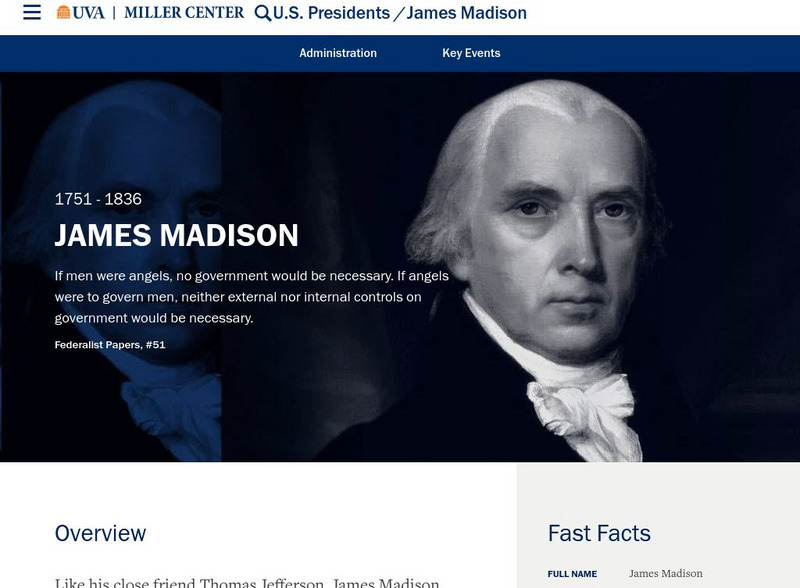
Miller Center at Uva: u.s. Presidents: James Madison
The Rector and Visitors of the University of Virginia provides an extensive biography on the life of James Madison. Provides information about his life before and after the presidency as well as his policies on foreign and domestic...
Independence Hall Association
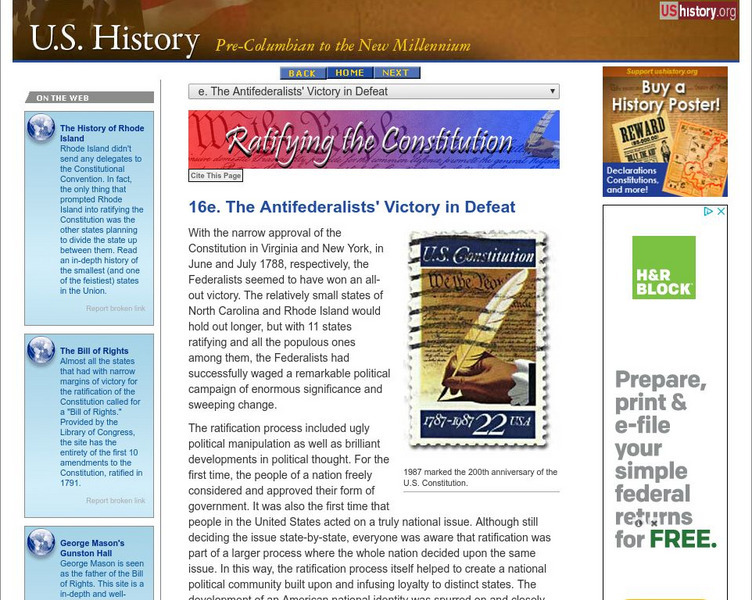
U.s. History: The Antifederalists' Victory in Defeat
By 1788 eleven states ratified the Constitution, more than enough to put it into effect as the document establishing rules for the nation. Read about the goals of the Federalists in estabilishing a national government and find out how...
Independence Hall Association
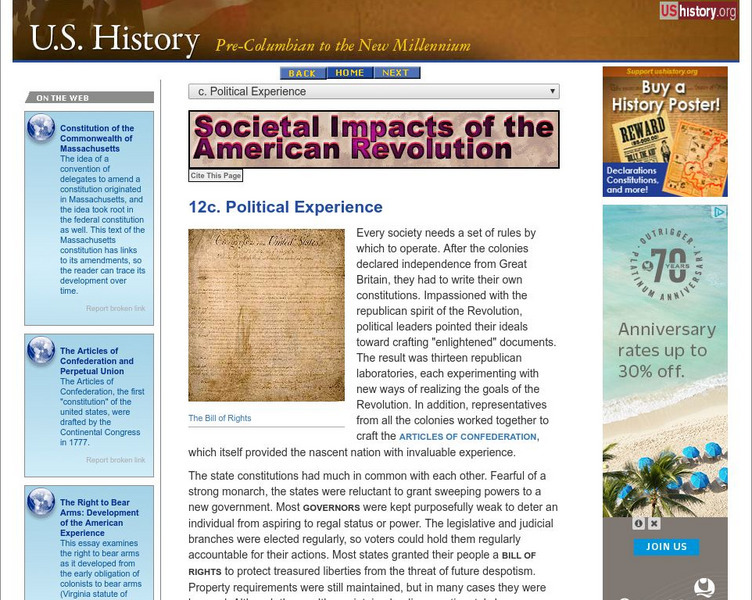
U.s. History: Political Experience
Read about how the state governments in the new American nation served as the laboratory to try out new ideas of governing and treating citizens. See how remarkably similar the ideas put forth in state constitutions were to each other.