Hi, what do you want to do?






PBS
Pbs Learning Media: Shifting Shadows
Why does your shadow move throughout the day? Watch this PEEP video [1:27] to understand how the sun's movement causes our shadow to change direction, shape, and size. Also included are teaching tips and how to conduct your own chalk...

E-learning for Kids
E Learning for Kids: Science: Scotland: Why Do Shadows Change During the Day?
William is a Scottish boy who is learning about the sun and how it casts shadows. Try to help him find out.
Harvard University
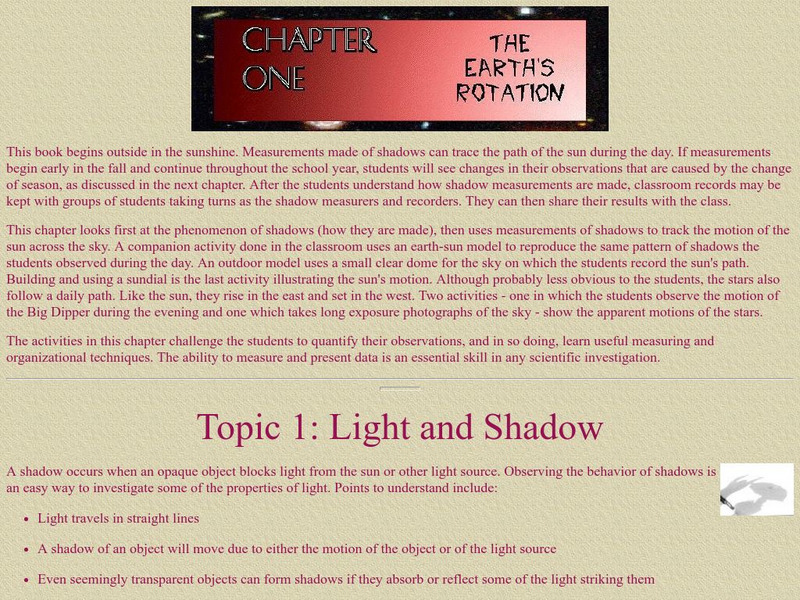
Eyes on the Sky, Feet on the Ground: The Earth's Rotation
Plenty of cool activities about the Earth's rotation can be found here, such as tracing shadows, observing shadows during different times of the day, and tracking the sun's path in the sky to understand the rotation of the earth.
Science Education Resource Center at Carleton College
Serc: Mn Step: What Does the Sun Do?
After a discussion about what students think the Sun does, the class takes a walk outside to observe what it actually does do. They may notice things like shadows and reflections. Back in class, their ideas are shared and recorded.
Exploratorium
Exploratorium: The Art and Science of Color
This series of programs includes hand-tinted archival films, contemporary offerings by local artists, and films created by artists drawing and painting on the film surface itself. Featuring animated, documentary, and homemade works.
Scholastic
Scholastic Instructor: Sun Sational Science
Discover more about the sun when you visit this educational resource. The content of this site includes solar fun facts, experiments, and activities.
Exploratorium
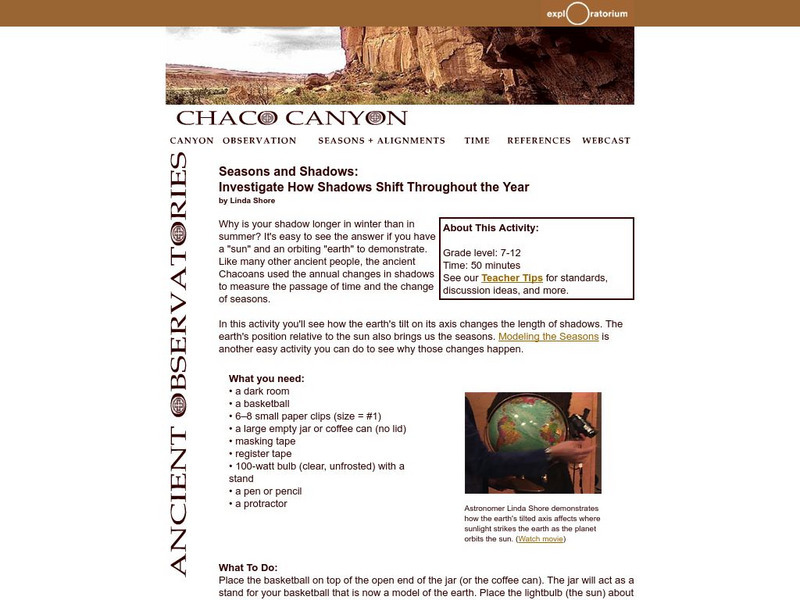
Exploratorium:seasons/shadows: Investigate How Shadows Shift Throughout the Year
Ancient Chacoans used shadows to tell daily time and seasons. Build a model that demonstrates the changes in Earth's tilt that affect the length of shadows relative to the sun that determines the seasons. The lesson plan uses everyday...

University of California
At Home Astronomy: Hands on Science Experiments for the Entire Family
A collection of ten hands-on science experiments for the entire family that will help you understand concepts in astronomy. Make an astrolabe, find the size of the sun and moon, build a lunar settlement, find out about meteoroids, shadow...

ClassFlow
Class Flow: Earth, Sun and Moon
[Free Registration/Login Required] In this unit children learn about the shapes and relative sizes of the Earth, Sun and Moon. Using models they learn how the three bodies move relative to each other and how these movements relate to...
Other
Center for Science Education: Eye on the Sky: What Makes Shadows?
Students will enjoy these activities where they draw shadows, and observe the sun's placement and how its position impacts on the size of a shadow.
Harvard University
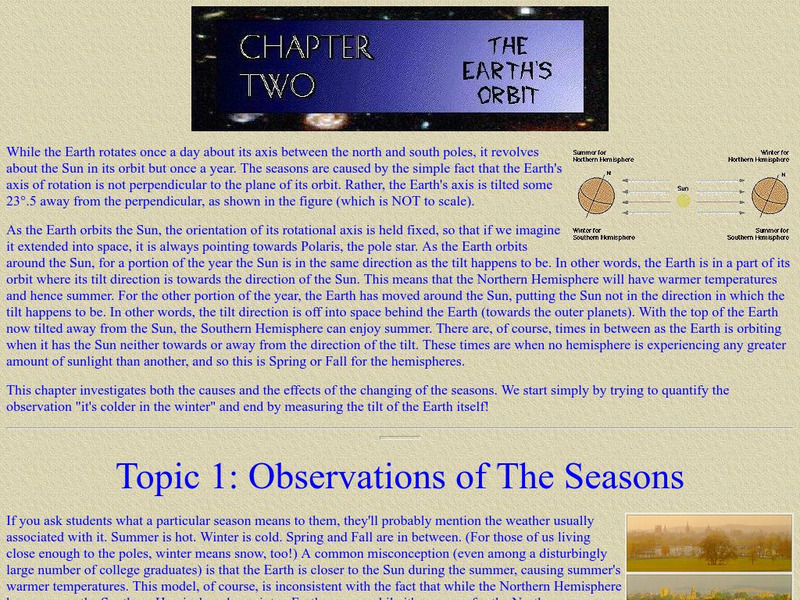
Eyes on the Sky, Feet on the Ground: The Earth's Orbit
Students perform many inquiry activities related to Earth's orbit. Included are recording daily temperatures, observing the sun's path over several weeks, tracking sunrise and sunset times, and angle of sunlight. Diagrams make lessons...
University of Michigan
Making of America: Illustrated Poems of Oliver Wendell Holmes
A complete, searchable text of "Illustrated Poems of Oliver Wendell Holmes," which was illustrated by George Randolph Barse and others.
Exploratorium
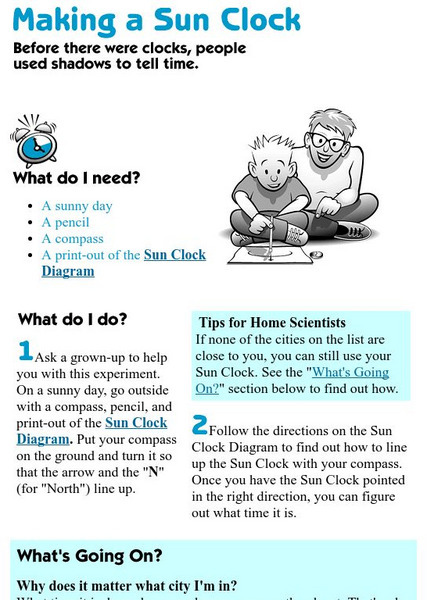
Exploratorium: Making a Sun Clock
Learn how to use the sun to tell time. This simple activity reinforces the concepts of light and shadow, night and day, time, and geographical north vs. magnetic north.
University of Texas at Austin
The University of Texas Mc Donald Observatory: Shadow Play
Everyone and everything has a shadow. Shadows illustrate how three-dimensional objects can be viewed in two dimensions.

ClassFlow
Class Flow: Earth and Sun
[Free Registration/Login Required] In this flipchart, students will learn the relationship between the Earth and the Sun.
Science Education Resource Center at Carleton College
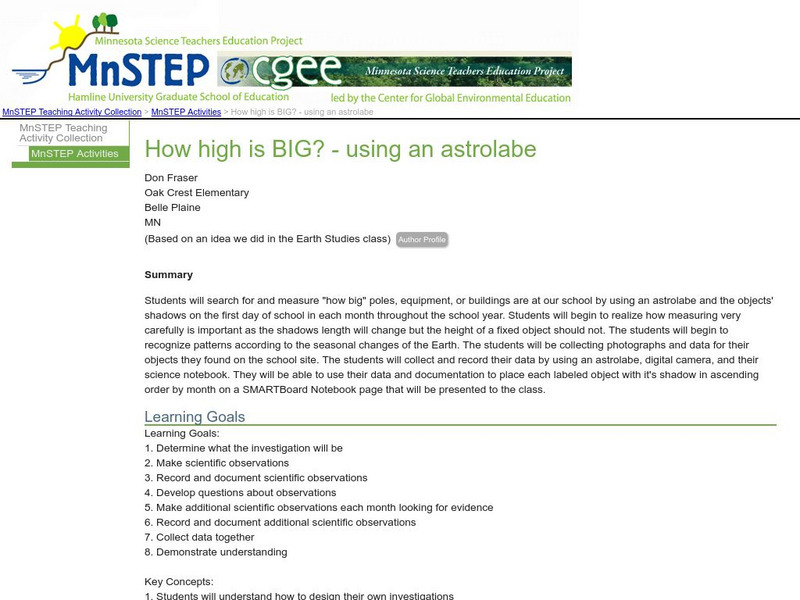
Serc: How High Is Big? Using an Astrolabe
Students observe and measure the shadows of fixed objects throughout the school year to learn about how the seasonal change affects the sun's position in the sky.
TeachEngineering
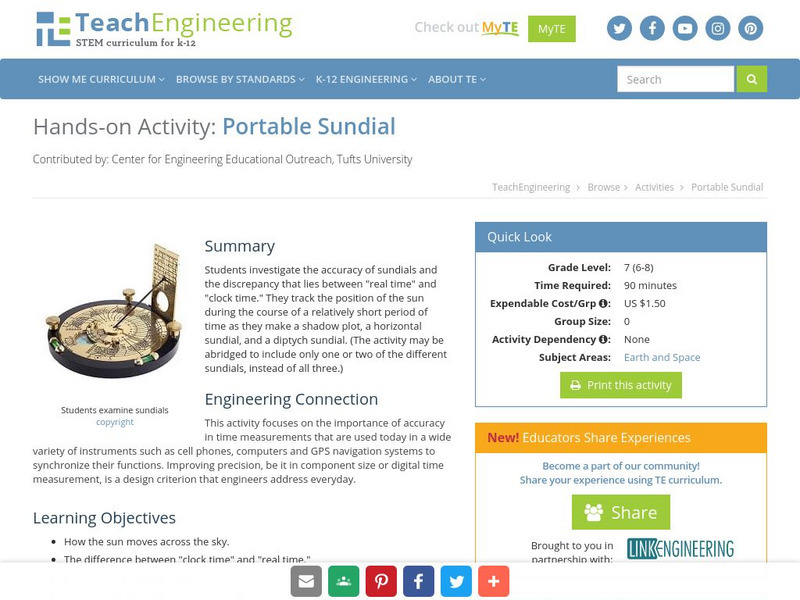
Teach Engineering: Portable Sundial
In this activity students will investigate the accuracy of sundials and the discrepancy that lies between "real time" and "clock time". They will track the position of the sun over the course of a relatively short period of time as they...
Harvard University
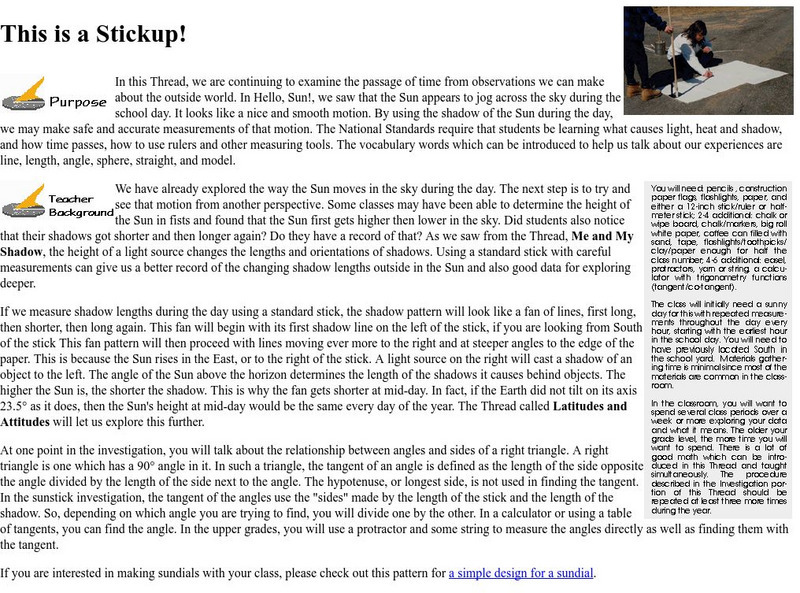
University of Harvard: This Is a Stickup!
Students are taught how to make a sundial. The relationship between angles and the sides of a right triangle are explored. Great lesson plan ideas with plenty of background information. The instructional activity is adapted for grade...
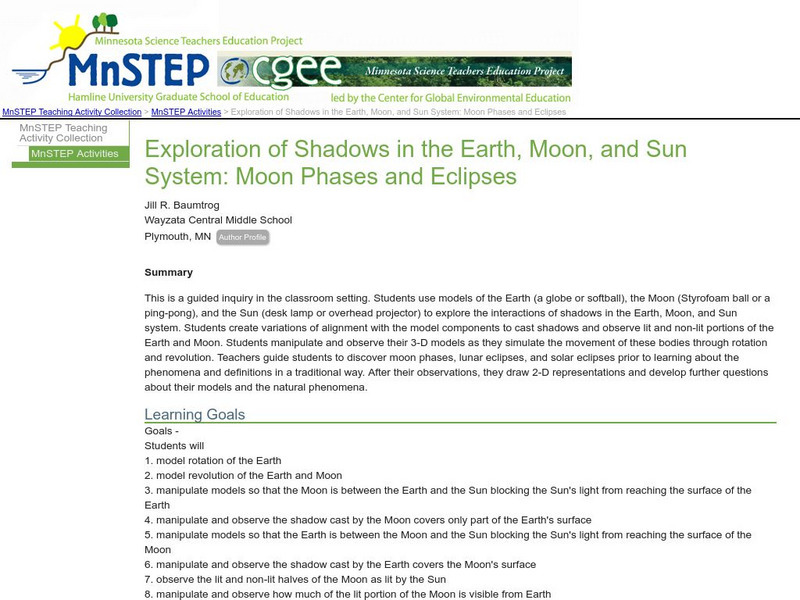
Science Education Resource Center at Carleton College
Serc: Exploration of Shadows: Earth, Moon, Sun System: Moon Phases Eclipses
A guided inquiry where students participate in the simulation of moon phases and eclipses.
University of Toronto (Canada)
Selected Poems of John Donne
Links to 42 poems by the English metaphysical John Donne (1572-1631).
PBS
Pbs Learning Media: Night Light Video
Watch PEEP and Quack [8:49] have fun with shadows in the middle of the night using flashlights. They learn that shadows can grow and change shape by rotating the object. An additional hands-on activity is provided for students along with...
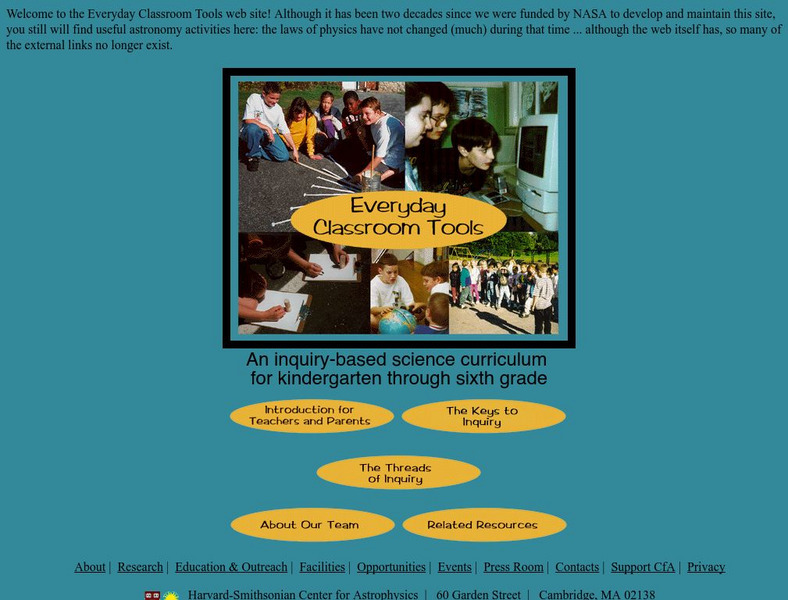
Harvard University
Harvard Smithsonian: Everyday Classroom Tools
The focus of this series of lessons is to engage students in an exploration of the world around them. The emphasis is on inquiry as students learn about the earth, sun, light, shapes and more.
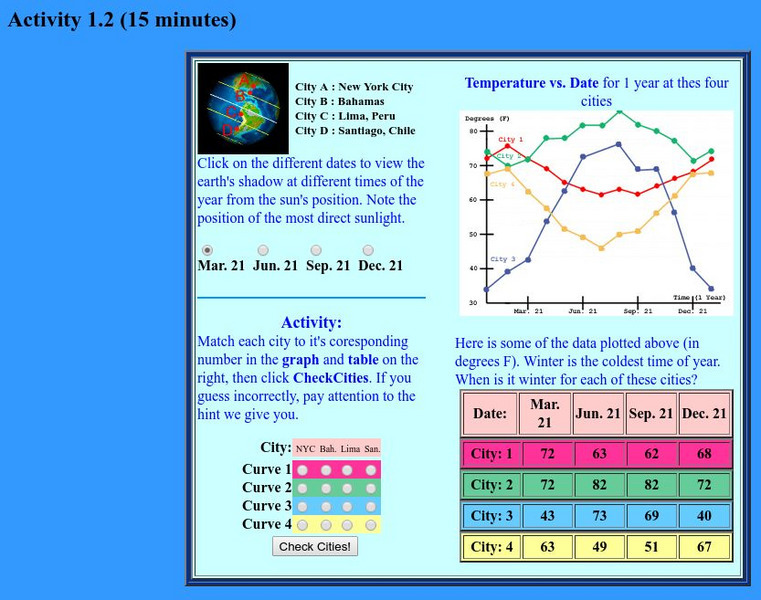
University of Utah
University of Utah: Aspire: Seasons Exercise
In this activity, use seasons to determine your location. Click on the different dates to view the earth's shadow at different times of the year from the sun's position.
University of Colorado
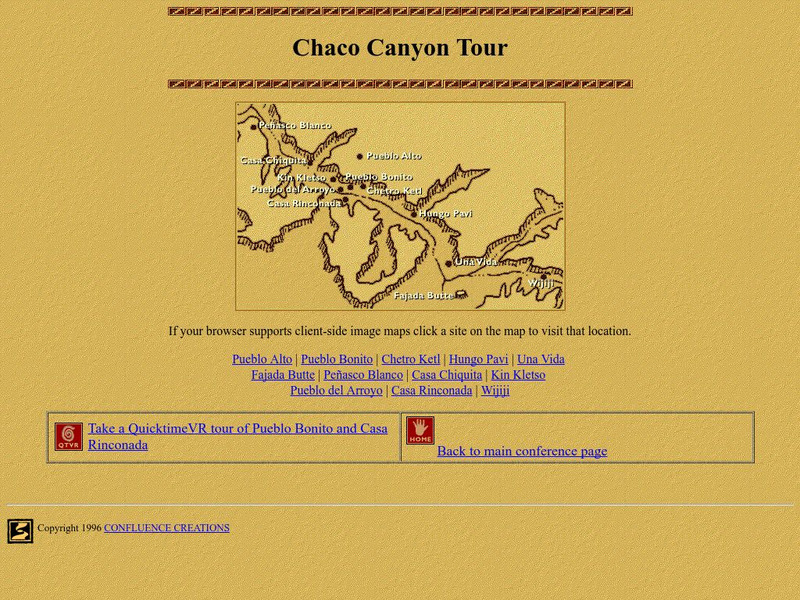
University of Colorado: Confluence Creations: Chaco Canyon Tour
Take a tour of the Chaco Canyon archaeological site. The map takes you to the many dwellings and important astronomical sites. Virtual tours are available if you have Quick Time.