Hi, what do you want to do?






TED Talks
Ted: Ted Ed: How to Master Your Sense of Smell
Some perfumers can distinguish individual odors in a fragrance made of hundreds of scents; tea-experts have been known to sniff out the exact location of a particular tea; and the NYC Transit Authority once had a employee responsible...
Science Buddies
Science Buddies: Dog Scents: The Super Nose of Man's Best Friend
Everyone thinks their dog's the best, but in the case of smelling ability, all dogs possess super powers. In fact, a dog's nose can be over a 1,000 times more sensitive than a human's. In this project, learn about smell from a dog's...
National Institutes of Health
Nidcd: Smell Disorders
This site discusses the sense of smell and disorders associated with smell. The site provides information on what makes our sense of smell work, what smell disorders are, what causes these disorders, and whether these disorders may be...

Science Buddies
Science Buddies: The Nose Knows Smell but How About Taste?
As if sniffles and clogged sinuses are bad enough, everything seems to taste bland and flavorless when we are sick. Gather up a few volunteers, hit the kitchen, and try this experiment to find out if there is really truth to the idea...

CK-12 Foundation
Ck 12: Life Science: Taste and Smell
[Free Registration/Login may be required to access all resource tools.] Imagine you open a gallon of milk, and you suddenly smell a foul odor. Your sense of smell has informed you that the milk has spoiled. So you pour the spoiled milk...

TED Talks
Ted: Ted Ed: How Do We Smell?
An adult human can distinguish up to 10,000 odors. You use your nose to figure out what to eat, what to buy and even when it's time to take a shower. But how do the molecules in the air get translated into smells in your brain? This...
Society for Science and the Public
Science News for Students: Making Sense of Scents
How does your nose work in combination with your brain to analyze all the different scents you smell? Find out what scientists have discovered after studying how mouse brain cells react to different scents.

TeachEngineering
Teach Engineering: A Tasty Experiment
Students conduct an experiment to determine whether or not the sense of smell is important to being able to recognize foods by taste. They do this by attempting to identify several different foods that have similar textures. For some of...

eSchool Today
E School Today: Your Revision Notes on the Five Senses
Learn how the sense organs are structured and how they function to provide you with five senses.

University of Florida
Florida Museum of Natural History: My Body My Senses
This teacher's guide introduces children to the human body and the five senses and covers the major body parts and what they do. Children also will use their five senses to learn about the world.
Canadian Museum of Nature
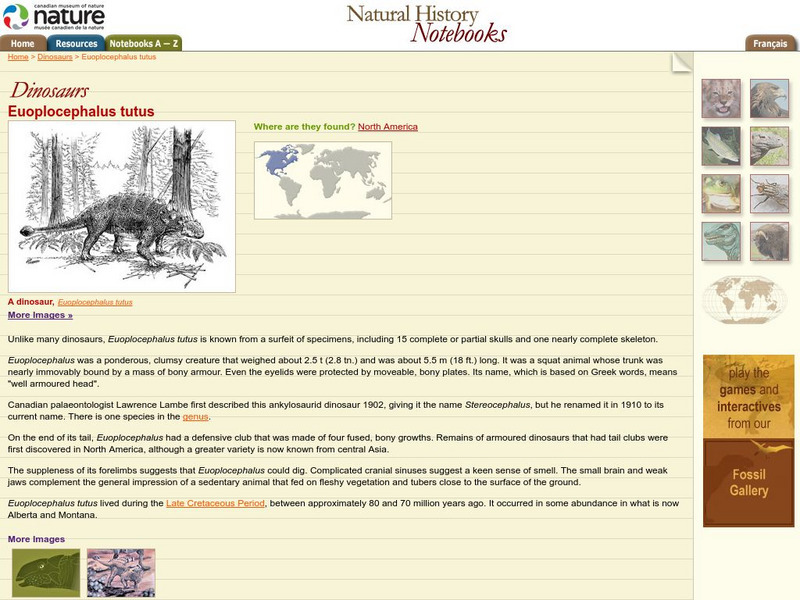
Canadian Museum of Nature: Euoplocephalus
Among some the interesting details of the Euoplocephalus is its armored tail. A detailed description is provided here.
PBS
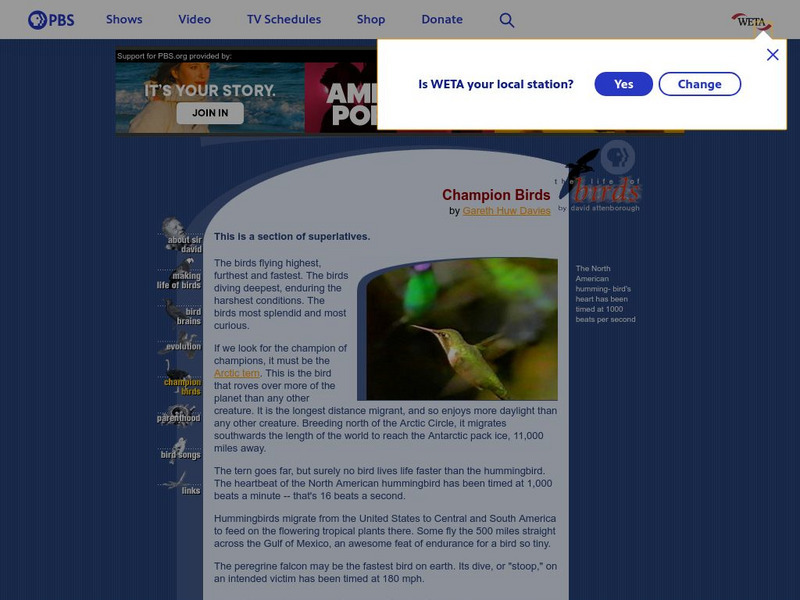
Pbs: Champion Birds
The PBS video series "The Life of Birds" is accompanied with this site. There are articles about several aspects of birds and their behavior. This one chronicles the highest, fastest, and most extreme birds. There are lots of examples.

Other
Ergonomics4 Schools: The Learning Zone: Aesthetics
The term 'aesthetics' concerns our senses and our responses to an object. If something is aesthetically pleasing to you, it is 'pleasurable' and you like it. If it is aesthetically displeasing to you, it is not pleasurable and you don't...
Smithsonian Institution
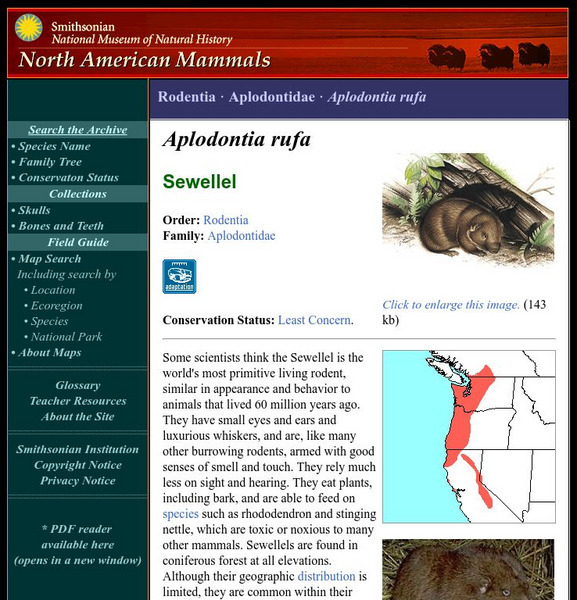
National Museum of Natural History: American Mammals: Mountain Beaver
Some scientists think the Mountain Beaver is the world's most primitive living rodent, similar in appearance and behavior to animals that lived 60 million years ago. They have small eyes and ears and luxurious whiskers, and are, like...
Frontiers Media
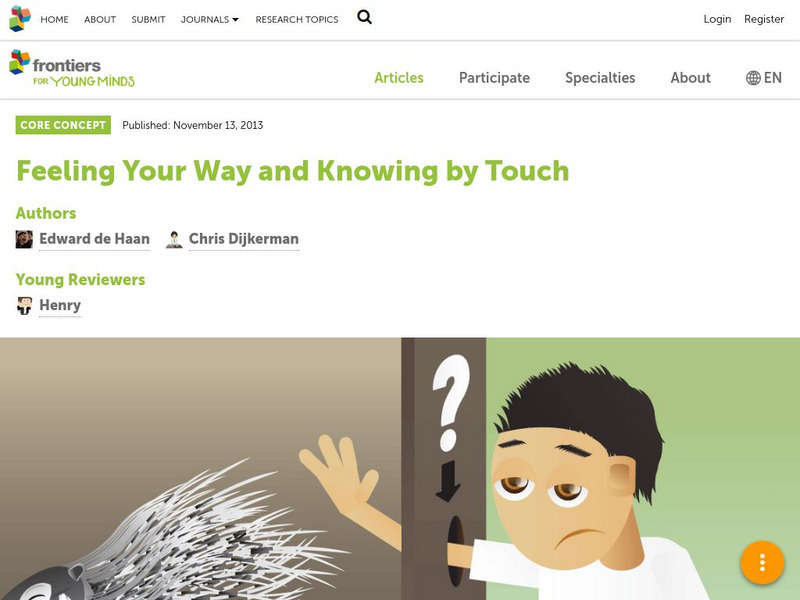
Frontiers: Feeling Your Way and Knowing by Touch
You can perceive things by touching, tasting, smelling, listening and seeing. The sensory system that allows us to "feel" is called somatosensation (so-MAT-o-sen-sa-shun). Somatosensation is a broadly defined perceptual system that...