Independence Hall Association
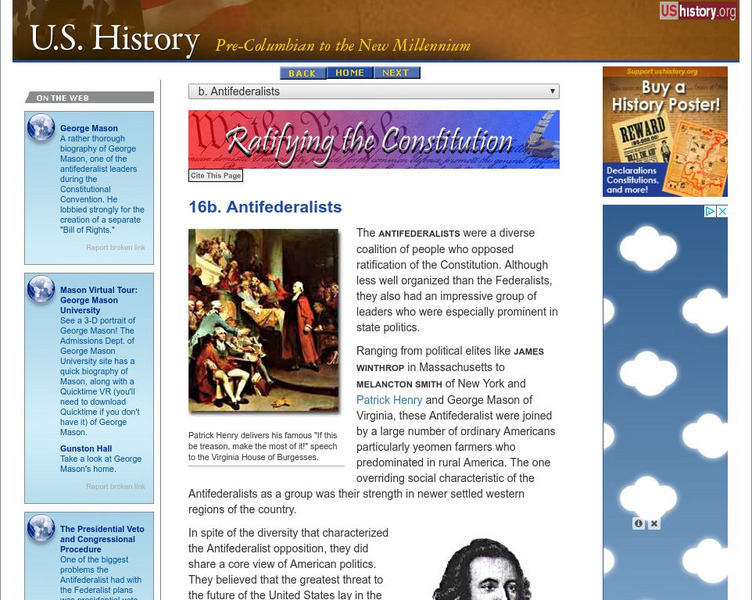
U.s. History: Antifederalists
The Anti-federalists, those who opposed the ratification of the Constitution, were a diverse group. They did have specific fears about carrying out the precepts of the Constitution. Read about their fears, especially the main one, no...
Independence Hall Association
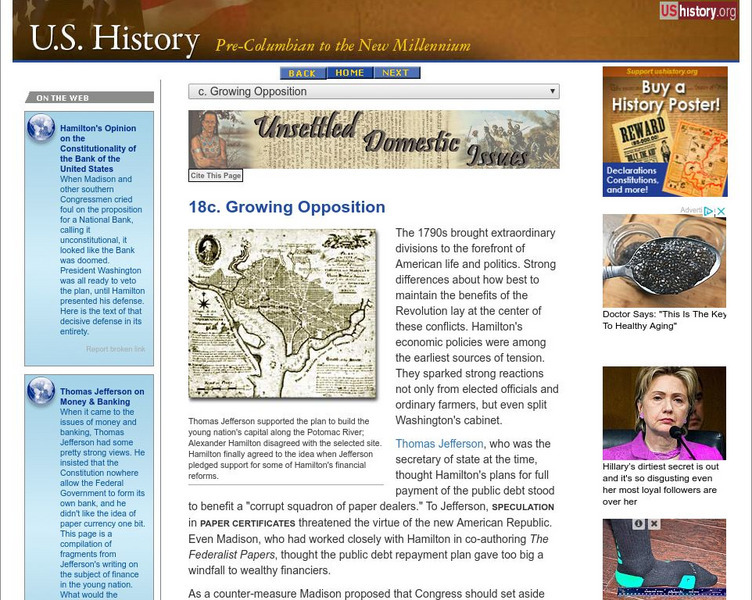
U.s. History: Growing Opposition
George Washington's cabinet had strong personalities with often opposing opinions. Read about the differences between Alexander Hamilton and Thomas Jefferson in regard to Hamilton's financial policies for the new country. See why these...

Independence Hall Association
U.s. History: Women's Suffrage at Last
Trace the history of the women's suffrage movement from its organized beginnings in 1848 with the Seneca Falls Convention to the final success with the adoption of the 19th Amendment, which constitutionally granted women the right vote.
Ohio State University
Osu History Teaching Institute: u.s. Constitution: The Bill of Rights
Fifth graders will examine the Bill of Rights of the US Constitution.
Independence Hall Association
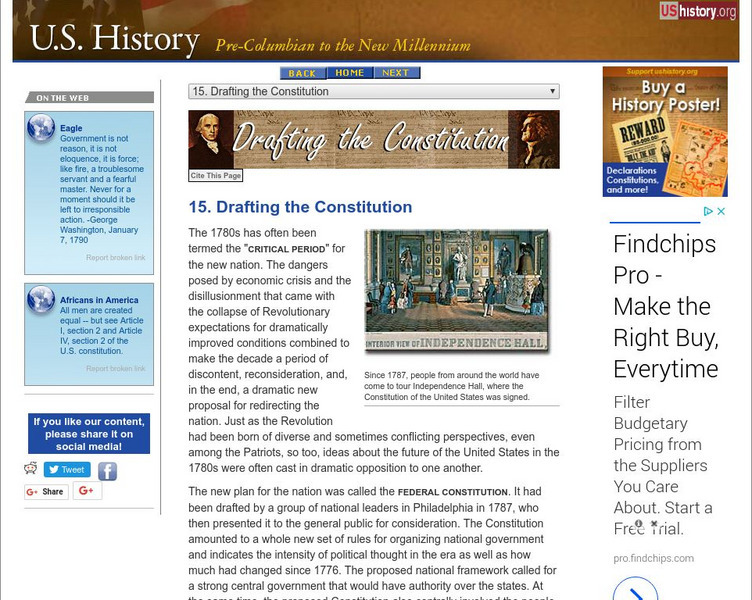
U.s. History: Drafting the Constitution
Problems with the new government of the United States led to rethinking the rules of governing. Read a brief overview of what the results were.
Independence Hall Association
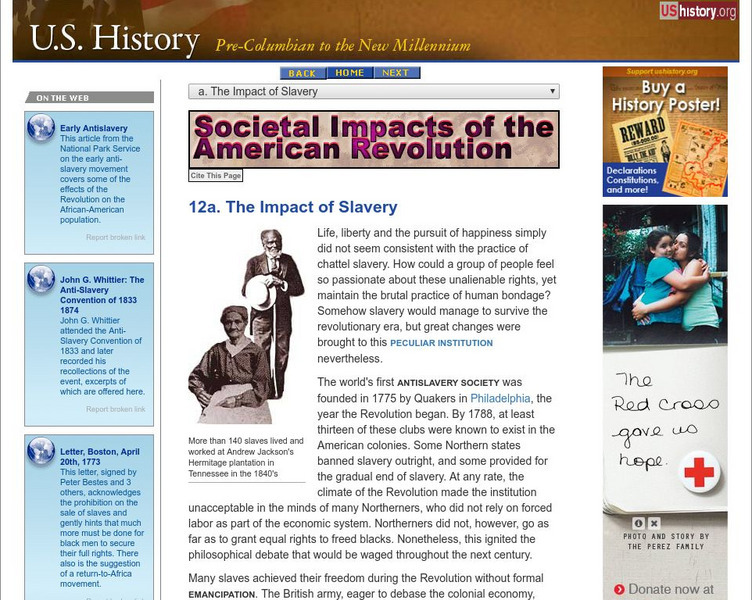
U.s. History: The Impact of Slavery
See how the ideals of freedom and equality garnered from the American Revolution were reflected in the early abolitionist movement and the banning of slavery in many Northern state constitutions as the new country was forming.
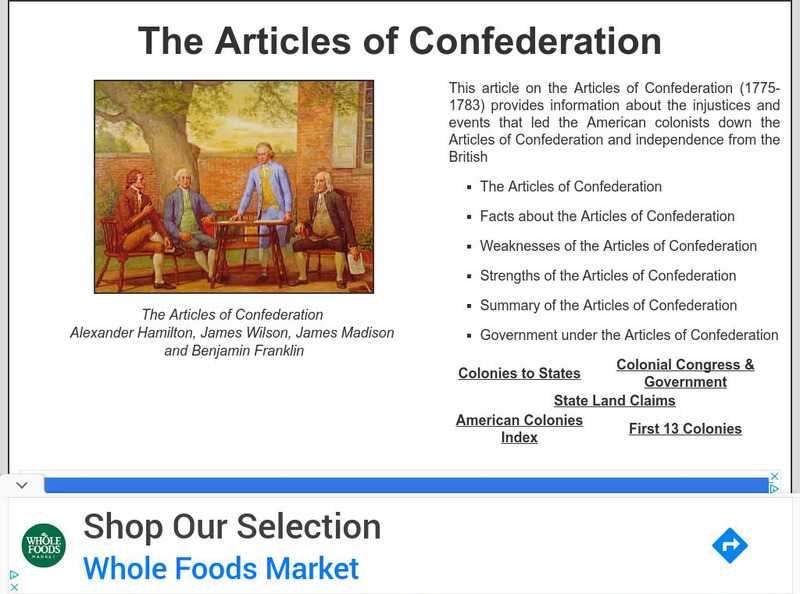
Siteseen
Siteseen: Land of the Brave: The Articles of Confederation
This article summarizes the Articles of Confederation, its strengths and weaknesses, and how it led to the Constitution.
US Government Publishing Office
Ben's Guide to u.s. Government: Grades K 2
Here you can learn all about the U.S. Government! Find information on our nation, how our government works, your own neighborhood, and the main government symbols. Games and other activities are also included!

Khan Academy
Khan Academy: Us History: 1754 1800: Constitutional Convention and Ratification
A quick comprehension check over the Constitutional Convention and debates over ratification.

Khan Academy
Khan Academy: Us History: 1754 1800: The Constitutional Convention
Shortly after the end of the Revolutionary War, American leaders realized that the nation needed a new, stronger Constitution. But what would the new system of government look like?
Thomson Reuters
Find Law: Article Ii: Impeachment
This resource provides detailed information about Article II of the Constitution, which focuses on impeachment.

Khan Academy
Khan Academy: Us History: 1754 1800: The Bill of Rights
The first ten amendments to the US Constitution guarantee citizens' essential freedoms and rights.
Thomson Reuters
Find Law: Article I: Congressional Qualifications
This site provides text of Article 1 of the U.S. Constitution. Section 2 of the article deals specifically with the qualifications needed to be a representative of the U.S. Congress. This site provides text as its worded in the...
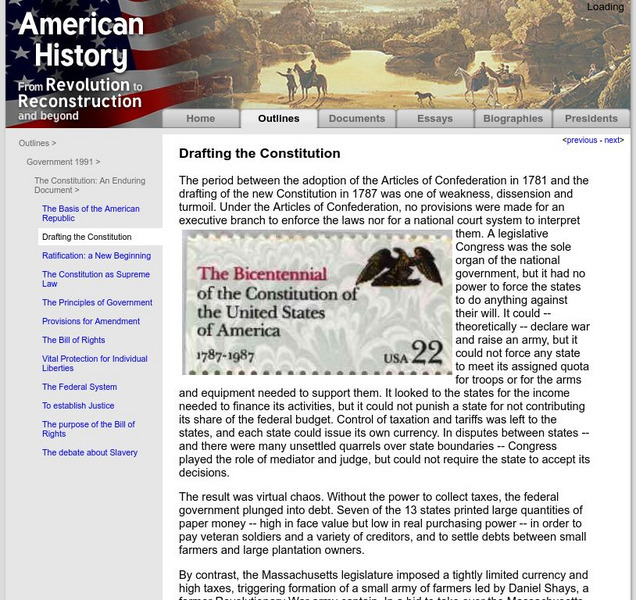
University of Groningen
American History: Outlines: Drafting the Constitution
Essay covers from the Articles of Confederation and the problems of disunity of the new states after the Revolutionary War, internally as well as externally, to the Constitutional Convention, an attempt to address the Articles' problems....
Houghton Mifflin Harcourt
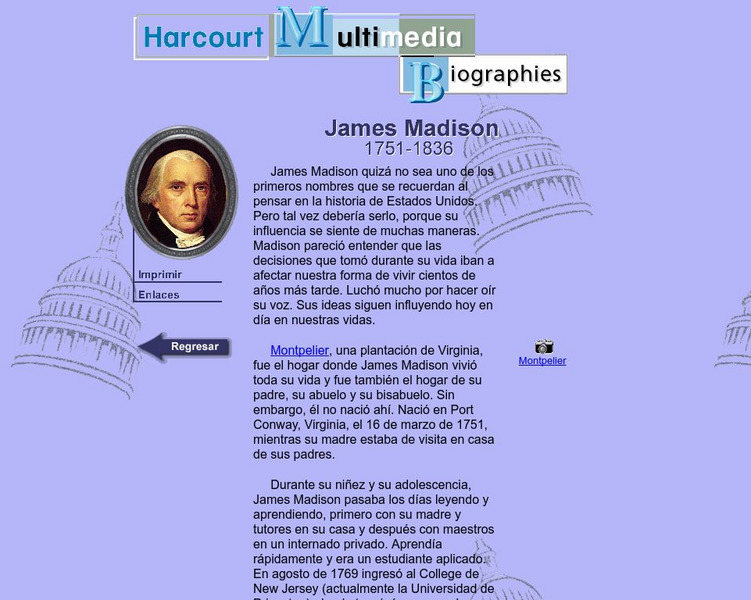
Harcourt: Biographies: James Madison
A brief biography of James Madison. Find out why James Madison was called the father of the constitution. Learn how his life affected the United States. (In Spanish)
Thomson Reuters
Find Law: Annotation 3: Eighth Amendment
This particular page of annotations on the Eighth Amendment discusses the background and intended meaning of the phrase "cruel and unsual punishment".

Thomson Reuters
Find Law: u.s. Supreme Court: In Re Gault (1967)
Full court transcript of 1967 U.S. Supreme Court case involving a juvenile, Gerald Gault.
Constitutional Rights Foundation
Constitutional Rights Foundation: Centralized vs. Decentralized Rule: The Articles of Confederation
Activity comparing the Articles of Confederation to the Constitution. Using a variety of articles, students research and create a chart with explanations and critical comparisons of the two governing documents.
Other
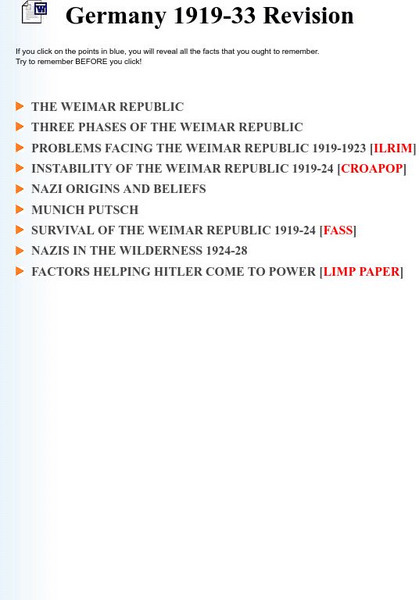
Greenville History Site: Germany 1919 33 Revision
An outline sheet that covers the history of the Weimar Republic in Germany from 1919 to 1933. The problems facing the republic are discussed along with reasons why the Weimar Republic eventually failed and was replaced by Hitler's...
Thomson Reuters
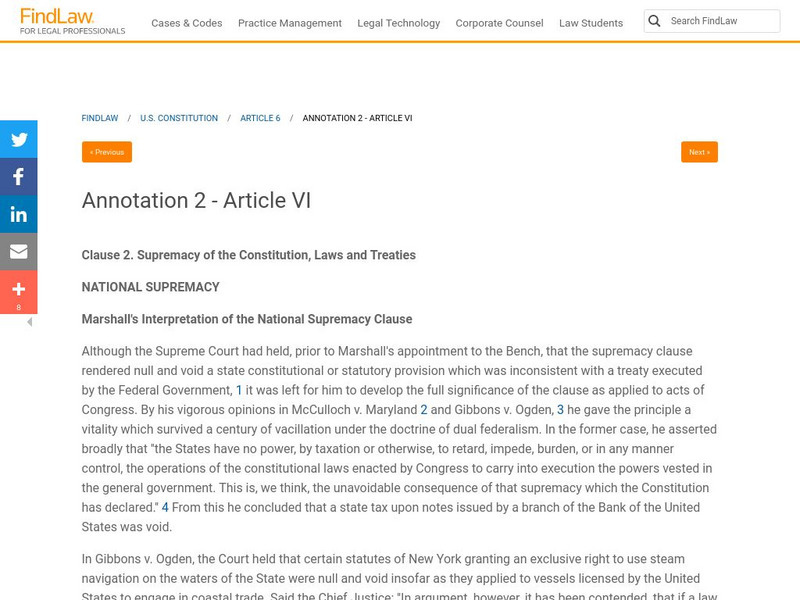
Find Law: Article Iv: National Supremacy
This resource provides a review of Clause 2, Article VI, "Supremacy of the Constitution, Laws and Treaties."
Thomson Reuters
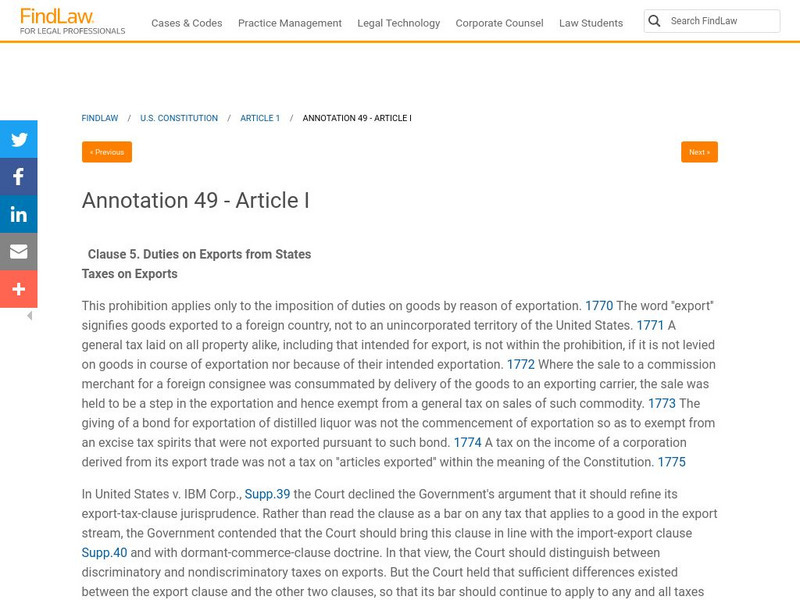
Find Law: Article I: Duties on Exports From States
This resource explains Clause 5 of Article I of the U.S. Constitution by defining specific words and phrases contained within the clause. Also gives historical background to explain the purpose of the Clause.
Thomson Reuters
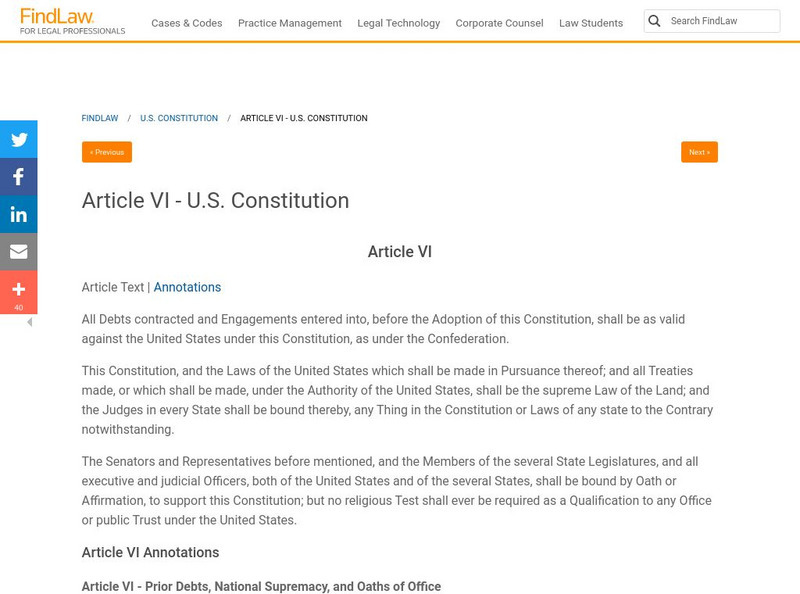
Find Law: Article Vi
This resource provides links to papers written about Article VI of the U.S. Constitution. Sample topics include: Validity of Prior Debts and Engagements, Supremacy of the Constitution, National Supremacy, the Power of Congress in Respect...
Thomson Reuters
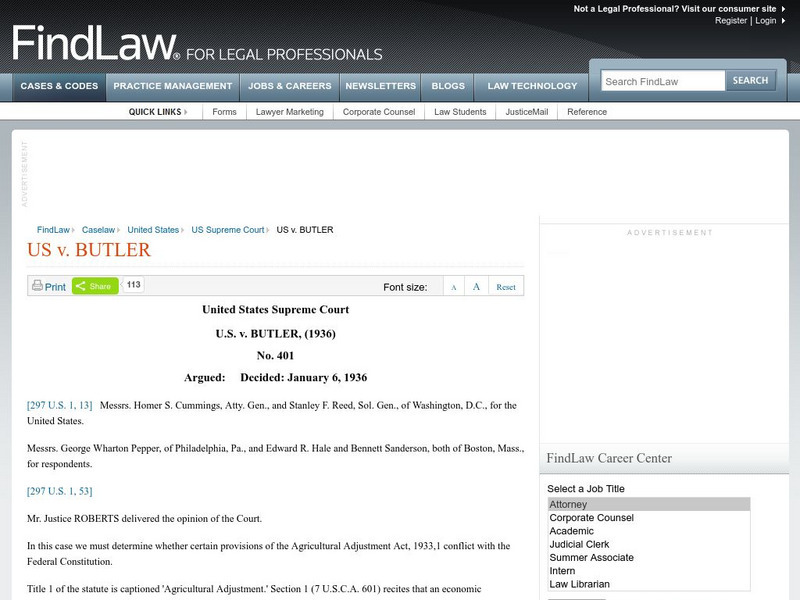
Find Law: u.s. Supreme Court: u.s. V. Butler (1936)
This Supreme Court case dealt with provisions of the Agricultural Adjustment Act conflicting with the Federal Constitution. Read the complete text of the court's opinions and decision. Registration for a free Findlaw account may be...
Thomson Reuters
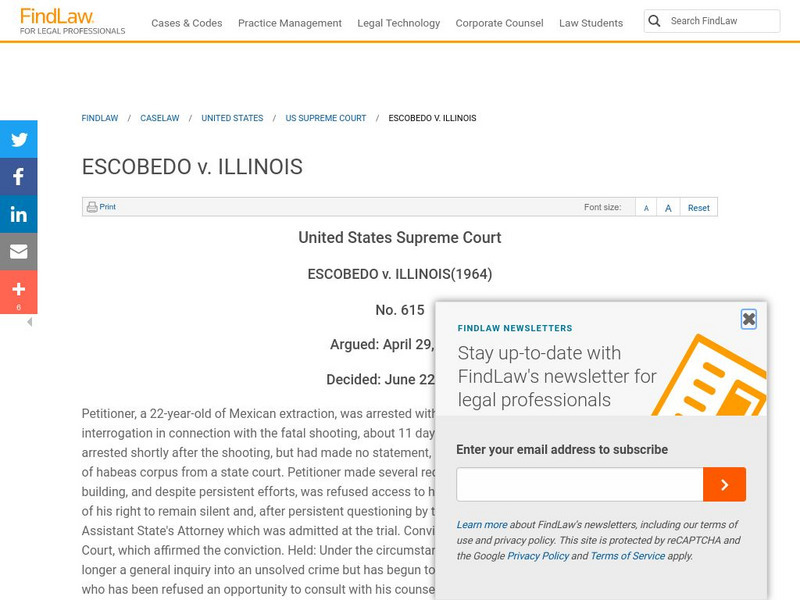
Find Law: u.s. Supreme Court: Escobedo v. Illinois (1964)
A detailed description of the United States Supreme Court decision on the appeal of the case Escobedo v. Illinois, which ruled on the right to have counsel under the 6th and 14th Amendments to the Constitution.