Hi, what do you want to do?





Internal Revenue Service
Irs: Evolution of Taxation in the Constitution Lesson Plan
This lesson plan will give young scholars an overview of the role and purpose of taxes in American history.
Library of Congress
Loc: The Constitution: Drafting a More Perfect Union
This instructional activity provides discussion, culminating, and extension activities to enhance student understanding of the Constitution, and the Committees of Detail and Style. Students have the opportunity to compare the work of...

Bill of Rights Institute
Bill of Rights Institute: The Stolen Valor Act and False Speech
A lesson plan, including an extension opportunity, addressing whether the Stolen Valor Act violates the First Amendment to the U.S. Constitution.
Bill of Rights Institute
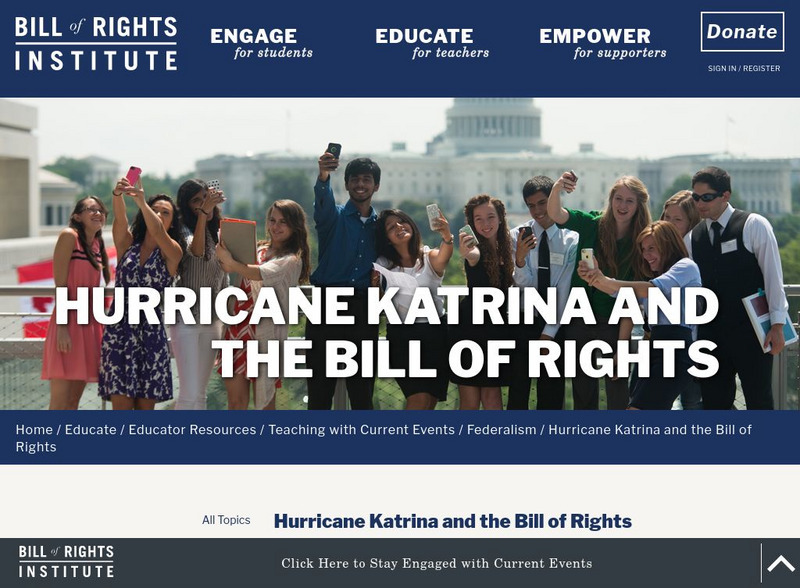
Bill of Rights Institute: Hurricane Katrina and the Bill of Rights
Crisis can raise many questions about constitutional rights. The events and media coverage during Hurricane Katrina is one of those crisises. This lesson plan offers students the opportunity to evaluate some of the instances in an effort...
Huntington Library
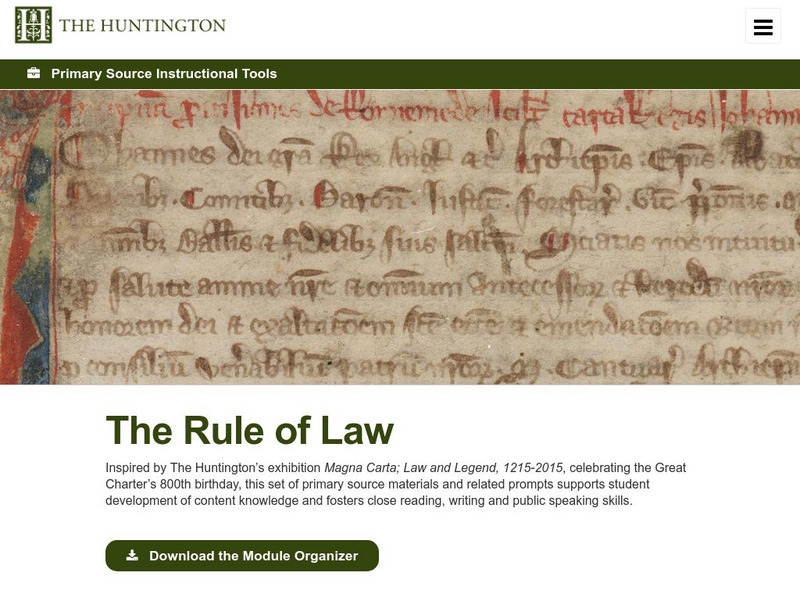
Huntington Library: The Rule of Law
In this lesson, students examine primary source materials including the Book of Laws, the Constitution, the Bill of Rights, and the Magna Carta in order to understand their meaning and to compare them. They then prepare an argument on...
Bill of Rights Institute
Bill of Rights Institute: Occupy Protests and the Bill of Rights
A lesson plan and extension activities focused on the Occupy Protests which began in 2011. Students will explore the goal of the protests in relationship to the Bill of Rights.

PBS
Pbs News Hour: Constitutional Amendments and Gay Marriage
In this lesson, students examine and debate the issue of same sex marriage by studying background information, news articles, legal arguments and the 14th Amendment to the U.S. Constitution. They then draft an amendment of their own to...
iCivics
I Civics: Constitution Day Lesson Plan
This interactive lesson gives students a quick snapshot of the Constitution, including the purpose of each article, the powers of the three branches, how a bill becomes a law, and the concepts of separation of powers and checks and...
iCivics
I Civics: Montesquieu Mini Lesson
Meet the Baron de Montesquieu, one of the great thinkers of the 18th century. He spent a lot of time thinking about how governments should be created and maintained. These ideas guided the Founding Fathers when they wrote the...
iCivics
I Civics: The Great State
In this overview lesson, students learn about state government structure, functions, lawmaking, and relationship with local government.
National Women’s History Museum
National Women's History Museum: The National Woman's Party
Students will examine documents to determine if the justice system was fair and Constitutional in its treatment of the National Women's Party picketers.
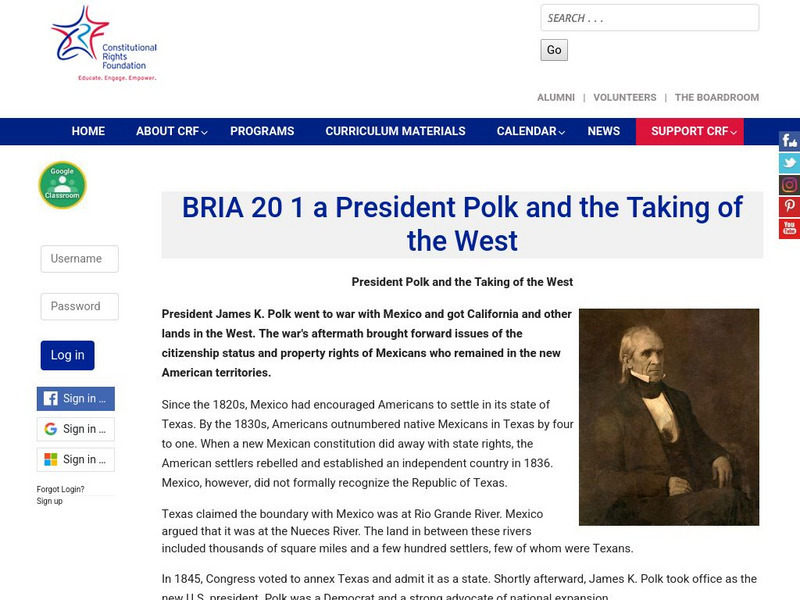
Constitutional Rights Foundation
Constitutional Rights Foundation: Conflict of Cultures: President Polk and the Taking of the West
Lesson and activity on conflict of cultures in which students study U.S. overtaking lands of Mexico and California and form policy on property rights and citizenship of conquered cultures. Activity guidelines, questions for discussion...

Constitutional Rights Foundation
Constitutional Rights Foundation: Leadership: u.s. History
Lesson and activity looks at leadership in U.S. history focussing on presidents, past and present, to determine what makes a good leader. Questions for discussion and class activity guidelines included.
PBS
Pbs News Hour: Getting to Democracy, Lesson Plan
With the end of major military action in Iraq, what obstacles do the people of Iraq and the coalition face in rebuilding their country? With this lesson, students will compare what is happening in Iraq to what happened after World War II...
Council for Economic Education
Econ Ed Link: Constitution Costs
This instructional activity helps young scholars understand the basic services provided for Americans in the United States Constitution and the necessity of a system of taxation to fund those services. Students will debate the pros and...
iCivics
I Civics: Benjamin Franklin Mini Lesson
"The First American", Benjamin Franklin, is the only Founding Father that signed all three major documents that founded the United States of America. Students explore the many roles he took during the founding of America.
National Endowment for the Humanities
Neh: Edsit Ement: The First Amendment
This resource presents lessons on the First Amendment. It contains many resources for use with children, and links to primary source documents.
Constitutional Rights Foundation
Constitutional Rights Foundation: Economics and Democracy
Lesson in economics and democracy in which students analyze the decision to outsource jobs and determine if globalization is a threat to American workers. Small group, independent and whole class work. Links to related material.
iCivics
I Civics: Wanted: A Just Right Government
Look at the tensions and differences of opinion that existed among early American states and citizens. Learn about the Articles of Confederation, why the first "constitution" didn't work, and how compromise led to the Constitution.
iCivics
I Civics: Marbury v. Madison (1803)
This mini-lesson plan covers the basics of the Supreme Court's decision that affirmed the Court's power of judicial review. Young scholars learn how Congress tried to add to the Supreme Court's Constitutional power, how the Supreme Court...
Other
Usa Gov: Three Branches of Government
Lesson plans for students to learn about the three branches of government. They can find information about the origins of the Constitution, separation of powers, and details about each of the three branches.
iCivics
I Civics: Voting in Congress
n this lesson, students learn what factors members of Congress consider when deciding whether to vote for a bill, including the powers given to Congress by the Constitution, what a member's constituents want, his or her political party's...
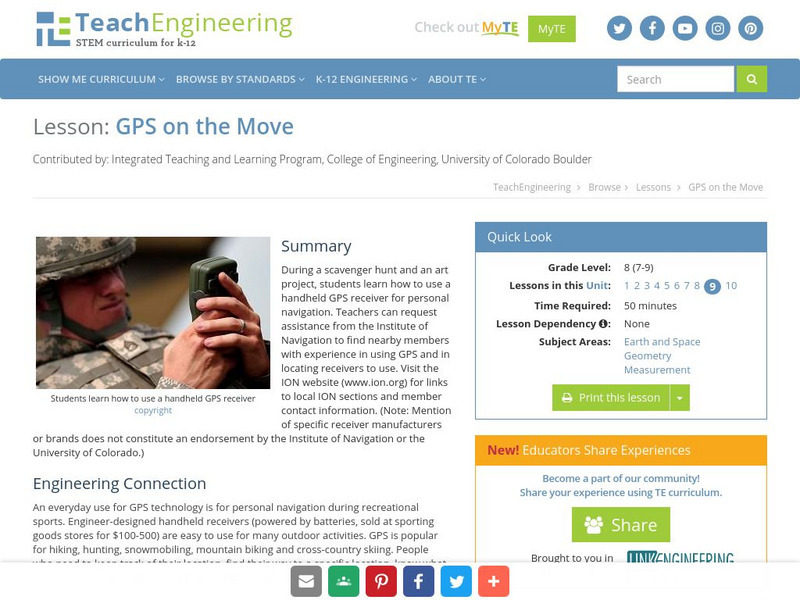
TeachEngineering
Teach Engineering: Gps on the Move
During a scavenger hunt and an art project, students learn how to use a handheld GPS receiver for personal navigation. Teachers can request assistance from the Institute of Navigation to find nearby members with experience in using GPS...
PBS
Pbs Teachers: Church and State Separation: Challenge and Debate (Lesson Plan)
Describes the elements of the U.S. Constitution's First Amendment as it relates to the separation of church and state and freedom of religion. Speculates on the probable constitutional issues associated with the separation of church and...