Hi, what do you want to do?






PBS
Pbs Learning Media: Above the Clouds: Telescopes on Mauna Kea
This video segment adapted from First Light explains why the highest peak in the Pacific, Mauna Kea, is an ideal site for astronomical observations. Featured are new telescope technologies that allow astronomers to explore the universe...
Optical Society
Optical Society of America: Optics for Kids: Make a Telescope
An activity for making a telescope using a cardboard tube and two lenses. Accompanied by an explanation of how the telescope works, and a link to an article about lenses.
Science4Fun
Science4 Fun: Telescope
Illustrated discussion of the invention of the telescope with details on Galileo's telescope, the reflecting telescope, and the space telescope.
NASA
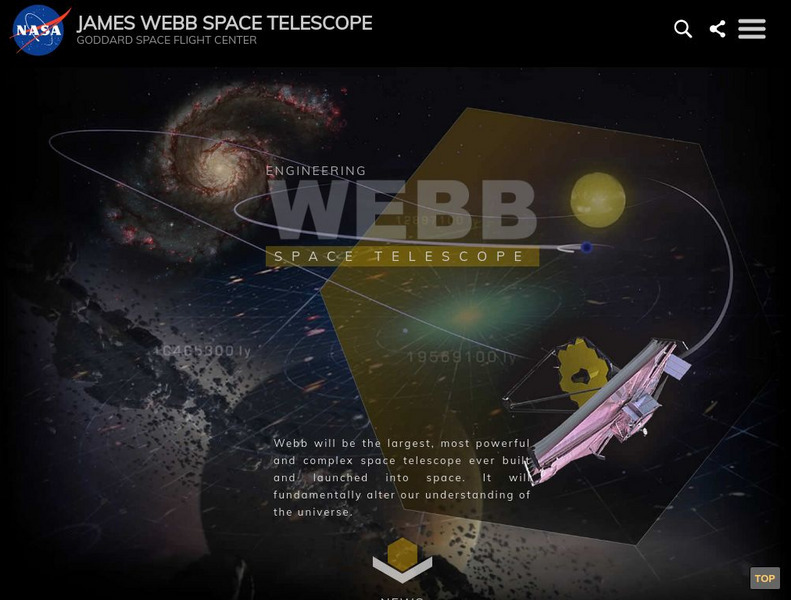
Nasa: James Webb Space Telescope
NASA's web site about the James Webb Space Telescope, which will replace the Hubble telescope and is expected to observe the farthest reaches of the universe.
Other
South African Large Telescope Project
South African Large Telescope (SALT) homepage describes a multi-national project sponsored by the South African Astronomical Observatory to build a large telescope in South Africa. Visually appealing and written for the lay person.
NASA
Nasa: Starlight Riddle
This site from NASA provides an interestinnng approach to telescopes. "Almost all telescopes nowadays use mirrors, not lenses, to gather and focus the light from celestial objects. We have just seen, though, that mirrors reverse the...
University of Utah
University of Utah: Aspire: The Aspire Breadboard
This is a tutorial for creating a breadboard with an LED display as an educational outreach effort for the Telescope Array cosmic ray research project near Delta, Utah. When completed, the breadboard could be programmed to use actual...
University of Wisconsin
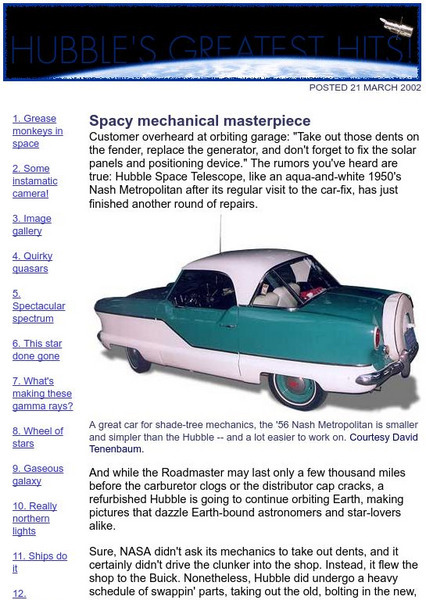
The Why Files: Spacy Mechanical Masterpiece
An interesting article describing repairs which were completed on the Hubble telescope in 1993 and 1997. Also contains links to pictures taken by the telescope.
PBS
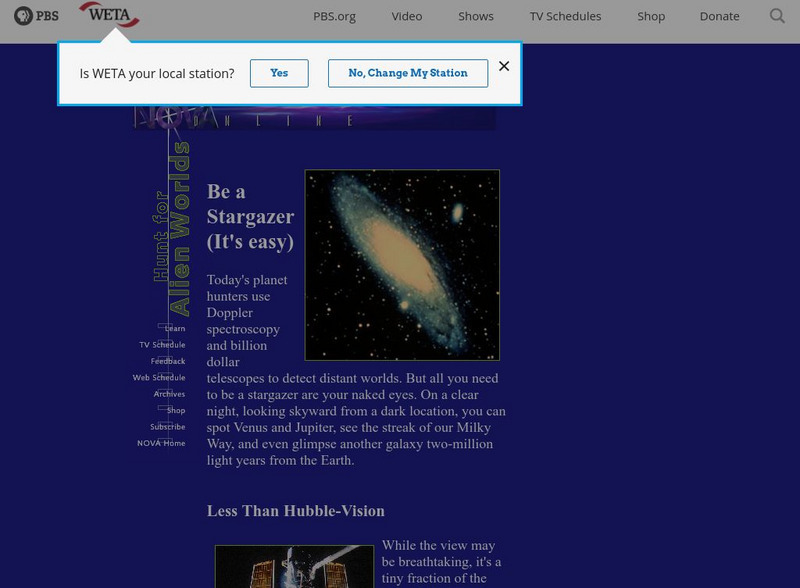
Pbs: Nova Online: Be a Stargazer
This resource briefly describes how telescopes work and provides helpful tips for stargazing.
Georgia State University
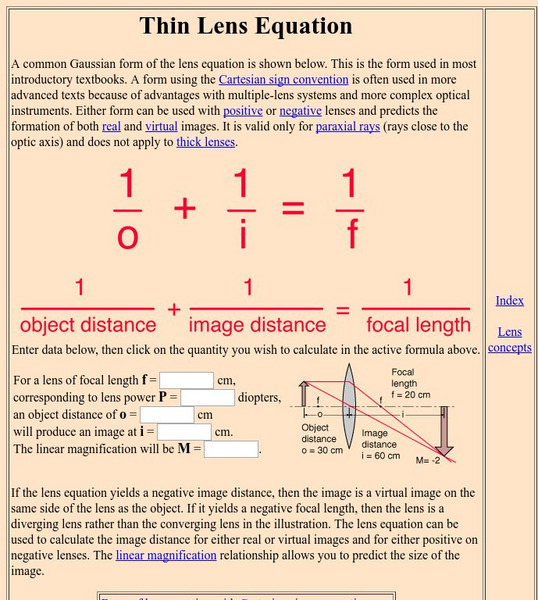
Georgia State University: Hyper Physics: Thin Lens Equation
This is an informative site from Georgia State University. It gives a discussion of the thin lens equation and an illustration of its use in determining the image distance based upon the object distance and the focal length.
Georgia State University
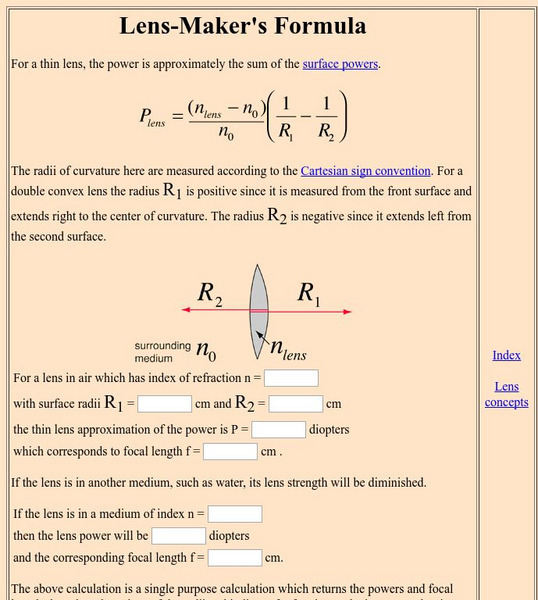
Georgia State University: Hyper Physics: Lens Maker's Formula
A discussion of the lens-maker's formula and its use in determining the effect of lens shape and index of refraction upon the magnifying power of a lens. Includes an interactive problem-solving section.
TED Talks
Ted: Ted Ed: Why Neutrinos Matter
Elementary particles are the smallest known building blocks in the universe- and the neutrino is one of the smallest of the small. These tiny neutrinos can tell us about the furthest reaches and most extreme environments of the universe...

NASA
Nasa: Astronomy Picture of the Day: Jupiter's Great Red Spot
This collage of images by the Hubble Space Telescope captured the changes in Jupiter's Great Red Spot over a period of several years.
Famous Scientists
Famous Scientists: William Herschel
Learn about the life and work of William Herschel, and find out about his telescope coinstruction and solar system reserach.
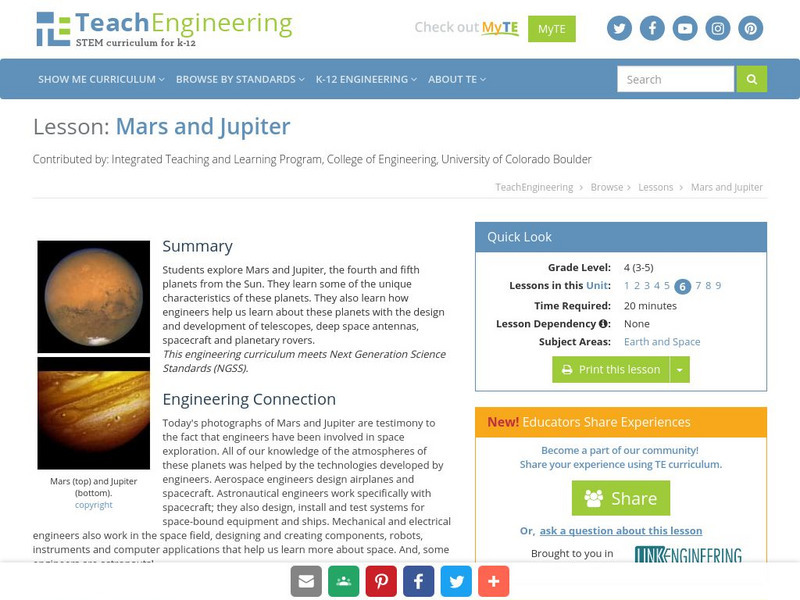
TeachEngineering
Teach Engineering: Mars and Jupiter
Students explore Mars and Jupiter, the fourth and fifth planets from the Sun. They learn some of the unique characteristics of these planets. They also learn how engineers help us learn about these planets with the design and development...

BBC
Bbc: Gcse Bitesize: Lenses
Lenses are precisely shaped pieces of glass that have been developed and used in corrective glasses, telescopes, microscopes, binoculars, and magnifying glasses. They can be convex or concave. Links are provided to a video an a test.
Science4Fun
Science4 Fun: Galileo Galilei
Brief biographical sketch of Galileo Galilei, famous scientist and astronomer whose discoveries include the Tower of Pisa Experiment and the Galilean Telescope.
Science4Fun
Science4 Fun: Isaac Newton
Brief biographical sketch of Isaac Newton, famous scientist whose discoveries include the law of gravitation, three laws of motion, reflective telescope, and calculus.
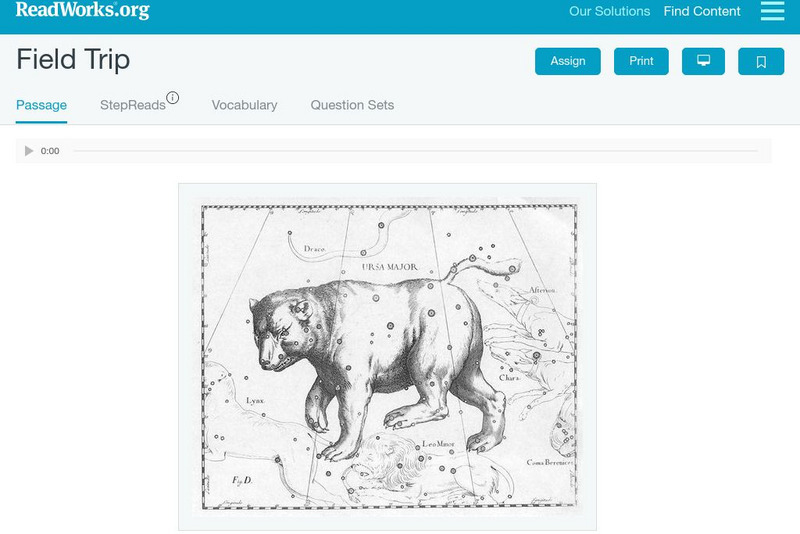
Read Works
Read Works: Passages: Partial Eclipse
[Free Registration/Login Required] Students read a fiction text about a boy named Marcus who watched a partial eclipse through a telescope and answer questions about comprehension, climax, supporting details, characterization,...
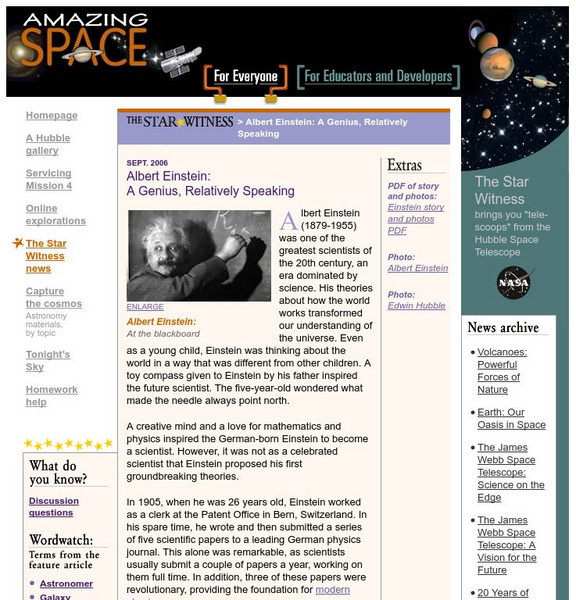
Space Telescope Science Institute
Amazing Space: Albert Einstein: A Genius, Relatively Speaking
Albert Einstein was one of the most influential scientists in the 20th century. Read about his contributions on the fact filled site from the Space Telescopes Science Institute.
PBS
Pbs Learning Media: Images of the Sun
We think of the sun as being bright yellow, however, the sun is actually different colors based on whether the sun is in an active stage. Scientists used telescopes and satellite cameras to take these stunning photographs of the sun....
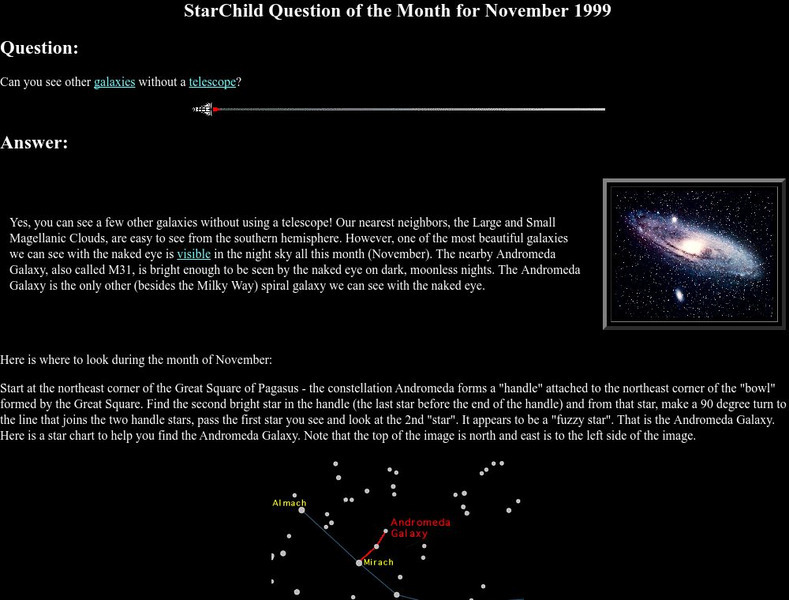
NASA
Nasa Star Child: Can You See Other Galaxies Without a Telescope?
Learn how and when to look up into the sky to see the Andromeda galaxy.

PBS
Pbs Nova: A Conversation With Neil De Grasse Tyson
Nova offers an enlightening conversation with astrophysicist Neil deGrasse Tyson. Topics include origins of the universe, multidisciplinary approaches to science, exciting recent discoveries, his position as director of the Hayden...
BBC
Bbc: Space Race
There are galaxies far, far away, but just how big is our own solar system? Scroll through this interactive to quickly observe just how much we know and have learned about our solar system.
Other popular searches
- Space Telescopes
- Hubble Telescopes
- Compare Telescopes
- Optical Telescopes
- Reflecting Telescopes
- Making Telescopes
- Space Tools Telescopes
- Telescopes Distant Objects
- Telescopes Handout
- Optical and Radio Telescopes
- Convex Lenses and Telescopes
- Radio Telescopes