Hi, what do you want to do?






British Library
British Library: Teaching Resources: Aphra Behn, the Rover: Carnival
These activities allow students to explore how Aphra Behn uses character types and tropes associated with carnival in "The Rover". Students can relate this to the play's context of production, and comic theories relating to the...
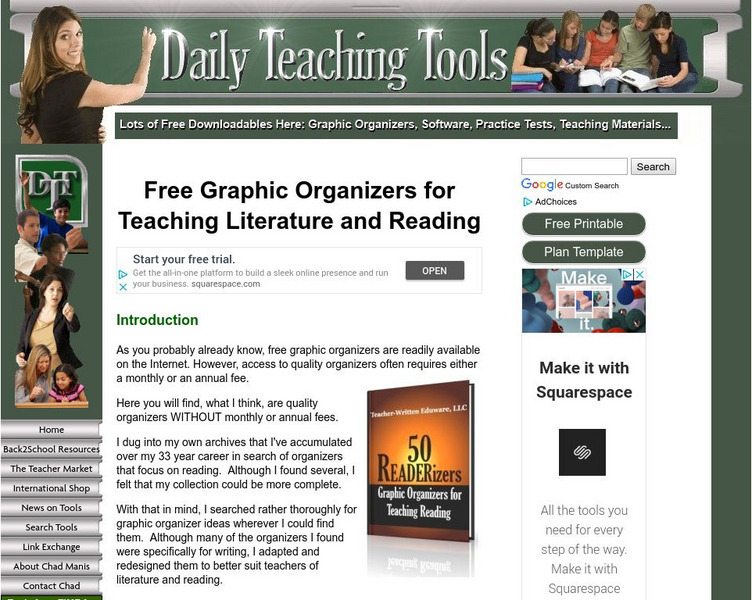
Daily Teaching Tools
Daily Teaching Tools: Customizable Graphic Organizers
This Daily Teaching Tools resource provides a series of graphic organizers for reading students. Forms are provided for plot, character analysis, reading logs, and reading responses.
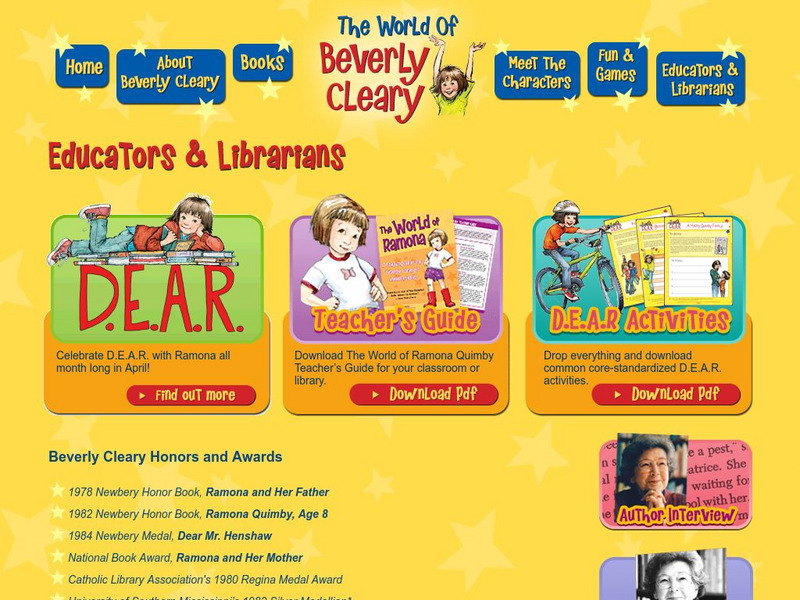
Other
The World of Beverly Cleary: Teaching Resources
A comprehensive guide to teaching Beverly Cleary's Ramona books. Includes material available as web pages as well as PDF formats. Also provides the words of Cleary herself when discussing characterization, as well as some unforgettable...
TES Global
Tes: Commedia Dell'arte and Stock Characters
[Free Registration/Login Required] This is a slide show lesson on Commedia Dell'Arte and stock characters including a close activity on Commedia Dell'Arte, a definition of stock characters with examples, modern day stock characters, and...
Better Lesson
Better Lesson: Speaking and Listening: Collaborative Conversations
Students will partner read The Kite, by Alma Flor Ada. Then work together in small collaborative groups to describe the character of the mother, the children, or the kitten. Included in this lesson are video demonstrations, printable...
Better Lesson
Better Lesson: Who's at the Door? Use Images to Find Out!
Students will use words acquired through reading to describe images (with adjectives) that demonstrate an understanding of characters in a story. The teacher will read Miss Nelson is Back which has great descriptors and will hold a class...
British Library
British Library: Bronte's Jane Eyre: The Figure of Bertha Mason
This activity will encourage young scholars to explore the character of Bertha Mason, Mr. Rochester's first wife, through the lens of medical history. They will compare Charlotte Bronte's presentation of the character with the...
British Library
British Library: Bronte's Wuthering Heights: Who Is Heathcliff?
This activity involves an exploration of the notoriously multifaceted character of Heathcliff, drawing on a range of sources that include the visual, literary, and historical. Learners will reflect on Emily Bronte's depiction of...
British Library
British Library: Bronte's Wuthering Heights: Fantasy and Realism
Young scholars will consider the two elements of fantasy and realism that combine to create the compelling narrative in Wuthering Heights (1847). In this activity, students will explore the significance of nature within the narrative,...
British Library
British Library: Dickens's Great Expectations: The Gothic, the Uncanny
This activity will introduce the idea of the uncanny and explore its expression within the narrative form of Charles Dickens's novel "Great Expectations".
British Library
British Library: Dickens's Great Expectations: Social Mobility
This lesson will explore this theme of social mobility through a reading of extracts from Samuel Smiles's Self-Help (1859), the handbook that many young men in 19th-century Britain turned to in seeking advice as to how to better...
British Library
British Library: Austen's Emma: Social Realism & the Novel
In the course of the novel's development, Jane Austen was a significant contributor to the emergence of the modern novel as we know it today. The review of Emma in the Quarterly Review (October 1815) makes clear to a modern audience how...
Better Lesson
Better Lesson: W.4.3b: Use Dialogue and Description to Develop Experiences/events
Links to 12 lessons and activities that build student skills in standard W.4.3b: Use dialogue and description to develop experiences and events to show the responses of characters to situations.