Hi, what do you want to do?






Open Curriculum
Open Curriculum: Modern Classification Systems
Identify the four new kingdoms that were added to the original Linnaean taxonomy.

Alabama Learning Exchange
Alex: Taxonomy: The Importance of Classifying
This is a technology-based, hands-on Biology lesson used to introduce the topic of Taxonomy and the importance of classifying. Students will listen to a podcast about classifying every living thing on Earth. Students will then give some...

Open Curriculum
Open Curriculum: Classification: Form and Function
Find out about taxonomy, and understand why scientists classify organisms. Study the concepts behind Linnaean taxonomy and binomial nomenclature.

BiologyWise
Biology Wise: Common Earthworm Classification and Characteristics
The taxonomic classification of the earthworm is described and its anatomical characteristics.

Alabama Learning Exchange
Alex: Let's Identify and Classify
During this hands-on lesson, students learn about scientific classification by navigating the Internet. They will examine a variety of potato chips in order to create their own classification key.
TES Global
Tes: Spelling Activity Matrix: 42 Ideas for Your Weekly Spelling Words
[Free Registration/Login Required] This matrix contains 42 spelling activities that are based on Bloom's Taxonomy Six Thinking Levels. The activities provide opportunities for each learning style.
BiologyWise
Biology Wise: Classification of Animals
The classification system for animals is explained and examples given. Includes suggestions for how to teach the system to younger students and how to create a classification chart of the animal kingdom.

Other
Ultimate Ungulates: Explore the Family Tree
Uncover ungulate taxonomy and explore their family tree. Provides links to explore the Perissodactyla and Cetartiodactyla orders.
TeachEngineering
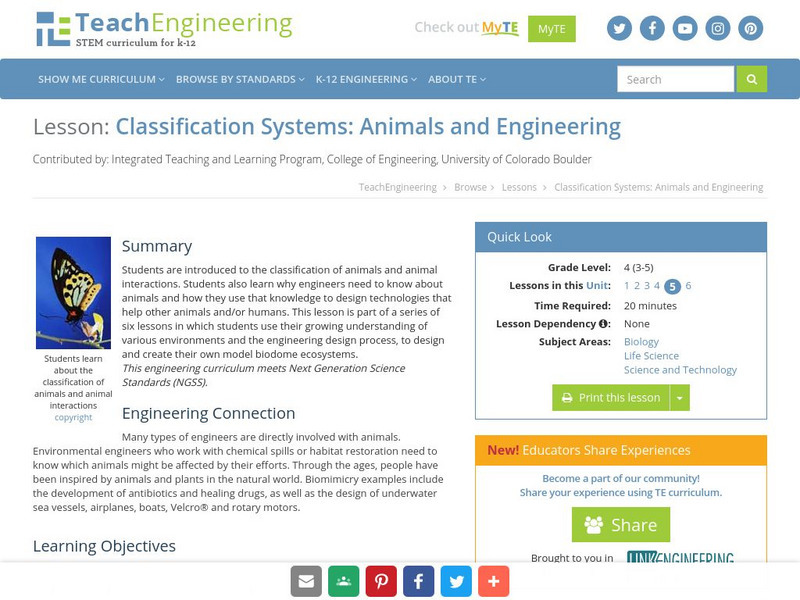
Teach Engineering: Animals and Engineering
Students are introduced to the classification of animals and animal interactions. Students also learn why engineers need to know about animals and how they use that knowledge to design technologies that help other animals and/or humans....
Utah Education Network
Uen: Classifying Objects
Fourth graders practice using a type of classification system.

University of Michigan
University of Michigan Critter Catalog: Insects
A thorough site that provides a description of the characteristics of insects and then focuses on the insects of southeastern Michigan. Pictures, classification groupings, and sound clips of insects are included.
Other
Pennsylvania Doe: Lesson Plan: Biological Levels of Organization
A lesson plan that takes learners through the process of organizing a set of biological picture cards according to levels of complexity.

Open Curriculum
Open Curriculum: New Kingdoms
Between 1866 and 1977, a total of four new kingdoms were added to the original plant and animal kingdoms identified by Linnaeus. The new kingdoms include Protista (protists), Fungi, Monera (eubacteria), and Archaea (archaebacteria)....

Sea World Parks & Entertainment
Animal Bytes: African Elephant
Resource for anyone seeking information on these huge creatures. Provides scientific classification of African Elephants, fast facts, fun facts as well as additional information on ecology and conservation.
Palomar Community College District
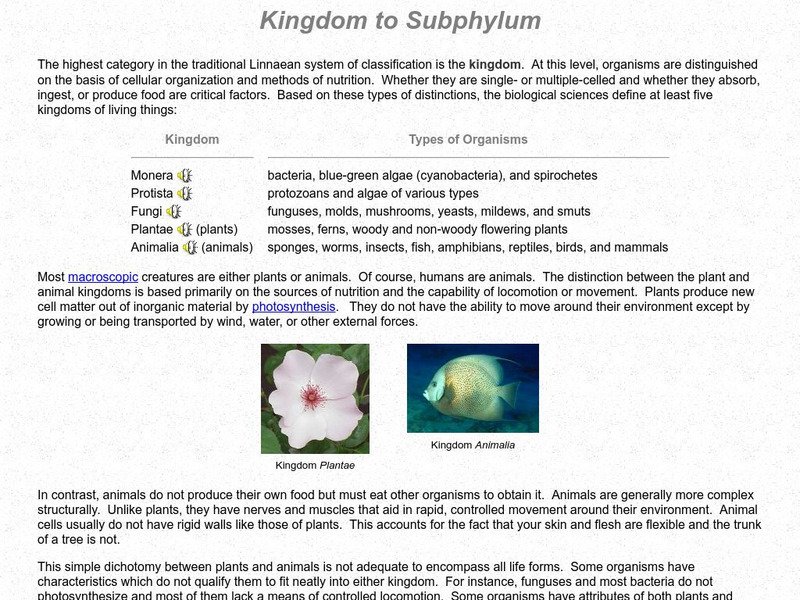
Palomar College: Kingdom to Subphylum
The highest category of taxonomic classification is the kingdom. This website from Palomar College presents the five kingdoms in an easy-to-read chart and discusses the Animalia and Plantae kingdoms in depth. After reading through the...
CK-12 Foundation
Ck 12: Biology: Classifying Organisms Study Guide
This comprehensive study guide covers the main terms and concepts needed for a unit on classifying organisms.
Other
Critical and Creative Thinking Bloom's Taxonomy
A simple site that gives concise definitions to critical thinking and creative thinking. Included are links to more resources about these thinking processes.
Australian National Botanic Gardens
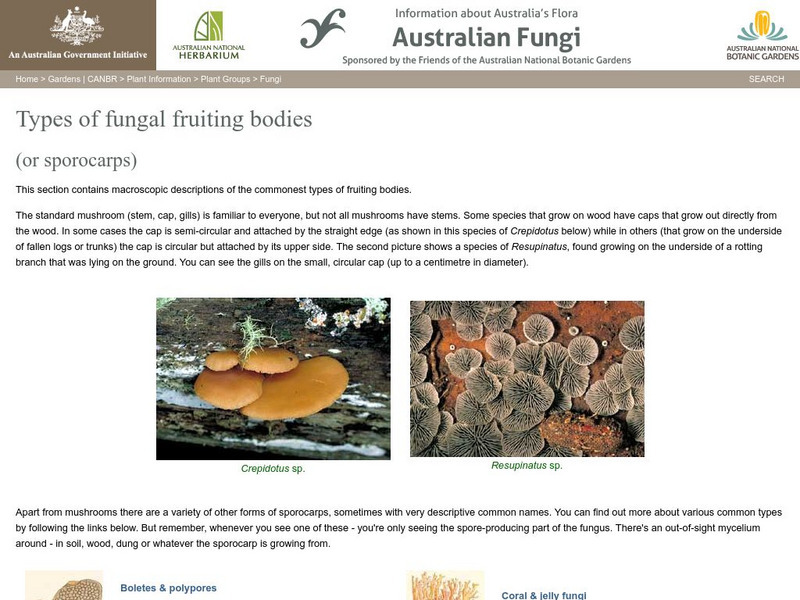
Australian Government: Types of Fungal Fruiting Bodies
Boletes and polypores, coral and jelly fungi, stinkhorns, puffballs and birds nest fungi, stereoid and paint fungi, cup fungi, flask fungi, and truffle-like fungi are discussed in this comprehensive.
Incredible Art Department
The Incredible Art Department: Strategies and Research in Instruction
Summarizes what is known about learning from research on the brain and suggests related strategies to use in the classroom. Also discusses the main techniques and strategies that are in wide use today including, for example,...
The Dirksen Congressional Center
Congress Link: Role of Congress in Formulating Policy
Using Bloom's taxonomy, students will learn about one of the major roles of Congress, that of formulating and making policy.
BiologyWise
Biology Wise: The 5 Significant Kingdoms of Living Things
Describes the characteristics of the five kingdoms of living things - Monera, Protista, Fungi, Plantae, and Animalia.
Estrella Mountain Community College
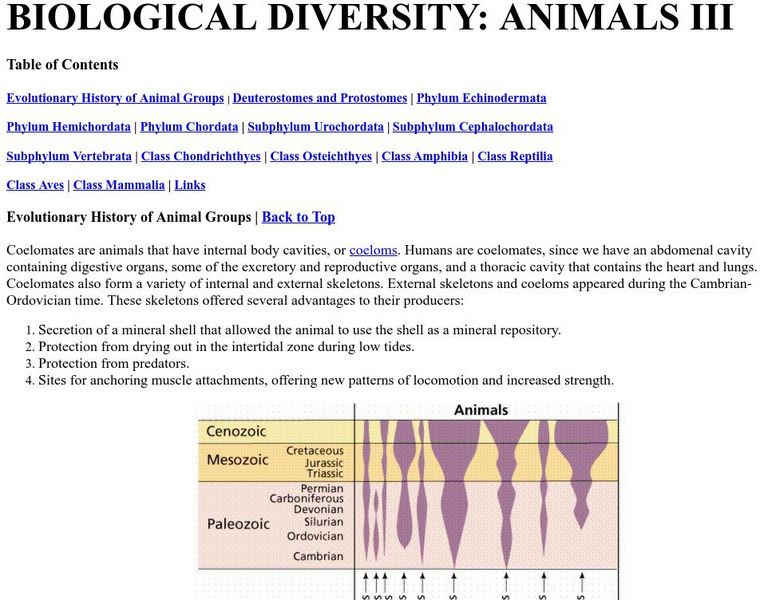
Estrella Mountain Community College: Class Mammalia: Got Milk?
This resource contains general information about the class Mammalia and their unifying characteristics.
Other
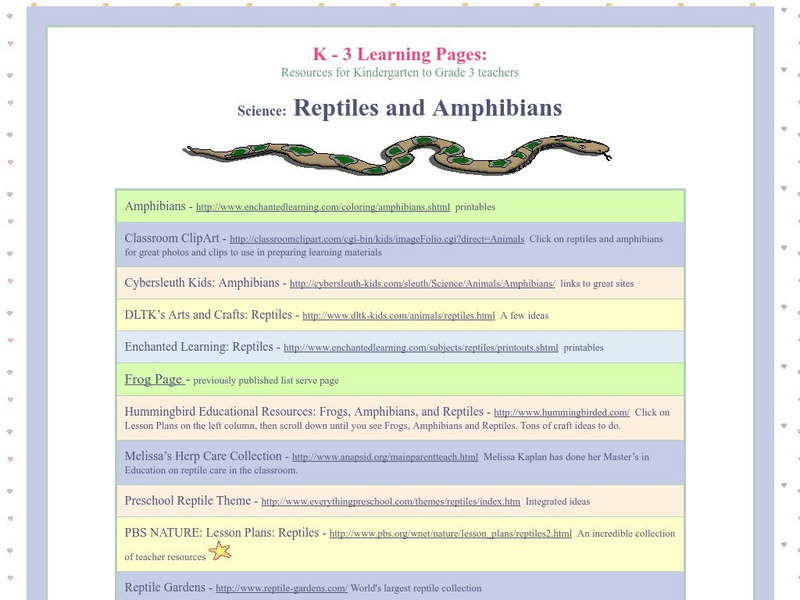
K 3 Learning Pages: Reptiles and Amphibians
Come and discover more about reptiles and amphibians when you explore this awesome resource. This site is filled with useful links.