Hi, what do you want to do?





Other
Lira Lab: Laboratory for Integrated Advanced Robotics
Site of the LIRA-Lab in University of Genoa, Italy which specializes in artificial vision and sensory-motor coordination from a computational neuroscience perspective.
Alberta Online Encyclopedia
Alberta Online Encyclopedia: Alberta Inventors and Inventions: Highmark Renewables
Can you recover usable bio gas from cow manure? Read about Highmark Renewables and how they have invented the 'Integrated Manure Utilization System' to do just that!
TeachEngineering
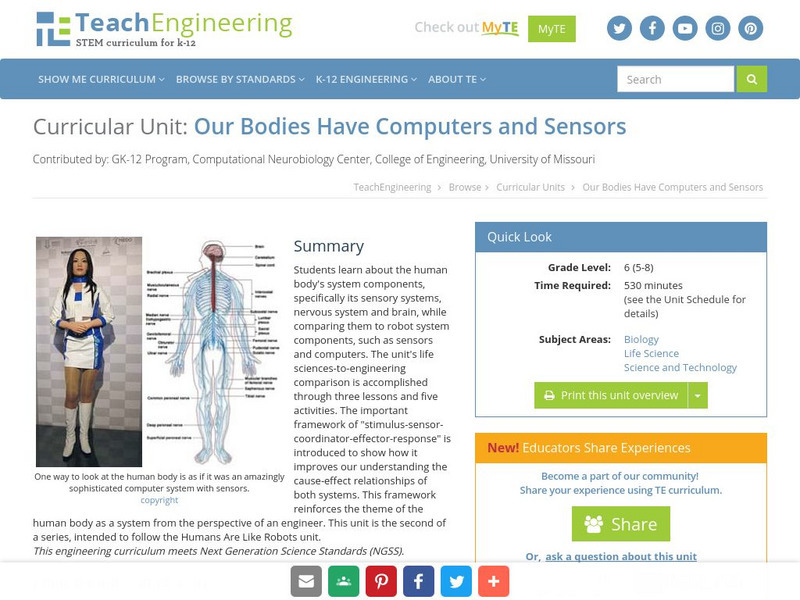
Teach Engineering: Our Bodies Have Computers and Sensors
Students learn about the human body's system components, specifically its sensory systems, nervous system and brain, while comparing them to robot system components, such as sensors and computers. The unit's life sciences-to-engineering...
TeachEngineering
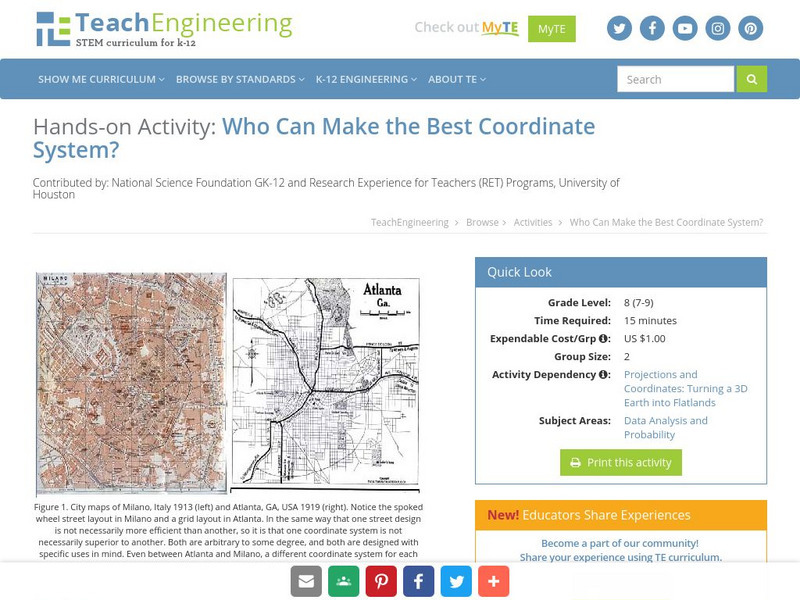
Teach Engineering: Who Can Make the Best Coordinate System?
Students learn about coordinate systems in general by considering questions concerning what it is that the systems are expected do, and who decided how they look. They attempt to make their own coordinate systems using a common area...
TeachEngineering
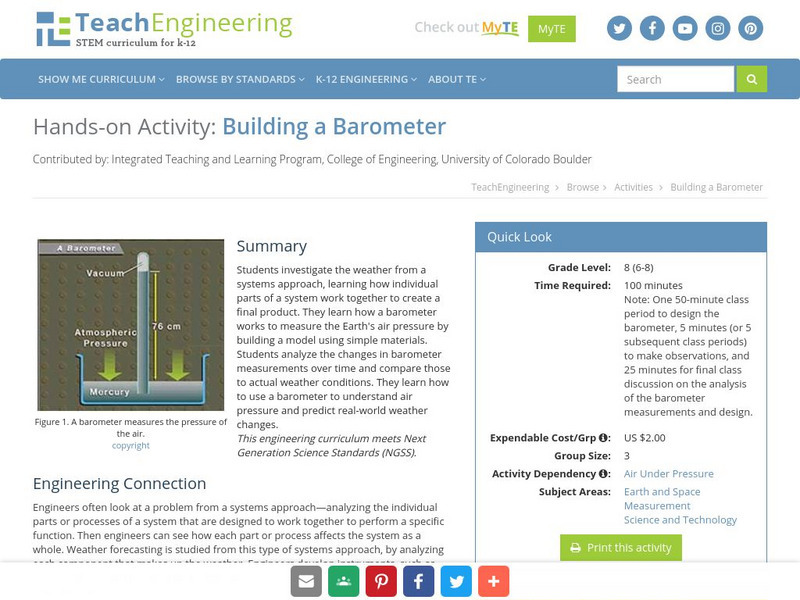
Teach Engineering: Building a Barometer
Students investigate the weather from a systems approach, learning how individual parts of a system work together to create a final product. Students learn how a barometer works to measure the Earth's air pressure by building a model out...

TeachEngineering
Teach Engineering: Wide World of Gears
In an interactive and game-like manner, students learn about the mechanical advantage that is offered by gears. By virtue of the activity's mechatronics presentation, students learn to study a mechanical system as a dynamic system under...
TeachEngineering
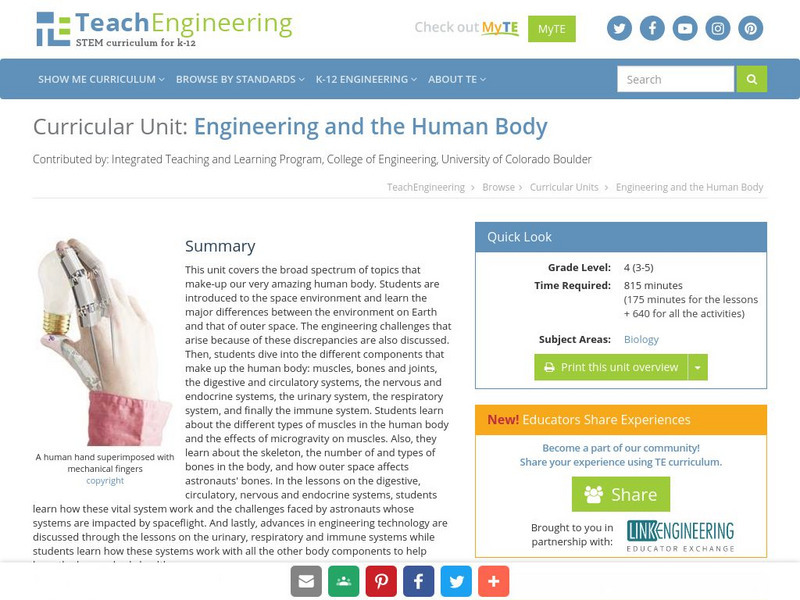
Teach Engineering: Engineering and the Human Body
The Engineering and the Human Body unit covers the broad spectrum of topics that make up our very amazing human body. Students are introduced to the space environment and learn the major differences between the environment on Earth and...
TeachEngineering
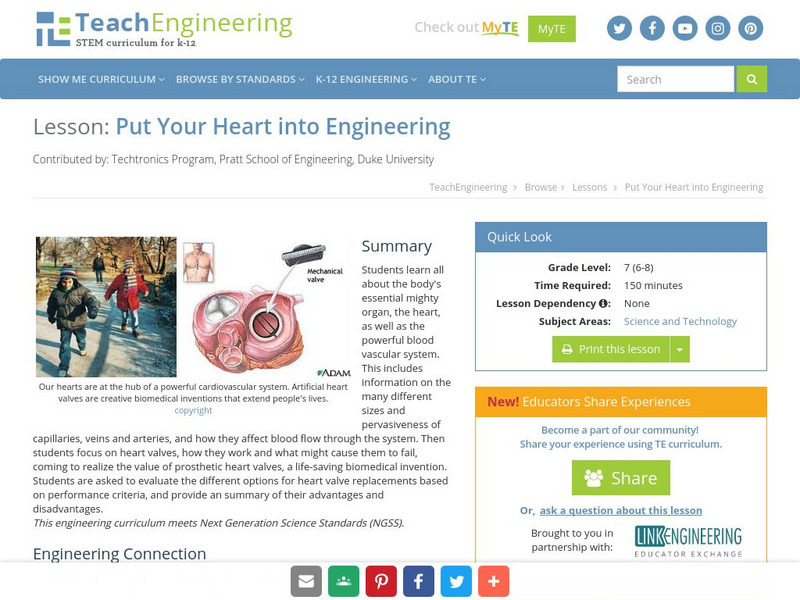
Teach Engineering: Put Your Heart Into Engineering
This lesson contains background about the blood vascular system and the heart. Also, the different sizes of capillaries, veins, and arteries, and how they affect blood flow through the system. We will then proceed to talk about the...
TeachEngineering
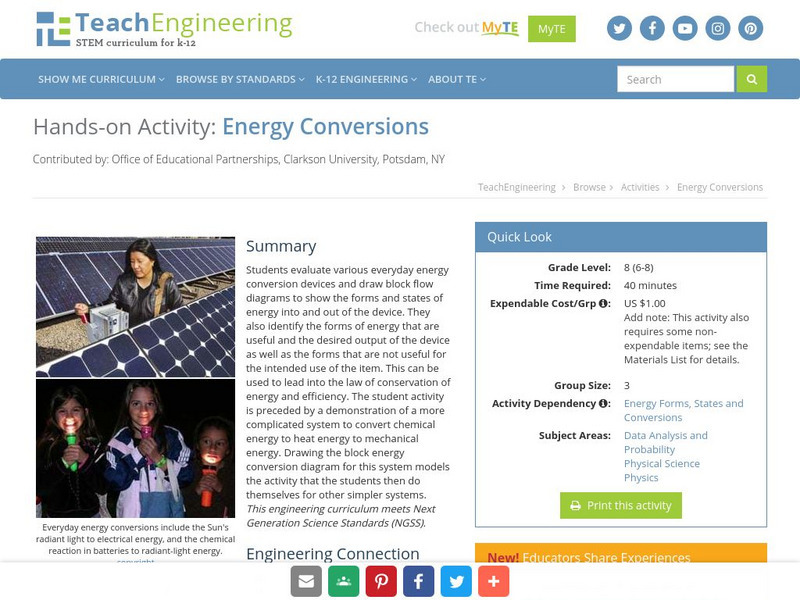
Teach Engineering: Energy Conversions
Students evaluate various everyday energy conversion devices and draw block flow diagrams to show the forms and states of energy into and out of the device. They also identify the forms of energy that are useful and the desired output of...
TeachEngineering
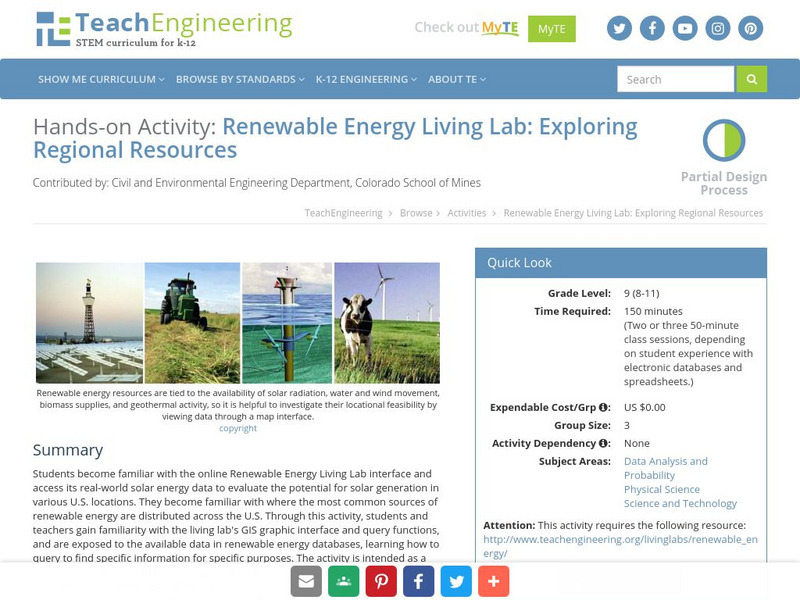
Teach Engineering: Renewable Energy Living Lab
Students become familiar with the online Renewable Energy Living Lab interface and access its real-world solar energy data to evaluate the potential for solar generation in various U.S. locations. They become familiar with where the most...
TeachEngineering
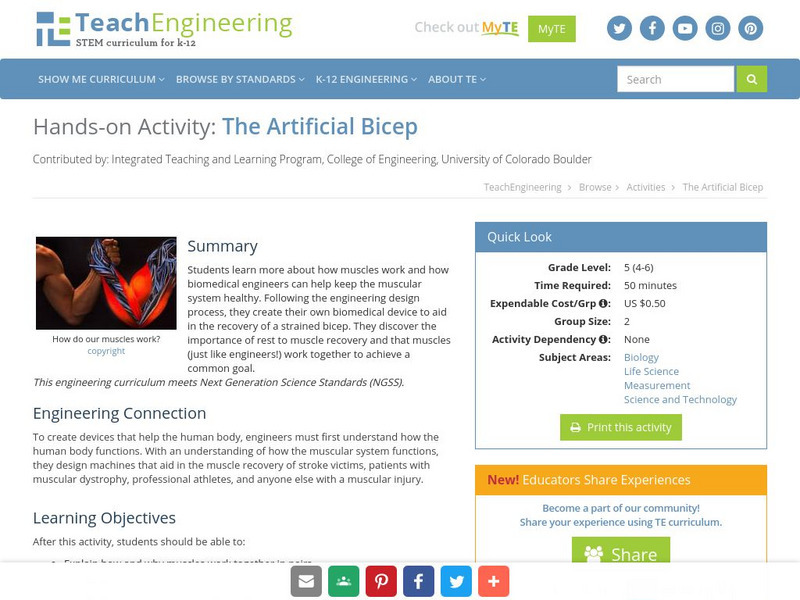
Teach Engineering: The Artificial Bicep
Learners learn more about how muscles work and how biomedical engineers can help keep the muscular system healthy. Following the engineering design process, they create their own biomedical device to aid in the recovery of a strained...
TeachEngineering
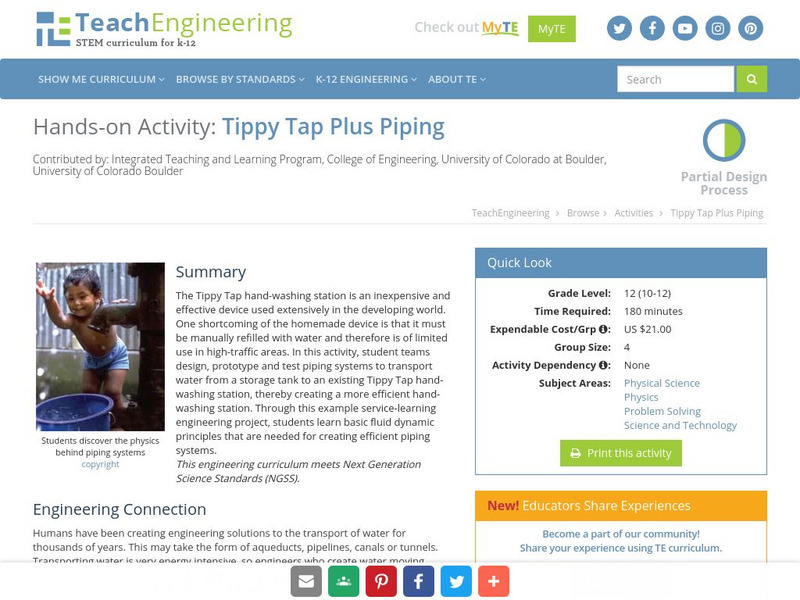
Teach Engineering: Tippy Tap Plus Piping
The Tippy Tap hand-washing station is an inexpensive and effective device used extensively in the developing world. One shortcoming of the homemade device is that it must be manually refilled with water and therefore is of limited use in...
TeachEngineering
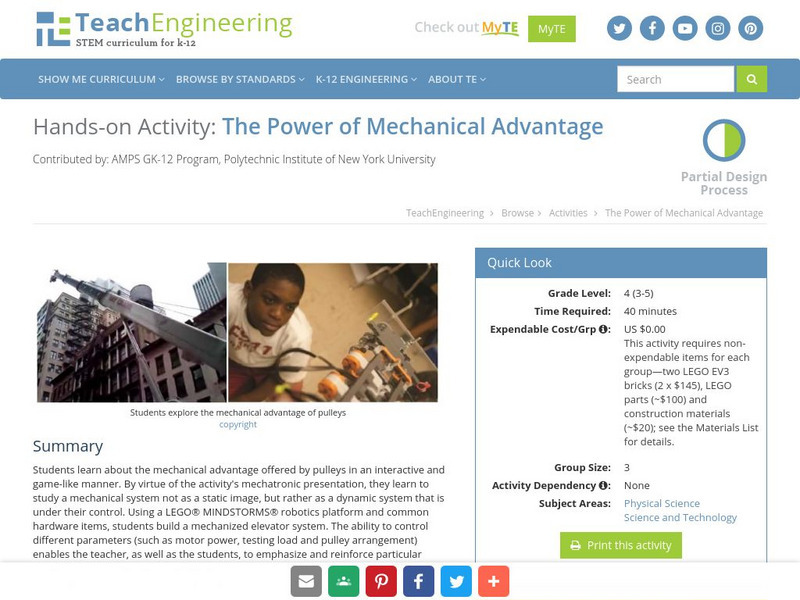
Teach Engineering: The Power of Mechanical Advantage
Students learn about the mechanical advantage offered by pulleys in an interactive and game-like manner. By virtue of the activity's mechatronic presentation, they learn to study a mechanical system not as a static image, but rather as a...
TeachEngineering
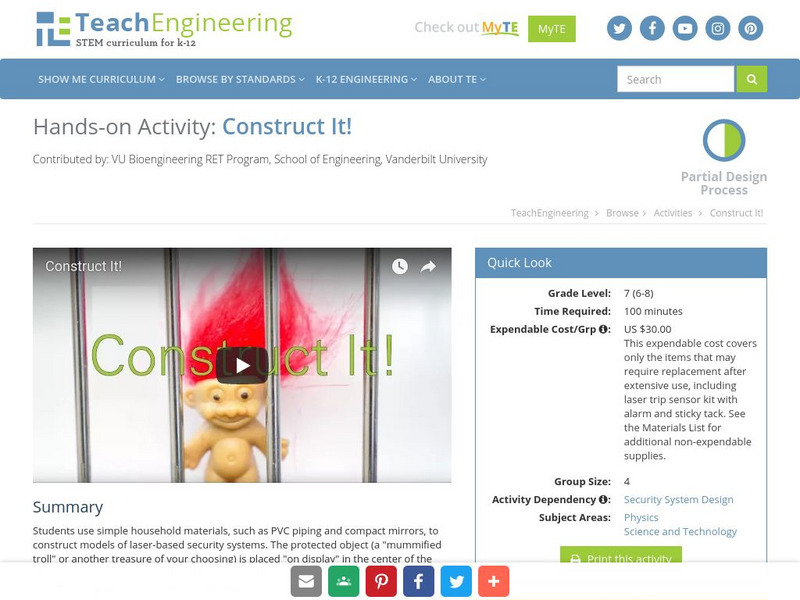
Teach Engineering: Construct It!
Students use simple household materials, such as PVC piping and compact mirrors, to construct models of laser-based security systems. The protected object (a "mummified troll" or another treasure of your choosing) is placed "on display"...
TeachEngineering
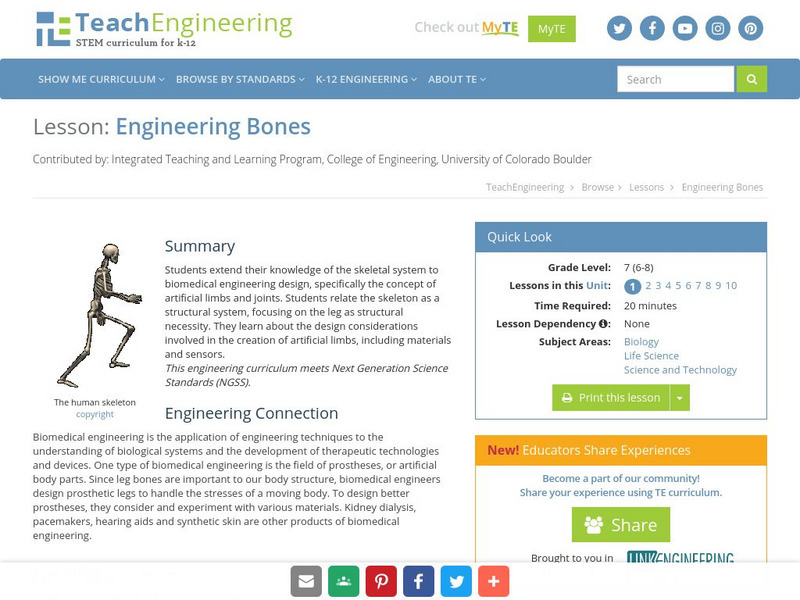
Teach Engineering: Engineering Bones
Students extend their knowledge of the skeletal system to biomedical engineering design, specifically the concept of artificial limbs. Students relate the skeleton as a structural system, focusing on the leg as structural necessity. They...
TeachEngineering
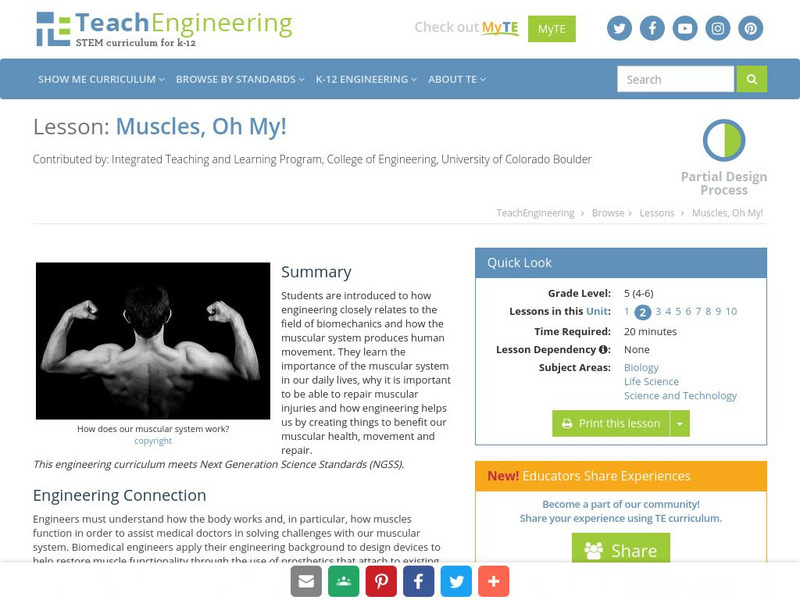
Teach Engineering: Muscles, Oh My!
Young scholars are introduced to how engineering closely relates to the field of biomechanics and how the muscular system produces human movement. They learn the importance of the muscular system in our daily lives, why it is important...