Hi, what do you want to do?





Choices Program, Brown University
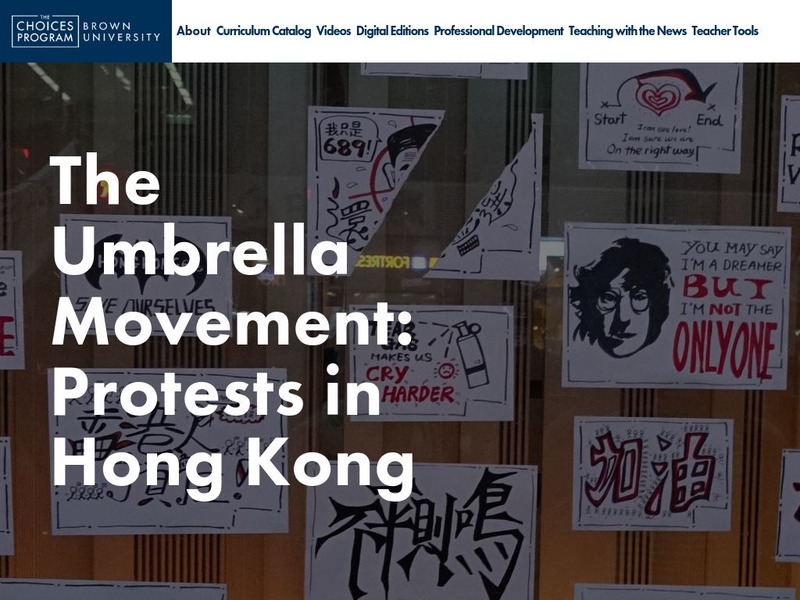
Choices: The Umbrella Movement: Protests in Hong Kong
Learning module uses multi-media sources to teach about the relationship between China and Hong Kong. Students use primary source material to analyze the recent protests in Hong Kong and explore the symbols and messages that protesters...

Bill of Rights Institute
Bill of Rights Institute: Occupy Protests and the Bill of Rights
A lesson plan and extension activities focused on the Occupy Protests which began in 2011. Students will explore the goal of the protests in relationship to the Bill of Rights.

Alabama Learning Exchange
Alex: Music: A Vehicle for Wartime Protest
In this lesson, students will examine music during wartime protests. Students will analyze a wartime protest song and present it to the class. Includes a PowerPoint presentation discussing music as a primary source and links to help...

Choices Program, Brown University
Choices: Teaching With the News: Protests, Revolutions, and Democratic Change
Third in a series of lessons on North Africa and the Middle East in which students survey the current political situation, consider the role of the international community and identify the political geography of the region. Multi-media...
Smithsonian Institution
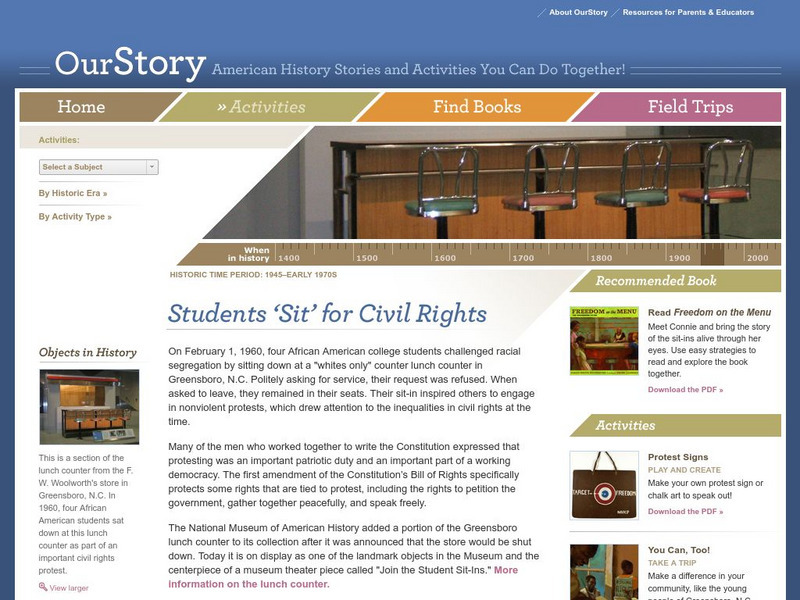
National Museum of American History: Students "Sit" for Civil Rights
Read the book, "Freedom on the Menu" about the Greensboro Sit-Ins and use the background information and follow up activities provided to enhance the story.
Choices Program, Brown University
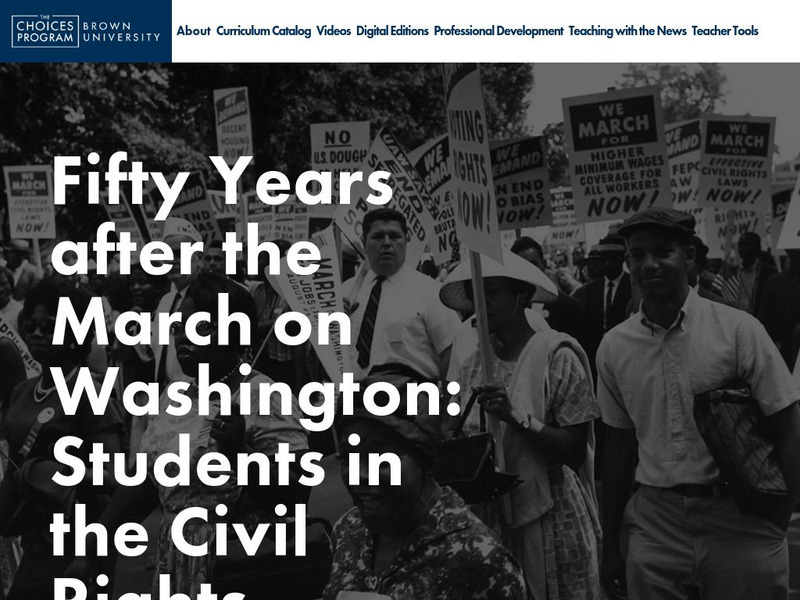
Choices: Fifty Years After the March on Washington
Comprehensive resources on the civil rights movement allows students to broaden their understanding through video and primary source material as they analyze the motivation and experience of students who joined the movement and consider...
History of American Wars
History of American Wars: Vietnam War Protests
A timeline highlighting the protests between 1964 and 1972 against the Vietnam War, many involving students at universities.
Digital History
Digital History: Freedom Now
When four African American North Carolina Agricultural and Technical College students refused to leave the lunch-counter at the F.W. Woolworth store in Greensboro they started the first non-violent, "sit-in" movement. Although the...
Choices Program, Brown University
Choices: Teaching With the News: The 20th Anniversary of Tiananmen
Multi-media lesson in which students consider the concept of censorship and analyze the merits of censorship versus freedom of information while learning about the protests in Beijing in 1989. Note: Some video content may not load in...
Hartford Web Publishing
World History Archives: Sncc Fought for Change From the Bottom Up
A highly informative narrative on the development and philosophy of the Student Nonviolent Coordinating Committee, with comparisons to Dr. King's SCLC and the Black Panther Party. Good resource.
Choices Program, Brown University
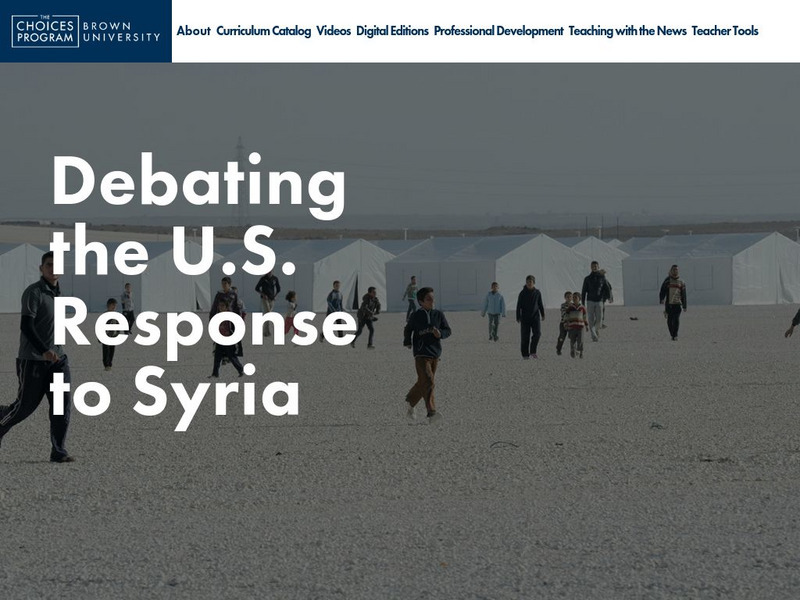
Choices: Teaching With the News: Debating the u.s. Response to Syria
Learning module with multi-media lesson and resources in which students work in small groups to analyze the issues that frame the debate around U.S. policy.
National Women’s History Museum
National Women's History Museum: The National Woman's Party
Students will examine documents to determine if the justice system was fair and Constitutional in its treatment of the National Women's Party picketers.
ibiblio
Ibiblio: Julian Bond
Informative biography of one of the founding leaders of the Student Nonviolent Coordinating Committee, a leading civil rights group of the 1960s.
Rock and Roll Hall of Fame
Rock & Roll Hall of Fame: Sti Lesson 21: Empathy and the Vietnam War
One of the most important aspects of the war in Vietnam was the draft. Every male upon reaching the age of eighteen was required to register with the selective service. Men found themselves willingly enlisting, trying for deferments as...

TeachEngineering
Teach Engineering: Pea Soup Ponds
In this activity, students will learn how water can be polluted by algal blooms. They will grow algae with different concentrations of fertilizer or nutrients and analyze their results as environmental engineers working to protect a...
Arizona State University
Art Lesson: Should Art Be for Art's Sake?
A lesson plan where the teacher presents the five traditional theories of art (formalism, instrumentalism, imitationalism expressionism and institutionalism.) Students review Chicana/o and earlier protest art from an instrumental point...
OpenStax
Open Stax: Disaffection: The First Continental Congress and American Identity
By reading this section from a chapter on "Imperial Reforms and Colonial Protests," students will be able to describe the state of affairs between the colonies and the home government in 1774 and explain the purpose and results of the...
Choices Program, Brown University
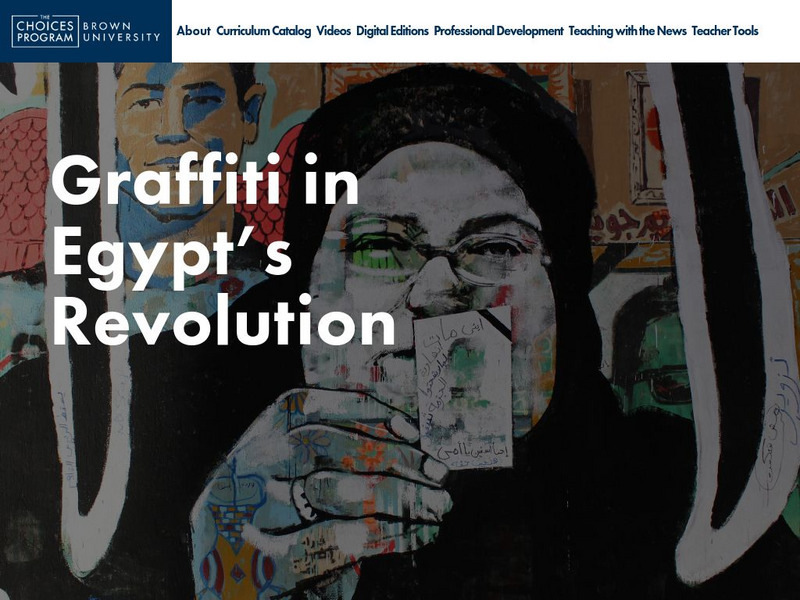
Choices: Teaching With the News: Graffiti in Egypt's Revolution
Lesson in which students use a short video to analyze the relevance of graffiti during the Egyptian revolution and assess the role of graffiti in political protest.
Other
Greensboro Sit Ins: James Farmer
This resource provides a brief description of Farmer's role in support of the Greensboro sit-ins. An audio clip is included.