Hi, what do you want to do?





TeachEngineering
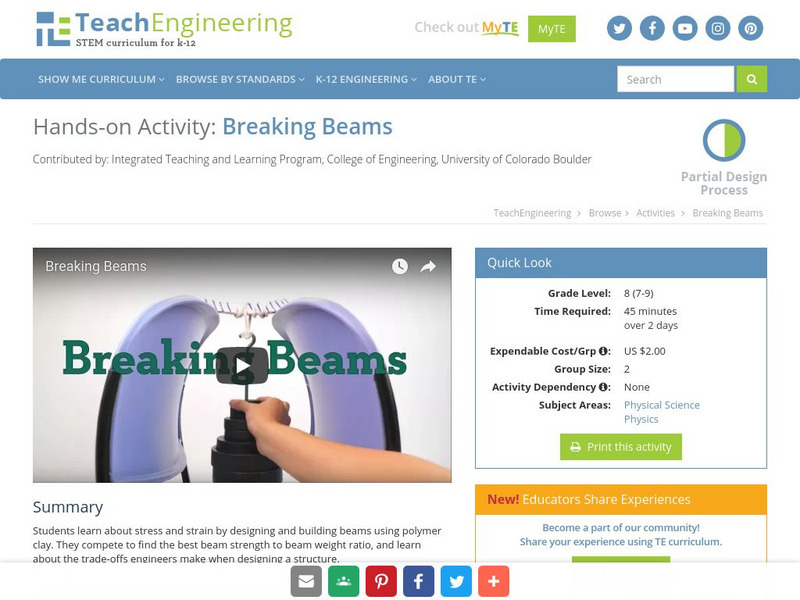
Teach Engineering: Breaking Beams
Students learn about stress and strain by designing and building beams using polymer clay. They compete to find the best beam strength to beam weight ratio, and learn about the trade-offs engineers make when designing a structure.
Other
World Wide Web Virtual Library: Civil Engineering
This site is an online library of information about civil engineering.
TeachEngineering
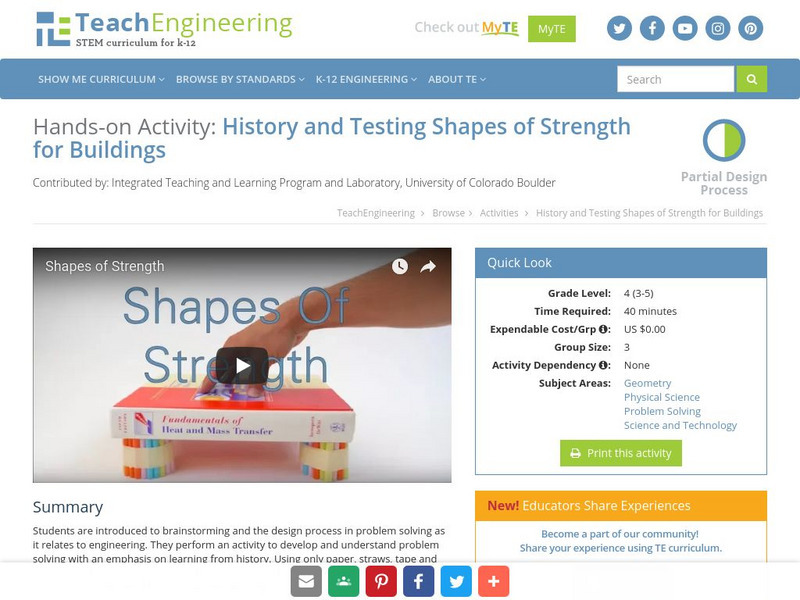
Teach Engineering: Shapes of Strength
Students are introduced to brainstorming and the design process in problem solving as it relates to engineering. They perform an activity to develop and understand problem solving with an emphasis on learning from history. Using only...
TeachEngineering
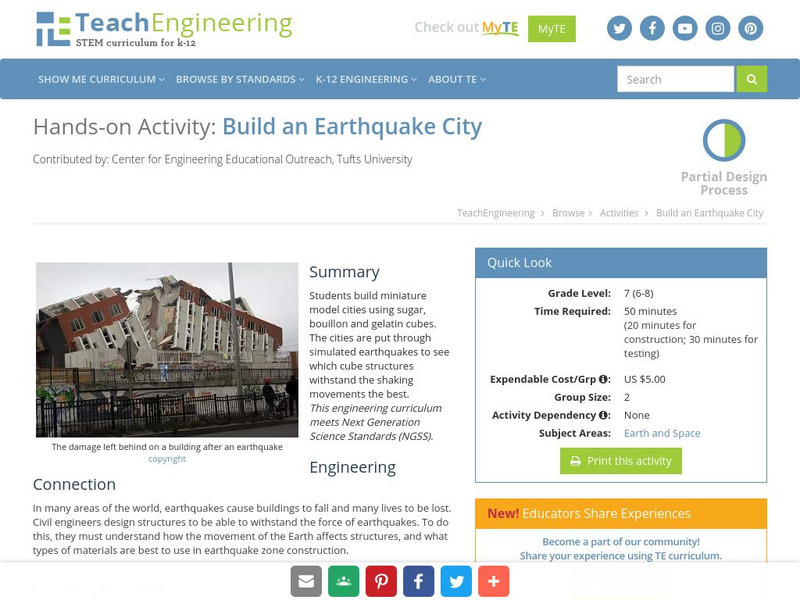
Teach Engineering: Build an Earthquake City
Students learn about earthquakes and how they effect structures. Student then apply their knowledge by trying to build an earthquake resistant city.

Technovation
Curiosity Machine: Challenges: Make a Structure That Assembles Itself
Using magnets design and build a structure that builds itself from pieces. This site contains the challenge, tips, a lesson plan, and a place for students to document their engineering design process.
Technovation
Curiosity Machine: Challenges: Build a Dna Origami Inspired Structure
Using pasta students will design and construct a container that can travel along a zip line to deliver a cargo which is candy. This challenge is explored on this site as well as tips, a lesson plan, and a place for students to document...
Technovation
Curiosity Machine: Challenges: Build a Strong Honeycomb Structure
Using paper and tape, students are challenged to build a honeycomb structure that is able to support a heavy textbook or more. The website includes a place for students to document their design process, tips, and a lesson plan.

Better Lesson
Better Lesson: Goody Goody Gumdrop! Building Structures Are Fun!
In this lesson, the children will be building a physical model to illustrate how the shape of an object, such as triangles, helps it function. At the end, the children will test their gumdrop structures and the class will collectively...

Better Lesson
Better Lesson: A Place in the Shade an Engineering Challenge
Kindergarteners can participate in the engineering and design process in this challenge in which they try to keep an ice cube from melting. Included in this instructional activity are samples of student's structures, a video of a...
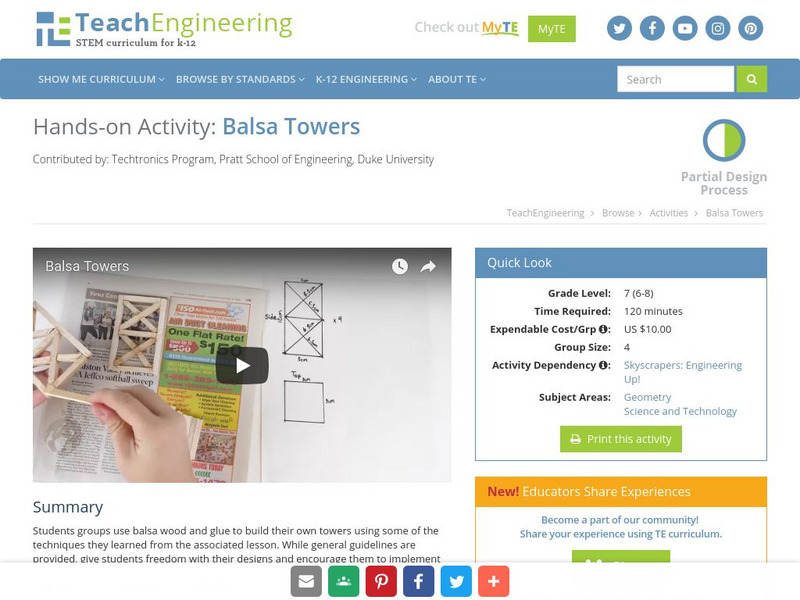
TeachEngineering
Teach Engineering: Balsa Towers
Students will build their own towers using some of the techniques they have learned. The materials will consist of balsa wood and glue. General guidelines are provided, but the students will have a lot of freedom with their design to...
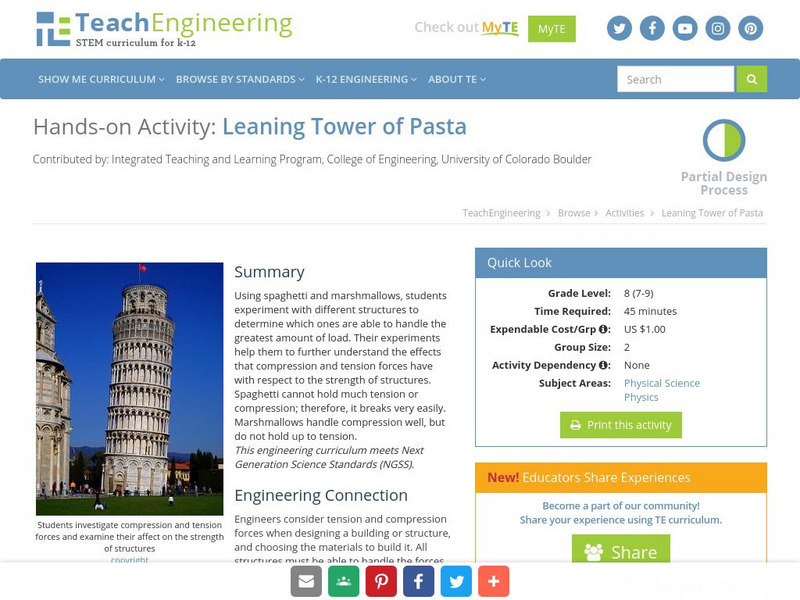
TeachEngineering
Teach Engineering: Leaning Tower of Pasta
Using spaghetti and marshmallows, students experiment with different structures to determine which ones are able to handle the greatest amount of load. Their experiments help them to further understand the effects that compression and...
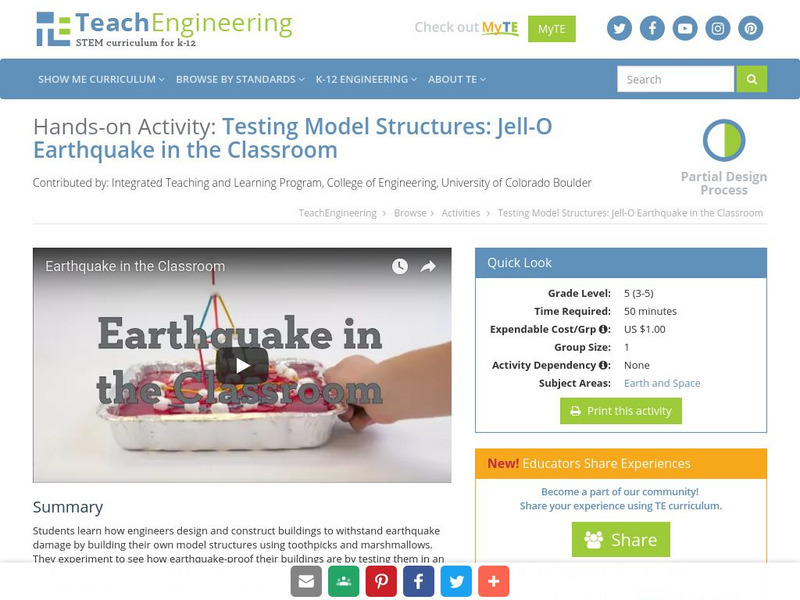
TeachEngineering
Teach Engineering: Earthquake in the Classroom
Students will learn how engineers construct buildings to withstand damage from earthquakes by building their own structure with toothpicks and marshmallows. Students will test how earthquake-proof their buildings are by testing them on...
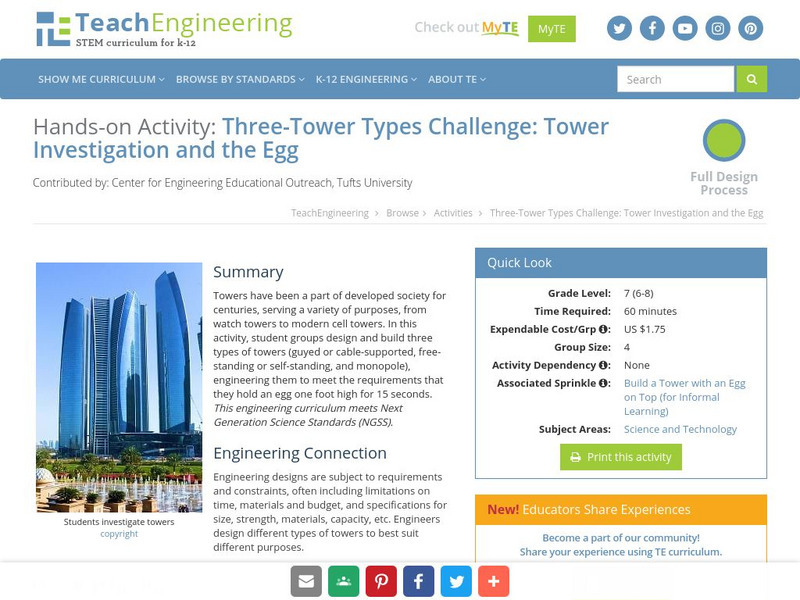
TeachEngineering
Teach Engineering: Tower Investigation and the Egg
Towers have been a part of developed society for centuries. Towers serve a variety of purposes, from lookouts to cellular towers. In this activity student groups will build three types of towers, engineering them to hold an egg one foot...
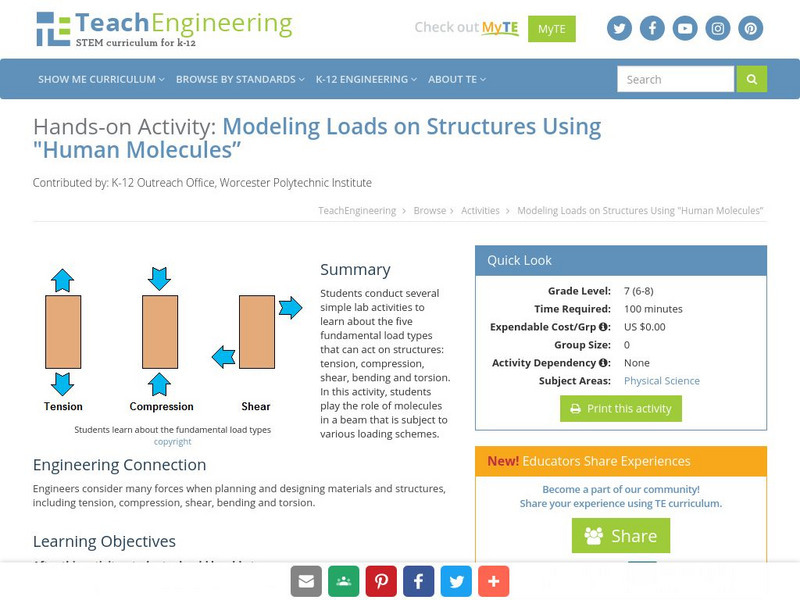
TeachEngineering
Teach Engineering: Forces on the Human Molecule
Students will conduct several simple lab activities to learn about the five fundamental load types that can act on structures: tension, compression, shear, bending, and torsion. In this activity, students will play the role of molecules...
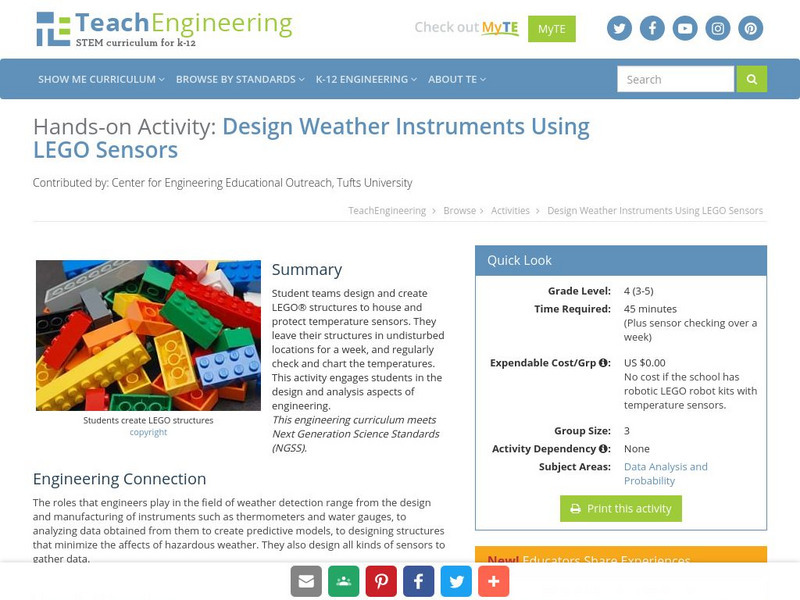
TeachEngineering
Teach Engineering: Design Weather Instruments Using Lego Sensors
Students will design and create a LEGO structure that will house and protect a temperature sensor. They will leave the structure in a safe spot and check the temperature regularly and chart it.
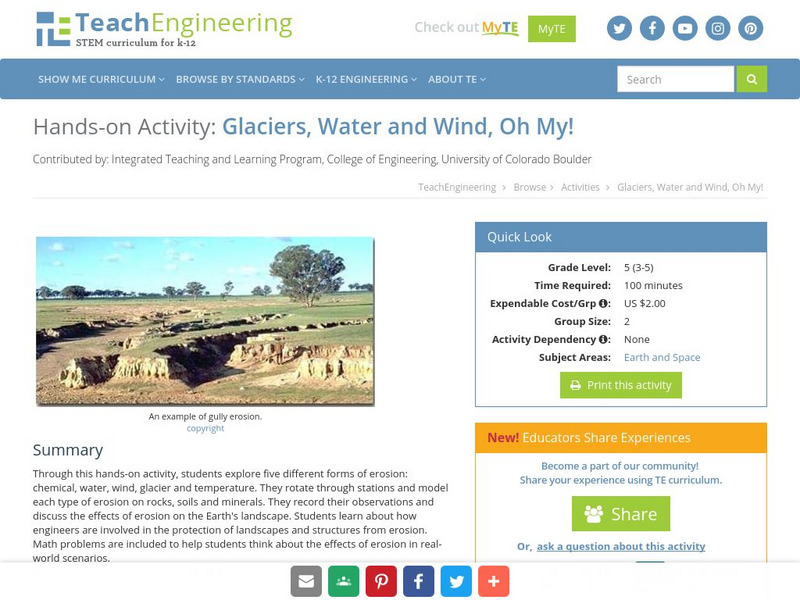
TeachEngineering
Teach Engineering: Glaciers, Water and Wind, Oh My!
This hands-on activity explores five different forms of erosion (chemical, water, wind, glacier and temperature). Students rotate through stations and model each type of erosion on rocks, soils and minerals. The students record their...
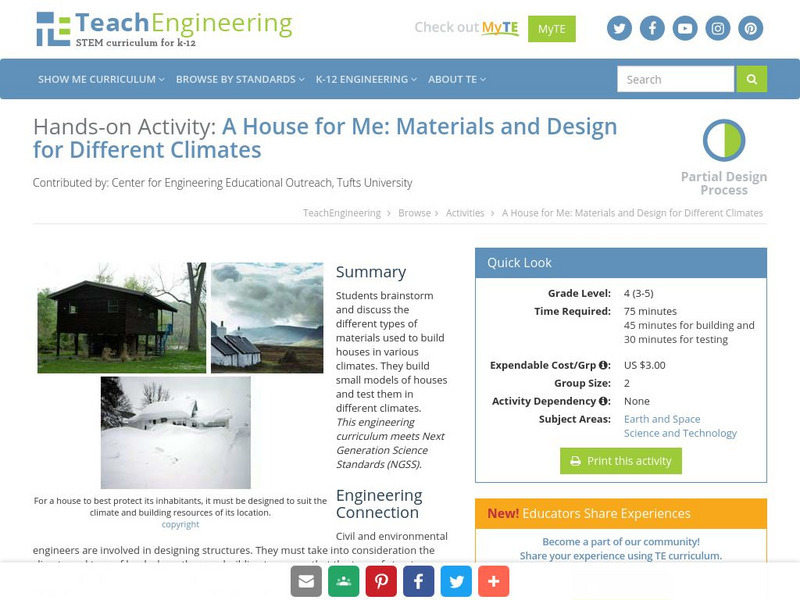
TeachEngineering
Teach Engineering: A House Is a House for Me
Students brainstorm and discuss the different types of materials used to build houses in various climates. Small models of houses are built and tested against different climates.
Science for Kids
Science Kids: Science Quizzes: Engineering Quiz
A ten-question trivia quiz on popular topics in engineering, e.g., famous structures.
Technovation
Curiosity Machine: Challenges: Build a Cantilever
Make a cantilever that can hold 5 marbles at least 12 inches away from its base structure with this engineering challenge. The site contains the challenge, a lesson plan, tips, and a place for students to document their engineering process.
Technovation
Curiosity Machine: Challenges: Build a Lightweight Airplane Wing
A challenge for students to build a lightweight wing structure that is 12 inches long and can hold up a heavy load without deflecting. This site contains the challenge, a lesson plan, tips, and a place for students to document their...
Technovation
Curiosity Machine: Challenges: Build a 3 D Object Out of Tetrahedra
Can you build a 3-D object out of tetrahedra that is as big as you are? With this challenge, students will be using common household items to build their tetrahedra structure. Site contains the challenge, tips, a lesson plan, and a place...
TeachEngineering
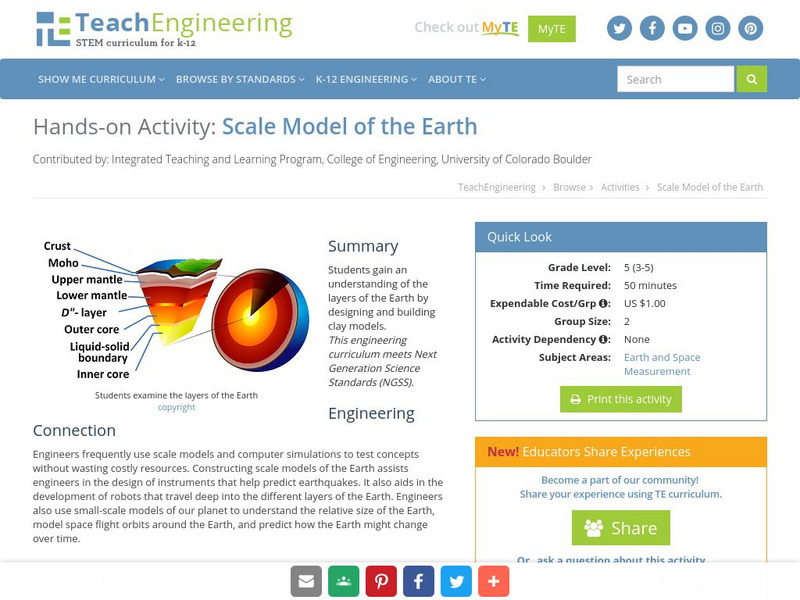
Teach Engineering: Scale Model of the Earth
In this activity, students gain an understanding of the layers of the Earth by designing and building a clay model.
TeachEngineering
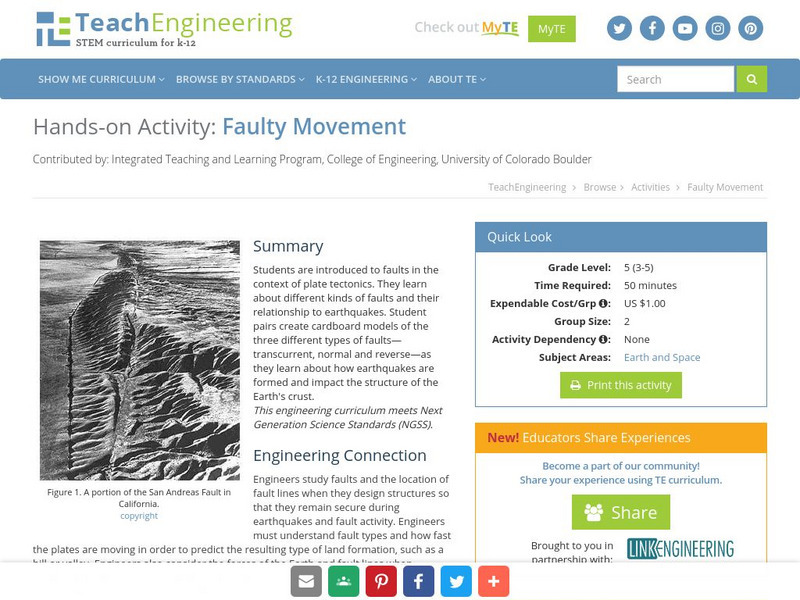
Teach Engineering: Faulty Movement
In this activity, students are introduced to faults. They will learn about different kinds of faults and understand their relationship to earthquakes. The students will build cardboard models of the three different types of faults as...
Center for Innovation in Engineering and Science Education, Stevens Institute of Technology
Ciese: Musical Plates: Engineering Application: Keeping Afloat
A lesson that looks at how to design a building so that it will withstand an earthquake and not sink or lean over.