Hi, what do you want to do?





Other
Graduating Engineer and Computer Careers Magazine: Structural Engineering
Structural engineering is a branch of civil engineering, and its applications are extremely diverse. A career as a structural engineer is profiled .. education, salary, job description .. are included.

TryEngineering
Try Engineering: Working With Watermills
Teams of students design, build, test, and evaluate a working watermill made from everyday materials. Lesson explores how watermills generate energy from water, while students gain an understanding of the structural engineering design...
TeachEngineering
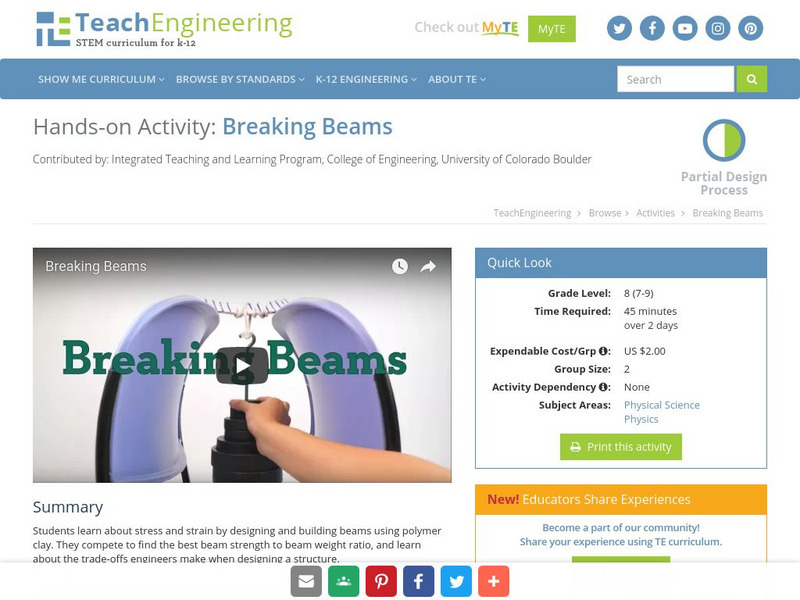
Teach Engineering: Breaking Beams
Students learn about stress and strain by designing and building beams using polymer clay. They compete to find the best beam strength to beam weight ratio, and learn about the trade-offs engineers make when designing a structure.
TeachEngineering
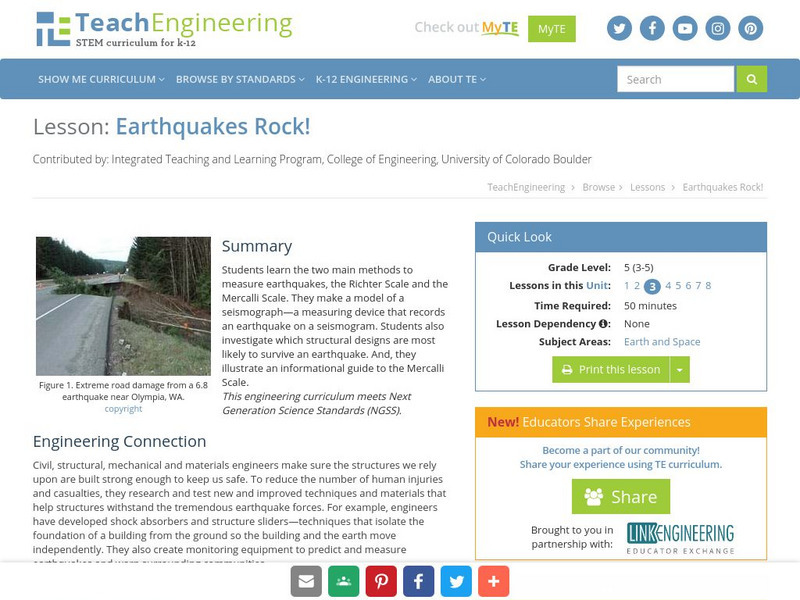
Teach Engineering: Earthquakes Rock!
Students learn the two main methods to measure earthquakes, the Richter Scale and the Mercalli Scale. They make a model of a seismograph - a measuring device that records an earthquake on a seismogram. Students also investigate which...
TeachEngineering
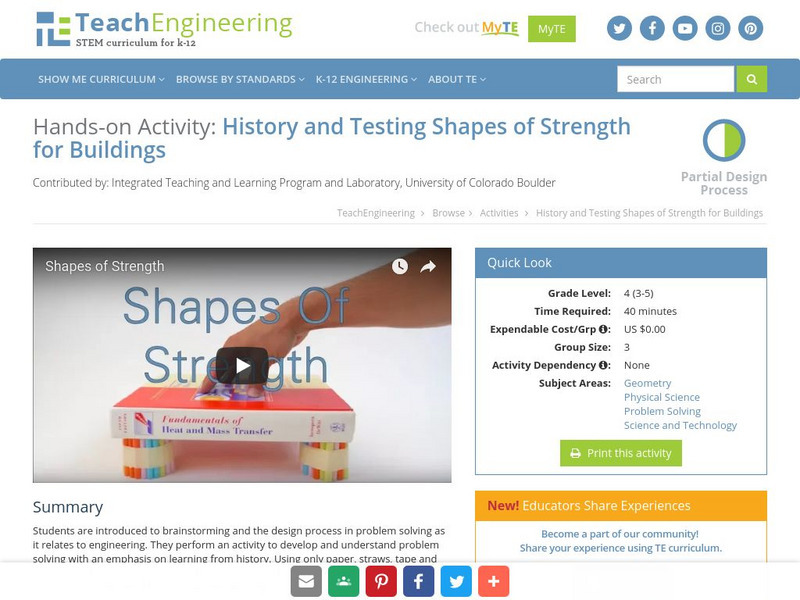
Teach Engineering: Shapes of Strength
Students are introduced to brainstorming and the design process in problem solving as it relates to engineering. They perform an activity to develop and understand problem solving with an emphasis on learning from history. Using only...
TeachEngineering
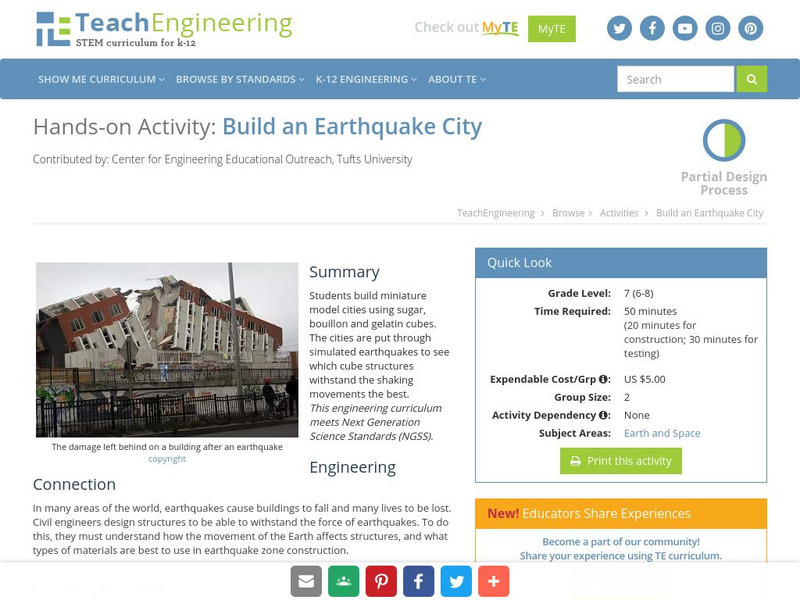
Teach Engineering: Build an Earthquake City
Students learn about earthquakes and how they effect structures. Student then apply their knowledge by trying to build an earthquake resistant city.
TeachEngineering
Teach Engineering: This Land Is Your Land, This Land Is My Land
In this activity, students will review and evaluate the ways land is covered and used in their local community. They will also consider the environmental effects of the different types of land use. Students will act as community planning...
TeachEngineering
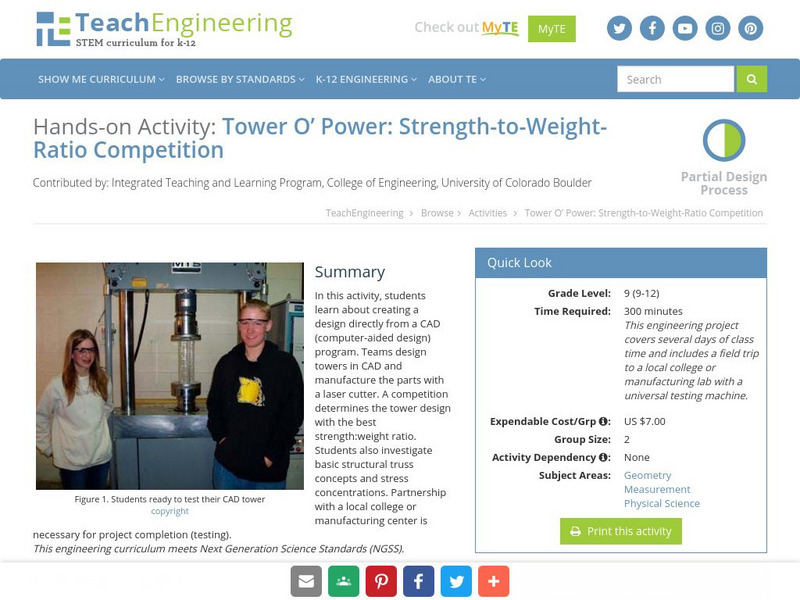
Teach Engineering: Tower O' Power
In this activity, students learn about creating a design directly from a CAD (computer-aided design) program. They will design a tower in CAD and manufacture the parts with a laser cutter. A competition determines the tower design with...
Science Buddies
Science Buddies: Building Structures: It's a Slippery Slope
All structures require a foundation to keep them from falling down. This is especially important when a structure is built on a hill or on a slope. In this science project, you will build a tower of Lego Duplos on slopes with different...

Better Lesson
Better Lesson: Goody Goody Gumdrop! Building Structures Are Fun!
For this lesson, the children will be building a physical model to illustrate how the shape of an object, such as triangles, helps it function. At the end, the children will test their gumdrop structures and the class will collectively...
CK-12 Foundation
Ck 12: Earth Science: Earthquake Safe Structures Study Guide
Review the main concepts of earthquake-safe structures.
TryEngineering
Try Engineering: Tall Tower Challenge
Students learn about the engineering design process as they design, build, test, and evaluate the tallest tower they can build with just straws, pipe cleaners, and paperclips that can support the weight of a golf ball for two minutes....
TeachEngineering
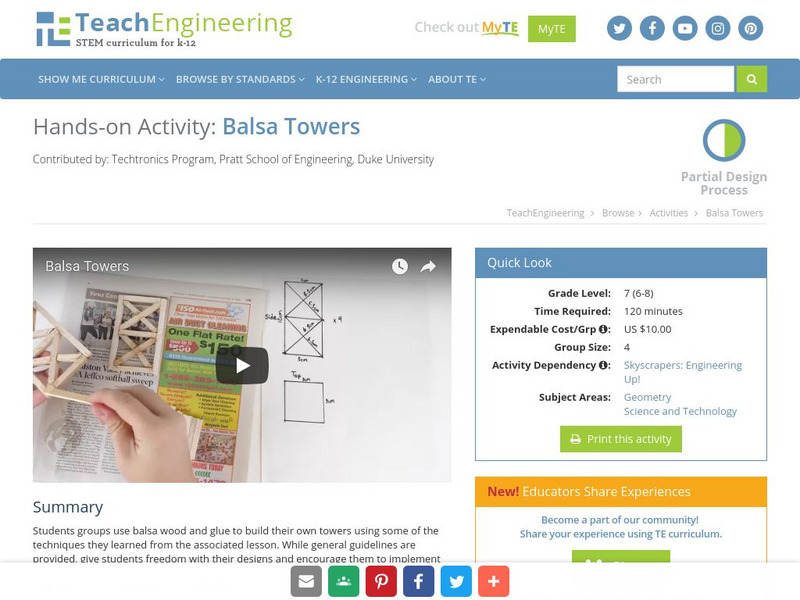
Teach Engineering: Balsa Towers
Students will build their own towers using some of the techniques they have learned. The materials will consist of balsa wood and glue. General guidelines are provided, but the students will have a lot of freedom with their design to...
TeachEngineering
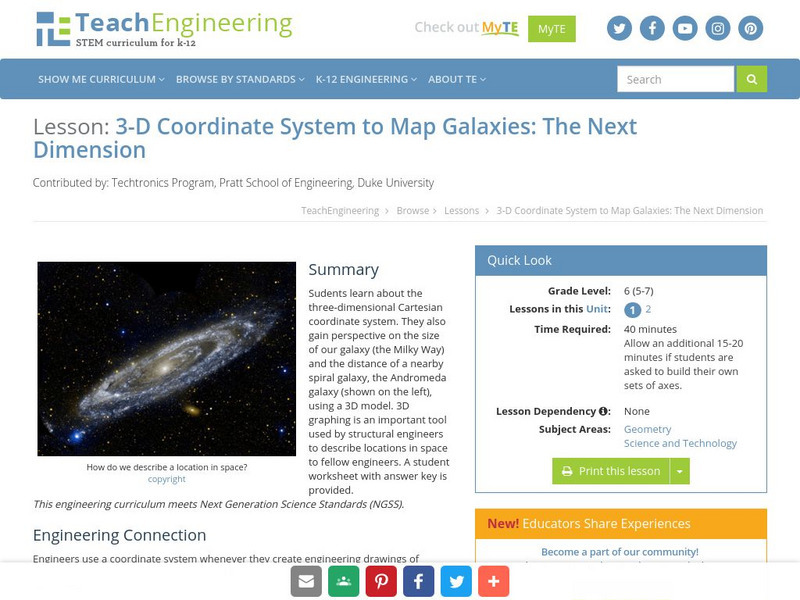
Teach Engineering: The Next Dimension
The purpose of this lesson is to teach students about the three dimensional Cartesian coordinate system. It is important for structural engineers to be confident graphing in 3D in order to be able to describe locations in space to fellow...
TeachEngineering
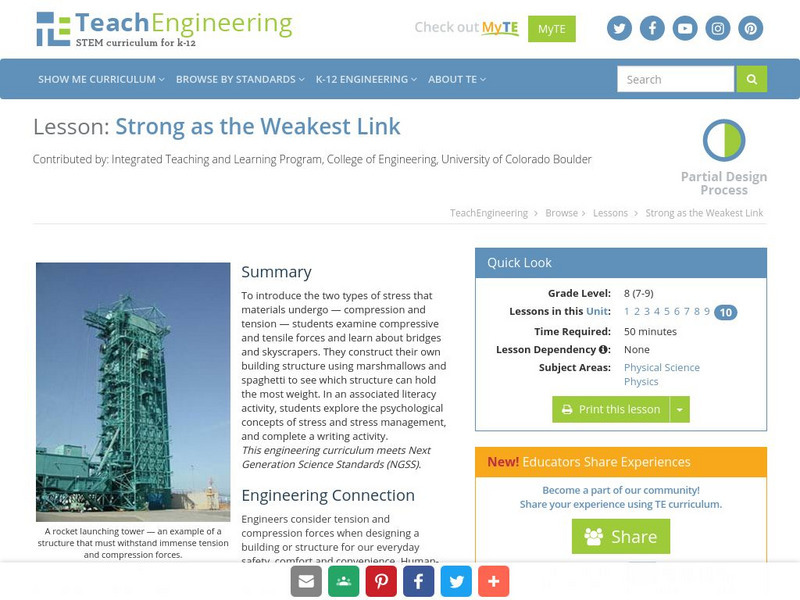
Teach Engineering: Strong as the Weakest Link
To introduce the two types of stress that materials undergo - compression and tension - young scholars examine compressive and tensile forces and learn about bridges and skyscrapers. They construct their own building structure using...
TeachEngineering
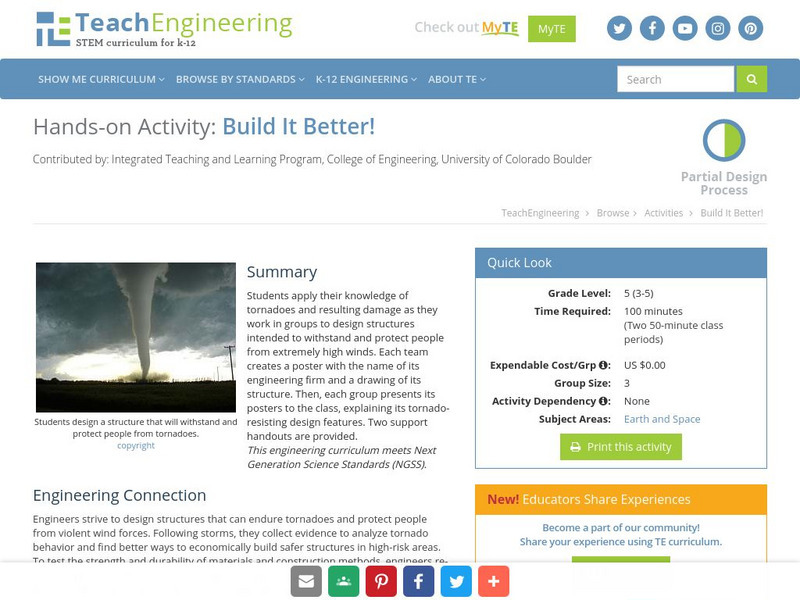
Teach Engineering: Build It Better!
Students learn about tornados and how engineers design structures to better withstand them. Students then design and draw a house that will better withstand a tornado. Students also learn about the Fujita Tornado Damage Score.

TeachEngineering
Teach Engineering: Simple Machines and Modern Day Engineering Analogies
Learners apply the mechanical advantages and problem-solving capabilities of six types of simple machines (wedge, wheel and axle, lever, inclined plane, screw, pulley) as they discuss modern structures in the spirit of the engineers and...
TeachEngineering
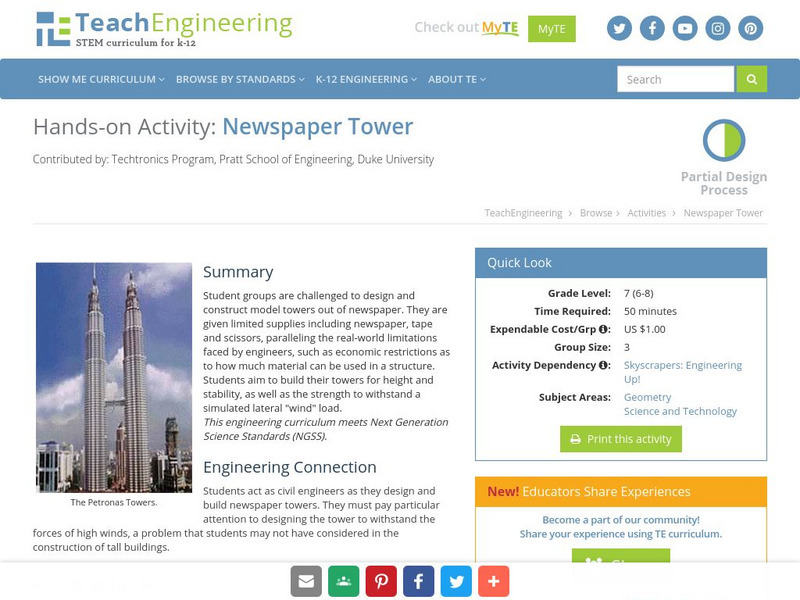
Teach Engineering: Newspaper Tower
Students will be challenged to design and construct a tower out of newspaper. They will have limited supplies including newspaper, tape, and scissors since engineers are often restricted by economic reasons as to how much material they...
TeachEngineering
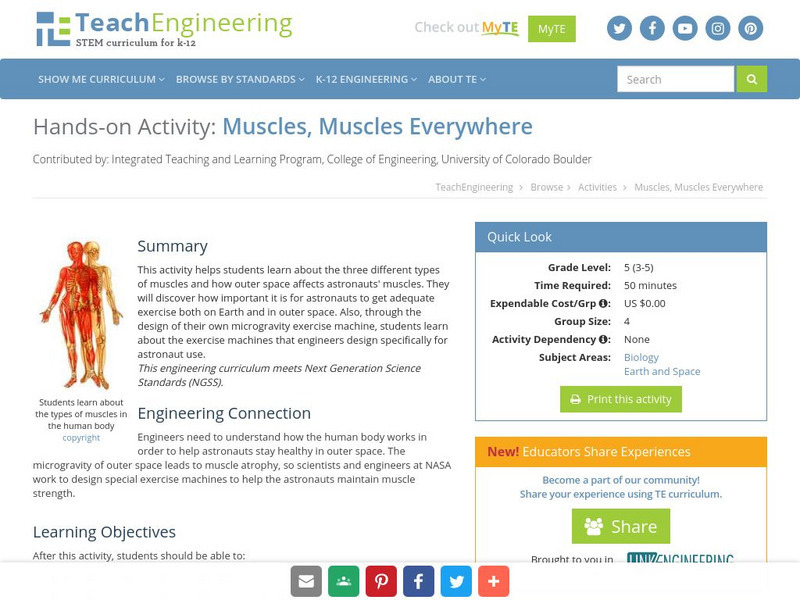
Teach Engineering: Muscles, Muscles Everywhere
This activity helps students learn about the three different types of muscles and how outer space affects astronauts' muscles. They will discover how important it is for astronauts to get adequate exercise both on Earth and in outer...
TeachEngineering
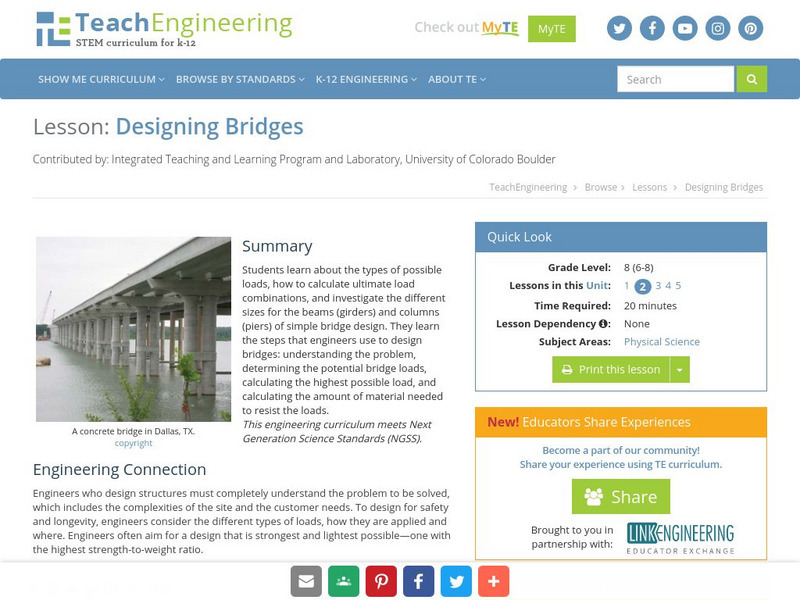
Teach Engineering: Designing Bridges
Students learn about the types of possible loads, how to calculate ultimate load combinations, and investigate the different sizes for the beams (girders) and columns (piers) of simple bridge design. Students learn the steps that...
TeachEngineering
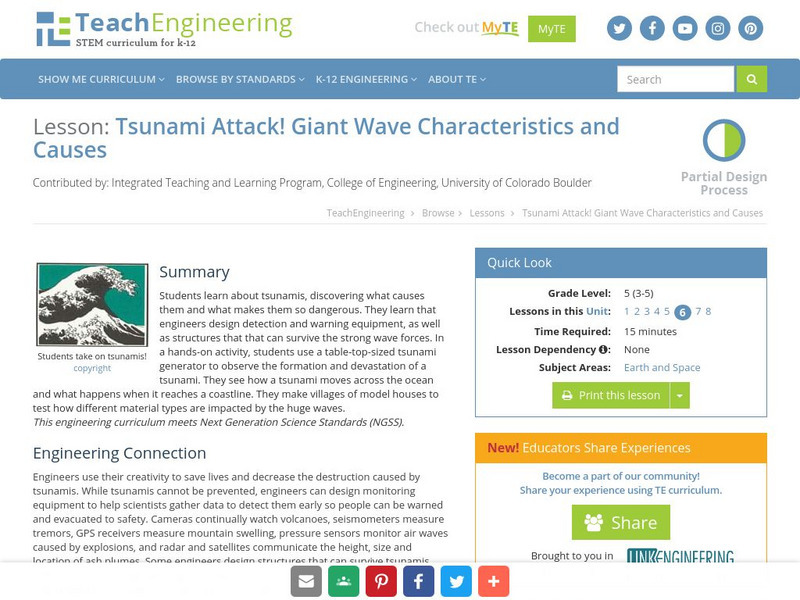
Teach Engineering: Tsunami Attack!
Students learn about tsunamis, discovering what causes them and what makes them so dangerous. They learn that engineers design detection and warning equipment, as well as structures that that can survive the strong wave forces. In a...
TeachEngineering
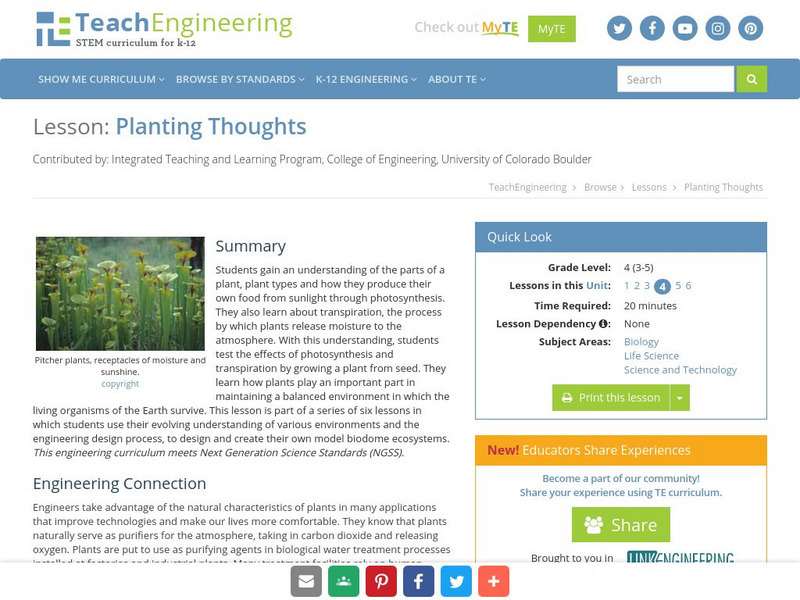
Teach Engineering: Planting Thoughts
Students gain an understanding of the parts of a plant, plant types and how they produce their own food from sunlight through photosynthesis. They also learn about transpiration, the process by which plants release moisture to the...
TeachEngineering
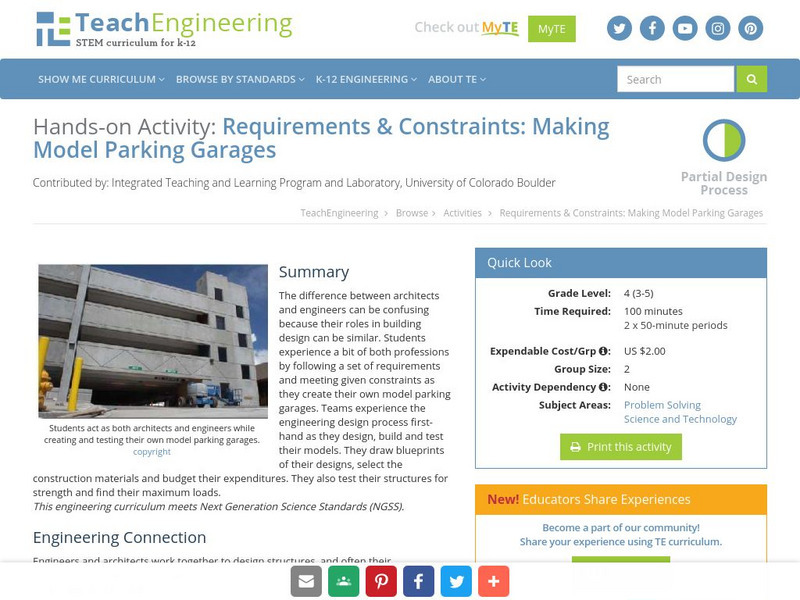
Teach Engineering: Requirements & Constraints: Making Model Parking Garages
The difference between an architect and an engineer is sometimes confusing because their roles in building design can be similar. Young scholars experience a bit of both professions by following a set of requirements and meeting given...
TeachEngineering
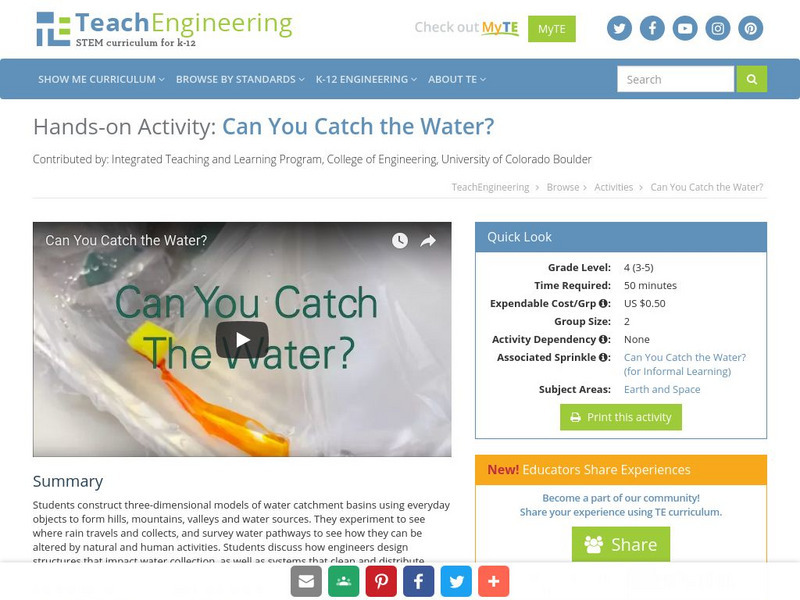
Teach Engineering: Can You Catch the Water?
Students construct a three-dimensional model of a water catchment basin using everyday objects to create hills, mountains, valleys and water sources. They experiment to see where rain travels and collects, and survey water pathways to...