Hi, what do you want to do?






Utah Education Network
Uen: How Big Are Earth, Sun, and Moon?
Understand where the sun is in the solar system and how big the earth, moon, and sun are.

Science Buddies
Science Buddies: The Moon and the Stars
When you are in the city, only a few of the brightest stars are visible. But when you are in the country, you can see many more stars than you can count. Sometimes you can even see the bright belt of our galaxy, the Milky Way. In this...
Better Lesson
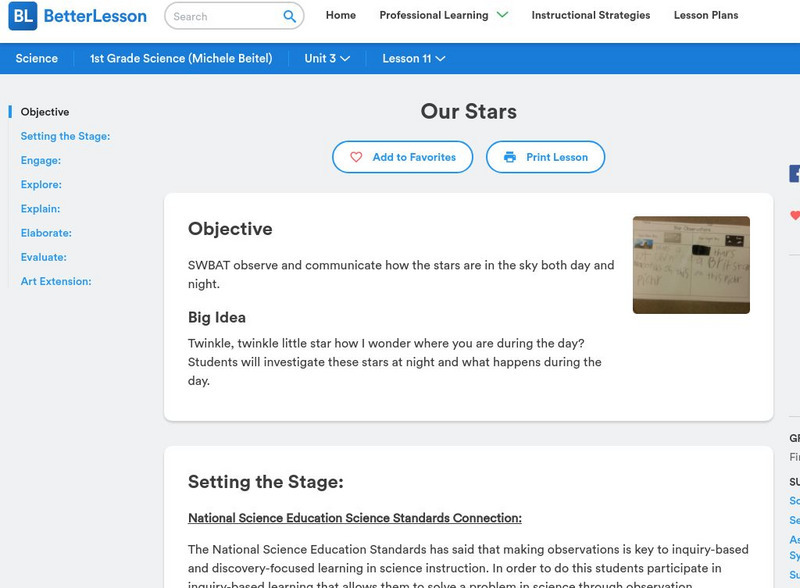
Better Lesson: Our Stars
In this lesson, learners will observe and communicate how the stars are in the sky both day and night. The extremely detailed lesson includes photos and videos of the lesson in actions, examples of student's work, materials, parent...
The Wonder of Science
The Wonder of Science: 1 Ess1 1: Sun, Moon, and Star Patterns
The NSTA vetted source includes resources to help students describe patterns of the sun, moon, and stars using observation. Included are assessment ideas, videos, examples, lesson plans, and photos of student work.
Science Buddies
Science Buddies: Where Did All the Stars Go?
If you live in a big city or urban area it is hard to see many stars at night. In most urban areas only the most brilliant stars, planets and the moon can be seen. This is because of something called light pollution which is the...
Better Lesson
Better Lesson: Our Sky
What objects are in the day sky and the night sky? How do they seem to move? Come and explore with us as we discover the sun, moon, planets and stars! This detailed lesson plan includes pictures and videos of the lesson in action,...
Smithsonian Institution
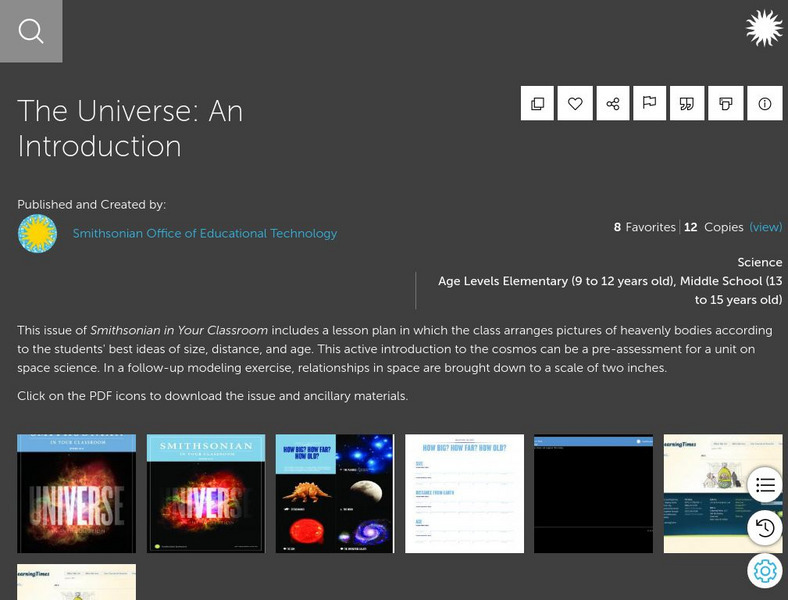
Smithsonian Learning Lab: The Universe, an Introduction
Start with the questions all students ask: How big is the universe, how far away are the planets and stars, how did they form and when, how do they move and why? Build on their natural curiosity. The Smithsonian, in cooperation with...
Other
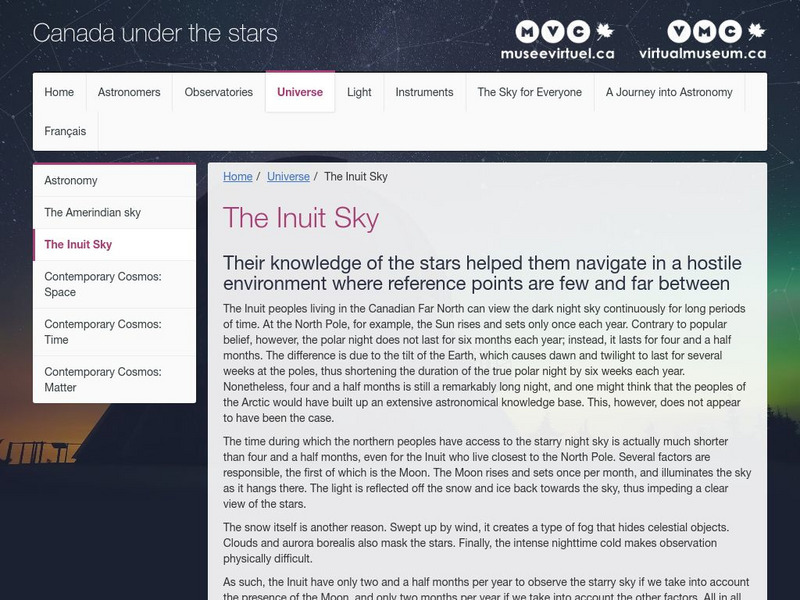
Vmc: The Inuits the Sky of the First Inhabitants
The Inuit's knowledge of the stars helped them navigate in a hostile environment. In their legends, they did view the the Sun as being a woman, and the Moon as a man. Several stories are shared here.
Books in the Classroom
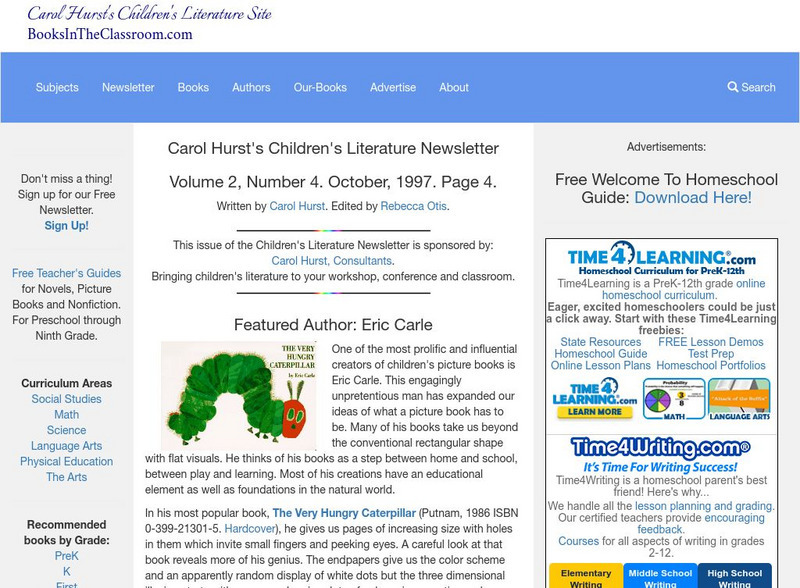
Carol Hurst's Children's Literature Site: Eric Carle
What do you know about Eric Carle, the author? This Carol Hurst site highlights some interesting facts about this author's life and refers to some of his books.

Alabama Learning Exchange
Alex: Comets
During this lesson, students have the opportunity to explore comets. By navigating the Internet, viewing a slideshow, and participating in a videoconference with NASA, students will discover what comets are all about.