
Curated OER
Classic Short Stories- Locked Room Settings
Students read the short story "The Problem of Cell 13" and examine the plot devices that build suspense. In this lesson students create their own short story using the same locked room setting.

Curated OER
Breaking News English: Ku Klux Klan Arrest for 1964 Murders
In this English worksheet, students read "Ku Klux Klan Arrest for 1964 Murders," and then respond to 47 fill in the blank, 7 short answer, 20 matching, and 8 true or false questions about the selection.

Curated OER
Steller Web Spinning Mystery
Students investigate what a system is in the scientific world. They watch a video of the Stellar seals of Alaska and develop clues as to why the seals are leaving. They discover through the clues they discover, how the components of the...

TED Talks
Ted: Ted Ed: Early Forensics and Crime Solving Chemists
In a CSI age, we take forensic science for granted. New York did not have a medical examiner or forensic toxicologist until 1918, whose eventual arrival changed the landscape of crime investigation forever. Deborah Blum prompts the TED...

Other
Crime Scene Investigator: Evidence Collection Guidelines
A list of specific types of evidence that could be collected from a crime scene. Links to methods for collecting the following kinds of evidence: blood stains, seminal stains, hair, fibers and threads, glass, paint, flammable liquids,...
Indiana University
A Crime Against Plants
Have your students delve into the evidence involving a small tree and arrive at an explanation of what happened in this thorough lesson plan site. .
Indiana University
The Case of the Missing Computer Chip
Have your teams of students solve the simulated crime scene using clues presented in this thorough forensic lesson plan.
Other
Crime Scene Investigator: Practical Methods for Processing a Vehicle
Practical methods are suggested to secure and not contaminate any evidence found in a vehicle at a crime scene.
Constitutional Rights Foundation
Constitutional Rights Foundation: City Youth Unit: Crime Prevention [Pdf]
This unit is focused on helping students understand resources for solving and preventing crime. They compare crime prevention methods of today and in the past, take part in simulation exercises, and participate in a service learning...
Science Education Resource Center at Carleton College
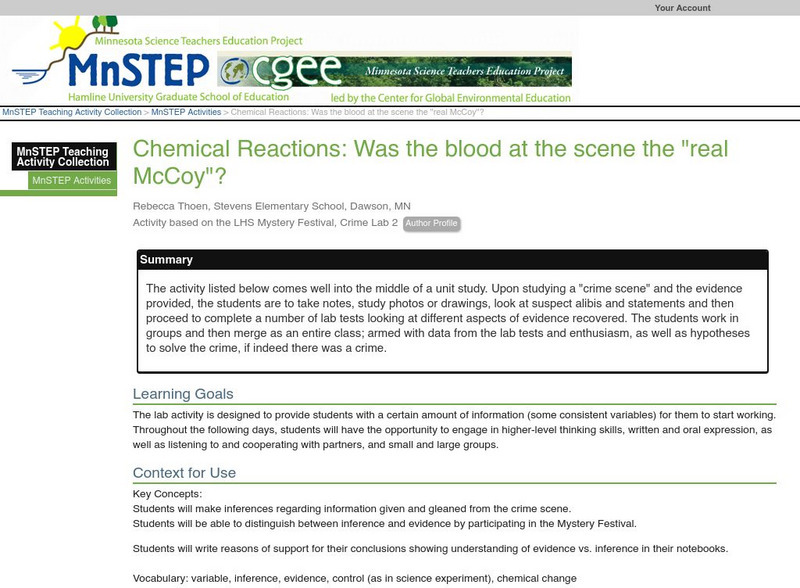
Serc: Chemical Reactions: Was the Blood at the Scene the "Real Mc Coy"?
The activity listed below comes well into the middle of a unit study. Upon studying a "crime scene" and the evidence provided, the students are to take notes, study photos or drawings, look at suspect alibis and statements and then...

Cyberbee
Cyberbee: Who Dunnit?
If you are a crime scene investigation (CSI) fan, then you will love this site! You get to be the detective by examining the evidence, viewing the crime scene, dusting for fingerprints, interviewing the suspects, and solving the crime.
American Institute of Biological Sciences
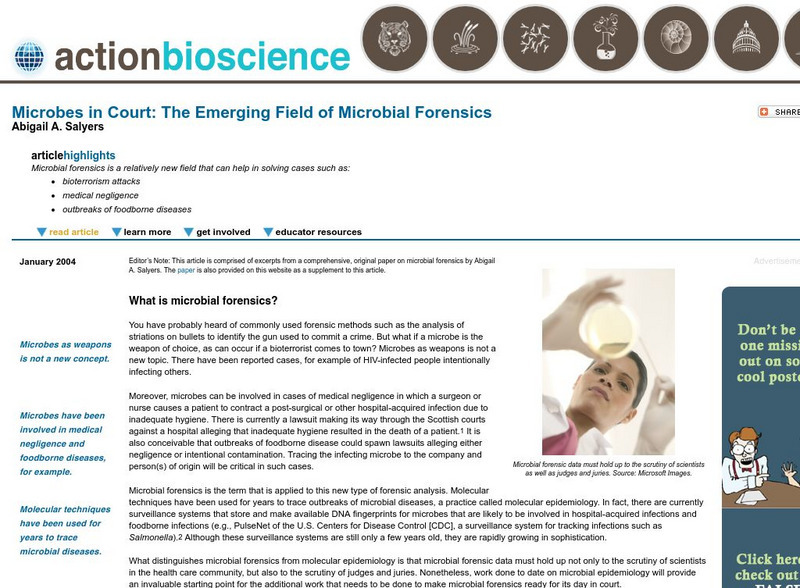
Action Bioscience: Microbes in Court: Emerging Field of Microbial Forensics
Learn how microbes can actually help solve crimes. Uncover some of the problems with using microbes as forensic evidence.
Rice University
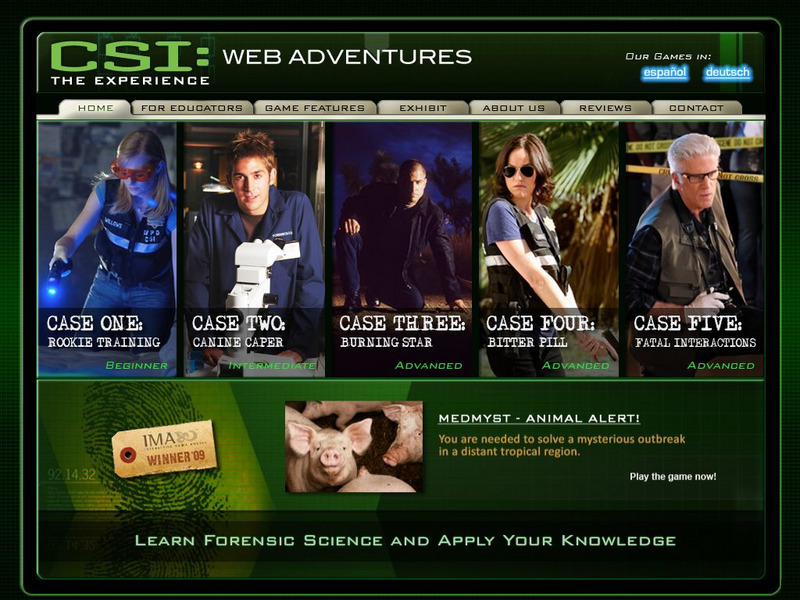
Rice University: Web Adventures: Csi: The Experience
Based on the CSI television show, this series of four role-playing games helps students learn the scientific method and try their hand at solving crimes. Discover if you have what it takes to be a forensic scientist.
Science Buddies
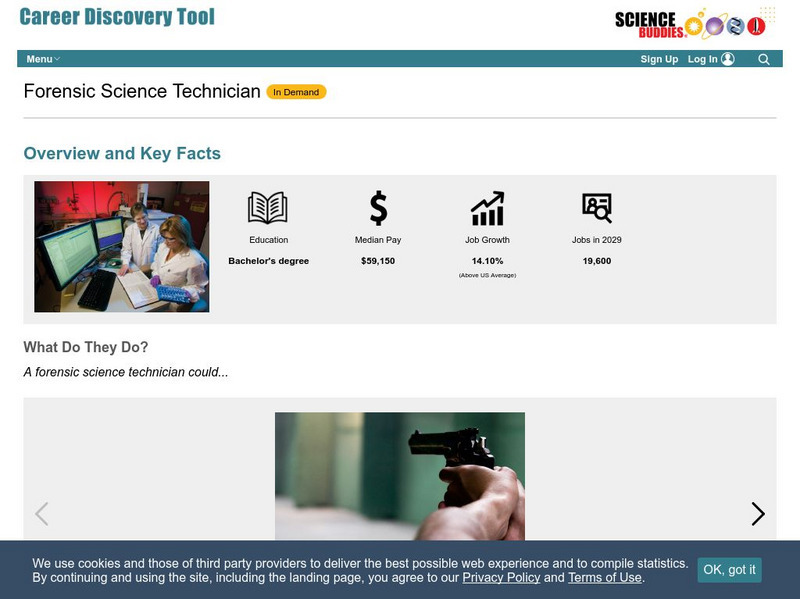
Science Buddies: Career Profile: Forensic Science Technician
With the advent of many crime-solving television shows, there is increased interest in the career of forensin science technician. Read this Science Buddies career profile to find out all the kinds of things the forensic scientist gets to...
Chemistry Collective
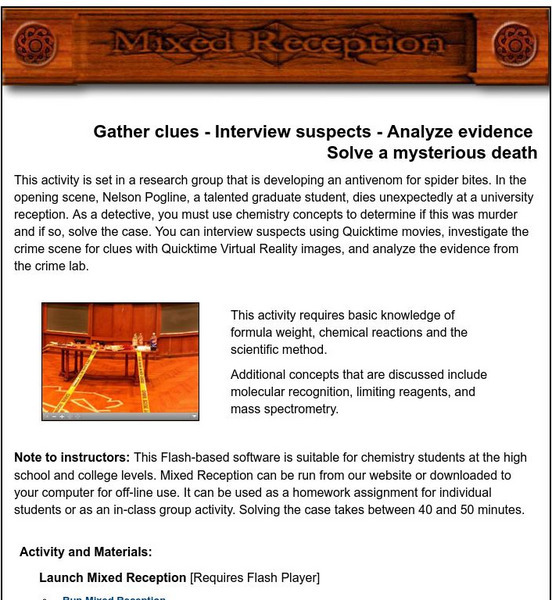
Chem Collective: Mixed Reception
Participate in the investigation of a virtual crime scene using chemistry concepts to solve a mysterious death. The 40-50 minute activity can be used as a classroom lab or as a homework assignment. Additionally, teachers may request a...
National Institutes of Health
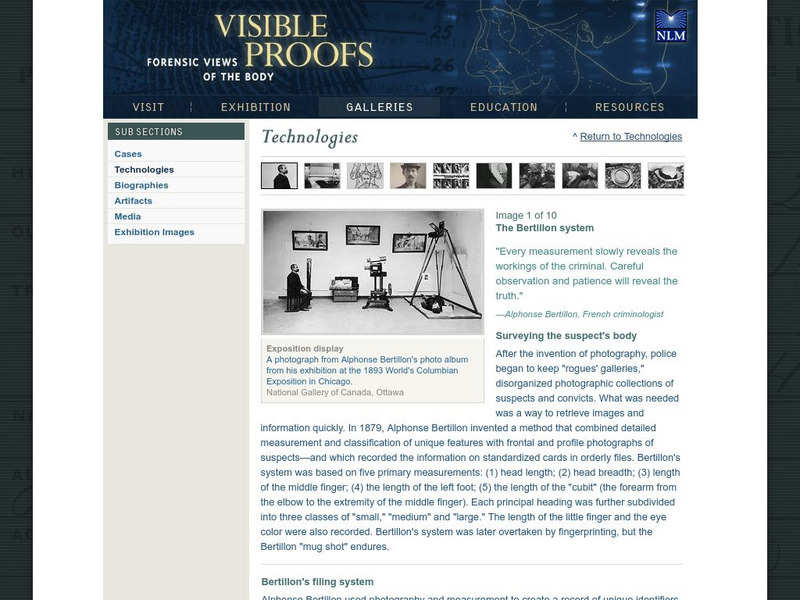
National Library of Medicine: The Bertillon System
Bertillon devised a system to make order out of the myriad of crime scene photos taken by the police. This brief site describes how that system worked and shows a number of crime scene photos taken from Bertillon's photo album.
National Institutes of Health
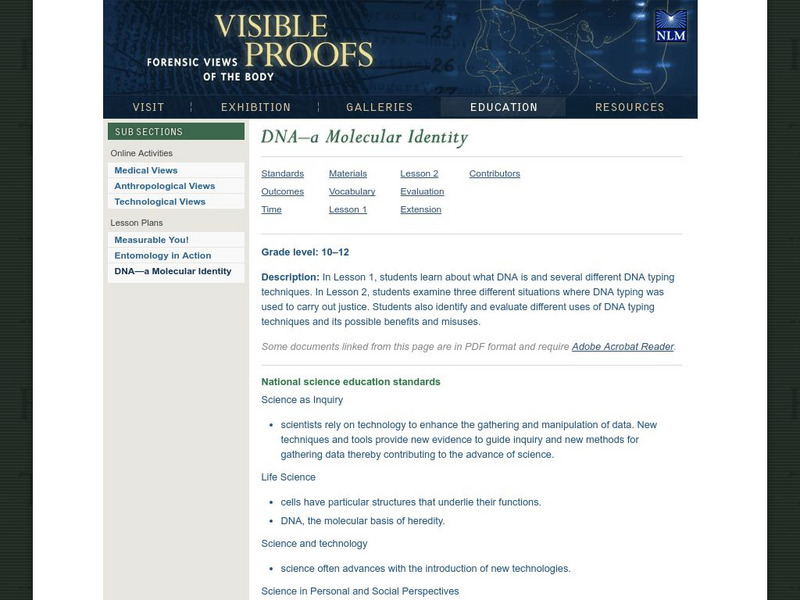
National Library of Medicine: Dna a Molecular Identity
In this lesson plan site, students learn about DNA and examine three different situations where DNA was used to solve a case.
Yale University
Detective Fiction: Focus on Critical Thinking
Through the use of reading crime fiction, this lesson plan helps to refine critical thinking skills and problem solving strategies which are important for the development of 21st century skills.

TED Talks
Ted: Ted Ed: The Myth of Hercules: 12 Labors in 8 Bits
Hercules, stricken with a temporary curse of madness, has just committed the most unspeakable crime imaginable. Seeking to atone for the deaths of his family, Hercules must complete twelve impossible tasks that pit him against invincible...
Texas Instruments
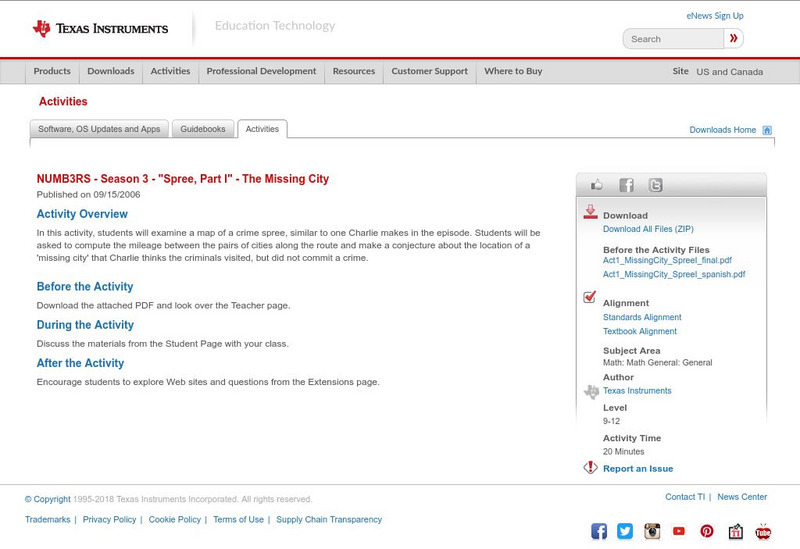
Texas Instruments: Numb3 Rs: The Missing City
Based off of the hit television show NUMB3RS, this lesson has students examine maps of a crime spree in order to figure out if any locations have been unreported. The lesson is not math-intensive and instead forces students to use...
Texas Instruments
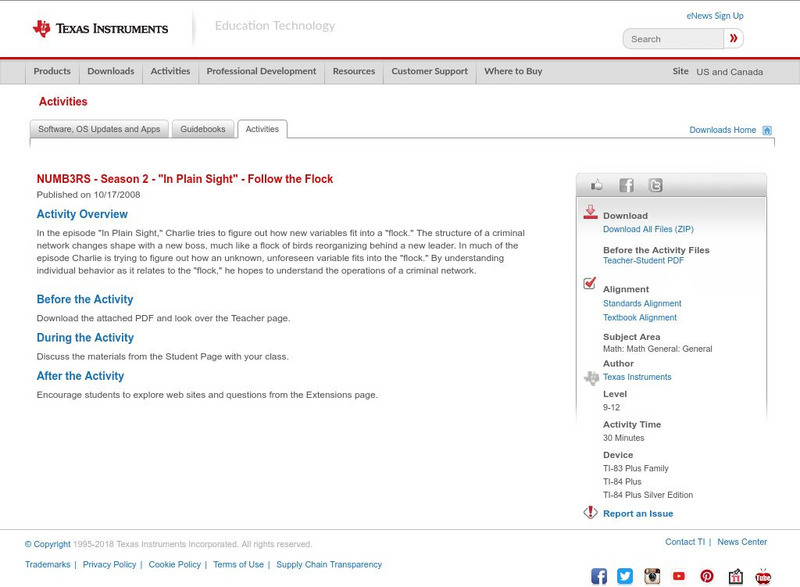
Texas Instruments: Numb3 Rs: Follow the Flock
Based off of the hit television show NUMB3RS, this lesson introduces students to the lesser-studied topic of Flock Theory. The lesson is framed in the context of groups of birds, which follow a few simple rules. By using this algorithm,...
PBS
Pbs: What Jennifer Saw
How can eyewitness identification go wrong? What role can DNA play in protecting the innocent? This interesting site answers these questions and gets the opinions of several DNA experts on this fascinating subject.

Blackdog Media
Classic Reader: The Wisdom of Father Brown by Gilbert K. Chesterton
Follow Father Brown as he solves crimes in these short stories that make up the book "The Wisdom of Father Brown" by Gilbert K. Chesterton. Read the full text on this site.
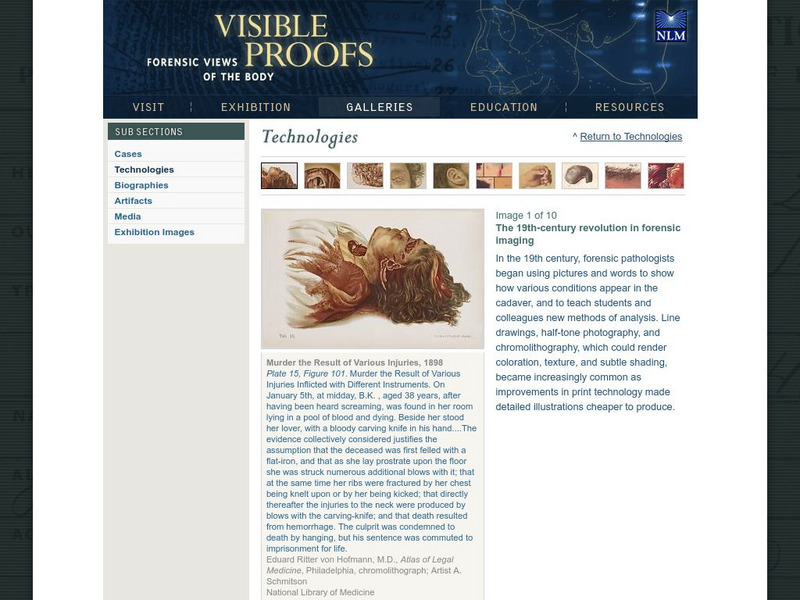
National Institutes of Health
National Library of Medicine: The 19th Century Revolution in Forensic Imaging
In the 19th century, forensic pathologists began to use words and pictures to describe cadavers and to teach using cadavers in the classroom. See a number of interesting photos of various crime scenes on this interesting site.